


Workplace drug test consequences are the range of actions an employer may take after an employee tests positive for drugs or refuses testing. These actions include immediate termination, suspension, mandatory treatment referrals, or probationary status. U.S. employment drug test policies vary widely by industry, state, and employer, but federal frameworks like the Department of Transportation’s 49 CFR Part 40 set firm standards for safety-sensitive roles. Understanding what happens after a drug test puts you in a far stronger position, whether you are a current employee or a job seeker preparing for pre-employment screening.
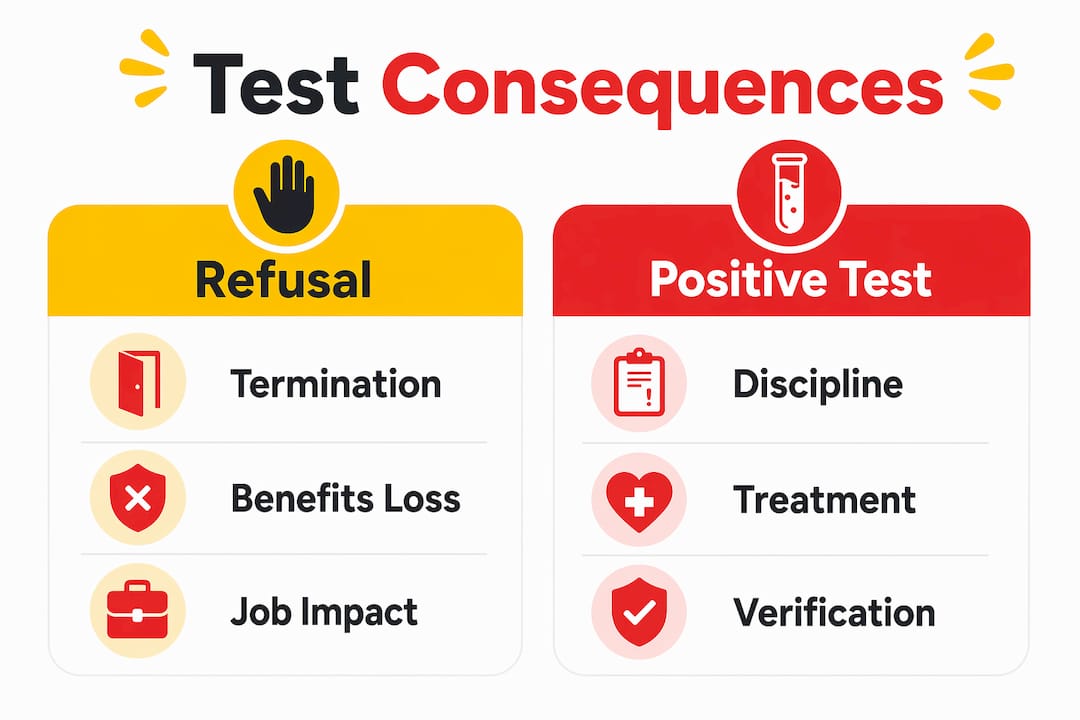
What are the workplace drug test consequences of refusing or failing?
Refusing a drug test carries the same legal weight as failing one in most U.S. states. Under at-will employment laws, refusal allows employers to presume impairment and proceed with termination. That presumption is powerful. It means you lose the ability to argue you were sober, because the refusal itself becomes the evidence.
The consequences extend well beyond losing your job. Employees terminated for refusal or a confirmed positive test routinely face denial of unemployment benefits. Workers’ compensation claims are also at risk. If you refuse testing after a workplace accident, most states treat that refusal as evidence that drugs caused the incident.
For employees in DOT-regulated roles, such as commercial truck drivers, airline pilots, or railroad workers, the rules are even stricter. DOT regulations under 49 CFR Part 40 require immediate removal from safety-sensitive duties after a confirmed positive or refusal. Return to duty requires evaluation by a Substance Abuse Professional, or SAP, and a negative return-to-duty test.
- Termination is the most common outcome for a first positive under zero-tolerance policies.
- Loss of unemployment benefits is likely when termination is for cause.
- Workers’ compensation claims face denial under rebuttable presumption laws in many states.
- DOT-regulated employees face mandatory SAP referrals and return-to-duty protocols before reinstatement.
- Non-DOT employers have more flexibility but must follow their own written policy consistently.
Pro Tip: Read your employer’s drug-free workplace policy before any test. The written policy defines your specific consequences, and knowing it word for word gives you a clear picture of your rights and risks.
How do employers determine consequences after a positive drug test?
The employer’s written drug-free workplace policy is the single most important document in this process. It defines every step, from who gets notified to what discipline applies. SAMHSA emphasizes that consistently applied policies are the foundation of a legally defensible testing program. Inconsistent enforcement is the leading cause of employee lawsuits against employers.
The process typically follows these steps after a non-negative result:
- Initial screen flagged. The laboratory reports a non-negative result to the Medical Review Officer, or MRO.
- MRO review. The MRO contacts you directly to ask about prescriptions or medical explanations before reporting the result to your employer.
- Confirmation testing. A second test on the same specimen confirms or clears the initial result.
- Employer notification. The MRO reports a confirmed positive to your employer’s designated representative.
- Policy-driven discipline. Your employer applies the consequence outlined in the written policy, ranging from removal from safety duties to termination.
The type of role you hold shapes the outcome significantly. Safety-sensitive positions under DOT rules require immediate removal from duty. Non-safety roles in non-regulated industries may allow for a last-chance agreement, mandatory treatment, or a probationary period instead of outright termination.
Starting in 2026, drug test panels now include fentanyl and norfentanyl in DOT and some non-DOT programs. This change catches synthetic opioid use that older panels missed entirely. Employees who use prescription fentanyl patches or similar medications need to disclose that to the MRO before testing.

Pro Tip: If you take any prescription medication, tell the MRO during the review call. Disclosing a valid prescription at that stage can prevent a confirmed positive from ever reaching your employer.
What legal protections exist for employees contesting positive results?
Employees have real procedural rights, and those rights can change the outcome. The first line of defense is challenging the process itself. Chain of custody errors, improper specimen handling, or a lab that skipped confirmation testing are all grounds to dispute a result.
“ADA protections may apply if a disability and a legal medication explain the positive result. Employers must engage in an interactive process before taking adverse action.” Source: Constangy, Brooks, Smith & Prophete
The Americans with Disabilities Act, or ADA, adds another layer of protection. If you have a documented disability and a legal prescription that caused the positive result, your employer is required to explore accommodation options before disciplining you. Skipping that interactive process exposes the employer to discrimination claims.
State cannabis laws create additional complexity. In states where recreational marijuana is legal, some laws now restrict employers from taking adverse action based solely on off-duty cannabis use. The specifics vary sharply by state, so the protection you have in Colorado differs from what applies in Texas.
- Procedural challenges: Errors in chain of custody, specimen handling, or lab confirmation can invalidate a result.
- Prescription disclosure: Presenting valid prescription documentation to the MRO during review is your strongest factual defense.
- ADA accommodation: Employers must engage in an interactive process when a disability or legal medication explains the result.
- State cannabis protections: Some states limit employer authority to discipline for off-duty marijuana use.
- Documentation: Supervisor training records and written policy documents are critical evidence if you pursue a legal challenge.
Remote work adds a specific complication. In-person verification by multiple trained supervisors is the best practice for reasonable suspicion testing. Virtual assessments of impairment signs carry a much higher legal risk for employers, which can work in your favor if the process was not followed correctly.
How do drug test consequences affect your benefits and job prospects?
A confirmed positive or a refusal creates ripple effects that go well beyond the day you lose your job. The workplace drug testing impact on your financial safety net is immediate and serious.
| Consequence | Likely outcome |
|---|---|
| Unemployment benefits | Denied in most states when termination is for cause due to a positive test |
| Workers’ compensation | Claim denied under rebuttable presumption laws if you test positive post-accident |
| Future employment | Background checks and reference checks may reveal the circumstances of termination |
| Professional licenses | Some licensed professions require self-reporting, which can trigger license review |
| Rehire eligibility | Many employers flag terminated employees as ineligible for rehire |
Workers’ compensation claims face denial when an employee tests positive after a workplace accident and cannot prove the drugs were unrelated to the injury. That burden of proof sits with you, not the employer. Losing both your job and your injury benefits simultaneously is a real and common outcome.
Future job prospects depend heavily on how the termination is documented. Employers who conduct reference checks may learn the reason for your departure. Some industries, including transportation, healthcare, and federal contracting, maintain databases of employees with confirmed positives. A record in those systems can close doors for years.
Recovery is possible, but it requires a deliberate approach. Completing a substance abuse treatment program, obtaining a certificate of completion, and being transparent with future employers about rehabilitation all improve your chances. Some employers offer last-chance agreements that include probationary employment, which gives you a documented path back.
Pro Tip: If your employer offers an Employee Assistance Program, or EAP, use it immediately after a positive result. EAP participation demonstrates good faith and is often a prerequisite for reinstatement or a last-chance agreement.
Key takeaways
Failing or refusing a workplace drug test triggers legal, financial, and career consequences that extend far beyond the day of the test itself. Knowing your rights and your employer’s written policy is the most effective protection you have.
| Point | Details |
|---|---|
| Refusal equals failure | Refusing a test is treated the same as a positive result under at-will employment laws. |
| Written policy controls outcomes | Your employer’s drug-free workplace policy defines every disciplinary step after a positive. |
| MRO review is your first defense | Disclosing prescriptions to the MRO before the result reaches your employer can prevent a confirmed positive. |
| Benefits are at risk | Unemployment and workers’ compensation claims are commonly denied following a positive or refusal. |
| 2026 panels include fentanyl | DOT and some non-DOT tests now screen for fentanyl, catching synthetic opioids previously undetected. |
What I’ve learned about navigating drug test consequences
Working in this space, the pattern I see most often is employees who are blindsided because they never read their employer’s drug policy. That document is not fine print. It is the rulebook, and it determines everything from whether you get a second chance to whether you can collect unemployment.
The 2026 expansion of drug test panels to include fentanyl is a significant shift that most employees are not aware of. Prescription fentanyl patches, certain pain medications, and even some transdermal treatments can trigger a positive. Disclosure to the MRO is not optional if you want to protect yourself.
The other thing I would stress is that EAPs are genuinely underused. Employers who offer them want employees to succeed. Using an EAP is not an admission of guilt. It is a documented step toward reinstatement, and it signals to your employer that you are taking the situation seriously. Punitive-only approaches are giving way to supportive frameworks that prioritize recovery, and that shift benefits employees who act quickly and in good faith.
— MIchael
Passdrugtest has resources to help you prepare
Facing a workplace drug test is stressful, but preparation makes a real difference. Passdrugtest carries a full range of drug test detox products designed for employees and job seekers who need reliable options before their test date.
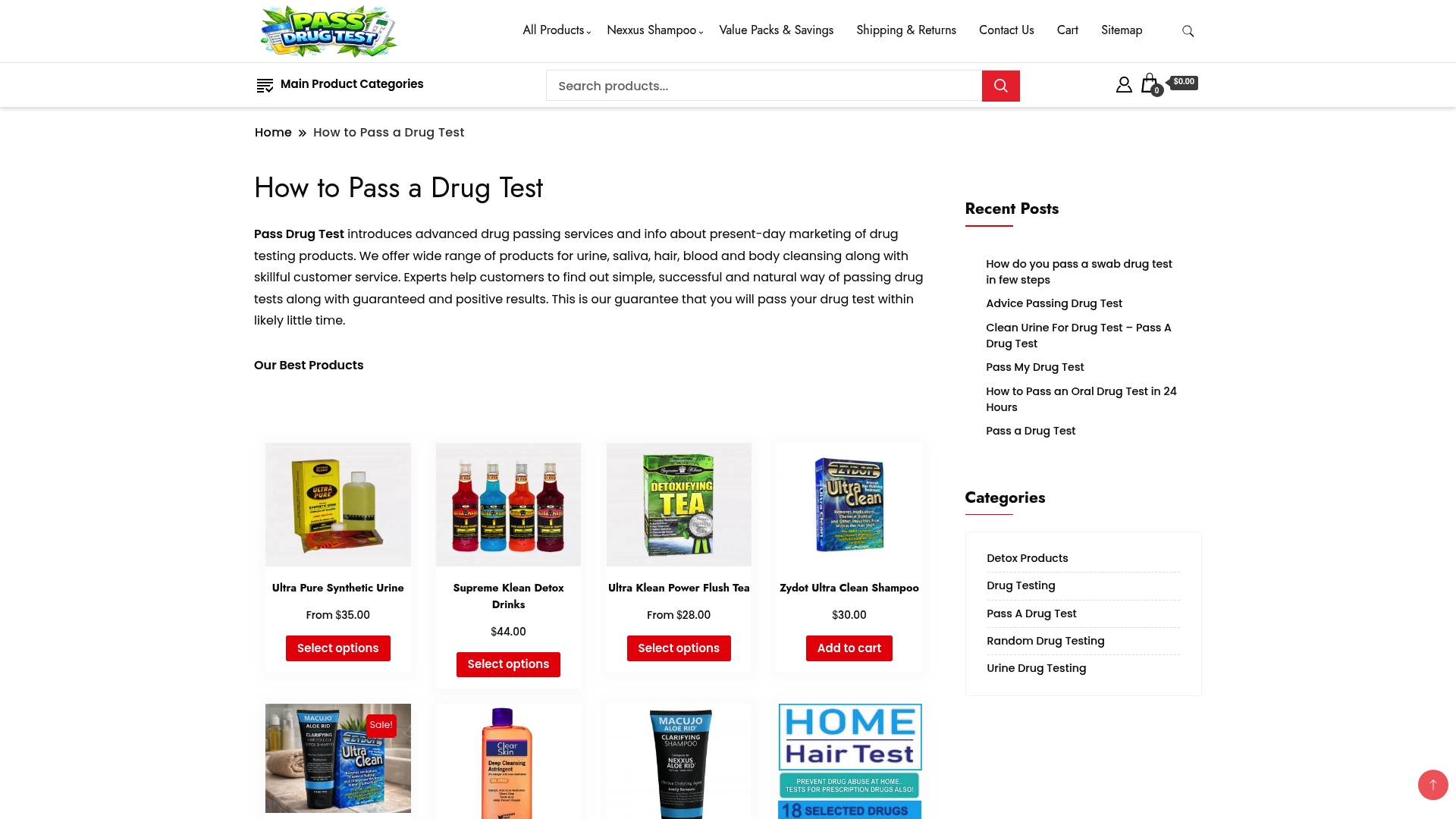
Whether you are preparing for a urine screen, a hair follicle test, or a full-panel employer test, Passdrugtest has products matched to your situation. The site also covers pre-employment drug testing in detail, so you understand exactly what to expect and how to prepare. If you have a hair follicle test coming up, the Macujo Aloe Rid Shampoo is the flagship product used in the proven Macujo Method, widely regarded as the most effective approach to passing a hair follicle drug test. Browse the full selection and find the right solution for your test type.
FAQ
What happens if you refuse a workplace drug test?
Refusal is treated the same as a confirmed positive in most U.S. states, giving employers grounds for immediate termination and denial of unemployment benefits.
Can you contest a positive drug test result at work?
Yes. You can challenge results based on procedural errors, chain of custody failures, or by presenting valid prescription documentation to the Medical Review Officer during the review process.
Does a failed drug test affect unemployment benefits?
A termination for cause due to a positive drug test or refusal typically disqualifies you from unemployment benefits in most states.
Are there new drugs being tested for in 2026?
DOT and some non-DOT employers now test for fentanyl and norfentanyl starting in 2026, expanding panels beyond the traditional five-drug screen.
Can the ADA protect you after a positive drug test?
The ADA may protect you if a documented disability and a legal prescription explain the positive result. Your employer must engage in an interactive accommodation process before taking disciplinary action.