
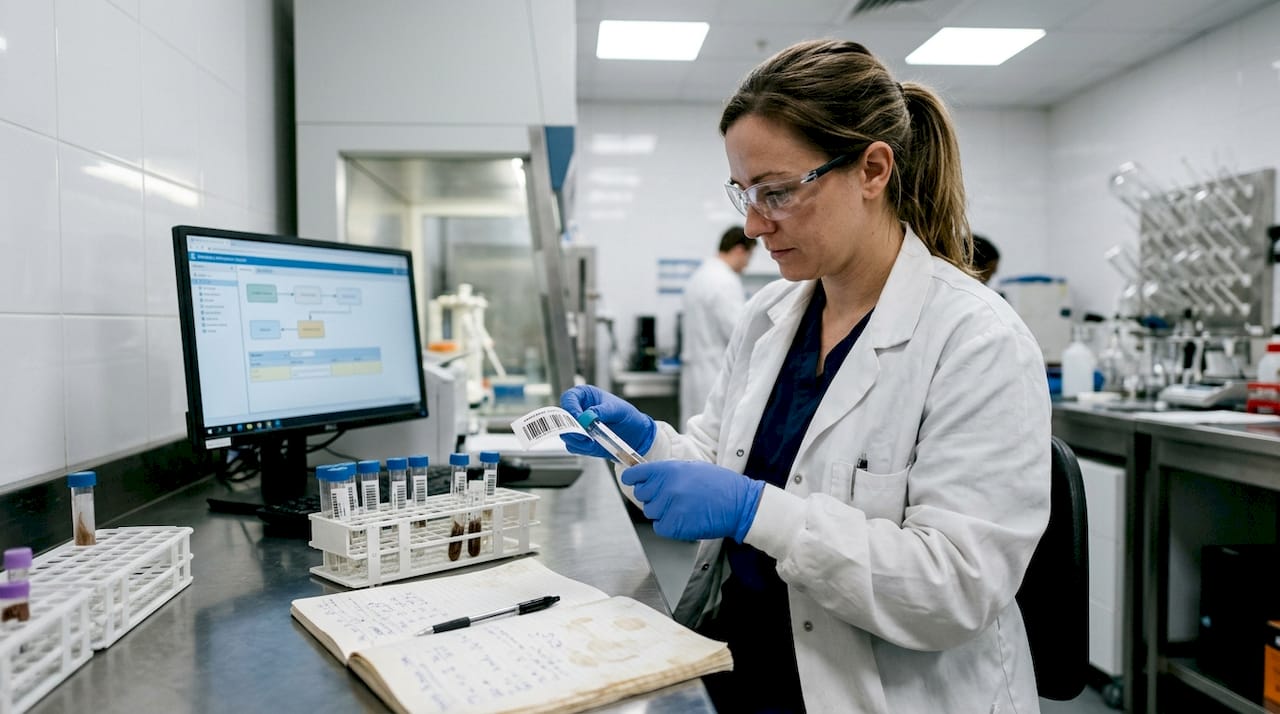

Many people facing a hair follicle drug test turn to detox shampoos and home remedies, confident these methods will save them. The reality is more sobering. Modern laboratory hair testing follows rigorous, multi-step protocols specifically built to resist manipulation, and decontamination and dual laboratory testing are designed to minimize external interference. Popular methods like the Macujo method may have loud fan followings online, but the science tells a more complicated story. This article walks you through exactly how lab testing works, what’s really being detected in your hair, and which strategies hold up under scrutiny.
Table of Contents
- How laboratory hair testing works
- What labs are really looking for
- Detox myths: The truth about Macujo, Aloe Rid, and home methods
- What actually helps your chances
- The uncomfortable truth about passing a hair test
- Where to find trusted resources and detox support
- Frequently asked questions
Key Takeaways
| Point | Details |
|---|---|
| Lab hair testing is sophisticated | Labs use decontamination and advanced analysis that resist most home remedy and detox attempts. |
| Detox shampoos have limited proof | Popular methods like Macujo and Aloe Rid shampoo lack scientific studies supporting reliable effectiveness. |
| THC metabolites are the target | Labs look for embedded THC-COOH, not just surface contamination or traces from the environment. |
| Myth busting matters | Understand what actually helps your risk versus what could harm your hair and wallet. |
| Get informed before taking action | Use evidence and expert advice to make smart decisions if you face a hair drug test. |
How laboratory hair testing works
Understanding what happens inside the lab is the first step toward making smart decisions before your test date. Most people picture a simple swab or rinse, but the actual process is far more detailed.
When your hair sample arrives at the lab, technicians begin with external decontamination. This involves washing the sample to remove surface-level residues, environmental pollutants, and any substances you may have applied to your hair. The goal is to ensure the test reflects what’s inside the hair shaft, not what landed on the outside.
After decontamination, the sample goes through an immunoassay screening, a broad first-pass test that flags potential positives. This is sensitive enough to catch most drug metabolites but is not the final word. If the immunoassay flags a sample, it moves to a confirmation stage using either GC/MS (gas chromatography/mass spectrometry) or LC-MS/MS (liquid chromatography/tandem mass spectrometry). These instruments are precise enough to identify specific metabolites at the picogram level.
Here is how the process looks step by step:
- Step 1: Sample collection (approximately 1.5 inches of hair, 100 to 120 strands)
- Step 2: External decontamination wash
- Step 3: Immunoassay screening for target drug classes
- Step 4: Confirmation testing via GC/MS or LC-MS/MS for any positives
- Step 5: Results reviewed and reported
You can read full test process details to understand how each step affects your sample.
For marijuana specifically, hair tests detect THC metabolites that are incorporated into the hair shaft as it grows from the follicle. Since hair grows roughly half an inch per month, a 1.5-inch sample covers approximately 90 days of use history.
| Stage | What happens | Purpose |
|---|---|---|
| Decontamination | Hair washed with solvents | Remove surface contamination |
| Immunoassay | Broad screening test | Flag potential positives |
| GC/MS or LC-MS/MS | Confirmatory analysis | Identify specific metabolites |
The dual-confirmation system is what makes this test so difficult to beat. Labs are not looking for surface residues. They are looking at what your body deposited inside the hair structure itself.
What labs are really looking for
Knowing the process is useful, but knowing exactly what’s being measured gives you a clearer picture of your actual risk.
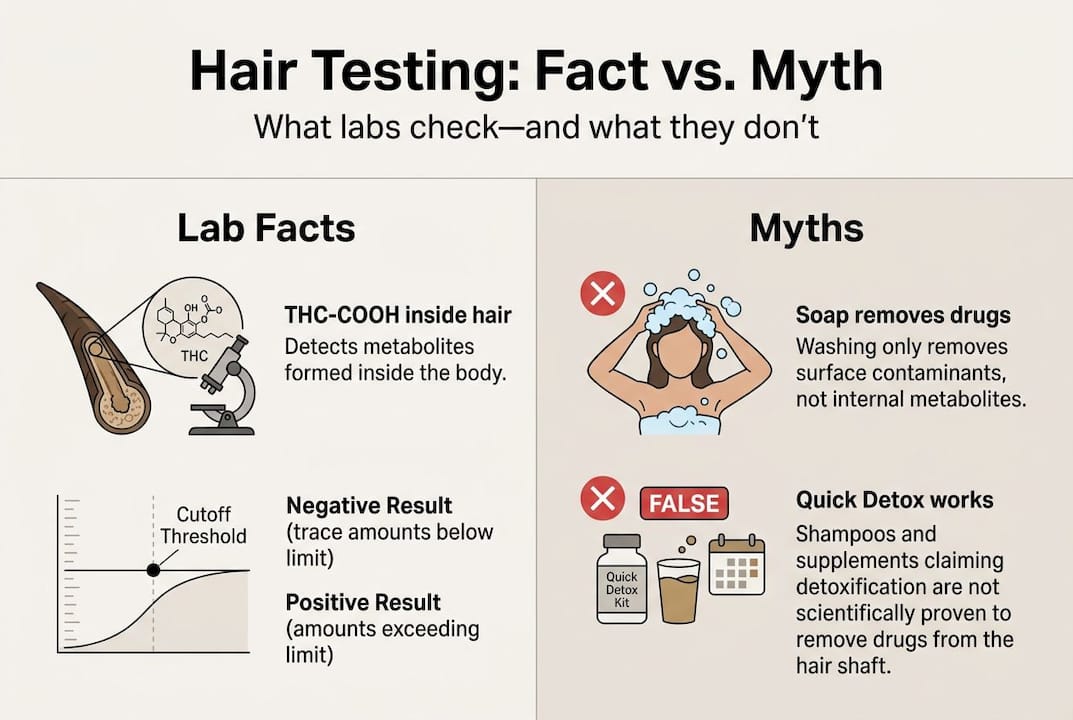
For marijuana users, the key target is THC-COOH (11-nor-9-carboxy-THC). This is not the THC you smoke. It is a metabolite your liver produces after processing THC. When blood carries this metabolite past the scalp, it gets incorporated into the hair shaft as new hair grows. That process is passive and internal, which is why external washes do not remove it.
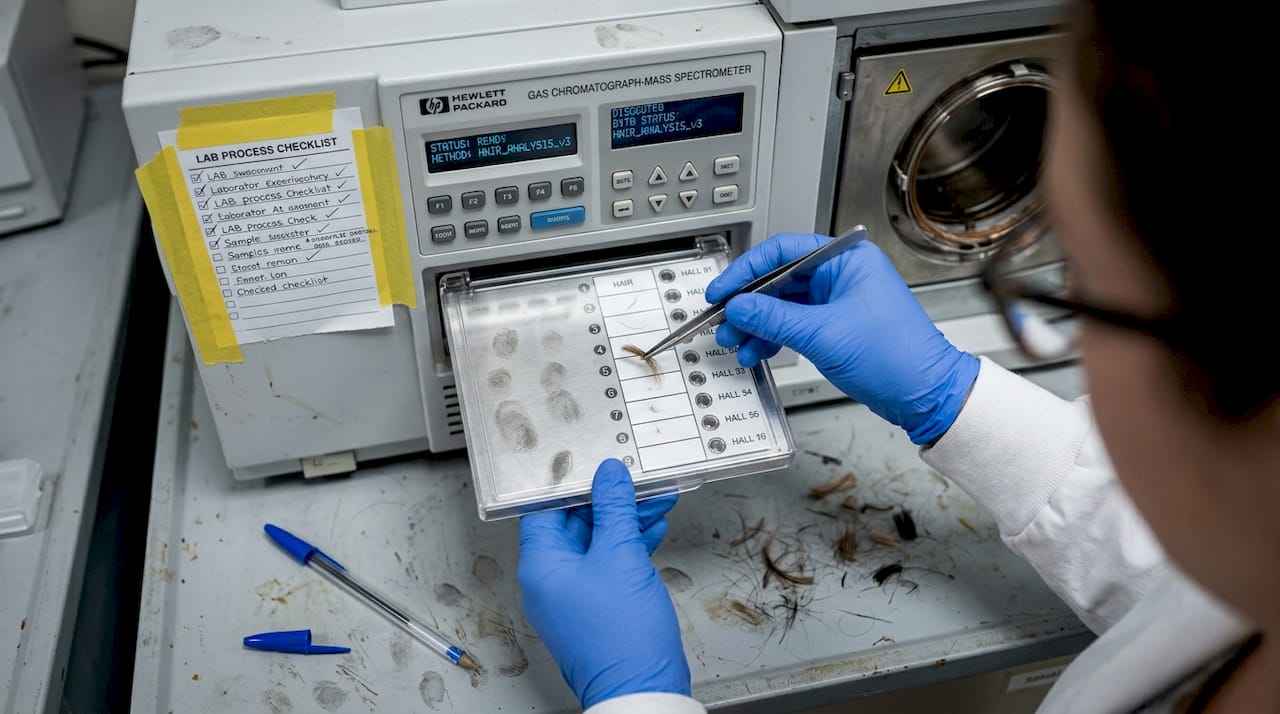
Labs use cutoff thresholds to decide what counts as a positive result. THC metabolite cutoffs are typically expressed in picograms per milligram (pg/mg) of hair, unlike urine tests which use nanograms per milliliter. Here is a comparison:
| Test type | Measurement unit | Typical THC cutoff |
|---|---|---|
| Urine test | ng/mL | 50 ng/mL (screening) |
| Hair follicle test | pg/mg | 1 pg/mg (confirmation) |
Those numbers show just how sensitive hair testing is at the confirmation stage. Labs also apply a two-tier cutoff system: a higher threshold for initial screening and a lower one for confirmation. This guards against both false positives and attempts to dilute or mask the sample.
To further protect result integrity, labs compare the ratio of THC metabolites to their precursors. This helps distinguish actual drug use from external environmental exposure, such as secondhand smoke. Here are the key things labs check:
- Presence of THC-COOH above the confirmation cutoff
- Metabolite ratios consistent with internal metabolism
- Absence of evidence suggesting sample tampering
“Understanding hair follicle test shampoo science means accepting that the test is measuring metabolites locked inside the hair, not residue on the surface.”
The practical takeaway: you cannot rinse, wash, or scrub out THC-COOH from the inside of a hair strand the way you would clean off dirt. Any strategy that targets the outside of the hair is working on the wrong part of the problem.
Detox myths: The truth about Macujo, Aloe Rid, and home methods
Now that you know what labs are actually targeting, it is worth looking honestly at the popular detox methods and asking: do any of them work?
The Macujo method is the most discussed approach online. It involves using a combination of products, including Aloe Rid shampoo, vinegar, and Clean and Clear Pink, applied in repeated washes. The theory is that opening the hair cuticle allows these products to pull THC metabolites out of the cortex. However, no peer-reviewed evidence supports this claim. Every success story you read is anecdotal.
The Aloe Rid shampoo (specifically the old formula) is widely recommended as the foundation of the Macujo method. It does contain propylene glycol, which can penetrate the hair shaft to some degree. That said, penetrating the cortex is very different from extracting metabolites already bound there.
Here are the key risks and realities of home detox methods:
- External treatments like bleaching may reduce metabolite concentration but cannot guarantee passing
- Repeated harsh chemical treatments can cause significant scalp and hair damage
- A visibly compromised sample (brittle, over-processed hair) can trigger extra scrutiny
- Costs for legitimate Macujo Aloe Rid shampoo and supplies add up fast with no guaranteed outcome
Pro Tip: If you choose to use the Macujo method explained, always buy from a verified seller. Counterfeit Aloe Rid formulas are common and have no active ingredients worth using.
Some forum users report passing after following the Macujo method. But forums also feature users who failed after doing everything correctly. Published science consistently shows that lab decontamination protocols account for external manipulation, which is why results are mixed at best. You can review recommended shampoos for hair tests to understand what quality products actually contain and why ingredient integrity matters.
The bottom line: No detox shampoo, home remedy, or method carries any scientific guarantee of a passing result.
What actually helps your chances
After clearing away the myths, here is what you can realistically do to reduce your risk before a hair follicle drug test.
Time is your biggest ally. Since hair tests cover roughly 90 days of growth, stopping use as early as possible is the single most effective step you can take. Labs’ decontamination and dual-screening procedures are built to withstand most external cleansing attempts, but they cannot put THC-COOH back into hair that grew during a clean period.
Here are the most practical steps to take:
- Stop use immediately. Every day clean adds clean hair growth that will be part of the tested segment.
- Understand your test timeline. Know when the test is scheduled and calculate how much clean growth you can accumulate.
- Focus on overall hair health. Damaged or chemically altered hair can raise questions, so avoid unnecessary treatments that could flag a sample.
- Research your employer’s testing protocol. Some tests use a shorter hair segment; some use body hair if head hair is insufficient.
- Consult a professional if stakes are high. An employment attorney or a medical professional can give you specific, relevant guidance.
Pro Tip: Very light or one-time marijuana use is less reliably detected by hair tests because lower metabolite concentrations may fall below the confirmation cutoff. If you are a chronic daily user, this does not apply to you.
It is also worth knowing what to avoid:
- Shaving your head (testers will use body hair instead)
- Tamper attempts that alter the sample’s integrity
- Buying unverified detox products from unreliable sources
For a full breakdown of realistic options, check out practical passing strategies and also review detailed steps and warnings before committing to any method.
The uncomfortable truth about passing a hair test
Here is something most detox product sites will not tell you directly: the labs have been doing this a long time. They have seen every trick, studied every workaround, and built their protocols specifically to counter them. Hoping a shampoo will outsmart a certified forensic laboratory is not a strategy. It is wishful thinking.
We have seen a lot of people come to us frustrated after spending hundreds of dollars on products that did not deliver. The pattern is almost always the same: they trusted forum posts over facts and bought into the idea that a guaranteed fix exists. Detox products lack empirical validation, and anecdotal success does not replace lab-verified science.
What we do believe in is informed decision-making. Knowing the truth about hair test detox lets you weigh real risks against real options. That is more valuable than false confidence. If you are going to use any detox product, use a quality one, follow the instructions precisely, and go in with realistic expectations rather than guaranteed promises.
Where to find trusted resources and detox support
Facing a hair drug test is stressful, and you deserve accurate information and real support, not marketing hype or spam products.
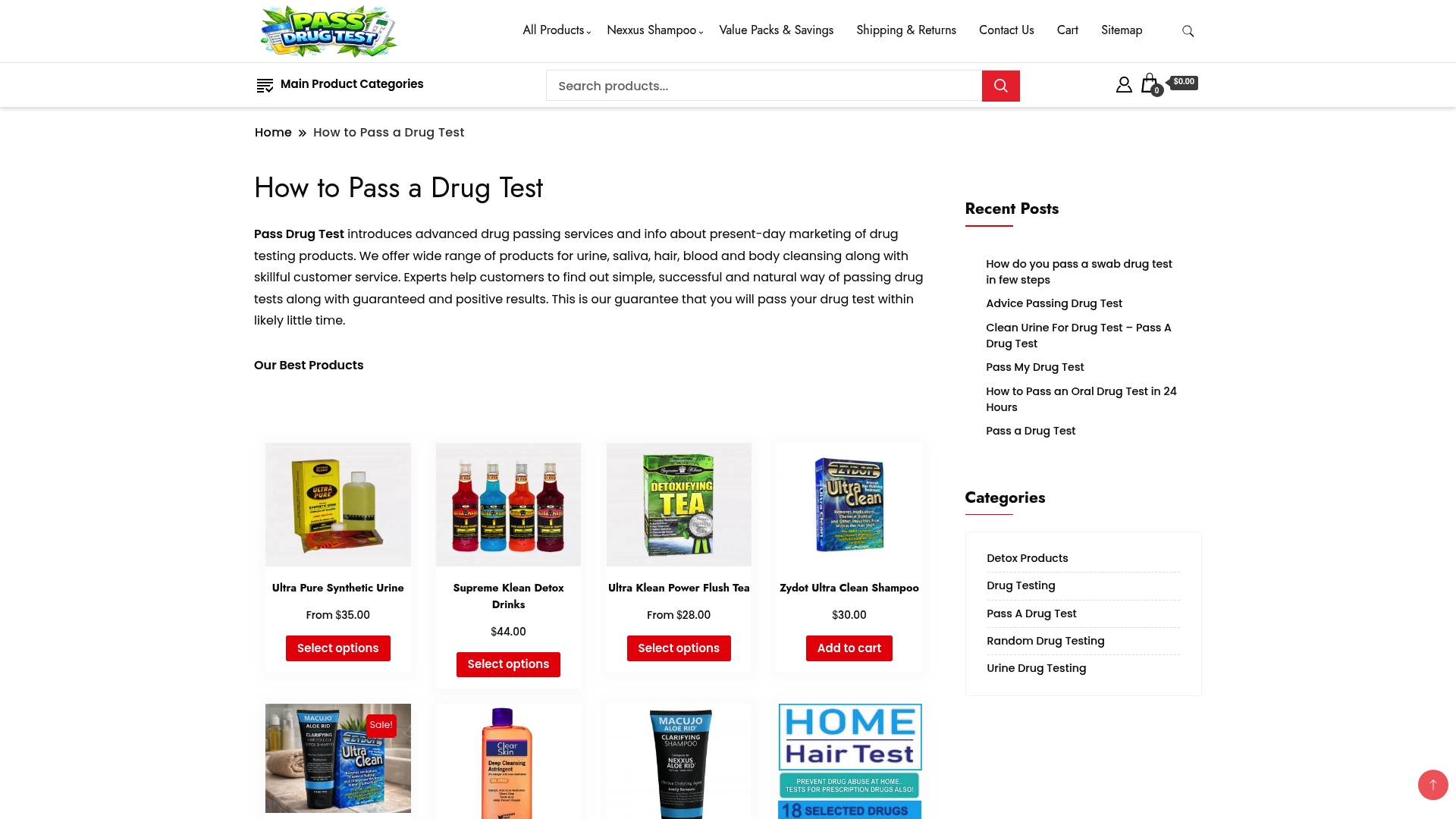
At passdrugtest.net, we focus on providing honest, science-informed resources alongside our vetted product selection. Whether you need to understand the detox shampoos overview or want to browse our full detox product selection, we make it easy to find what fits your specific situation. We also offer detailed hair test passing advice that goes beyond what you will find on a forum. Our Macujo Aloe Rid shampoo is the leading product in its class, and we back it with real information so you know exactly what you are getting and what to expect.
Frequently asked questions
How far back can a hair follicle drug test detect marijuana use?
Most hair drug tests detect marijuana for up to 90 days, based on the standard 1.5-inch sample that corresponds to roughly three months of hair growth. Hair tests detect THC metabolites incorporated into the hair during the growth period.
Does bleaching or dyeing your hair help pass a drug test?
External treatments like bleaching can reduce metabolite levels but cannot guarantee a passing result, and they may damage your hair or alert testers to possible tampering.
Is the Macujo method for hair tests scientifically proven?
No. No scientific studies validate Macujo method effectiveness. All reported successes are anecdotal, and the method carries real risks including scalp irritation and hair damage.
What happens during the lab hair testing process?
Labs decontaminate the hair sample, run an immunoassay screen, then confirm any positives using GC/MS confirmation. This multi-step system is built specifically to filter out surface contamination and external manipulation.
Can light or single-use marijuana be detected?
Hair tests are less sensitive for single or light use because metabolite concentrations may fall below confirmation thresholds, but chronic or repeated use is reliably detected.