
Short answer: no, not the way the label promises. Commercial detox drinks do not reliably remove drug metabolites from your system, and at best they temporarily dilute or mask a urine sample, something modern lab screening is built to catch. The federal government’s own research arm has found no solid evidence these products speed up detoxification. What actually determines your result is time, test type, and how the lab processes your sample. That’s what the rest of this guide breaks down.
TL;DR:
- Detox drinks mainly rely on dilution or disguise through additives, but modern lab tests can detect tampering and false signals are unreliable.
- The only effective detoxing process is natural elimination over time, as no product accelerates the body’s liver and kidney functions.
- Using excessive fluids or diuretics poses health risks like electrolyte imbalances, seizures, or dehydration, especially when combined with laxatives.
- Urine tests can sometimes be fooled by dilution, but hair follicle tests detect drugs stored in hair and are unaffected by drinking or masking attempts.
- For prolonged detection windows, especially in hair testing, methods targeting hair shaft contamination, like the Macujo Method, are more effective than drinking detox products.
Table of Contents
- What Are Detox Drinks and Detox Kits, Exactly?
- How Do Detox Drinks Claim to Work, and What Actually Happens?
- Does the Science Actually Support Detox Drinks Working?
- What Health Risks Come With Detox Drinks and Kits?
- Which Substances and Test Types Are Hardest to Beat?
- When Should You Seek Medical Help Instead of a DIY Fix?
- Who’s Behind This Guide, and Where Can You Learn More?
- The Bottom Line on Detox Drinks
- Why the Conventional Advice on Detox Drinks Misses the Point
- How Passdrugtest Can Help You Prepare the Right Way
- Sources
What Are Detox Drinks and Detox Kits, Exactly?
Detox drinks and kits are marketed as a shortcut around your body’s own filtration system, packaged as bottled drinks, multi-step kits, capsules, or standalone additives meant to be mixed into a sample after collection. Each form makes a different promise, but the underlying pitch is the same: flush out toxins fast.
Here’s what typically shows up on the ingredient label and what the marketing claims each one does:
- B-vitamins — restore a normal yellow color to diluted urine so it doesn’t look watered down
- Creatine — mask low creatinine levels caused by chugging fluids
- Diuretics (like caffeine or dandelion extract) — speed up urination to flush the bladder faster
- Herbal extracts (milk thistle, burdock root) — marketed as “liver support” with no proven detox effect
- Laxatives — pushed as whole-body cleansing agents, though they have nothing to do with urine composition
Because the supplement industry faces light regulatory scrutiny before products hit shelves, ingredient lists are not always accurate, and some products contain substances that aren’t disclosed at all.
How Do Detox Drinks Claim to Work, and What Actually Happens?
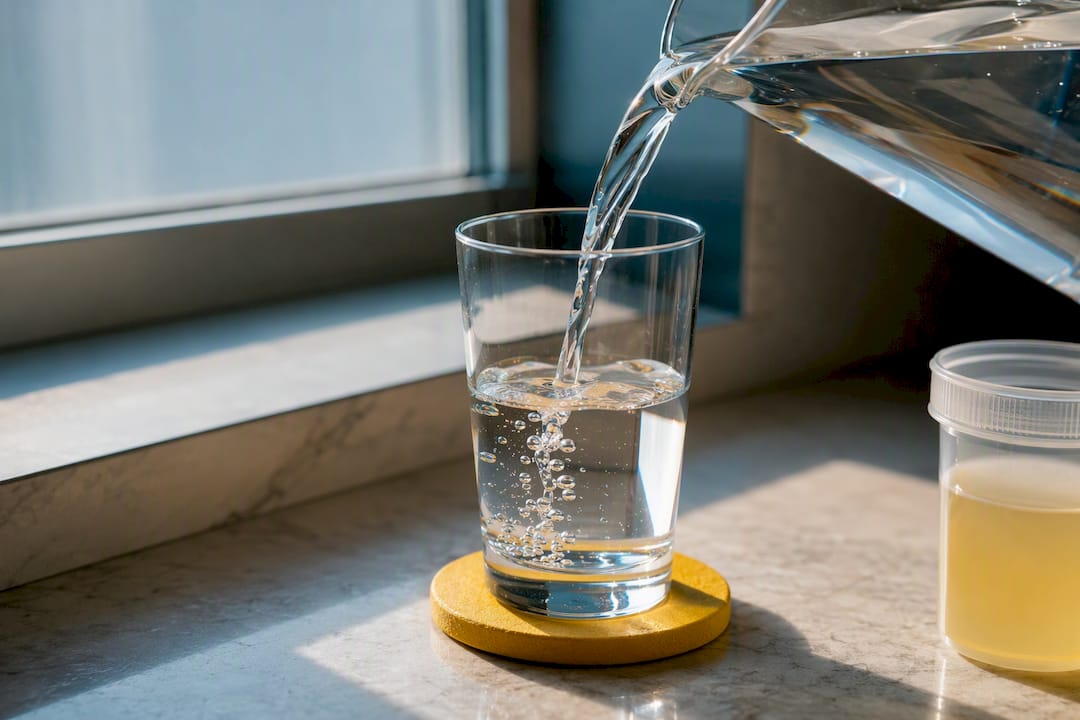
Every detox drink strategy boils down to one of two moves: dilution or replacement. Dilution means drinking large volumes of fluid to flush your bladder and lower the concentration of metabolites in your urine below a lab’s cutoff threshold. Replacement means adding compounds like creatine or B-vitamins to disguise the telltale signs of that dilution, since watered-down urine is unusually clear and low in creatinine.
There’s a separate category worth knowing about: in vitro adulteration, where someone adds a chemical directly to a collected sample, versus in vivo attempts, where someone drinks or ingests something beforehand hoping their body processes it. Labs treat both as tampering, and both leave fingerprints.
What labs actually check for:
- Creatinine levels (abnormally low levels flag dilution)
- Specific gravity (measures how concentrated or watered down urine is)
- pH balance (outside normal range signals possible adulteration)
- Oxidizing agents (chemicals like bleach or peroxide used to mask THC metabolites)
Clinical toxicology references confirm that labs run confirmatory testing, typically gas chromatography-mass spectrometry (GC/MS), on any sample that looks suspicious. GC/MS identifies exact metabolites at a molecular level, and no amount of masking changes that molecular signature. A diluted or adulterated sample often gets flagged before it ever reaches that stage, which frequently counts as a failed or refused test on its own.
Does the Science Actually Support Detox Drinks Working?
It doesn’t, and the gap is wider than most product pages let on. The National Center for Complementary and Integrative Health has reviewed the claims behind commercial detox and cleanse products and found no credible evidence that they accelerate what your liver and kidneys already do continuously. NIH’s own consumer health division reached the same conclusion in its review of detox diets, adding a warning about the safety risks of unregulated products.
There is no evidence that “detox” diets or products remove toxins from the body beyond what the liver, kidneys, and digestive system already handle on their own. Studies backing these commercial claims are largely absent or methodologically weak.
That distinction between screening and confirmation matters enormously for anyone banking on a drink to save them. A urine immunoassay, the cheap, fast screening test most employers use first, is the one method that dilution can sometimes fool, because it works off concentration thresholds. But systematic reviews of detox methods point out that even a “negative” screen from dilution usually triggers a retest, since labs recognize when specific gravity and creatinine fall outside normal range.
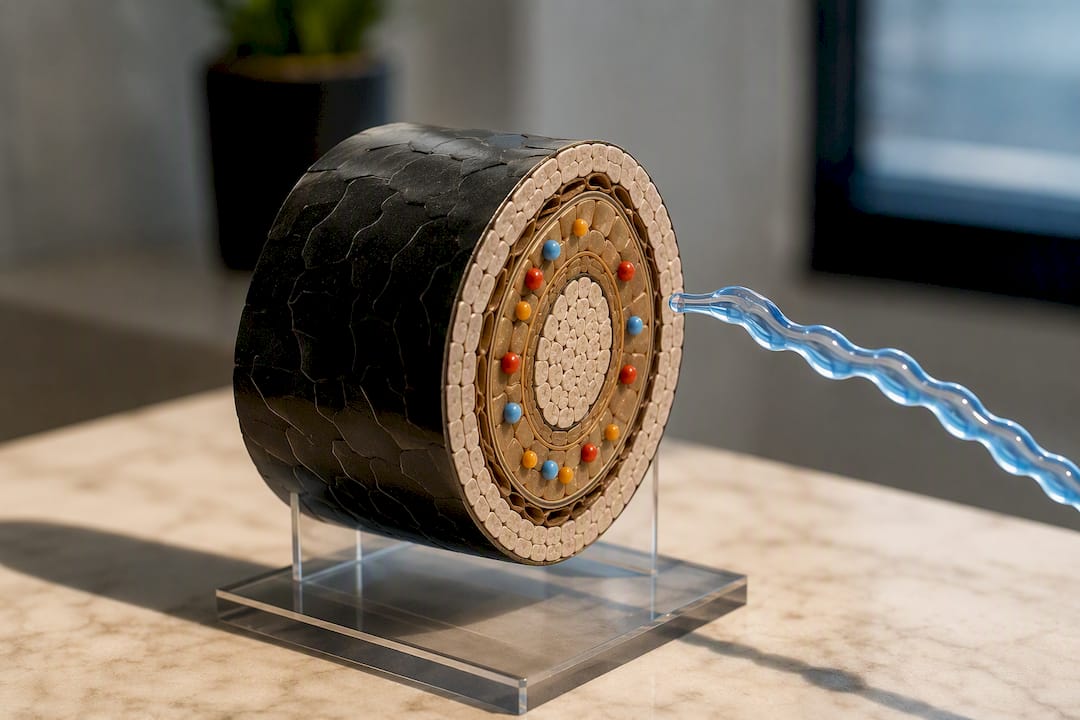
Hair follicle testing operates on a completely different principle. Drugs and metabolites get trapped inside the hair shaft as it grows, so no beverage, drink, or flush reaches that reservoir. Frequency and recency of use matter far more than anything you drink the morning of a test, for both hair and urine.
What Health Risks Come With Detox Drinks and Kits?
Chugging a gallon of fluid in under an hour isn’t just ineffective, it’s a genuine physical risk. Overhydration dilutes your blood sodium levels, and in rare but documented cases, that imbalance has caused seizures. Layer in the diuretics and laxatives many kits include, and you’re compounding fluid loss with electrolyte swings that can leave you dizzy, cramping, or worse.
Three things worth knowing before you buy any detox product:
- Supplement manufacturers face minimal pre-market testing, so documented cases exist of products containing unlisted or harmful ingredients, prompting FDA and FTC enforcement action against specific brands over the years.
- A flagged or adulterated sample rarely gets a quiet retest. Many employers and testing programs treat tampering the same as a positive result, sometimes with harsher consequences.
- Labs that suspect adulteration typically document the specific gravity, pH, and temperature readings that triggered the flag, creating a paper trail that’s hard to dispute after the fact.
Pro Tip: If a product’s packaging promises it will “guarantee” a passing result regardless of what’s in your system, treat that as a red flag rather than a selling point. No drink can outrun a confirmatory GC/MS test.
Which Substances and Test Types Are Hardest to Beat?
Not every drug leaves your system on the same clock, and drinks don’t level that playing field.
- THC is the toughest case. It stores in fat tissue and releases slowly, which is why chronic users can test positive for weeks after their last use in urine, and detect it in hair for months. Drinks have essentially no effect on fat-stored metabolites.
- Cocaine and amphetamines clear the urine faster, often within a few days for occasional use, but heavier or repeated use extends that window, and GC/MS confirmation still catches trace metabolites that dilution missed.
- Opioids vary widely by specific drug and half-life; urine detection times differ based on use patterns, with chronic use extending detection windows.
- Hair follicle tests detect a pattern of use over roughly the past 90 days regardless of substance, and no drink, shampoo rinse, or supplement reaches metabolites already locked into the hair shaft through normal biology.
Individual variation, including metabolism, body fat percentage, hydration habits, and frequency of use, swings these windows more than any product on a shelf.
When Should You Seek Medical Help Instead of a DIY Fix?
If you’re dependent on a substance, not just facing a one-off test, a detox drink is the wrong tool entirely, and in some cases a dangerous distraction from what you actually need.
Watch for these warning signs that call for medical attention rather than a home remedy:
- Severe withdrawal symptoms, including tremors, seizures, or hallucinations
- Fainting, chest pain, or irregular heartbeat
- Confusion or an altered mental state
- Withdrawal from opioids or alcohol, both of which can turn life-threatening without supervision
Supervised medical detox manages these risks with monitoring and, when needed, medication, something no beverage can replicate. SAMHSA and the National Institute on Drug Abuse both maintain free treatment locator tools if dependence, not just an upcoming test, is the real concern.
Who’s Behind This Guide, and Where Can You Learn More?
This guide was written by Michael for Passdrugtest, a site built around one focus: giving people facing drug tests evidence-based information instead of marketing copy. Nothing here replaces advice from a licensed physician or toxicologist.
For readers who want to go deeper on specific test types or product mechanics, these explainers cover the details this article couldn’t:
- Drug testing drink: what works and what doesn’t
- Detox vs. cleansing explained: what actually works
- How to pass a urinalysis drug test
The Bottom Line on Detox Drinks
Detox drinks don’t eliminate drugs from your system, and at best they buy you a temporary, detectable dilution of a urine sample. Your three real priorities: know exactly which test you’re facing, give your body actual time, and talk to a medical provider if dependence is part of the picture. Skip the diuretic cocktails and laxative teas. Never adulterate a sample, since tampering often carries harsher consequences than a straightforward positive.
Why the Conventional Advice on Detox Drinks Misses the Point
The evidence here points to an uncomfortable conclusion for anyone who’s ever stood in a store aisle scanning detox drink labels the night before a test: the entire category is built on a marketing sleight of hand. It borrows medical-sounding language, “cleanse,” “flush,” “detoxify,” and applies it to a process your liver and kidneys already run around the clock, without needing help from a bottle.
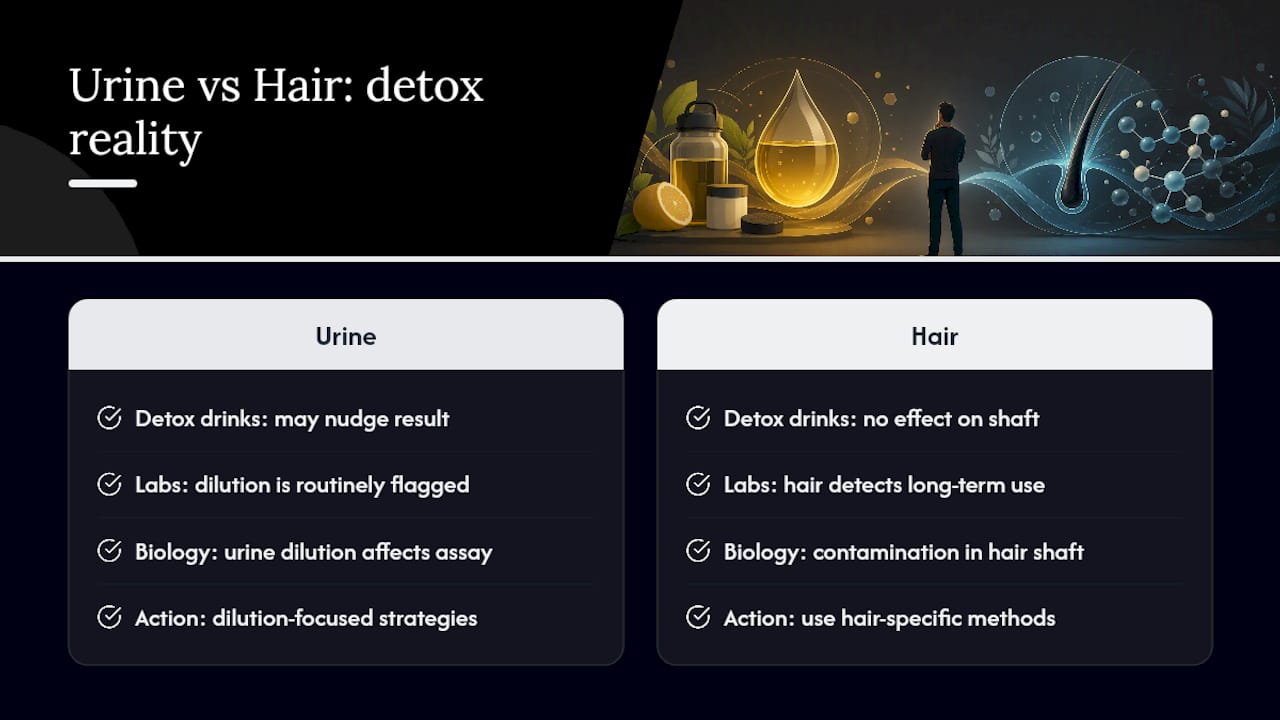
Where conventional advice really fails people is the false equivalence it draws between urine tests and hair follicle tests. Most drink marketing speaks in general terms about “passing a drug test,” as if one strategy covers every scenario. It doesn’t. Dilution might nudge an immunoassay screening result, though labs are trained to catch it. It does nothing whatsoever against a hair test, where the real answer lies in addressing hair shaft contamination directly rather than gambling on a beverage.
If you’re reading this because a hair follicle test is on the calendar, prioritize a method built for that specific biology, not a repurposed urine strategy. That’s the single biggest mistake this category encourages, and it’s an expensive one to make twice.
— Michael
How Passdrugtest Can Help You Prepare the Right Way
Some detox products and vague online advice leave people underprepared for the test they’re actually facing. If a hair follicle test is what’s ahead of you, the Macujo Method, developed by Mike Macujo, is widely regarded as the most thorough approach for treating hair shaft contamination directly rather than relying on dilution tricks that don’t reach hair at all.
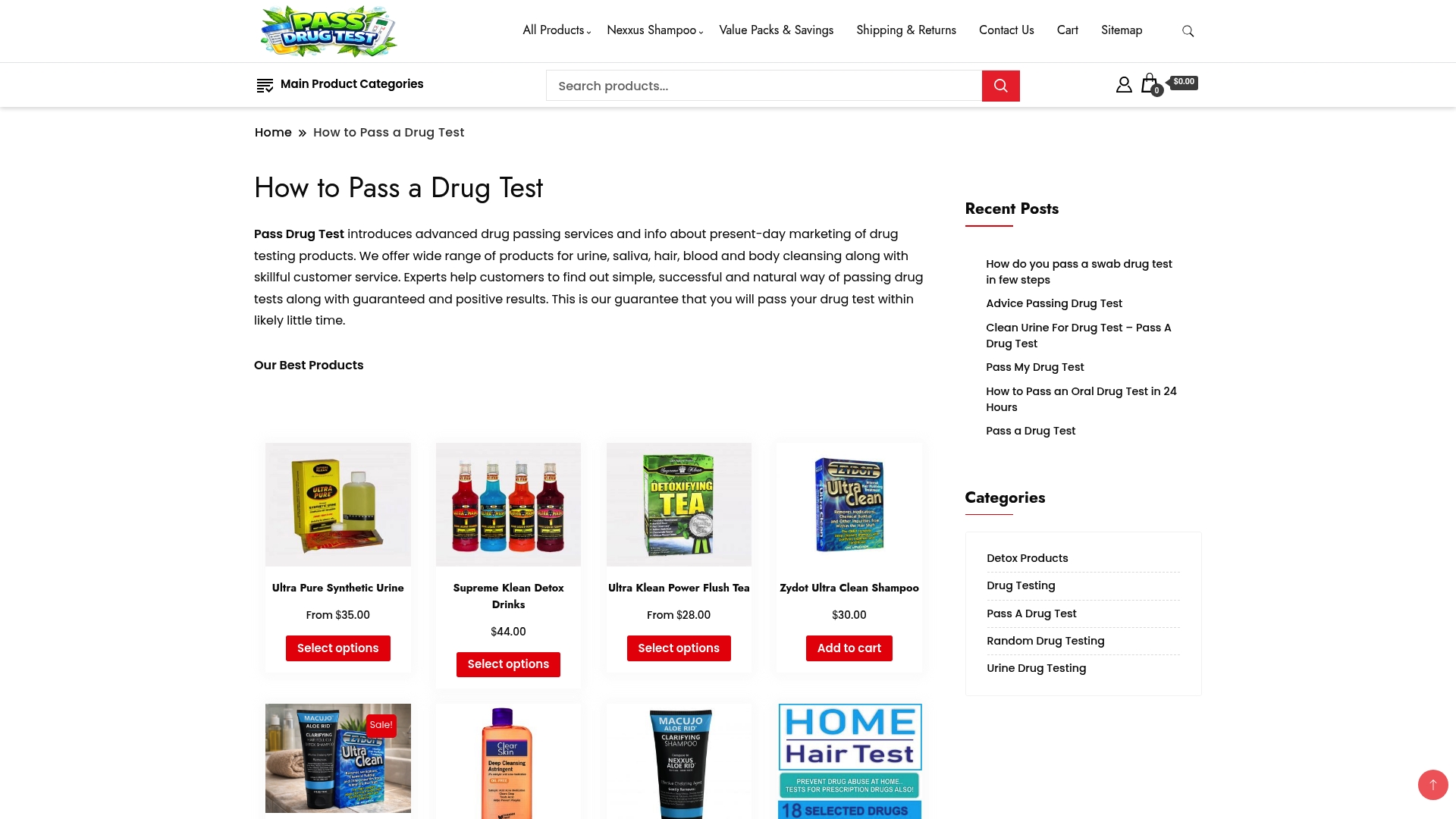
At the center of that method is the Macujo Aloe Rid Shampoo, formulated specifically to strip residue from the hair shaft through repeated, structured washing rather than a one-time rinse. Passdrugtest carries the full lineup, including the Aloe Rid and Zydot Ultra Clean combination for people who want a complete protocol rather than piecing one together from scratch. If you’re facing a hair test on a deadline, browse the full detox product catalog and start your protocol today, since this method works best with several days of lead time before your test date.
This article is general information, not a substitute for advice from a qualified doctor. Consult a qualified healthcare professional about your own circumstances before acting on anything here.
Sources
- “Detoxes” and “Cleanses”: What You Need To Know | NCCIH
- Do Detox Diets and Cleanses Work? | NIH News in Health
- Systematic reviews and evidence on detox methods | NCBI PMC
- Laboratory testing and toxicology reference | NCBI Bookshelf