
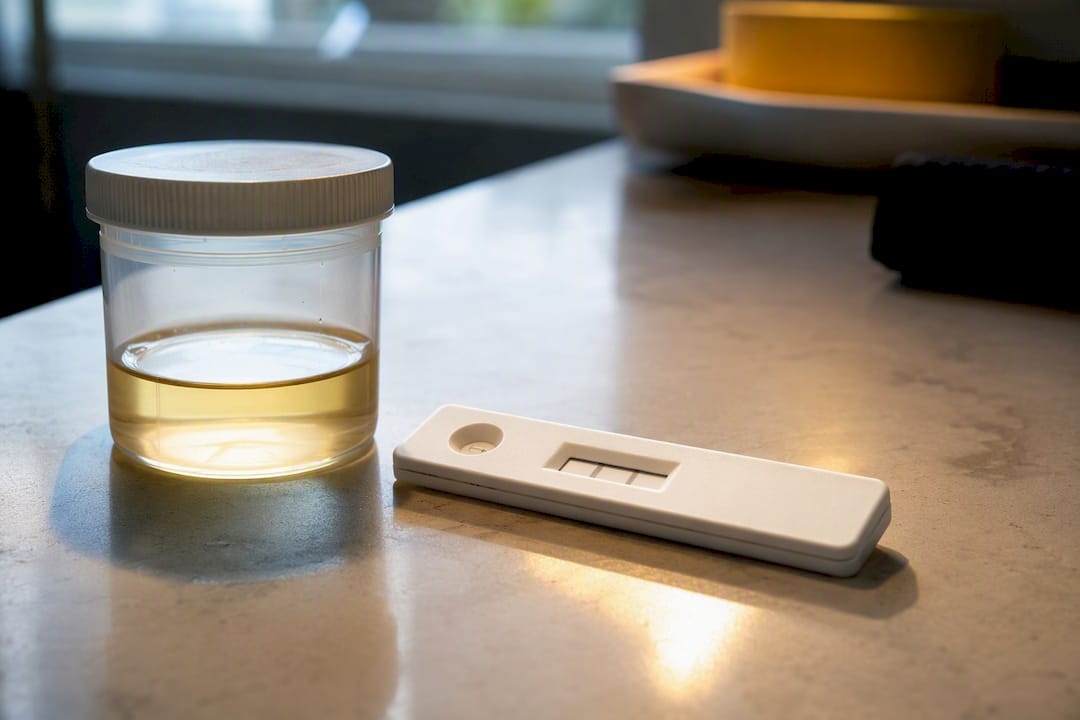

Home drug tests are presumptive screening tools, not proof of anything. The FDA is clear that any positive result needs laboratory confirmation through GC-MS or LC-MS/MS before it means anything legally or clinically. Accuracy swings widely depending on the specimen you use, the quality of the kit, and how carefully you follow the instructions.
TL;DR:
- Home drug tests only detect drug classes at specific cutoffs and cannot confirm individual substances or exact concentrations, requiring laboratory confirmation for legal or medical decisions.
- Urine tests typically detect recent drug use within 1 to 4 days, while hair testing can reveal drug history over 100 days or more, making specimen choice crucial for the detection period needed.
- False positives often result from cross-reactivity with medications or foods like poppy seeds, while false negatives stem from timing errors, dilution, or expired kits.
- To improve test accuracy, always check expiration dates, follow instructions carefully, use validity indicators if available, and confirm positive results with certified laboratory testing.
- Home drug test results should be considered preliminary; for any legal, employment, or health-related outcome, rely on confirmatory lab testing with GC-MS or LC-MS/MS.
Table of Contents
- What Home Drug Test Accuracy Actually Measures
- How Accuracy Differs by Specimen and Test Type
- Why Do Home Drug Tests Give False Positives or False Negatives?
- How to Get the Most Reliable Result From a Home Kit
- What Should You Do After a Positive or Disputed Home Test?
- Balancing the Evidence With Practical Product Options
- A Straight Answer, Not a Sales Pitch
- How Passdrugtest Fits Into Your Testing Plan
- Sources
What Home Drug Test Accuracy Actually Measures
Every home drug test accuracy claim you see on a box refers to one thing: how well the kit’s immunoassay detects a drug class at a specific cutoff concentration. That’s it. It’s not measuring guilt, innocence, or anything close to legal certainty.
Most home kits use lateral-flow immunoassays, the same basic strip technology behind a home pregnancy test. Antibodies in the strip bind to a target drug metabolite, and a chemical reaction produces a visible line. It’s fast, cheap, and reasonably good at flagging a drug class. What it can’t do is confirm which specific compound triggered the reaction, at what exact concentration, or rule out a chemical look-alike.
That’s why confirmatory testing exists. Gas chromatography-mass spectrometry (GC-MS) and liquid chromatography-tandem mass spectrometry (LC-MS/MS) separate and identify molecules with far greater specificity than any strip test. Labs run these as the second step whenever a screening result needs to hold up.
Confirmatory testing becomes necessary when:
- An employer or court will act on the result (termination, custody, probation)
- A clinician needs to rule in or rule out a specific substance for treatment decisions
- The screening result contradicts what the person reports using
- Any legal consequence hinges on the outcome
Research from NCBI’s clinical drug testing review notes that point-of-care tests can perform close to lab-grade screening when trained personnel run them. Hand that same kit to someone testing themselves at the kitchen sink, and the accuracy gap widens because of timing errors, misreading faint lines, or skipping steps in the instructions.
How Accuracy Differs by Specimen and Test Type
Detection window is where most home test confusion starts. People assume a negative urine result at day 10 means they’re clean, when the drug in question may have cleared the urine window days earlier but would still show up in hair.
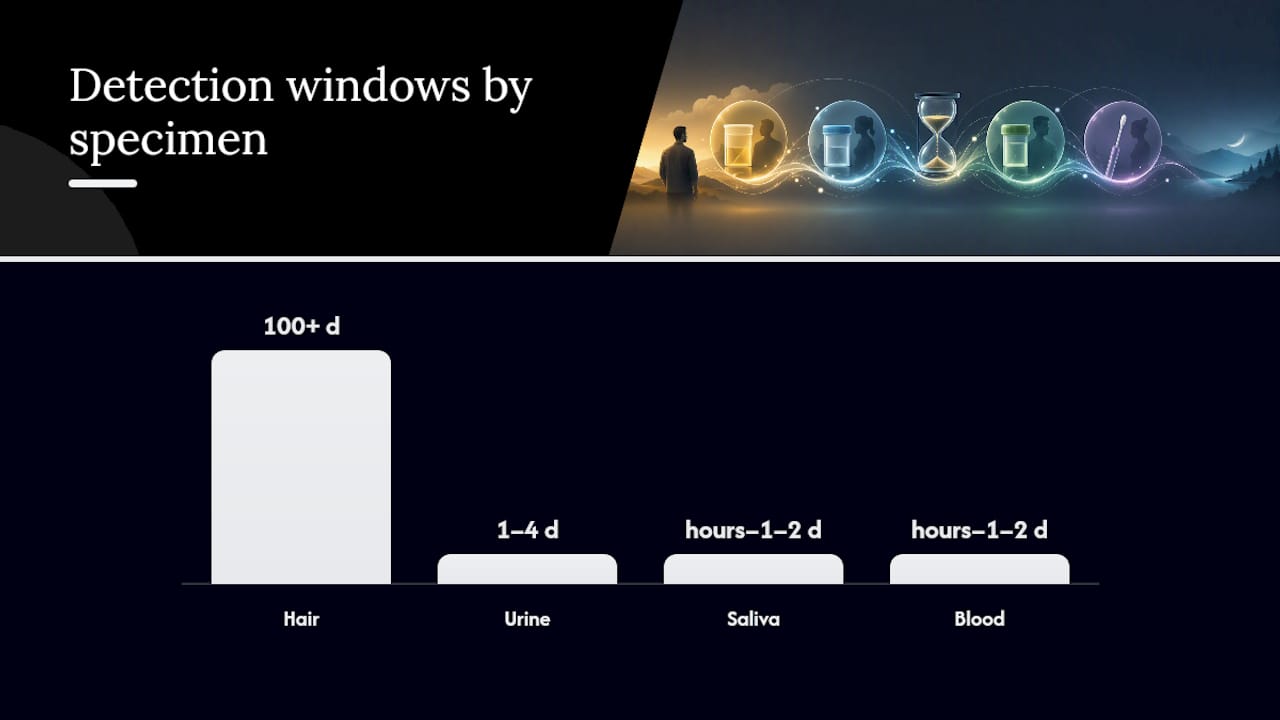
Urine testing catches most drugs for roughly 1 to 4 days after use, according to the Merck Manual, though heavy cannabis use can extend that window considerably longer because THC metabolites store in fat tissue. Hair testing works on a completely different timeline. It can detect drug use going back 100 days or more, since drug metabolites bind into the hair shaft as it grows and stay there. Saliva and blood sit at the opposite extreme, useful only for catching very recent use within hours to a couple of days.
| Specimen | Typical detection window | Best used for |
|---|---|---|
| Urine | 1 to 4 days (longer for THC) | Recent use, standard employment screening |
| Hair | over three months | Long-term use history, pre-employment history checks |
| Saliva | Hours to about 1 to 2 days | Very recent use, roadside or same-day screening |
| Blood | Hours to about 1 to 2 days | Clinical or emergency toxicology |
Pro Tip: If you’re being tested on a schedule you don’t control, hair is the specimen most likely to catch a pattern of use, while urine and saliva only capture a narrow recent snapshot.
No screening panel catches everything. Standard opiate immunoassays are built around morphine and often miss synthetic opioids like fentanyl unless the kit includes a fentanyl-specific panel, a limitation detailed in StatPearls’ review of drug testing. Some benzodiazepines that don’t metabolize into oxazepam can slip past standard benzo screens the same way. If you want a deeper breakdown of how hair incorporation actually works, this explainer on hair shaft drug incorporation covers the mechanics.
Why Do Home Drug Tests Give False Positives or False Negatives?
Most misleading results trace back to one of four causes, and none of them require anything unusual on the test-taker’s part.
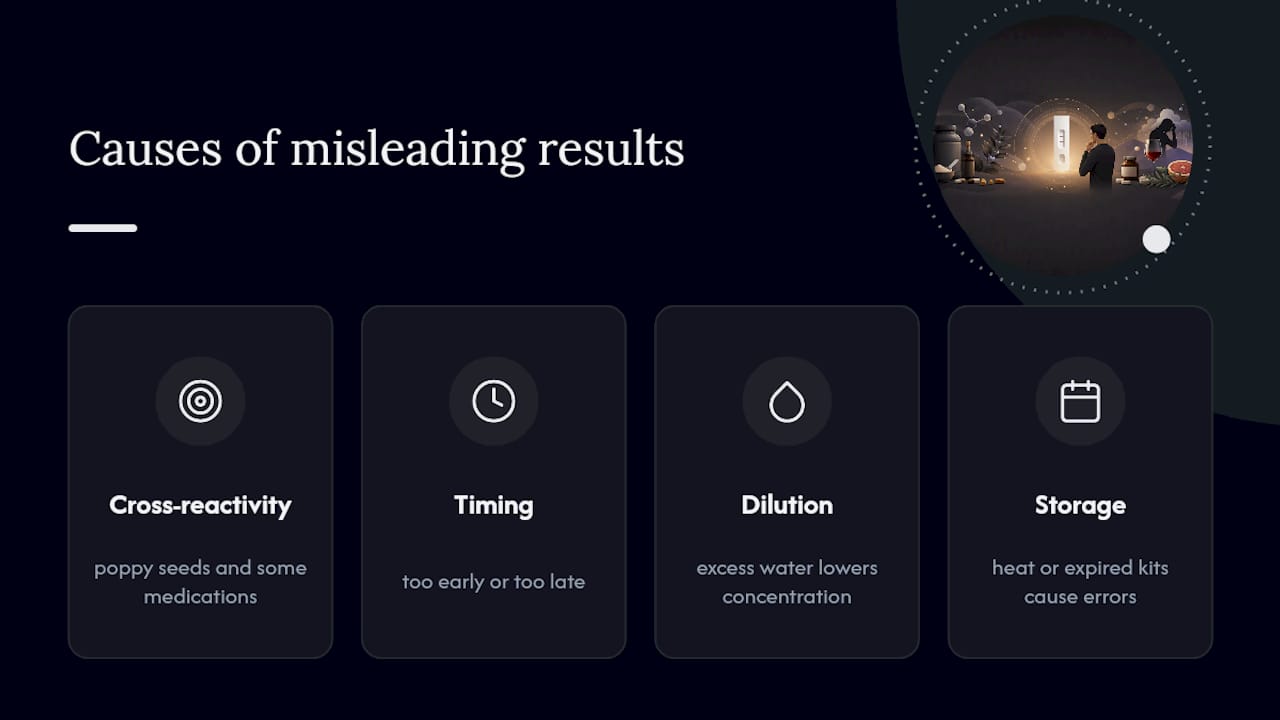
Cross-reactivity is the biggest source of false positives. Immunoassays target a chemical structure, not a specific drug, so anything with a similar shape can trigger a line. Pseudoephedrine, bupropion, and even ibuprofen have all been documented triggering false positives on certain panels, and poppy seeds remain a well-known cause of false opiate flags, according to peer-reviewed comparisons of cannabinoid immunoassay systems.
Timing errors cause false negatives more than any other factor. Testing too early, before metabolites reach detectable levels, or too late, after the window has closed, produces a clean result that doesn’t reflect actual use.
Dilution and adulteration distort urine tests specifically. Drinking excess water lowers concentration below the cutoff, though a genuinely diluted sample often shows unusually low creatinine or specific gravity to a lab running specimen-validity checks.
Storage and expired kits matter more than people expect. A strip kept in a hot car or used past its expiration date can produce unreliable lines in either direction.
A false positive can also stem from certain prescription medications, which is why disclosing current medications before any screening matters.
How to Get the Most Reliable Result From a Home Kit
Getting a trustworthy read starts before you even open the packaging.
- Check the expiration date first. An expired strip is one of the most common, and most avoidable, sources of a bad read.
- Read the full instruction sheet before collecting the sample, not while you’re holding the strip.
- If the kit includes specimen-validity indicators like temperature strips or specific-gravity markers, use them. They flag dilution before you waste a test on an unreliable sample.
- Time the test to the detection window of the drug in question. Testing on day one after a single use of a fast-clearing substance almost guarantees a false negative.
- Never dilute intentionally to “help” the result. It doesn’t improve accuracy. It just produces a sample a lab would flag as invalid anyway.
- If real consequences ride on the outcome, collect a sealed sample and send it to a certified lab for confirmation rather than relying on the strip alone.
For a full breakdown of testing formats and how each one holds up under real conditions, this guide to drug testing methods walks through the differences in detail.
What Should You Do After a Positive or Disputed Home Test?
A single strip turning positive is a starting point, not a verdict. Treat it that way.
- Don’t act on one home result. Arrange GC-MS or LC-MS/MS confirmation before assuming the worst.
- Understand that employers and legal bodies almost never accept a home kit result on its own. They require a certified lab test with documented chain of custody.
- If medication or a supplement could explain the result, write it down and bring that information to whoever ordered the confirmation.
- Contact a clinician or toxicologist if the result affects a medical decision, and keep any remaining sample sealed and refrigerated in case it needs retesting.
Balancing the Evidence With Practical Product Options
Michael edits this site with one rule: sell products that support a testing plan, never products that pretend to replace one. Detox shampoos, drinks, and specimen-prep items can be used as adjuncts for people preparing for a scheduled test, not as a workaround for lab science. When a result carries real stakes, GC-MS or LC-MS/MS confirmation is the standard, full stop.
A Straight Answer, Not a Sales Pitch
I’d rather tell you the uncomfortable truth than sell you false confidence. Home tests are useful for a rough read, but they’re built to flag, not to confirm. If your job, your custody arrangement, or your health depends on the outcome, get it confirmed at a lab. Anyone selling you certainty from a $12 strip isn’t being straight with you.
— MIchael
How Passdrugtest Fits Into Your Testing Plan
Once you understand that a strip test only screens, the real question becomes what to do with the days or weeks before that screen happens. That’s where Passdrugtest’s product lineup comes in, not as a replacement for lab science, but as preparation for it.
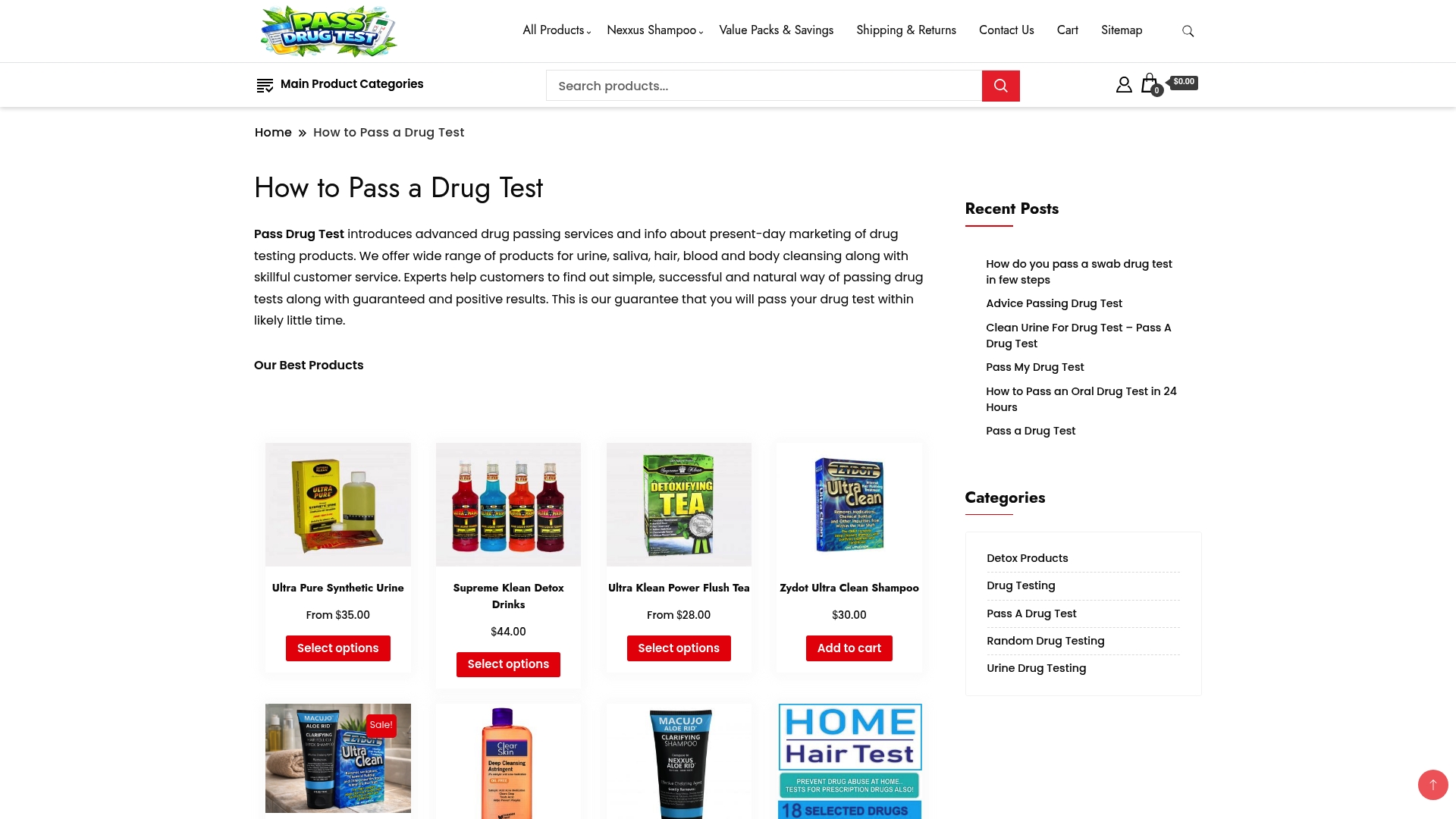
Our detox product categories cover hair, urine, and specimen prep, built around the same detection windows this article just walked through. If you’re facing a hair follicle test specifically, Mike Macujo’s method, using the Macujo Aloe Rid shampoo protocol, remains widely regarded among test-takers as the most thorough approach for stripping metabolites from the hair shaft before a scheduled screening. Browse the hair follicle drug test shampoo page to see how the protocol works, or check products for clean urine if a urine panel is what you’re up against. Whatever your timeline, start today, since detection windows don’t wait for anyone.
Sources
The FDA’s home drug test guidance explains the regulatory line between screening and confirmation. NCBI’s clinical drug testing review covers real-world screening reliability. The Merck Manual’s drug testing overview remains the clearest public reference for detection windows by specimen. Consult these directly before making any policy or clinical decision.
This article is general information, not a substitute for advice from a qualified doctor. Consult a qualified healthcare professional about your own circumstances before acting on anything here.
- Drugs of Abuse Home Use Test | FDA
- Clinical Drug Testing (NCBI Bookshelf)
- Clinical Drug Testing – Merck Manual