
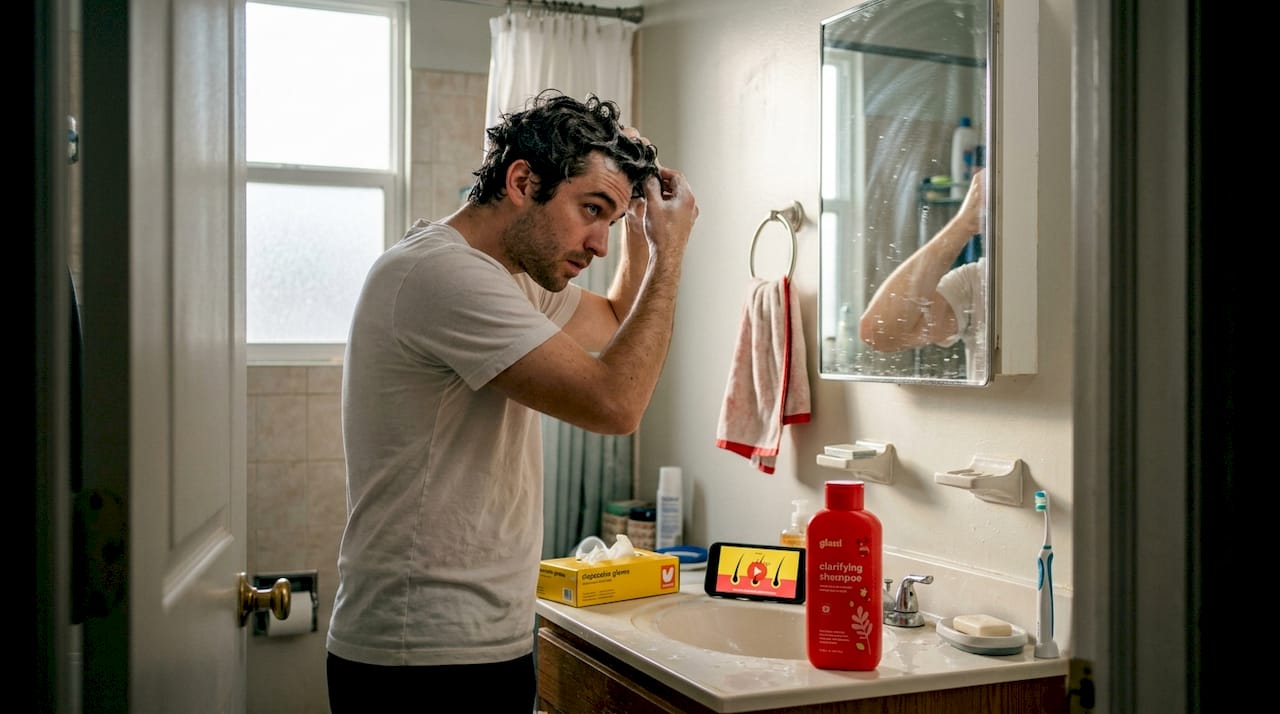

Most people searching for hair detox advice get buried in forum posts that promise guaranteed results, miracle shampoos, and quick fixes. The truth is harder to accept: no method is guaranteed, and the real science behind how THC locks into your hair contradicts most of what you’ll read online. Understanding the actual detoxification timeline, what influences it, and which methods carry real weight versus empty promises will put you in a far better position before your test.
Table of Contents
- What is the hair detoxification period for THC?
- Factors that influence your hair detox period
- Popular hair detox methods: Science vs internet advice
- Hair detox best practices: What to do if you’re preparing for a test
- A realistic perspective on hair detox: What most guides gloss over
- Reliable products and expert resources for hair detoxification
- Frequently asked questions
Key Takeaways
| Point | Details |
|---|---|
| Hair retains THC long-term | THC can stay in head hair for up to 90 days and in body hair for up to 12 months. |
| No foolproof detox | No shampoo or home method is scientifically proven to reliably clear all THC from hair. |
| User and hair type matter | How long THC stays depends on use frequency, hair color, and hair structure. |
| Best defense is abstinence | Stopping THC use for 90+ days before a test is the surest way to pass. |
| Be wary of shortcuts | Bleaching or shaving can backfire and are often detected by labs. |
What is the hair detoxification period for THC?
Armed with the truth about unrealistic shortcuts, let’s define what the hair detox period really means and why it matters so much.
The hair detoxification period is the amount of time that must pass after THC exposure before your hair will test negative on a drug test. It is not simply the time it takes for a shampoo to “wash out” the drug. It is the period your hair carries detectable drug metabolites inside the hair shaft itself.
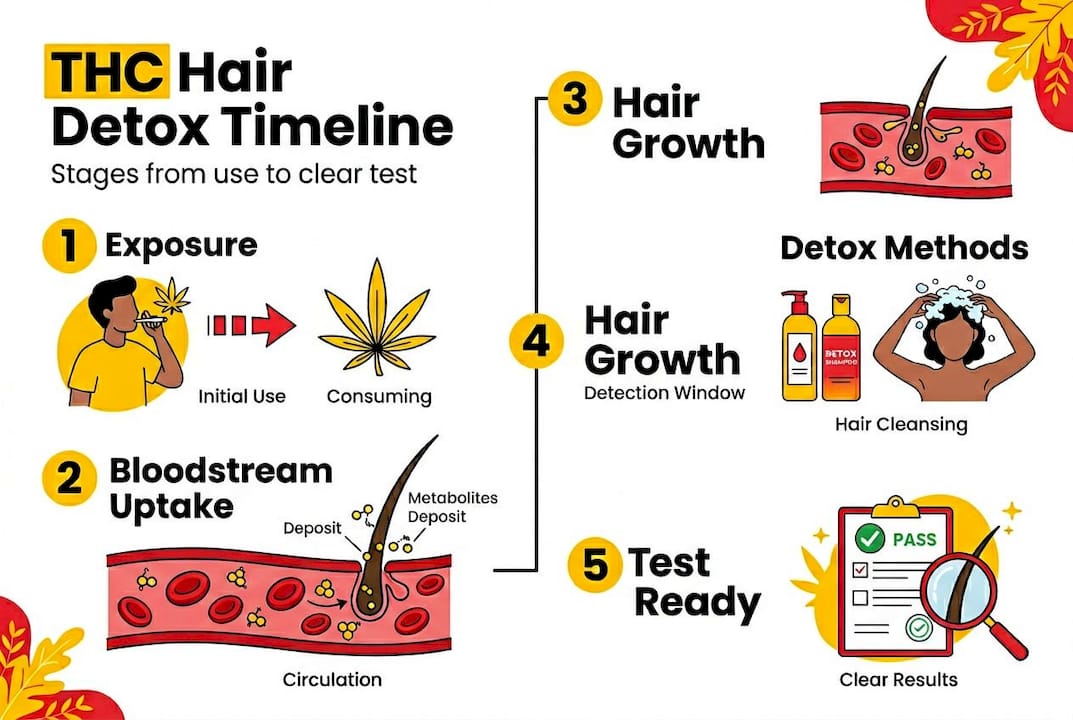
Here is why that distinction is critical. THC metabolites enter the hair through your bloodstream during hair growth, becoming embedded inside the keratin matrix of each strand. Once inside, they are not sitting on the surface. No amount of external washing removes them the way you would rinse out dirt or styling product. The metabolites are physically locked inside the structure of the hair.
The standard testing protocol uses a 1.5-inch segment of scalp hair, which corresponds to approximately 90 days of growth. Labs look specifically for THCCOOH, the primary metabolite of THC. This is why the hair drug test detection window is far longer than a urine test, which typically clears in a matter of days to weeks.
| User Type | Scalp Hair Detection Window | Body Hair Detection Window |
|---|---|---|
| One-time or occasional use | 30 to 60 days | Up to 6 months |
| Regular use (several times per week) | 60 to 90 days | Up to 9 months |
| Chronic or heavy daily use | 90 days or longer | Up to 12 months |
“Detection window varies by usage: one-time and occasional use may show positive for 30 to 60 days, while chronic and heavy users can test positive for 90 days or more. Body hair grows slower and can retain metabolites for up to 12 months.”
Body hair is a major factor that many people overlook. Because body hair grows significantly slower than scalp hair, metabolites remain in those strands for a much longer time. If labs cannot collect scalp hair because it is too short, they will use body hair, which gives them an even bigger detection window. Understanding hair sample analysis is essential to knowing exactly what testers are looking for and where.
Factors that influence your hair detox period
Knowing the basic time frames, let’s see how individual factors play a huge role in your personal detox window.
Two people with the same usage pattern can face completely different situations on test day because of biology, hair characteristics, and timing. Your personal detox timeline is not one-size-fits-all.
Here are the key variables that directly affect how long THC stays detectable in your hair:
- Amount and frequency of use. Light occasional users have far less metabolite saturation than someone who smokes daily. Chronic users build up higher concentrations over time, extending the window considerably.
- Hair color and melanin content. Dark, melanin-rich hair binds more THC, and that binding is stronger. People with naturally dark hair may face a longer detection window compared to those with lighter hair, even with similar usage patterns.
- Hair texture and chemical treatment history. Curly, thick, or previously chemically treated hair has a more complex cuticle structure. This can make metabolites harder to reach and remove, but it also means the structure holds onto compounds more stubbornly.
- Time since last use. Hair that has grown in the last 7 to 10 days will not yet contain detectable metabolites because the strand has not fully emerged from the follicle. This is one edge case where recent use might not show, but it is not a strategy you can rely on.
- Lab sophistication. Modern labs use metabolite ratio analysis to tell the difference between genuine drug use and external contamination. This means you cannot simply expose your hair to THC from secondhand smoke and claim contamination as a defense.
Understanding how THC levels in hair are measured and what thresholds labs use helps you see why even small residual amounts can trigger a positive result.
“Labs can now detect whether THC entered the hair from the inside via the bloodstream or from outside via environmental exposure, using specific metabolite ratios. This makes contamination defenses increasingly difficult to sustain.”
Pro Tip: If you have dark or chemically treated hair, assume you are on the longer end of the detection timeline. Plan your preparation accordingly and start your detox regimen as early as possible.
The hair cuticle effects on drug testing are a major reason why certain detox approaches try to open the cuticle layer. When the cuticle is opened, some methods attempt to flush or dissolve metabolites from within the strand. Whether this works reliably is a different question entirely.
Popular hair detox methods: Science vs internet advice
Since everyone’s detox period varies, many people seek out special methods, so how do these actually stack up against both science and anecdotal reports?
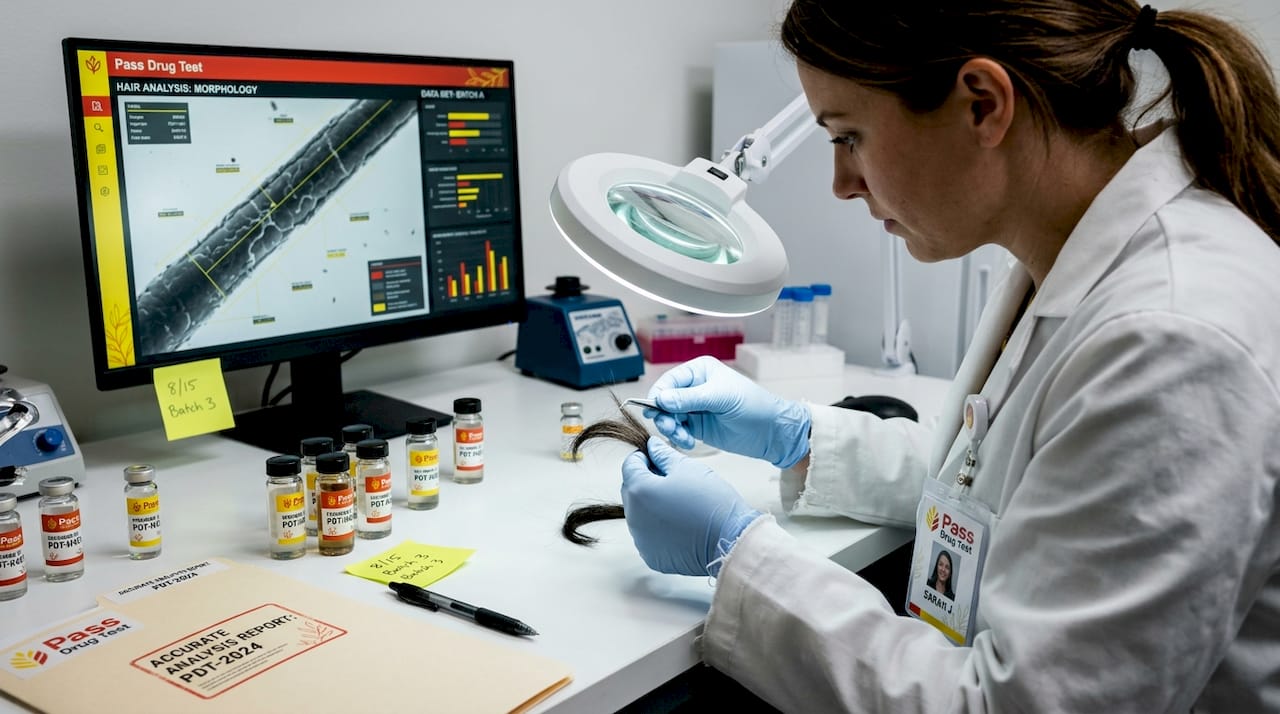
The internet is full of detox success stories and step-by-step guides. Some have real logic behind them. Others are dangerous, ineffective, or both. Here is a straight look at the major methods you will encounter.
The Macujo Method is the most widely discussed multi-step protocol for hair detox. Here is how it works:
- Stop all THC use immediately.
- Rinse your hair with warm water.
- Apply white vinegar to the scalp and hair, working it in thoroughly.
- While vinegar is still in, apply a salicylic acid astringent such as Clean & Clear Pink.
- Leave both products on your hair under a shower cap for 30 to 45 minutes.
- Rinse out and wash with Old Style Aloe Toxin Rid shampoo, which contains propylene glycol and EDTA to help penetrate the hair shaft.
- Follow up with a final wash using Tide liquid laundry detergent.
- Repeat this cycle between 3 and 15 times depending on the level of use and how much time you have before your test.
The logic behind this Macujo method is to open the hair cuticle using acidic compounds, then use a deep-penetrating shampoo to draw out or dilute metabolite concentrations. The Tide step is controversial and potentially damaging, but it remains part of the original protocol many users follow.
The Jerry G Method takes a more aggressive approach, using hair bleach and permanent dye to attempt to break down metabolites inside the shaft. While some users report results, bleaching and dyeing is more damaging to the hair and scalp, and the chemical changes are often detectable by labs, potentially raising red flags. Most experienced users consider the Jerry G Method less reliable and riskier than Macujo.
| Method | Effectiveness (Anecdotal) | Evidence | Risk Level |
|---|---|---|---|
| Macujo Method | Moderate to High | No peer-reviewed validation | Moderate (scalp irritation) |
| Jerry G Method | Low to Moderate | No peer-reviewed validation | High (damage, detectable) |
| Detox Shampoo Alone | Low | 36% reduction in some studies | Low |
| Abstinence 90+ Days | Highest | Supported by biology | None |
The uncomfortable reality is that no peer-reviewed studies validate any of these methods as reliably removing THC from hair. One study noted only about a 36% reduction in THC concentration using a leading detox shampoo alone, which may not be enough to drop below the lab’s detection threshold.
Pro Tip: Never rely on just a single detox shampoo wash. If you are going to use the Macujo Method, commit to multiple full cycles and use an authentic, high-quality Aloe Toxin Rid shampoo. Cutting corners here significantly reduces whatever chance the method gives you.
Comparing detox routines side by side makes it clear that the Macujo approach, while not scientifically proven, has far more going for it than simpler or more aggressive alternatives.
Hair detox best practices: What to do if you’re preparing for a test
Internet methods may sound easy, but real preparation means acting early and prioritizing what actually helps. Here is what to do if you are facing an upcoming test.
If you have 90 days or more: Complete abstinence is your strongest strategy. Stop all THC use immediately. Ninety or more days of abstinence gives your scalp hair time to grow past the testable segment. For chronic users, even 90 days may not be enough if body hair is tested. Read a complete 90-day THC test guide to structure your timeline properly.
If your test is coming up soon, here is a practical action plan:
- Stop all THC use immediately. Every additional day of use extends your window further.
- Verify that you are using authentic Old Style Aloe Toxin Rid shampoo. Counterfeit versions exist and will not produce the same results. The formula contains propylene glycol and EDTA, which are key for penetrating the hair shaft.
- Begin the Macujo Method cycles. If you are a heavy daily user, aim for 10 to 15 full cycles over the days leading up to your test.
- Protect your scalp. Apply Vaseline around your hairline and ears before each session to reduce skin irritation from the acidic products.
- Wear gloves during every treatment to protect your hands.
- Do not shave your head. US labs use GC-MS confirmation and will simply switch to body hair if your scalp hair is unavailable. Body hair has a detection window of up to 12 months, which is far worse for you.
- Avoid additional chemical treatments like bleaching unless you are following a specific protocol. Uncontrolled chemical damage can make your hair appear tampered with.
The scientific consensus is clear: metabolites are extremely difficult to fully remove from hair. No method offers a guarantee. What the Macujo approach does is improve your odds anecdotally by working to reduce concentrations below the detection threshold, not eliminate them entirely.
“No method is guaranteed. The best strategy remains abstinence for 90 or more days. Macujo improves odds anecdotally through cuticle opening and deep cleansing, but risks scalp irritation and hair damage.”
Explore best detox methods for a broader look at how different approaches compare when time is limited.
A realistic perspective on hair detox: What most guides gloss over
We have seen a lot of guides in this space, and most of them share one common flaw: they oversell results while underplaying risk. It is worth being straight with you about what the landscape actually looks like.
Lab technology has advanced faster than detox methods. Modern mass spectrometry can detect metabolite concentrations at incredibly low levels and can identify whether those metabolites came from internal bloodstream exposure or external contamination. The gap between what labs can detect and what any detox product can reliably remove is significant. Pro-detox sites often claim high success rates while scientific and skeptical sources emphasize a clear lack of controlled evidence, and both sides have something to gain from their position.
The Macujo Method is, in our view, the most defensible option if you have limited time and need to pursue a detox regimen. It is more controlled than the Jerry G Method, less damaging when done carefully, and has the most extensive anecdotal support in the user community. But calling it a guaranteed solution would be dishonest.
What most guides also skip over is the emotional side. Many people facing a hair follicle test are dealing with real stress, a job offer on the line, or a career they have built. Chasing shortcuts in that headspace can lead to poor decisions, wasted money on counterfeit products, or worse, overuse of harsh chemicals that damage the hair and signal tampering to the lab. The reliable hair detox strategies that actually help are the ones you plan for in advance, not the ones you panic-buy the night before.
If there is one piece of advice that stands above all the methods and products, it is this: time and abstinence are the only factors that work with certainty. Every method is a risk reduction measure, not an erasure of risk. Knowing that going in is what separates informed preparation from wishful thinking.
Reliable products and expert resources for hair detoxification
If you have decided to pursue a hair detox regimen and want to give yourself the best possible chance, using the right products and following proven protocols is non-negotiable.

Our site carries a full range of drug test detox products chosen specifically for hair follicle test preparation. The flagship product, Old Style Aloe Toxin Rid shampoo, is the cornerstone of the Macujo Method and is one of the most trusted tools in the field. You can browse our hair follicle drug test shampoo options to find the right fit for your situation. For step-by-step guidance on executing the method correctly, the full Macujo method guide walks you through every cycle in detail. Give yourself the best possible starting point by using authentic products and following the process correctly.
Frequently asked questions
How long does THC stay in your hair for a drug test?
THC can be detected in scalp hair for 30 to 90 or more days depending on how frequently you use, and body hair can retain detectable levels for up to 12 months.
Will detox shampoos guarantee a negative hair drug test?
No detox shampoo or home method is scientifically proven to fully remove THC and guarantee a negative result, though some show partial reductions in metabolite concentration.
How do hair type and color affect drug test results?
Dark, melanin-rich hair binds more THC than lighter hair, and curly or chemically treated hair is harder to detox, potentially extending your detection window.
Is shaving or bleaching effective for passing a hair drug test?
Shaving your head causes labs to collect body hair instead, which has an even longer window, and bleaching is often detectable and considered a red flag by testing facilities.
What’s the most reliable way to pass a hair test?
Complete abstinence for 90 or more days is the only dependable strategy for chronic users, as it allows new, uncontaminated hair to replace the testable segment.