

You’ve probably heard that a good detox shampoo or a few days of abstinence is enough to beat a hair follicle drug test. That belief is dangerously wrong, and it catches people off guard every day. Hair sample analysis for THC is one of the most sensitive, technically advanced drug detection methods in use today. Before you walk into that test confident you’ve covered your bases, you need to understand exactly how this process works, what labs are actually looking for, and why the 90-day detection window is no exaggeration.
Table of Contents
- What is hair sample analysis for drug testing?
- How THC and other drugs are detected in hair
- Testing methods and detection sensitivity
- Cleansing and detox myths: What really works?
- The uncomfortable truth about passing hair drug tests
- Next steps: Products and resources for your test
- Frequently asked questions
Key Takeaways
| Point | Details |
|---|---|
| Hair testing detects up to 90 days | Hair sample analysis reveals THC use from as long as three months ago, with a short lag for new growth. |
| Bloodstream incorporation is key | THC metabolites enter hair from the bloodstream, making it hard to cleanse hair of evidence internally. |
| Lab protocols reduce false positives | Expert labs use washes and confirmations to ensure results reflect actual drug use, not just environmental contamination. |
| Detox shampoos have limited effect | These products only remove surface residues, not what is embedded inside the hair, so results are often unreliable. |
| Abstinence is the only proven method | Avoiding THC for 90 days is the only sure way to pass a hair drug test, as internal hair growth cannot be cleansed. |
What is hair sample analysis for drug testing?
Hair sample analysis is a method laboratories use to detect drug metabolites, specifically the chemical byproducts your body produces after processing substances like THC, stored inside your hair shaft. Unlike urine or blood tests, which capture a short snapshot of recent use, hair testing provides a much longer historical picture.
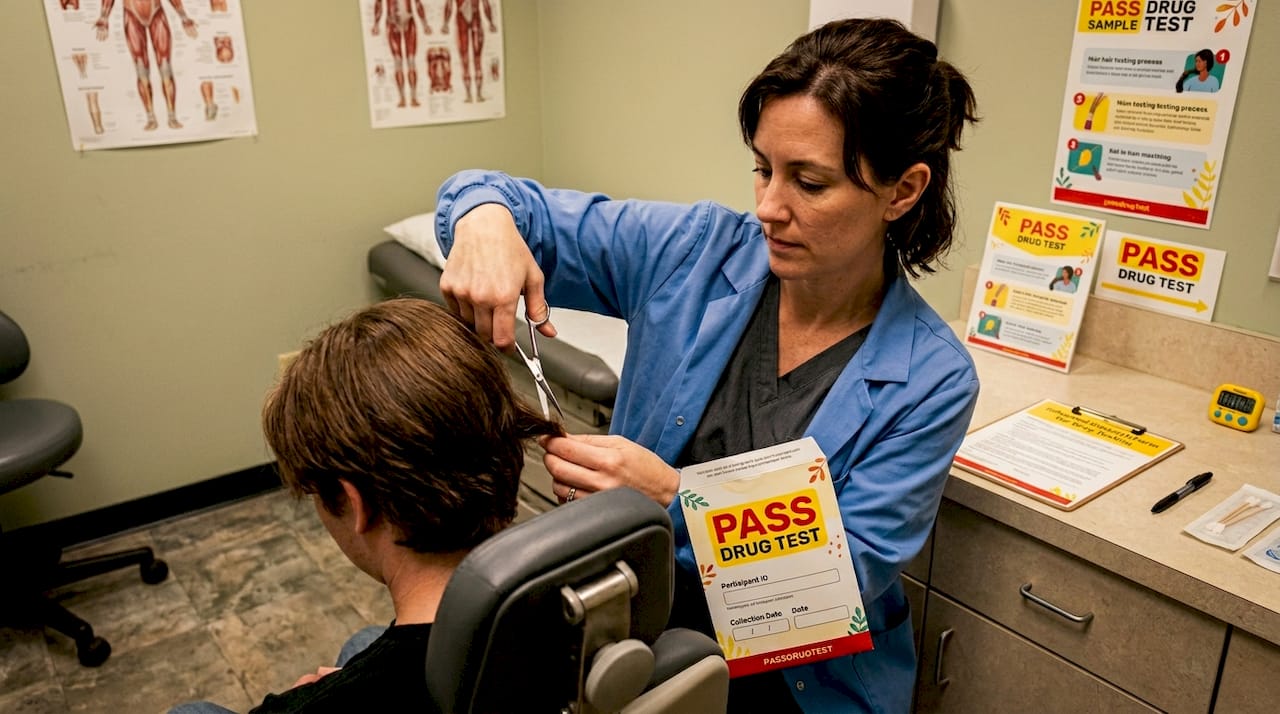
The collection process is straightforward but precise. A technician cuts a sample of hair as close to the scalp as possible, typically targeting the 1.5-inch segment nearest to the root. According to how hair follicle tests are done, labs collect 90 to 120 strands of hair weighing approximately 100 mg. That specific length is chosen because hair grows at an average rate of 0.5 inches per month, meaning 1.5 inches represents roughly 90 days of growth history.
Understanding the hair drug test detection window is essential. Labs focus on that proximal segment, the part of the hair closest to your scalp, because it reflects the most recent three months of your drug use. Hair further from the scalp reflects older history, but standard testing panels do not typically analyze it.
There is also an important gap to know about. THC does not appear in new hair growth instantly. New hair growth lags approximately 7 to 10 days before recent drug use shows up as the hair physically grows out of the scalp. That means if you used THC yesterday, today’s hair test may not capture it, but the test scheduled ten days from now almost certainly will.
Here are the core facts you need to keep in mind:
- Standard sample length: 1.5 inches, cut from the scalp outward
- Amount collected: approximately 100 mg, or 90 to 120 strands
- Detection window: up to 90 days of drug history
- Growth rate basis: 0.5 inches of hair per month
- Lag period: 7 to 10 days before recent THC use appears in hair
- Fallback collection site: body hair, if head hair is unavailable (body hair has a longer, less defined window)
| Factor | Detail |
|---|---|
| Sample length | 1.5 inches |
| Sample weight | ~100 mg |
| Strands collected | 90 to 120 |
| Detection window | Up to 90 days |
| Lag before detection | 7 to 10 days |
| Hair growth rate | 0.5 inches per month |
Knowing these details matters because they directly impact your strategy. Check the THC levels in hair tests page for a deeper look at how concentration thresholds are applied to results.
How THC and other drugs are detected in hair
With the process defined, it’s crucial to understand how THC is actually detected inside your hair. The biology here is what makes hair testing so difficult to defeat with surface-level treatments.
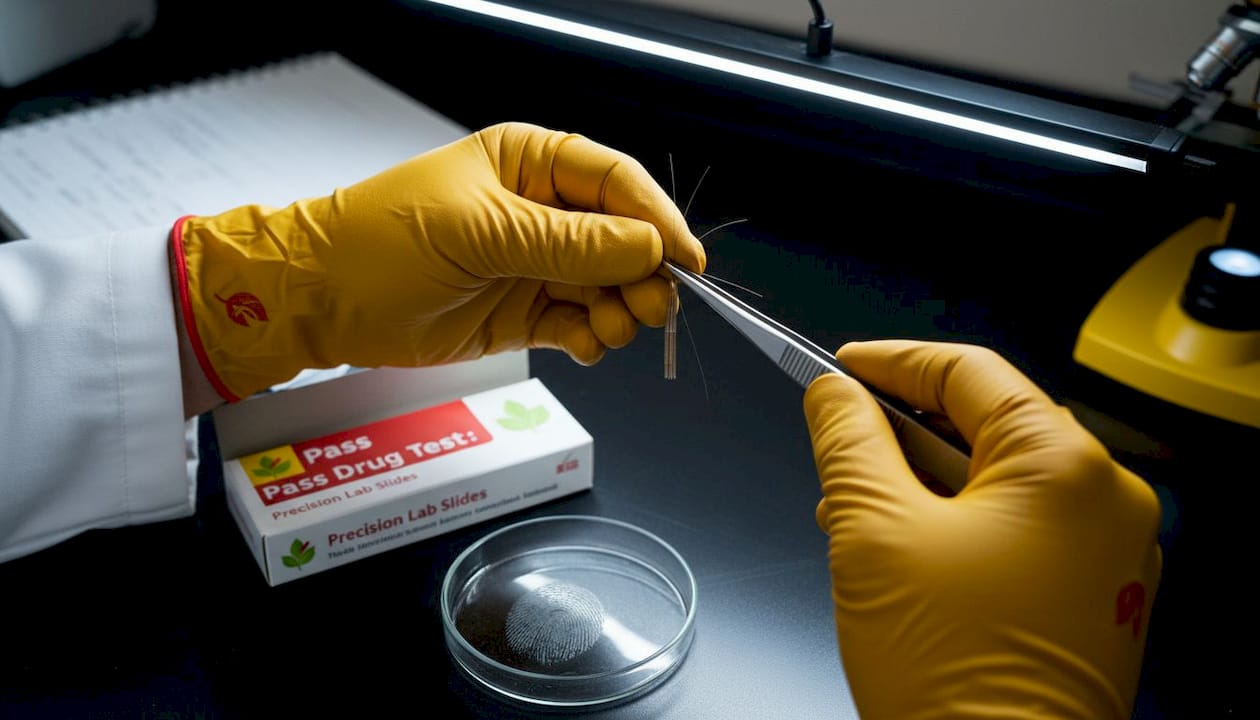
When you consume THC, your body metabolizes it and the resulting compounds, primarily THC-COOH, enter your bloodstream. As your hair grows from the follicle, it draws from the blood supply at the root. Drug metabolites present in the blood at that time become incorporated into the keratin matrix, the structural protein that makes up your hair shaft. Once embedded there, those metabolites do not simply wash out. They are locked inside the physical structure of the hair itself.
As lab research confirms, external contamination via sweat or sebum is possible but labs account for it through decontamination wash protocols before testing begins. This is a critical point that many people misunderstand. You might think that residue sitting on the outside of your hair could cause a false positive, but labs specifically neutralize that possibility.
“U.S. laboratories follow strict decontamination protocols, including multiple wash steps before analysis, specifically designed to eliminate external contamination and isolate only drug metabolites that have been incorporated internally through the bloodstream.”
This is why using a hair detox job applicant guide is so important. Surface-level approaches simply do not reach what is inside the hair shaft. The drug metabolites are embedded at the molecular level within the keratin protein structure.
Pro Tip: If you are preparing for a test and have used THC in the past 90 days, understand that any external cleansing addresses only what is on the outside of the hair. The metabolites inside the shaft are what labs are specifically targeting after their wash steps remove surface material.
The key distinction is internal deposition versus external contamination:
- Internal deposition: THC-COOH enters via blood supply during hair growth, trapped inside the keratin matrix, confirmed by labs as true use
- External contamination: Residue from smoke, sweat, or touch sits on the hair surface, removed by lab decontamination washes before testing
Understanding this biology also clarifies why federal hair test guidelines are so strict and why this method has become a preferred tool for employers and agencies. For more on marijuana hair drug tests, including specific detection thresholds for cannabis, the linked resource breaks it down clearly.
Testing methods and detection sensitivity
Knowing how THC is trapped in hair, let’s see how labs extract and analyze it with high precision. The testing process is not a single step. It is a layered protocol designed to eliminate errors and confirm results with near certainty.
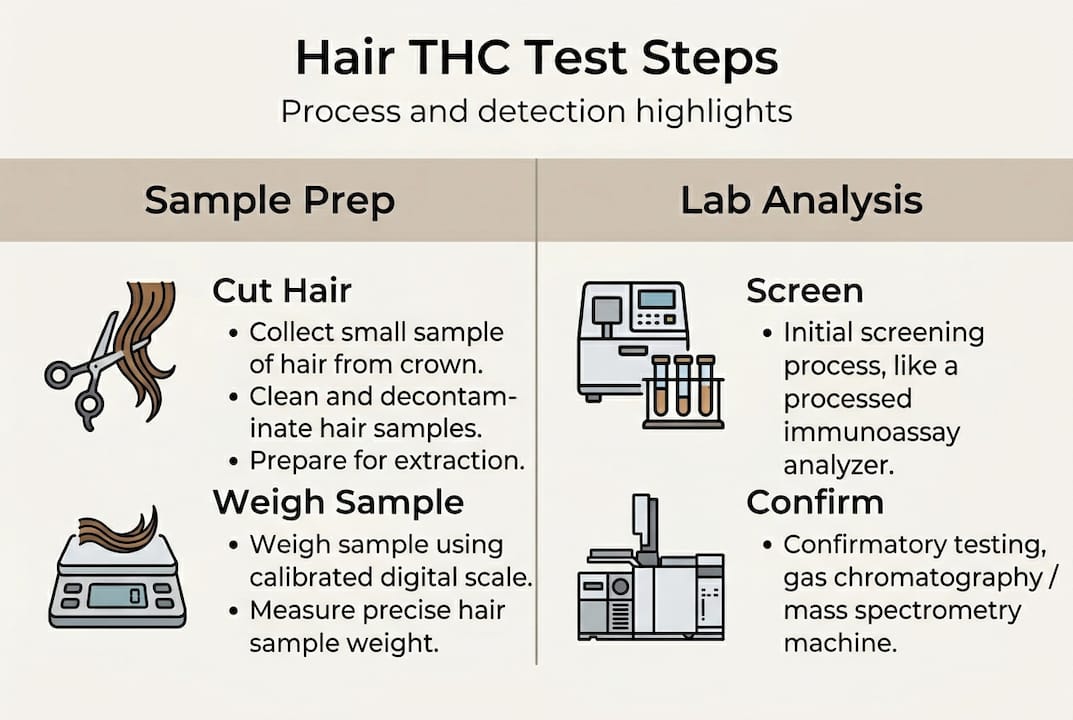
Labs begin with an immunoassay screening test, most commonly an ELISA (enzyme-linked immunosorbent assay). This initial screen is fast and capable of processing many samples simultaneously. If a sample tests positive at the screening stage, it moves to confirmation testing using gas chromatography mass spectrometry (GC/MS) or liquid chromatography tandem mass spectrometry (LC-MS/MS). As lab protocols document, confirmation testing specifically detects THC-COOH, the primary metabolite of THC.
The sensitivity levels here are what truly set hair testing apart. Screening cutoffs for THC sit at approximately 1.0 pg/mg (picograms per milligram of hair). Confirmation testing is even more precise, with a cutoff of just 0.1 pg/mg. To put that in perspective, one picogram is one trillionth of a gram. This is not a test you can marginally pass by reducing use for a week or two.
The full testing sequence works like this:
- Hair sample collected and labeled at the collection site
- Sample shipped to a certified laboratory under chain of custody
- Laboratory performs decontamination washes to remove external residue
- Initial screening using immunoassay (ELISA) at 1.0 pg/mg threshold
- Samples screening positive proceed to GC/MS or LC-MS/MS confirmation
- Confirmation testing identifies THC-COOH specifically at 0.1 pg/mg
- Medical Review Officer (MRO) reviews confirmed positive results before reporting
| Testing stage | Method | THC cutoff |
|---|---|---|
| Screening | ELISA immunoassay | 1.0 pg/mg |
| Confirmation | GC/MS or LC-MS/MS | 0.1 pg/mg |
The confirmation threshold of 0.1 pg/mg makes this one of the most sensitive drug tests available. The hair drug test FAQs page covers specific scenarios around sensitivity and what can realistically affect your results.
Cleansing and detox myths: What really works?
Now that you know how sensitive and rigorous hair sample analysis is, let’s tackle the widespread cleansing myths head-on. There is a lot of misinformation circulating in forums and YouTube comment sections, and acting on bad advice when your job or clearance is on the line is a serious risk.
The most persistent myth is that any shampoo or home remedy can fully eliminate THC metabolites from inside the hair shaft. This is not accurate. Cleansing methods including detox shampoos may reduce surface and external residues but are not reliably effective at removing metabolites embedded internally. Labs are also trained to look for signs of chemical damage or tampering. Bleached, heavily treated, or structurally damaged hair samples can trigger additional scrutiny or inconclusive results, which labs may handle by requesting a new sample.
Here is a breakdown of common myths versus reality:
- Myth: Shaving your head avoids the test. Reality: Technicians will collect body hair, which has an even less defined, potentially longer detection window.
- Myth: Baking soda or vinegar rinses remove metabolites. Reality: These address only the outer surface of the hair, not the keratin-embedded compounds.
- Myth: A few days of abstinence clears hair results. Reality: Hair retains metabolites for the full 90-day window regardless of abstinence.
- Myth: Bleaching hair removes all traces. Reality: Bleaching can degrade some metabolites but not reliably enough to guarantee a negative result, and labs may flag the damage.
- Myth: Drinking lots of water flushes toxins from hair. Reality: Hydration affects urine tests, not hair analysis. There is no mechanism for this to work on embedded hair metabolites.
The only method with a guaranteed result is complete abstinence for 90 or more days, long enough for the hair containing the metabolites to grow out past the 1.5-inch mark tested. That is the honest, science-backed answer.
Pro Tip: If you are considering top detox shampoos or a cleansing routine, research the ingredients and claims carefully. Look for products that are transparent about what they do and do not do. The detox shampoo effectiveness page provides a realistic look at what these products can achieve. Being informed protects you from wasting money and time on promises that science does not support. Understanding drug test shampoo pitfalls before you invest in any product is smart planning.
The uncomfortable truth about passing hair drug tests
After breaking down the facts and myths, here is an honest look at what experience and lab evidence actually reveals. Most of what you read online about passing a hair drug test is incomplete at best and dangerously misleading at worst.
The Macujo method, detox shampoos, and home kit combinations are popular because people want options. We understand that completely. But what many guides fail to tell you is that even the most rigorous cleansing routines cannot make a guaranteed promise when labs are operating at 0.1 pg/mg confirmation sensitivity. That is an extraordinarily low threshold. A routine that “worked for someone online” may have succeeded because that person had lower THC concentrations to begin with, tested in a less sensitive facility, or had genuinely cleared the 90-day window without realizing it.
Labs are also getting better at identifying chemically treated samples. When a hair sample shows unusual structural damage, fragmented proteins, or altered pH signatures, it raises flags. The result may not simply be a false negative. It may trigger a retest or closer examination.
What actually gives you the best defense? Understanding your timeline is the first step. Use the detection confidence guide to calculate exactly where you stand based on your last use. If you have more than 90 days before your test and have stopped using THC, your risk drops dramatically as that hair grows out past the tested segment. Pair that with a realistic applicant detox strategy that accounts for your actual use history, hair growth rate, and test timeline.
The uncomfortable truth is that timing and abstinence are the foundation of any real strategy. Cleansing products can be a supporting step, but treating them as a guaranteed solution ignores the biology and lab science covered throughout this article. Knowing what you are up against is not discouraging. It is empowering, because it helps you make decisions that are actually grounded in reality.
Next steps: Products and resources for your test
With the facts and perspective in mind, here is your next step if you want help preparing for your upcoming test.
We know that facing a hair follicle drug test is stressful. At passdrugtest.net, we offer drug test detox products designed specifically for marijuana users who need to prepare with the best tools available. Our flagship product, the Macujo Aloe Rid shampoo, is best in class for cleansing the hair shaft as thoroughly as any shampoo on the market. Pair it with our full range of specialized detox shampoos for a complete preparation routine. We also offer detailed guidance on how to pass a hair drug test, so you understand exactly how to use every product for maximum benefit. Come prepared, not guessing.
Frequently asked questions
How far back does a hair follicle test go for THC?
A standard test examines 1.5 inches of hair, covering up to 90 days of THC use history based on average hair growth of 0.5 inches per month.
Can detox shampoos help you pass a hair drug test?
Detox shampoos can remove some external residues, but they are unreliable for metabolites embedded inside the hair shaft where labs are specifically testing after their decontamination washes.
What is the minimum THC amount detected in hair tests?
Hair follicle testing can detect as little as 1.0 pg/mg in screening and 0.1 pg/mg at confirmation, making it significantly more sensitive than urine testing.
How soon after using THC will it show up in hair?
It takes approximately 7 to 10 days for THC from recent use to appear in hair as new growth emerges from the scalp.
Do labs account for external contamination in hair samples?
Yes. Labs use strict wash protocols to remove external residues before testing, ensuring results reflect internal metabolite deposition from bloodstream ingestion rather than environmental exposure.