
A heroin hair test looks back about 90 days, and it looks inside the hair shaft, not just on its surface. That is why no quick fix exists, and why the most useful thing you can do is understand exactly what the lab measures, how time changes the result, and what to do if the result is wrong. This guide walks through each of those points in plain language, so you can plan with facts instead of rumors.
TL;DR
- Hair labs screen first, then confirm with mass spectrometry. Confirmation is what decides a result, so a result is rarely a guess.
- A standard 1.5-inch sample represents roughly 90 days, and use in the last 7 to 10 days usually does not show yet.
- Published research on detox shampoos and heroin is limited and shows only modest changes in one tested product, so plan around time, not shortcuts.
- Hair color, bleaching and dyeing can affect how a result is read.
- If you use opioids and feel stuck, SAMHSA’s free helpline is confidential and open 24/7.
Table of Contents
- How a lab finds heroin in your hair
- The 90-day window, in practice
- What the research says about shampoos and hair treatments
- What can change how a hair result is read
- If you think a result is wrong
- Perspective
- Getting confidential support
- Where to go next for hair test preparation
- Preparing for a hair test with Passdrugtest
- FAQ
- Sources
How a lab finds heroin in your hair
Hair testing is a two-step process. The lab runs an initial screen using an immunoassay (ELISA), and anything that screens positive goes to a confirmation step using gas or liquid chromatography combined with mass spectrometry. The confirmation method identifies specific molecules, which is why it carries the weight in a final result.
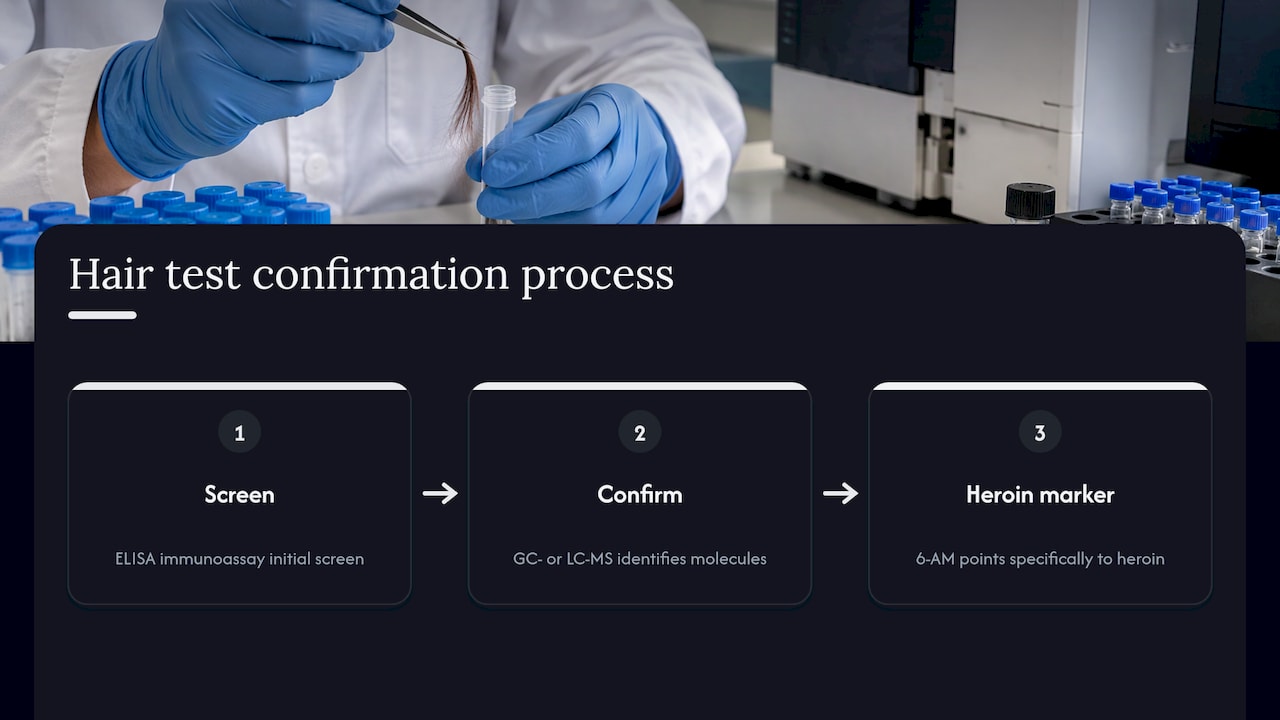
For heroin, the molecule that matters most is 6-acetylmorphine (6-AM or 6-MAM). In its 1995 federal workplace testing proposal, HHS explained that no other medication or substance is known to produce 6-AM, so finding it points specifically to heroin. That proposal concerned urine, but the same chemistry is why labs look for it in hair too.
What the collection looks like
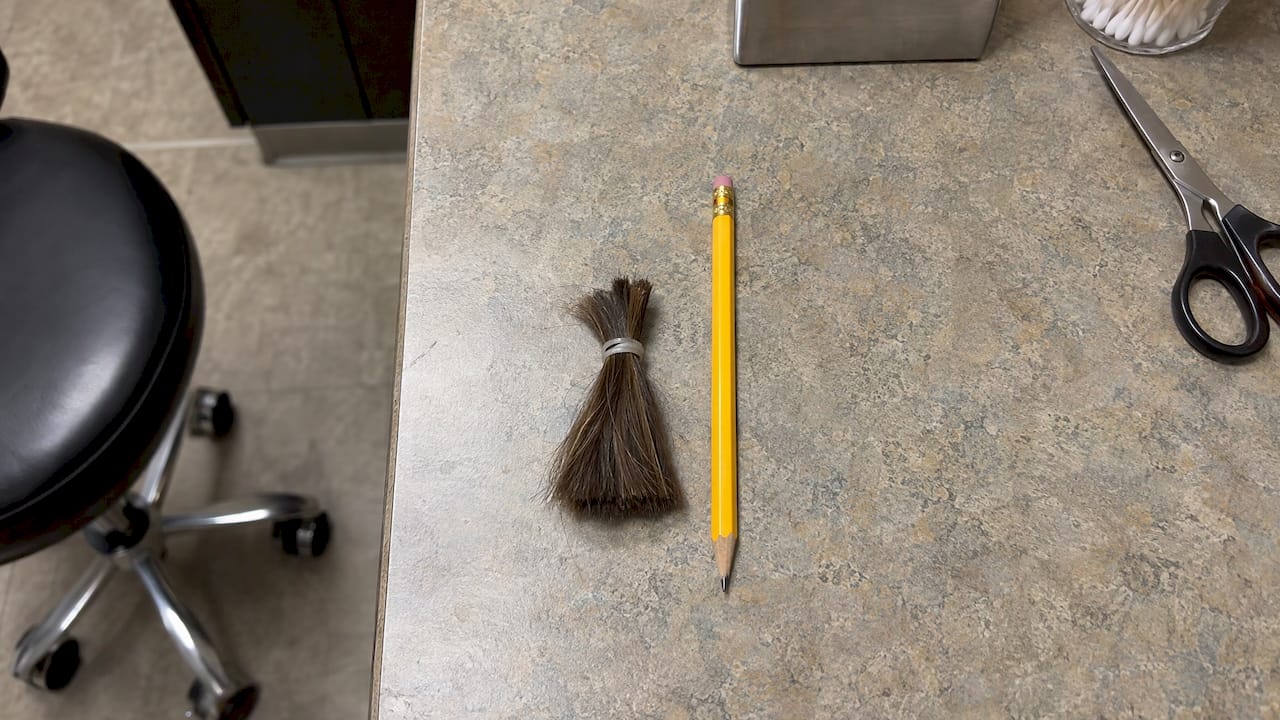
According to a Labcorp testing summary, the collector cuts about 100 strands close to the scalp. Together they are roughly a quarter of the diameter of a pencil. It is a small sample, but it is enough for both the screen and the confirmation.
The cutoff numbers you may see
You will see different numbers online because different programs set different thresholds. One industry source puts the usual confirmation cutoff for opiates, including 6-MAM, at 200 pg/mg in hair. A separate figure, 10 ng/mL for 6-AM, comes from the U.S. Navy Drug Lab and applies to its own panels, not to every hair test. Your employer’s or agency’s policy decides which cutoff applies to you. For a deeper explanation of how that threshold works, see our page on the 200 pg/mg opiates cutoff.
The 90-day window, in practice
The timeline is the single most important idea in hair testing. Labcorp states that a 1.5-inch sample detects drug use up to 90 days prior to testing, because head hair grows an average of about half an inch per month. Each segment of hair is a small calendar of the weeks during which it grew.
Two details are easy to miss:
- Recent use does not show right away. It takes about 5 to 7 days for the hair containing a drug to grow above the scalp, which is why a hair test generally cannot detect use in the previous 7 to 10 days.
- The window is a range, not a promise. The same Labcorp summary lists the approximate hair detection window as 1 week to 3 months. How much of that range applies depends on the amount of hair collected and how long it is.
A simple worked example: if a lab cuts 1.5 inches of head hair, that sample reaches back about three months. If your hair is shorter, the sample covers less time. If you have no head hair, labs can use body hair, which can represent a different period.
How long should you stay clean?
No official source gives a single number of days after which a heroin hair result is guaranteed to be negative, and we will not invent one. What the science does support is the logic of the window. The hair grown after you stop is clean hair, and the older hair is still on your head until it is cut or grows out. In practice, the longer the gap between your last use and the test, the fewer of the sampled segments contain any drug. If your test is scheduled, the safest move is to ask the program what length of hair and which cutoff they use, and plan your timeline around that.
What the research says about shampoos and hair treatments
It is natural to search for a detox when a date is on the calendar. The honest picture is that the published work on heroin specifically is thin, and it is worth knowing what it did and did not test.
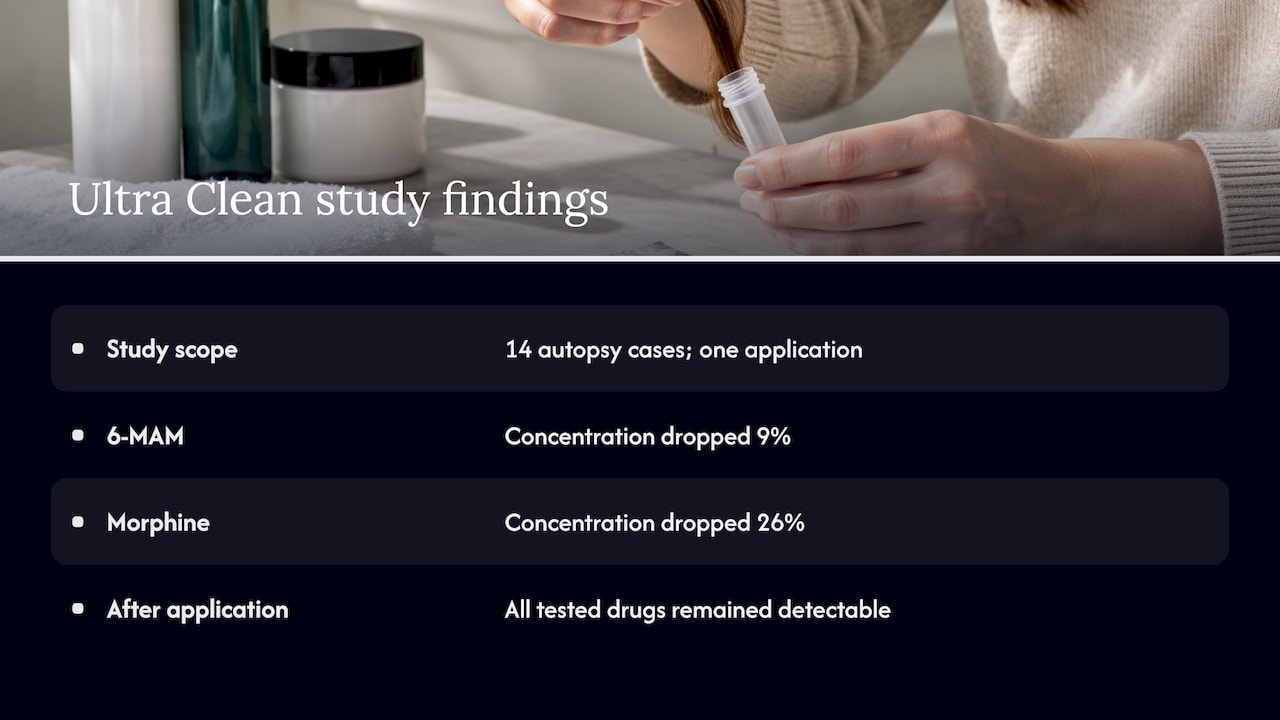
In a 2000 study of the shampoo Ultra Clean, researchers treated hair from 14 autopsy cases with known drug histories. After a single application, everything that had been present, heroin metabolites included, was still detectable. Concentrations dropped modestly: 6-MAM by 9% and morphine by 26%. That was one product, one application, and postmortem hair, so it does not describe every product or every routine.
A broader 2023 review of sample manipulation found that some studies saw decreases in hair concentrations of several drugs after detox shampoo use, while others, such as work on EtG, saw no significant change after a single application. Results vary by drug, product and hair type. The same authors note that the effect of cosmetic treatment depends on how stable the drug is, how much was there to begin with, and the properties of the hair itself.
The practical takeaway is that results are not uniform, and a plan built only on a bottle and a date is a plan with a lot of unknowns. Time, and the length of the hair sampled, matter more.
Where our own products fit
Our Macujo Aloe Rid Shampoo and the rest of our hair range are built around the needs of people preparing for hair tests for marijuana, which is where our experience and customer questions are concentrated. We do not make claims about heroin results, and you should not buy anything on the assumption that it will. If your question is about THC, our guides on what actually works in hair detox and reliable detox for hair follicle tests go through the details.
What can change how a hair result is read
Even with a clean confirmation step, hair is a biological sample, and several factors affect interpretation. A 2025 review in the Journal of Applied Laboratory Medicine identifies three main ones:
| Factor | What it means for a result |
|---|---|
| Melanin (hair color) | Dark hair binds more drug than light hair, so the same exposure can read differently |
| External contamination | Drug from the environment can sit on hair, which labs try to account for with washing steps |
| Chemical damage | Bleaching or dyeing alters the hair structure and can change measured concentrations |
Laboratories and regulators know this is a hard problem. HHS has noted that there is no objective, standardized method used across all labs to identify hair damaged by cosmetic or detox treatments, and it has proposed that laboratories use validated methods to identify chemically treated hair. If your hair is dyed or bleached, say so, and expect the lab to take that into account.
Sunlight and weathering matter too. The 2023 review above notes that ultraviolet exposure can damage the hair shaft and reduce drug concentrations, but how much depends on the drug and the hair.
If you think a result is wrong
A positive screen is not the end of the process. A confirmation test follows, and in many workplace programs a medical review officer (MRO) reviews results before they reach your employer. If you believe a result is mistaken, act quickly and keep records.
- Ask for the MRO review. Request it in writing and ask what the confirmation method and cutoff were.
- Disclose legitimate medications. Prescription opioids such as morphine or codeine can produce results that need interpretation. The 6-AM marker is the heroin-specific one, which is why the confirmation details matter.
- Request the paperwork. Chain-of-custody forms show who handled your sample. Disputes tend to turn on procedural failures such as a missing MRO review or a broken chain of custody.
- Talk to an employment attorney in your state if a job or benefit is at stake. Rules differ by state and by industry.
Perspective
We hear from people every week who are anxious about a hair test, and we know how tough and troublesome that wait feels. Our whole business is built around giving those readers calm, practical guidance and confidential service.
What we have learned is that the people who feel most in control are the ones who understand how the test works. Hair is a record of weeks, not days. That is the same reason the Macujo method has such a following among marijuana users: it is a careful, step-by-step routine that respects how hair actually behaves, and our Macujo Aloe Rid Shampoo is designed to support it.
For heroin and other opioids, we want to be straightforward. We do not claim our products change an opioid result, and we would rather you plan around real timelines than hope. If you are facing a test while using, please also reach out to a doctor or the free helpline listed below. That support is confidential and it can change the outcome in a way no product can.
Our team is available from 9am to midnight every day, and orders are handled with confidentiality and secure delivery. If your question is about a hair test, we are glad to point you to the right information.
MIchael
Getting confidential support
If you use heroin or other opioids and want to stop, or you simply want to talk to someone, SAMHSA’s National Helpline is a free, confidential, 24/7 treatment referral and information service available in English and Spanish. You do not need insurance to call, and you do not need to be ready to commit to anything. A call can connect you with local treatment options, and a doctor can advise you on medically supervised withdrawal, which should not be attempted alone with heroin or other opioids.
Where to go next for hair test preparation
If your test is for marijuana, our site has the practical detail. Start with hair test information for how sampling and incorporation work, then read about how drugs get into the hair shaft. To avoid wasted money, our guide to detox products to avoid and the one on detox myths and facts will save you time. For routines, hair detox do’s and don’ts lays out the common mistakes.
Preparing for a hair test with Passdrugtest
If you have a hair test for marijuana coming up, our Macujo Aloe Rid Shampoo is the product we recommend most. It is designed for the Macujo method, and you can read the full Macujo Aloe Rid instructions and timing before you order. You can see the shampoo and our other hair, saliva and urine testing products at Passdrugtest.
Our support team is available 9am to midnight daily, and every order ships with confidentiality in mind.
FAQ
Can a detox shampoo remove heroin from a hair test?
The published evidence is limited. In one study of a commercial shampoo on hair with known drug histories, heroin metabolites stayed detectable after a single application and fell only modestly. We make no claims about heroin results for our products, which are designed for marijuana hair tests.
How far back does a heroin hair test go?
A standard 1.5-inch head hair sample covers about 90 days, since hair grows roughly half an inch per month. Use in the last 7 to 10 days generally does not appear yet, because the hair has not grown out of the scalp. Shorter hair means a shorter look-back.
What does a hair test actually look for to identify heroin?
Labs look for heroin and its metabolites, especially 6-acetylmorphine, which no other known medication produces. An initial immunoassay screen is followed by confirmation using mass spectrometry. Cutoffs vary by program, and 200 pg/mg is commonly cited for opiates in hair.
Can dyed or bleached hair change the result?
Yes, it can affect interpretation. Chemical treatment alters the hair structure, and hair color changes how much drug binds. HHS has proposed that labs use validated methods to identify chemically damaged hair. Tell the collector about any treatments.
What should I do if I think my result is a false positive?
Ask for the MRO review, disclose any prescribed medications, and request your chain-of-custody records. An employment attorney in your state can advise on your rights. Act quickly, because deadlines for disputes can be short.
Sources
- Hair follicle drug tests: process and uses
- Labcorp drug testing options summary
- Labcorp workplace drug testing FAQs
- Psychemedics hair drug testing facts
- Objective testing: urine and other drug tests (PMC)
- Effect of the shampoo Ultra Clean on drug concentrations in hair (PubMed)
- Advances in testing for sample manipulation (PMC)
- Review on toxicology testing in hair (JALM)
- HHS hair testing guidelines proposal
- U.S. Navy Drug Lab FAQs
- Federal Register, Volume 60, Issue 221
- Heroin drug test detection times
- How to dispute a false positive drug test
- SAMHSA National Helpline