
Yes, the Macujo method can be used on dyed or bleached hair, but results are variable and never guaranteed. Dyed hair reacts differently to detox cycles than virgin hair, and some labs can flag hair that shows signs of chemical treatment. Follow the adjusted protocol and safety steps below to give yourself the most realistic shot.
TL;DR:
- Dyed hair reacts unpredictably, with some tests showing lower detectable drug levels and others higher detection odds for substances like cocaine and MDMA.
- The Macujo method should be adjusted for dyed hair, using gentler cleansers and shorter contact times to prevent further damage or irritation.
- Chemical treatments and bleaching can alter lab readings, prompting possible re-tests or additional specimen requests if results seem inconsistent.
- Proper patch testing and avoiding harsh steps on compromised scalp skin reduce the risk of burns or breakage during detox protocols.
- The typical 90-day detection window remains unchanged; a complete detox routine offers no instant solution and relies heavily on timing and individual hair chemistry.
Table of Contents
- What is the Macujo method?
- How dyeing and bleaching affect drug detection
- Step-by-step Macujo method for dyed hair
- Safety, scalp care, and avoiding chemical burns
- Timing and what labs look for on test day
- An honest take on the trade-offs
- Where to find the Macujo Aloe Rid shampoo
- FAQ
- Sources
What is the Macujo method?
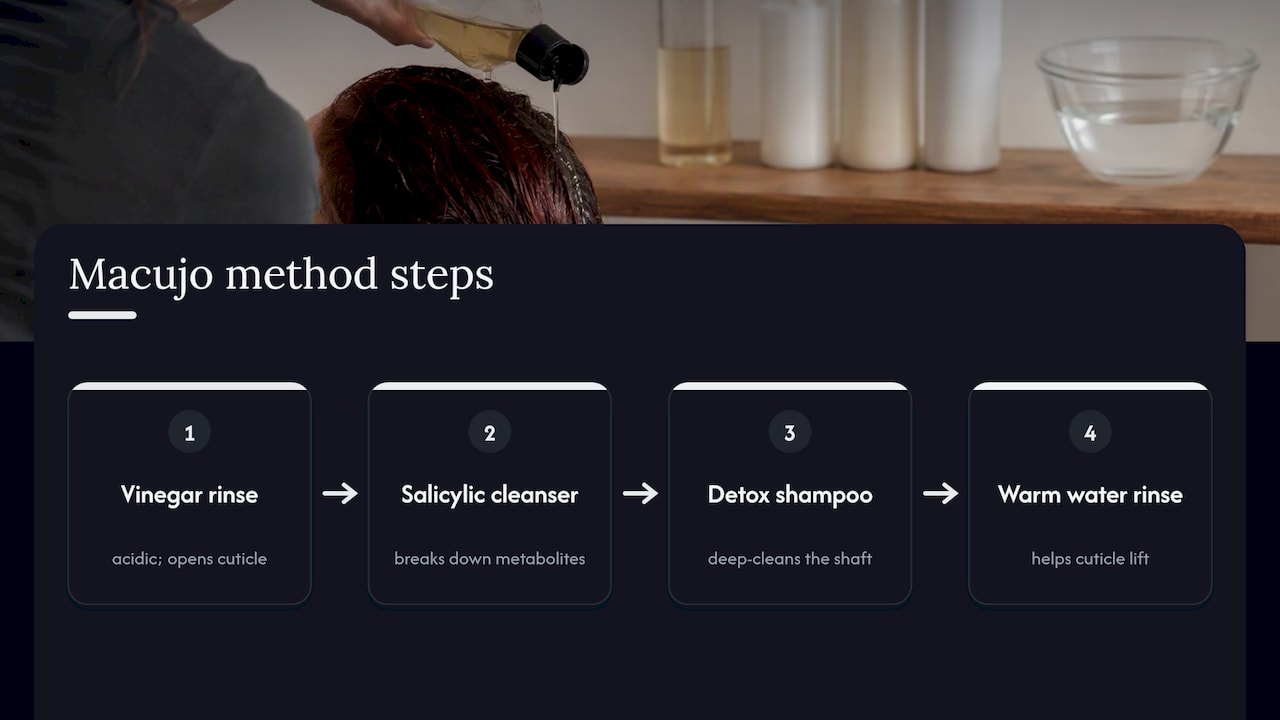
The Macujo method is a multi-step hair detox protocol built around opening the hair cuticle and breaking down drug metabolites trapped inside the shaft. A typical cycle uses an acidic rinse like vinegar, a salicylic-acid cleanser such as Clean & Clear, a dedicated detox shampoo, and warm water to help the cuticle lift so cleansing agents can work deeper into the strand.
Many people adjust the classic sequence when working with dyed hair, using fewer oxidative or bleaching steps and relying instead on more frequent clarifying washes. This keeps the cuticle responsive without stripping color entirely or compounding existing chemical damage.
Before starting, patch-test any product on a small section of skin and avoid piling on more bleach treatments during the process. Hair that is already brittle or over-processed needs a gentler hand, not a harsher one.
How dyeing and bleaching affect drug detection
Cosmetic hair treatments change how labs read drug concentrations, but the effect is inconsistent and depends on the drug class and the treatment itself. A large comparison of nearly 9,500 untreated hair samples against roughly 1,000 cosmetically treated samples found that treated hair often showed lower percentile concentrations, yet the overall positivity rate for drugs and EtG did not change significantly. In plain terms, dyeing can mute the numbers without actually making the test come back clean.
Other research complicates the picture further. A multivariable analysis of cocaine and MDMA detection found that dyed hair was associated with higher odds of detection for both drugs, with adjusted odds ratios of 3.75 for cocaine and 3.05 for MDMA. Dye does not simply erase evidence; it can shift it in unpredictable directions depending on hair chemistry and treatment history.
Laboratory experiments on everyday and advertised detox treatments show some multi-step washing protocols can meaningfully reduce measured THC concentrations under controlled conditions, which is part of why repeated, correctly timed cycles matter more than a single aggressive wash.
Federal guidance acknowledges this uncertainty directly:
- Cosmetic treatments are known to alter analyte levels in hair.
- Labs may request alternate specimens or corroborating tests when treated hair produces unexpected results.
- Visual signs of oxidative damage can prompt closer review by the testing lab.
Step-by-step Macujo method for dyed hair
Before you touch a single product, check three things: do a patch test on your inner arm, inspect your hair and scalp for fresh color or recent bleach, and skip the protocol entirely if your scalp has open cuts, scabs, or active irritation.
- Wet hair thoroughly with hot water to help open the cuticle.
- Apply white vinegar to the scalp and hair, working it in for about 1 to 2 minutes, then rinse.
- Apply a salicylic-acid cleanser such as Clean & Clear, massaging it into the scalp for roughly 10 to 15 minutes before rinsing.
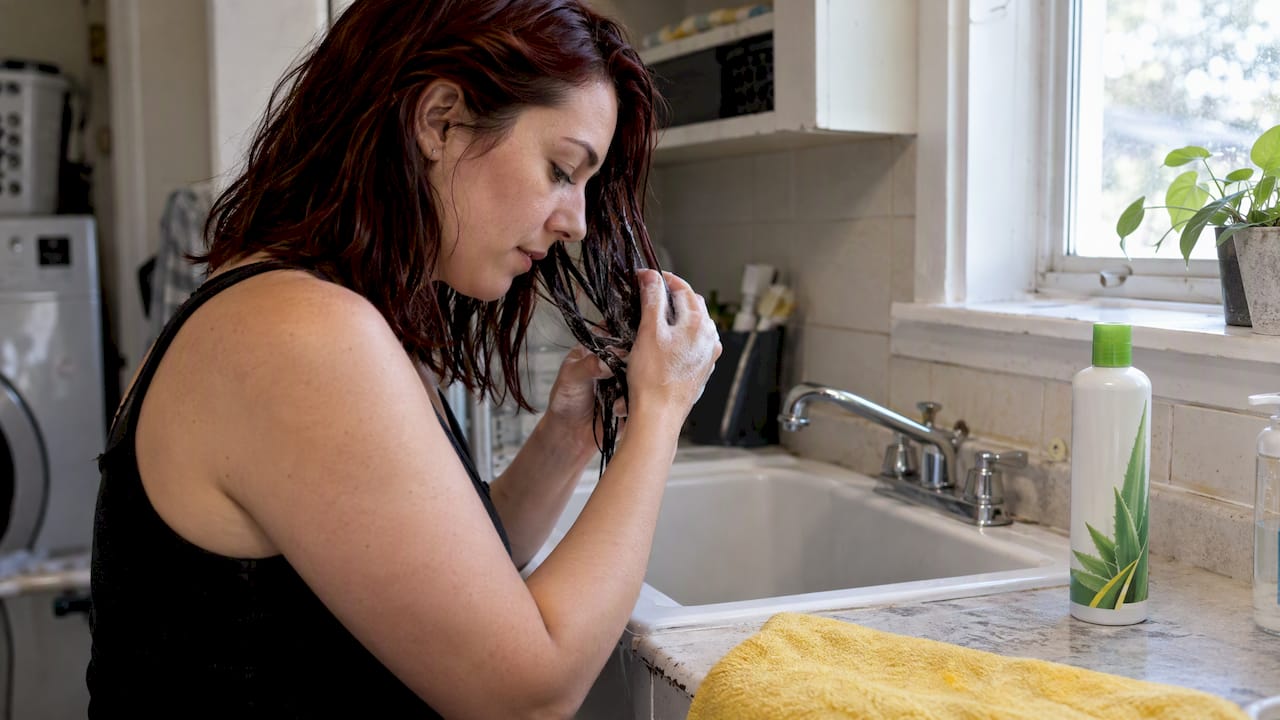
- Wash thoroughly with Macujo Aloe Rid Shampoo, working it from root to tip and leaving it on per the product instructions.
- Follow with a baking soda clarifying rinse if your hair can tolerate it, then a final rinse with cool water to help close the cuticle.
- Repeat the full cycle daily for light use, or increase frequency for heavier or longer-term use, based on your own exposure history.
For dyed hair specifically, skip any additional bleaching or peroxide-based steps during the detox window since these compound damage already done by your color treatment. Keep contact time with harsh cleansers on the shorter end and add a deep conditioner after your final wash, but never right before sample collection, since heavy conditioning residue can itself raise questions at the testing site.
Pro Tip: If your hair feels unusually dry or brittle partway through the cycle, cut back to every other day rather than pushing through daily washes.
A few troubleshooting notes:
- If hair is already severely damaged or breaking off, consider delaying the test if possible rather than compounding the harm.
- If you feel scalp burning, tingling that does not fade, or notice redness spreading, stop immediately.
- If you are unsure whether your hair can handle another cycle, err on the side of a lighter, less frequent routine.
Safety, scalp care, and avoiding chemical burns
The biggest risks with any detox protocol are chemical burns and contact dermatitis, both of which are more likely on hair that is already compromised by dye or bleach. Limiting contact time, patch-testing new products, and never scrubbing an already irritated scalp go a long way toward preventing injury.
- Always patch-test a new product on your forearm 24 hours before using it on your scalp.
- Keep salicylic-acid cleansers away from open scratches or recently picked scabs.
- Rinse immediately with cool water if you feel burning or stinging that does not ease within a minute.
If a burn does occur, flush the area with cool water right away and stop the protocol. Seek urgent care or call poison control if you experience blistering, severe pain, or symptoms beyond mild redness. Once your testing window has passed, restore moisture and color health with a sulfate-free conditioner and a weekly deep treatment rather than more clarifying washes.
Pro Tip: Save your richest conditioning treatments for after your test, since heavy pre-test conditioning can leave a residue some collectors notice.
Timing and what labs look for on test day
Standard hair follicle tests examine a proximal 1.5 cm segment closest to the scalp, representing roughly the most recent 90 days of growth. This window does not shrink or stretch based on how much detox work you have done.
At collection, technicians visually inspect the sample and may note obvious signs of bleaching or recent dye application. Labs also run chemical screens that can sometimes flag inconsistencies tied to cosmetic treatment.
- A visibly damaged or freshly bleached sample can prompt a closer look.
- Flagged results often lead to confirmation testing or a request for an alternate specimen.
- Medical review officers may follow up directly if results appear unusual given your history.
An honest take on the trade-offs
Plenty of people report passing after a disciplined Macujo routine, and the peer-reviewed record backs up that treated hair often reads differently than untreated hair. But the science is genuinely mixed, and no cycle removes risk entirely. We’d rather you go in with conservative timing, realistic expectations, and products built specifically for this job than chase shortcuts that leave both your hair and your results worse off.
— MIchael
Where to find the Macujo Aloe Rid shampoo
We carry the Macujo Aloe Rid Shampoo as our flagship hair detox product, formulated specifically to work within the multi-step cycle described above rather than as a one-wash fix. It pairs with the rest of the protocol instead of replacing any step, so following the full sequence still matters.
- Orders ship discreetly, with packaging that does not reference the contents.
- Support is available daily to answer questions about the protocol or the order.
- Follow the instructions on the bottle exactly, since contact time and frequency affect how well the product performs.
If you are ready to start, browse our full hair detox shampoo lineup or check out the complete detox product catalog before your test date.
FAQ
How long until you can pass a hair drug test?
Most labs test a 1.5 cm segment representing roughly the last 90 days of hair growth, so natural clearance depends on how recently you stopped use. A disciplined detox routine followed in the days before testing can help, but it will not instantly erase three months of growth.
How to pass a hair follicle test in 2026?
The approach has not fundamentally changed: a multi-step detox cycle combined with conservative timing gives you the most realistic chance. Many people specifically point to the Macujo method from Mike Macujo as the most established method for tackling a hair follicle drug test, though outcomes still vary by individual hair chemistry and exposure history.
What can cause a negative hair follicle test?
A negative result can come from genuinely low or absent drug exposure, successful reduction of analyte concentrations through a detox protocol, or lab-specific cutoff thresholds not being met. Hair condition, treatment history, and testing methodology all play a role in the final reading.
How accurate is armpit hair for a drug test?
Body hair, including armpit hair, is sometimes used as an alternate specimen when head hair is unavailable or has been treated, but it grows at a different rate and does not map cleanly to the standard 90-day head hair window. Federal guidance recognizes alternate specimens as a tool labs may use, though results are interpreted with that difference in mind.
Sources
- A multivariable analysis delineating hair color, hair dyeing, and hat wearing as predictors of level of cocaine and MDMA detection in human hair samples – PMC
- Utility of coloured hair for the detection of drugs and alcohol
- Department of Health and Human Services Mandatory Guidelines for Federal Workplace Drug Testing Programs (hair testing discussion)