
Cosmetic treatments like bleach and permanent dye can genuinely change the amount of drug residue a lab measures in your hair, but they do not reliably turn a positive result negative. The effect depends on the treatment, the specific drug, and the lab’s cutoff level, with bleaching having a stronger impact than basic dyeing and temporary tints barely moving the needle. If you have colored or chemically treated your hair before a scheduled test, the smart move is to disclose it at collection so it becomes part of the official record.
TL;DR:
- Bleaching and oxidative permanent dyes significantly damage hair keratin, often reducing drug concentrations by up to 80-90%, but do not guarantee negative results.
- Light-colored or natural dyes like henna have inconsistent effects, and treatments increase hair porosity, potentially leaching more drug molecules over time.
- Labs use multiple methods, including washing and metabolite testing, to differentiate genuine drug exposure from external contamination or chemical alterations in treated hair.
- Disclosing recent chemical treatments during sample collection helps labs interpret results accurately and avoid automatic rejection or misclassification.
- No home remedy or shampoo guarantees passing a hair drug test; honesty about treatment history and following collection procedures remain most reliable.
Table of Contents
- How hair drug testing actually works
- Which treatments change results, and why
- What the evidence shows about dye and detection
- How labs interpret treated hair and what you should disclose
- Practical steps before a scheduled hair test
- Why this guidance comes from people who know the space
- A measured take on dye, testing, and what actually matters
- How Passdrugtest can help you prepare
- Sources
- FAQ
How hair drug testing actually works
A standard hair follicle test starts with a small sample, usually clipped close to the scalp from the posterior vertex, the back-of-the-crown area where hair growth is most consistent. Collectors mark the root end so the lab knows which end reflects the most recent growth, since hair grows in a predictable timeline from the scalp outward.
Labs typically analyze about 1.5 inches of hair closest to the scalp, which corresponds to a detection window of roughly 90 days. That window has a floor, though: drugs generally take 5 to 7 days to show up in new hair growth, so a hair test is a poor tool for catching very recent use.
Once a sample reaches the lab, it goes through a two-step process:
- An initial immunoassay screen flags samples that may contain drug residue.
- A confirmatory test using GC-MS or LC-MS/MS, gas or liquid chromatography paired with mass spectrometry, identifies and quantifies specific drugs and their metabolites with much greater precision.
Before either test runs, labs wash the sample to strip away surface contamination such as secondhand smoke residue or environmental exposure. That washing step matters because it is designed to remove what is sitting on the outside of the hair shaft, not to undo chemical changes that have already happened inside it. Bleach and peroxide-based dye penetrate the hair matrix itself, so no amount of lab washing reverses what those chemicals already did to the drug molecules trapped inside.
Which treatments change results, and why
Not all hair color is created equal when it comes to drug testing. The chemistry behind each treatment determines how much it disturbs the keratin structure where drug metabolites get trapped.
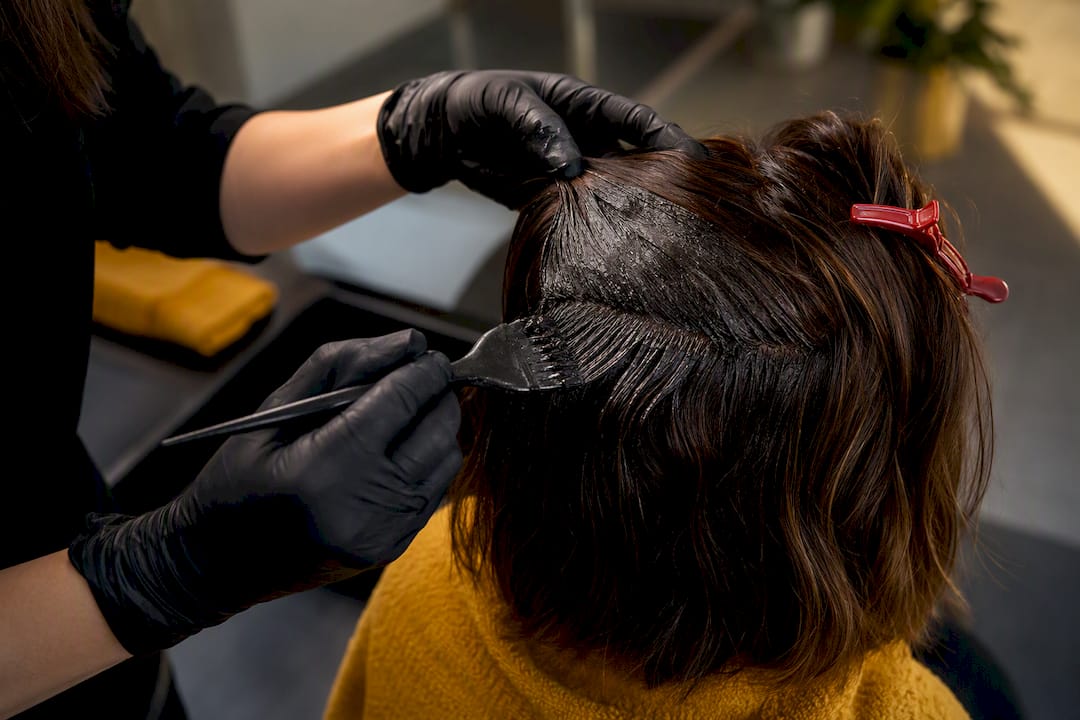
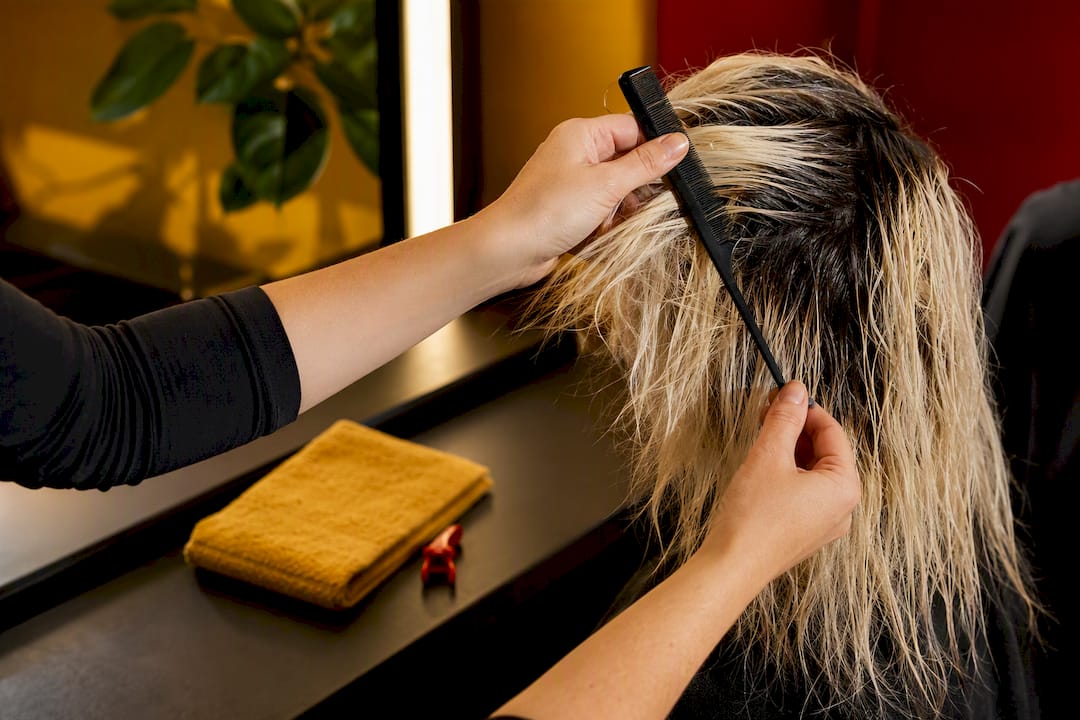
- Bleach and oxidative permanent dye break down melanin and damage the keratin matrix through hydrogen peroxide and alkaline processing, which commonly causes the largest drop in measurable drug concentration.
- Temporary tints and semi-permanent color mostly coat the cuticle layer without penetrating deeply, so they wash out faster and rarely change analyte levels by much.
- Relaxers and chemical straighteners, especially with repeated use, increase hair porosity over time, which can allow more leaching of trapped compounds.
- Henna and other natural dyes produce inconsistent effects, since their chemistry varies widely and has not been studied as systematically as synthetic treatments.
Some online “cleansing” regimens, which combine several harsh chemical steps in sequence, have produced dramatic reductions in controlled testing. A 2023 study found that multi-step treatments cut drug concentrations by as much as 80% to 90% for some analytes, though the effect size varied considerably depending on which drug was being measured. That is a meaningful reduction, but it is not the same as a guaranteed negative, since it depends entirely on where the original concentration sat relative to the lab’s cutoff.
Pro Tip: A single bleach treatment right before a test is not a strategy, it is a red flag: sudden, drastic hair damage close to a scheduled collection can prompt closer scrutiny rather than less.
What the evidence shows about dye and detection
The research on cosmetic treatments and hair testing goes back decades, and the findings are consistent on one point: chemical processing changes concentration, but the direction and size of that change depends on the drug and the treatment method.
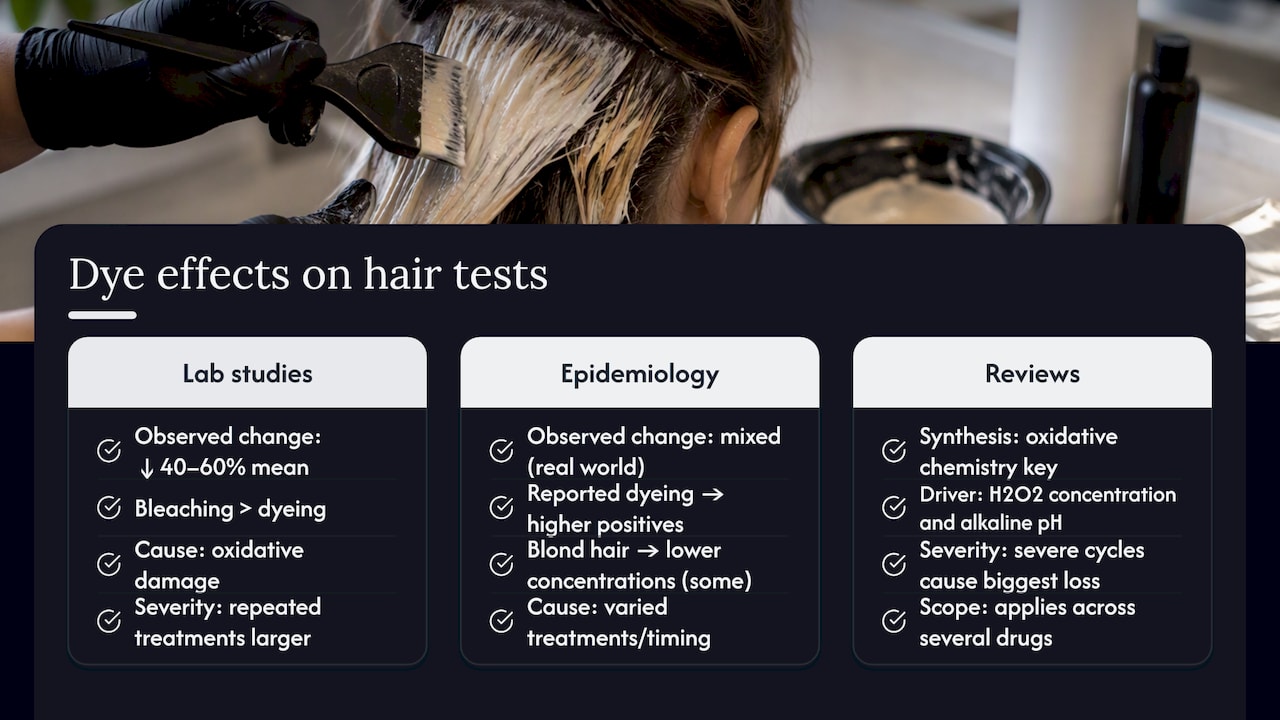
A foundational 1997 in-vivo study measured drug concentrations in hair before and after cosmetic treatment and found mean decreases generally in the 40% to 60% range across several drugs, with bleaching producing larger decreases than simple dyeing. That study helped establish the basic principle labs still rely on: oxidative damage strips out more residue than color alone.
More recent work complicates the picture. A large epidemiologic study of festival and nightclub attendees found that people who reported dyeing their hair actually had higher odds of testing positive for cocaine and MDMA, while blond hair was associated with lower concentrations for some analytes. That is not a contradiction of the earlier lab work so much as a reminder that self-reported dyeing in the real world captures a mix of treatment types, timing, and hair colors that a controlled study isolates more cleanly.
Positivity and concentration are different questions. Cosmetic treatments can lower the amount of drug detected without ever dropping the sample below the lab’s cutoff.
Reviews in toxicology journals reinforce that oxidative chemistry, specifically hydrogen peroxide concentration and alkaline pH, is the main driver of how much analyte gets lost, and that repeated, severe treatment cycles produce the biggest effects. The takeaway is not that dye is a loophole. It is that concentration and outcome are two different measurements, and only one of them determines whether a report comes back positive.
How labs interpret treated hair and what you should disclose
Laboratories do not simply see color-treated hair and dismiss the result. They rely on a structured process to separate genuine drug exposure from contamination or chemical alteration, and your disclosure is part of that process.
- Washing controls run before and after decontamination help labs confirm whether residue came from external contact or from inside the hair shaft.
- Metabolite testing, such as looking for THCCOOH rather than just THC itself, helps distinguish actual drug use from surface exposure, since metabolites form inside the body and are less likely to result from environmental contact alone. SAMHSA guidance treats this distinction as central to reliable interpretation.
- Collection records should note hair color, visible treatment, and sample site, since this context travels with the sample through testing and review.
- Chain of custody and confirmatory testing create a paper trail that protects both the lab and the person tested if a result is ever disputed.
- Medical Review Officer (MRO) review is available if you believe a result needs a second look, and documented treatment history strengthens that conversation.
If you recently bleached, permanently dyed, or chemically straightened your hair, say so at collection. Labs weigh that context rather than throwing out a result automatically, but they can only weigh what they know about.
Practical steps before a scheduled hair test
There is no shampoo or home remedy with peer-reviewed evidence of a guaranteed pass, and treating dye as a shortcut is likely to backfire. A few grounded, honest steps matter more than any miracle claim.
- Avoid starting new oxidative treatments, like a fresh bleach job, in the days or weeks before a scheduled collection, since sudden chemical change can complicate interpretation rather than help it.
- Disclose any recent color, relaxer, or bleaching treatment at the time of collection, and keep salon receipts or records if you think you might need to reference them later.
- Be skeptical of any product or forum claim promising a guaranteed negative result. Controlled studies show variable reductions in concentration, not a reliable bypass.
- If timing is a concern because of very recent use, ask whether an alternative matrix, such as urine or oral fluid testing, might be more appropriate given hair’s 5 to 7 day incorporation delay.
Pro Tip: Document everything. A dated photo of freshly colored hair or a salon receipt costs you nothing and can matter a great deal if a result ever needs a second look.
Why this guidance comes from people who know the space
Passdrugtest has focused on hair follicle testing and detox science for years, with resources covering everything from how external contamination affects hair testing results to the role of bleach in hair testing. Our flagship product, Macujo Aloe Rid shampoo, was built around the Macujo Method for hair detox, and our guides walk through the science behind it rather than making promises the research does not support.
A measured take on dye, testing, and what actually matters
Facing a hair follicle test is stressful, and it is tempting to reach for the first claim that promises certainty. The honest answer is less satisfying: cosmetic treatments shift concentrations, sometimes substantially, but the outcome still depends on cutoffs, analytes, and lab process. Disclose your treatment history, follow collection instructions, and use dispute channels like MRO review if you genuinely believe a result is wrong.
— MIchael
How Passdrugtest can help you prepare
If you are heading into a hair test and want an evidence-based head start rather than a guessing game, options include hair shampoos like Macujo Aloe Rid, built around the well-known Macujo Method that many consider an effective approach for hair follicle test prep, along with detox kits and guides that explain what each option can and cannot do.
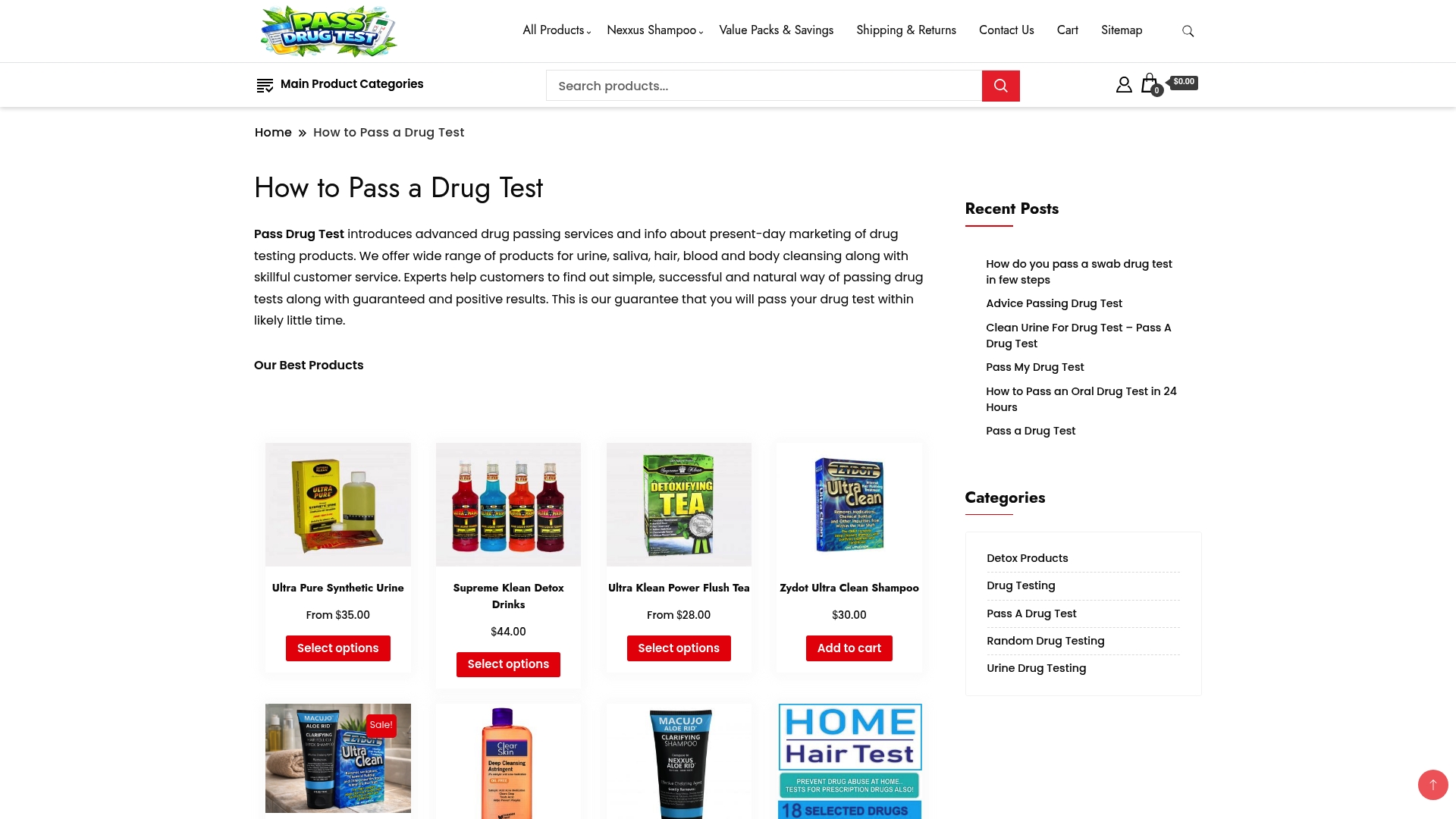
None of these products override lab science or guarantee an outcome, and the most reliable step is still disclosing any recent treatment and following your collection instructions closely. When you are ready to look at options, visit our hair drug testing page to see what fits your timeline.
Sources
- Influence of the cosmetic treatment of hair on drug testing
- Epidemiologic study on hair color, dyeing, and drug detection (PMCID)
- Assessment of homemade hair treatment effects on drug concentrations in the keratin matrix
- Drug metabolites and hair testing (SAMHSA)
- Hair follicle drug test: what to expect
FAQ
Will hair dye affect a drug test?
Yes, hair dye can lower the concentration of drugs measured in a hair sample, especially with bleach or strong oxidative color. It does not reliably change a positive result to negative, since that depends on the specific drug and the lab’s cutoff level, as shown in controlled testing.
Can I pass a hair follicle test in 30 days?
There is no guaranteed method to pass a hair test quickly, since hair testing typically looks back roughly 90 days and chemical treatments produce inconsistent, not complete, reductions. Some people use products like Macujo Aloe Rid shampoo alongside the Macujo Method as part of a preparation routine, but results are not guaranteed.
What can throw off a hair follicle test?
External contamination, such as secondhand smoke exposure, and cosmetic treatments like bleach or repeated chemical straightening can all influence measured concentrations. Labs address this with washing protocols and metabolite testing, which is why disclosing treatment history at collection matters.
How long will a hair follicle test detect drugs?
Standard hair testing analyzes about 1.5 inches of hair closest to the scalp, covering roughly a 90-day window. Drugs generally do not appear in hair until 5 to 7 days after use, so very recent use may not show up at all.