

Apple cider vinegar will not reliably help you pass a hair follicle drug test. No clinical evidence supports ACV as a method for clearing drug metabolites from hair, and authoritative recovery resources confirm that topical rinses do not alter metabolites already incorporated into the hair shaft. One controlled lab study did report measurable reductions in surface drug concentrations on treated samples, but those results were not proof of passing real-world tests. If you have a test coming up, your most reliable next steps are to determine the test type, calculate your timeline, and consider validated detox protocols rather than home rinses. Passdrugtest offers products built around documented protocols, including the Macujo Aloe Rid Shampoo, which is the most used shampoo in structured multi-step routines.
- ELISA screening is the first lab stage; it flags positive samples for further analysis.
- GC/MS confirmation is the second, definitive stage; it identifies specific metabolites bound inside the hair shaft, not just on the surface.
- Surface washes, including ACV rinses, may reduce external contamination but cannot reliably reach metabolites already incorporated into the cortex of the hair.
Key Takeaways
ACV does not reliably remove drug metabolites incorporated into the hair shaft, and no clinical evidence supports it as a method for passing a GC/MS-confirmed hair follicle drug test.
| Point | Details |
|---|---|
| ACV evidence is weak | No clinical proof supports ACV as a hair drug-test detox; labs use GC/MS confirmation that surface rinses cannot defeat. |
| 90-day detection window | Hair tests cover roughly 90 days of growth; abstinence for that full period is the only guaranteed biological approach. |
| Lab wash protocols neutralize surface rinses | Labs wash samples before analysis specifically to exclude external contamination, including home rinses. |
| Safe ACV use is for hair health only | Diluted ACV (2–4 tablespoons per cup of water) is a legitimate clarifying rinse; use it for scalp balance, not test prep. |
| Passdrugtest offers structured protocols | The Macujo Aloe Rid Shampoo and combination kits provide documented multi-step routines with more support than any home remedy. |
Table of Contents
- How the apple cider vinegar hair test question misses what labs actually measure
- What people claim ACV does for a vinegar hair drug test
- What science and health experts actually say about ACV for hair detox
- Common DIY methods people try before a hair follicle test
- What actually increases your odds of passing a hair test
- How to use ACV safely for hair health (not for passing tests)
- How to assess your actual risk before a scheduled hair test
- The honest truth about home remedies and realistic expectations
- Passdrugtest has the products that fit a real preparation plan
- Sources
How the apple cider vinegar hair test question misses what labs actually measure
Hair follicle drug testing does not analyze the outside of your hair. Labs test for drug metabolites that entered the bloodstream and were incorporated into the hair shaft as it grew. Healthline’s explainer on hair strand drug tests confirms the standard detection window covers approximately 90 days of growth, based on an average scalp hair growth rate of roughly half an inch per month. Labs collect a 1.5-inch segment cut close to the scalp, representing that 90-day period.
The 90-day window is a biology fact, not a lab policy. Metabolites bind to the melanin and keratin structure inside the cortex during growth. Once incorporated, they stay there unless the hair is physically cut away.
There is also a practical latency to understand: drug use from the last 5–7 days typically will not yet appear in a scalp hair sample because the affected hair has not grown above the scalp surface yet.
The lab workflow matters here. Technicians run an initial ELISA screen to flag reactive samples, then confirm positives with GC/MS testing. Critically, labs include mandatory wash steps before analysis specifically to remove external contamination, so they can distinguish between a person who touched a contaminated surface and a person whose body processed the drug. Any surface rinse you apply at home is essentially replicating a step the lab already accounts for.
- Hair grows approximately 0.5 inches per month; a standard 1.5-inch sample covers roughly 90 days.
- The 5–7 day latency means very recent use may not appear in a scalp hair test.
- ELISA screens for reactive samples; GC/MS confirms specific metabolites at the molecular level.
- Lab wash protocols are designed to detect and exclude external contamination attempts.
What people claim ACV does for a vinegar hair drug test
Online forums and DIY detox communities promote several specific mechanisms for using ACV before a hair follicle test. Understanding these claims helps you evaluate them honestly.
- “Acidic pH strips metabolites from the shaft.” The claim is that ACV’s low pH (roughly 2–3) dissolves or loosens drug metabolites. In practice, metabolites are bound inside the cortex, not sitting on the cuticle surface where pH changes have direct access.
- “ACV removes external contamination.” This one has a partial basis. ACV can act as a clarifying rinse and may reduce surface residue. The problem is that labs already wash samples before testing, so removing surface contamination at home does not change what the lab measures internally.
- “Opening the cuticle washes out incorporated metabolites.” Acidic solutions actually close the cuticle, not open it. Alkaline treatments (like baking soda) open the cuticle. This claim gets the chemistry backwards.
- Common DIY protocols include soaking hair in undiluted or lightly diluted ACV for 30 minutes or longer, using it as a pre-wash before other treatments, or combining it with baking soda as part of a multi-step scrub.
Many of these protocols are anecdotal, vary widely in dilution, contact time, and frequency, and have no controlled data behind them.
What science and health experts actually say about ACV for hair detox

The scientific consensus is clear: ACV does not reliably help you pass a hair follicle drug test. Numa Recovery Centers states directly that no clinical evidence supports ACV as a drug-test detox method, and that metabolites incorporated into the hair shaft are not removed by topical application.
There is one study worth examining honestly. A peer-reviewed LC-HRMS laboratory study tested vinegar-like treatments on hair samples and reported mean reductions in drug concentrations of up to approximately 60% for THC under controlled conditions. That sounds significant until you read the limitations: the study used controlled lab samples (not real-world hair from active users), the reductions were in surface concentrations, and the authors explicitly stated these results do not prove real-world test-passing.
A 60% surface reduction in a controlled lab setting does not equal a negative GC/MS result on a real test. The confirmatory stage looks for metabolites bound inside the shaft, and a partial surface reduction leaves enough incorporated metabolite to trigger a positive.
On the hair-health side, the picture is more nuanced. Trichologists and dermatologists interviewed by Glamour support diluted ACV rinses for clarifying buildup and balancing scalp pH, with recommended dilutions of a few tablespoons in water. They are consistent about one thing: undiluted ACV on the scalp is a risk, not a benefit.
Pro Tip: If you want to try ACV as a hair-care rinse while preparing for a test, always dilute it (no more than 4 tablespoons per cup of water), do a patch test first, and limit contact time to under 5 minutes. This keeps your scalp healthy without adding chemical stress to already-treated hair.
Common DIY methods people try before a hair follicle test
Several multi-step protocols circulate online, each claiming to do what ACV alone cannot. Here is what each involves and what the real risks are.
| Method | What supporters claim | Evidence strength | Scalp/hair damage risk | Complexity |
|---|---|---|---|---|
| ACV rinse alone | Strips metabolites via pH | Very weak | Low to moderate | Low |
| Baking soda scrub | Opens cuticle to flush metabolites | Very weak | Moderate to high | Low |
| Bleach and re-dye (Jerry G) | Destroys metabolites chemically | Weak, anecdotal | Very high | High |
| Multi-step detox wash (Macujo-style) | Multi-mechanism deep cleanse | Moderate (most documented) | Moderate | High |
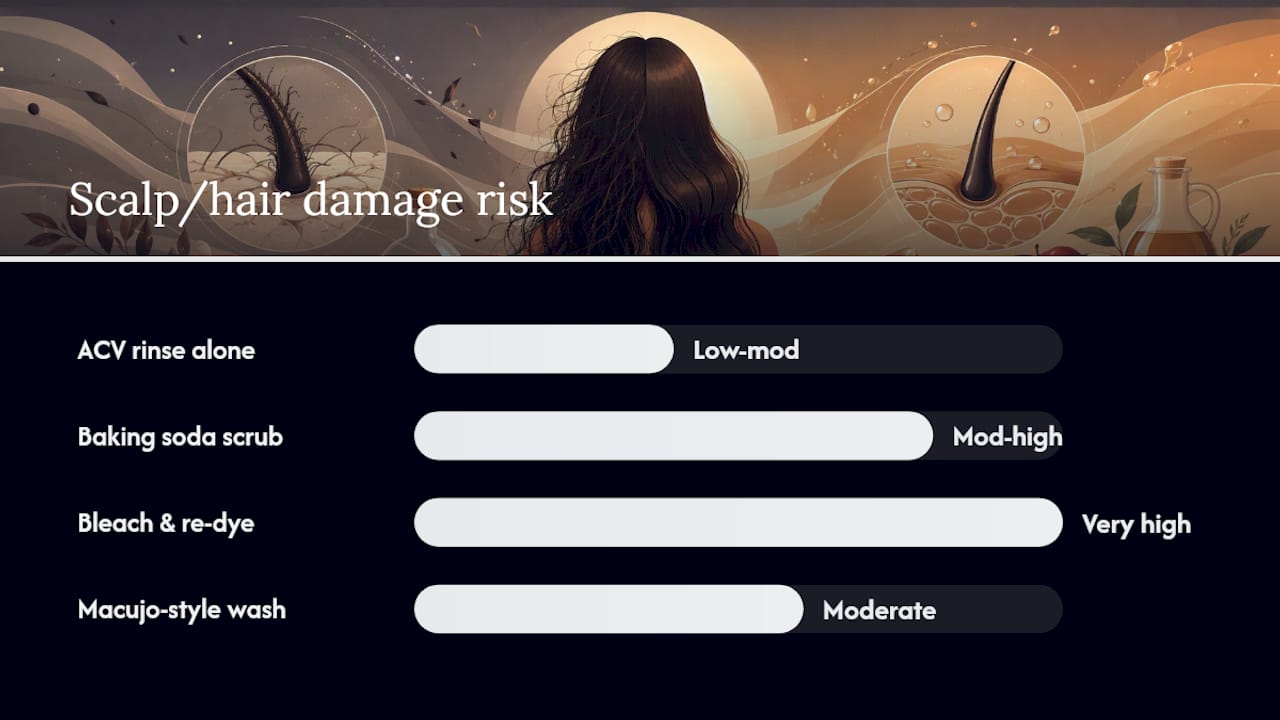
ACV rinse alone is the simplest approach and the least likely to cause severe damage, but it also has the weakest evidence for affecting incorporated metabolites. It may clarify the surface and balance pH, which has real hair-health benefits, but those benefits do not translate to passing a GC/MS-confirmed test.
Baking soda scrubs work on the opposite pH logic from ACV: alkaline solutions open the hair cuticle. Some protocols combine baking soda and ACV in sequence. Repeated alkaline treatments cause significant protein damage and breakage, and the hair detox dos and don’ts at Passdrugtest address exactly this kind of escalating chemical stress.
The Jerry G method involves bleaching and re-dyeing hair, which does chemically alter the hair shaft. The damage risk is severe: chemical burns, extreme breakage, and scalp inflammation are documented outcomes. Evidence for actually passing a confirmed test remains anecdotal.
Macujo-style multi-step washes are the most structured and most documented of the DIY approaches. The Macujo method uses a sequence of treatments including a clarifying shampoo, an astringent, and a specialized detox shampoo applied over multiple sessions. It is more complex and requires the right products, but it has a larger body of user documentation than any other home-based protocol.
Warning: Any protocol that involves bleach, undiluted acids, or repeated high-pH scrubs carries real risk of chemical burns, permanent hair loss, and scalp inflammation. If you experience burning, redness, or blistering, rinse immediately with cool water and stop the treatment.
What actually increases your odds of passing a hair test
Abstinence and time are the only approaches with a guaranteed biological basis. Once you stop using, your body stops incorporating new metabolites into growing hair. Hair grows out from the scalp at roughly 0.5 inches per month, so after 90 days of abstinence, a standard 1.5-inch sample would theoretically contain no new metabolites from the period of use.
Pro Tip: Before your test, ask the requester three specific questions: (1) What sample length will they collect? (2) Do they use GC/MS confirmation? (3) Will they accept body hair as an alternative sample site? Body hair grows more slowly and may represent a longer or different window than scalp hair.
Here are the realistic options, ranked by evidence:
- Abstinence for 90+ days is the only approach with a guaranteed biological mechanism. No product or rinse replaces this.
- Hair cutting or shaving removes the evidence but raises immediate red flags with testers. Labs may request body hair instead, and refusing a sample is often treated as a positive result.
- Validated detox shampoo protocols used over multiple sessions have the most user documentation of any active intervention. Results vary and no product can guarantee a negative result, but structured protocols with the right shampoos are more defensible than single-ingredient home rinses.
- Knowing your timeline matters more than most people realize. If your last use was more than 90 days ago, your risk from a standard scalp hair test is low. If it was within the last 7 days, a scalp hair test may not yet capture it. The window between 7 and 90 days is where preparation matters most.
For a full breakdown of what a reliable hair detox actually involves, Passdrugtest has a detailed resource that separates evidence-based steps from wishful thinking.
How to use ACV safely for hair health (not for passing tests)
ACV is a legitimate hair-care ingredient when used correctly. Healthline’s guide to ACV for hair confirms it can help with buildup, shine, and scalp balance. Verywell Health recommends a maximum dilution of about 4 tablespoons per cup of water and emphasizes thorough rinsing to prevent residue that dries the hair.
ACV’s real value for hair is as a clarifying rinse, not a detox agent. It can remove product buildup, mildly address scalp flaking, and help restore the slightly acidic pH that healthy hair prefers (around 4.5–5.5).
Here is a safe protocol for using ACV as a hair rinse:
- Mix your solution. Combine 2–4 tablespoons of ACV with 8 oz (1 cup) of water. Start at the lower end if you have color-treated or fine hair.
- Do a patch test first. Apply a small amount to the inside of your wrist or behind your ear. Wait 24 hours. If you see redness, itching, or irritation, do not proceed.
- Shampoo your hair first. Always apply the ACV rinse to clean, shampooed hair, not as a first step.
- Apply the rinse. Pour or spray it evenly through your hair, focusing on the scalp and mid-lengths. Avoid the eye area.
- Wait no more than 3–5 minutes. Longer contact times increase the risk of dryness and irritation without adding benefit.
- Rinse thoroughly with cool water. Cool water helps close the cuticle after the rinse.
- Follow with conditioner if your hair feels dry, especially on the ends.
Frequency guidance by hair type:
- Oily scalp or heavy product buildup: once per week at most.
- Normal hair: once every 2–3 weeks.
- Dry, color-treated, or chemically processed hair: once per month or less.
Pro Tip: Never apply undiluted ACV directly to your scalp. The acidity can cause chemical irritation, especially on skin that is already sensitized from other detox treatments. If you have been through a multi-step detox routine, wait at least 48 hours before adding an ACV rinse.
Warning: Do not use ACV on broken skin, open sores, or an actively irritated scalp. If you are recovering from a harsh detox treatment, focus on restoring your hair’s health before adding any additional chemical treatments.
How to assess your actual risk before a scheduled hair test
Before you try any protocol, spend 10 minutes doing this assessment. It will tell you more than any single product claim.
- Determine the test type. Is it a hair follicle test, urine test, saliva test, or blood test? Each has a different detection window and different preparation strategies. This article covers hair specifically.
- Find out the sample length. Standard tests use 1.5 inches of scalp hair, covering roughly 90 days. Some employers or courts request longer samples.
- Calculate your last-use date. Count back from your test date. More than 90 days of abstinence with scalp hair growing normally puts you in a low-risk category for a standard test.
- Check whether GC/MS confirmation is used. Most certified labs use it. If the test goes to a SAMHSA-certified lab, GC/MS confirmation is standard.
- Ask about alternative sample sites. Body hair (chest, leg, arm) grows more slowly and may represent a different detection window. Some labs accept it; others do not.
- Measure your hair length. If your scalp hair is shorter than 1.5 inches, the lab may request body hair. Know this before the test day.
Quick risk tiers based on timeline:
- Last use 90+ days ago: Low risk on a standard 1.5-inch scalp sample. Maintain abstinence and consider a clarifying shampoo wash before the test.
- Last use 30–90 days ago: Moderate to high risk. This is the window where a structured detox protocol has the most potential relevance.
- Last use 7–30 days ago: High risk. The metabolites are in the hair that will be sampled.
- Last use within 7 days: The affected hair may not have grown above the scalp yet, but do not assume safety. Abstain immediately and reassess.
Use the hair detox checklist at Passdrugtest to work through each of these steps systematically.
The honest truth about home remedies and realistic expectations
The appeal of ACV as a hair test solution is understandable. It is cheap, widely available, and carries a reputation as a natural remedy. But the biology of hair follicle testing does not care about reputation. Metabolites are incorporated into the hair shaft during growth, and they stay there. Labs are designed to find them, and their wash protocols are specifically built to neutralize the kind of surface-level interference that home rinses provide.
What I keep coming back to is this: the people who get caught are usually the ones who spent their preparation time on unproven home remedies instead of addressing the actual problem. ACV has real value as a hair-care ingredient. It does not have reliable value as a drug-test countermeasure. The evidence for the former is solid; the evidence for the latter is not.
If you are facing a real test with real consequences, the smart move is to combine the only guaranteed approach (abstinence and time) with the most documented active protocol available. That means a structured multi-step routine using validated products, not a kitchen-cabinet rinse. The comparison between detox shampoos and home remedies at Passdrugtest lays out exactly why the gap between these two approaches matters.
Passdrugtest has the products that fit a real preparation plan
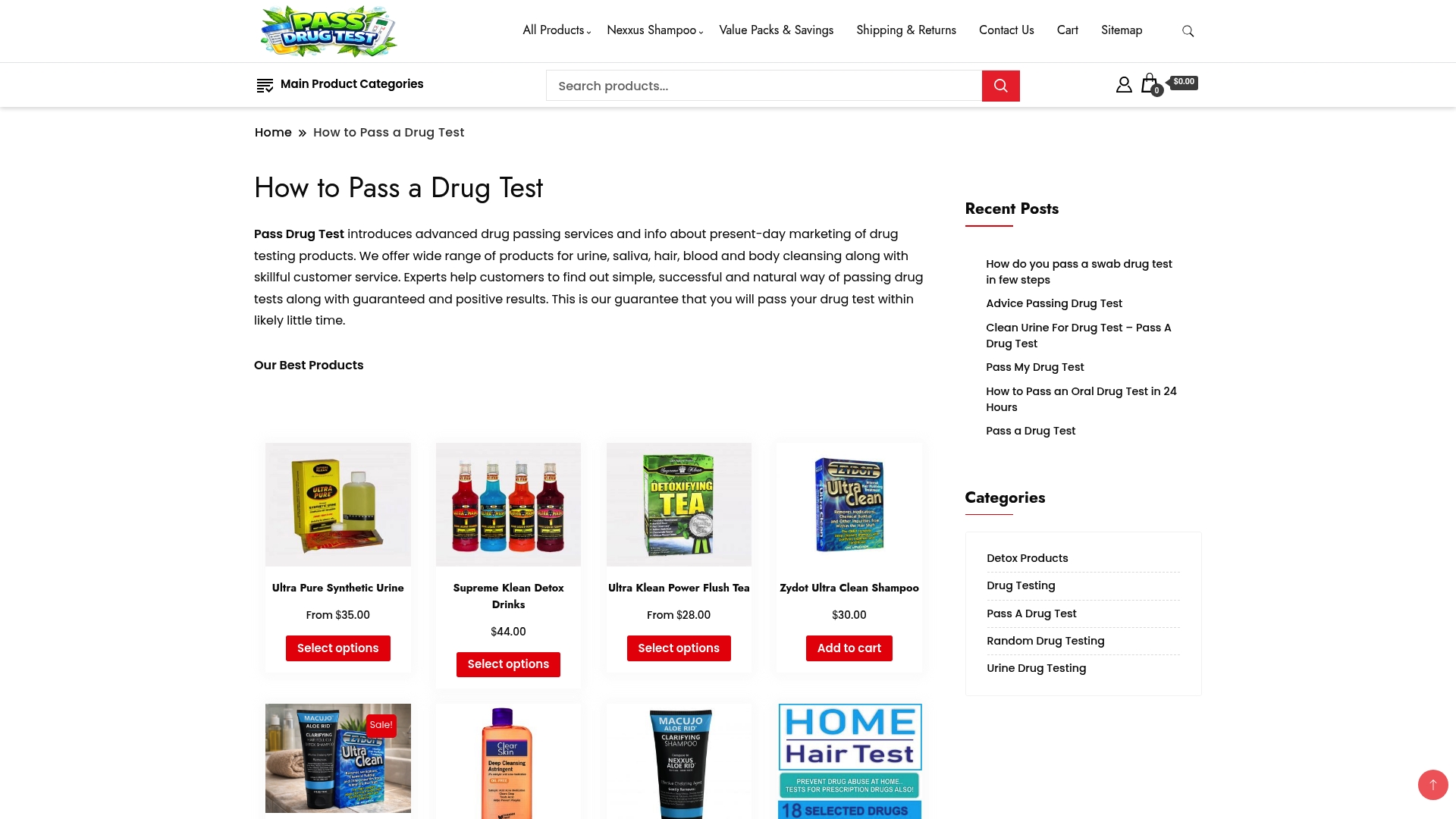
If you have read this far, you know that ACV alone is not a preparation strategy. What you need are products built around documented protocols, used correctly and on the right timeline. Passdrugtest carries the Macujo Aloe Rid Shampoo, the most used specialized shampoo in structured multi-step hair detox routines, along with combination kits like the Macujo Aloe Rid plus Zydot Ultra Clean treatment for a complete two-stage approach. For a full view of available detox options, the drug test detox products page covers every category the site carries, from hair shampoos to urine and saliva solutions. Follow the manufacturer’s directions, time your washes properly, and do a strand test before committing to a full protocol. That is the difference between a plan and a hope.
Sources
For the evidence above, see:
- Apple Cider Vinegar for a Drug Test: Does It Work? | Numa
- Should You Try an Apple Cider Vinegar Hair Rinse? | Verywell Health
- Apple cider vinegar for hair: benefits and how to use | Glamour