
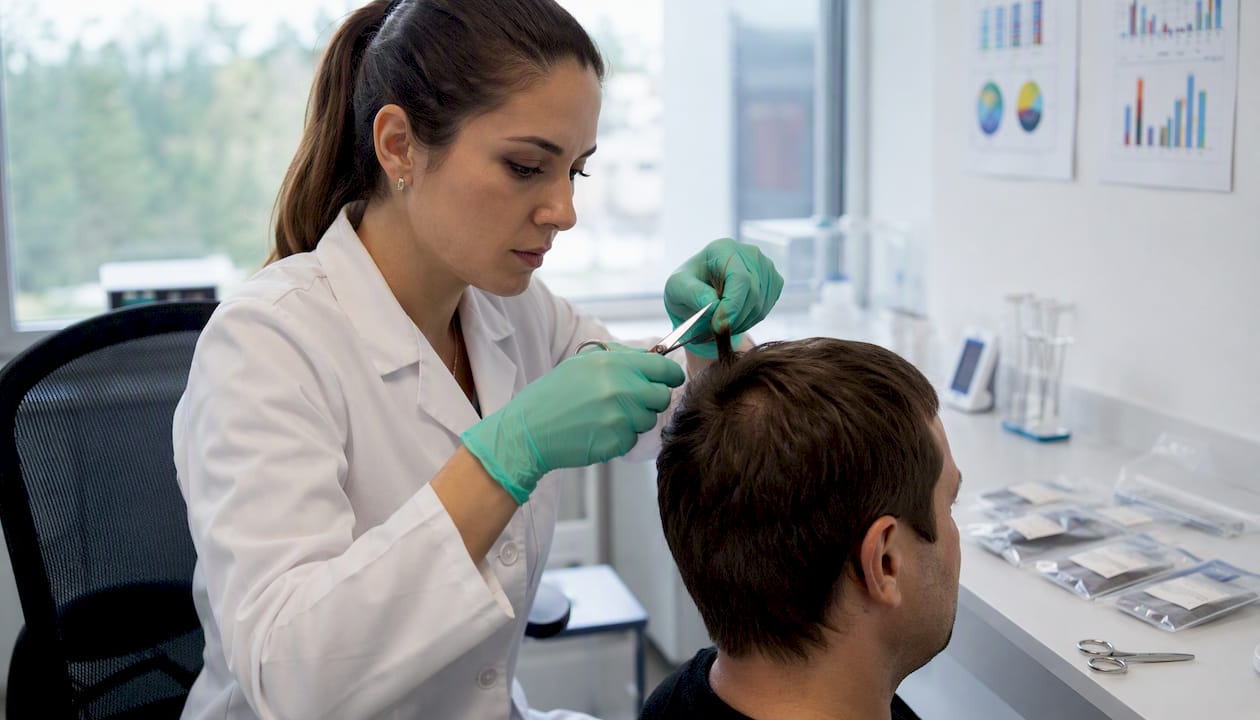

Labs analyze the segment of scalp hair closest to the root that covers an approximate three-month window of drug use. That single fact drives every decision you need to make before a hair follicle drug test. Head hair grows at roughly 0.5 inches per month, so three months of growth lands right at that 1.5-inch mark. Here is what to do right now:
- Measure your hair immediately (dry and straightened for accuracy)
- Do not shave your head — it triggers body hair collection and often extends the detection window
- Decide on a cleansing protocol or arrange an alternative sample strategy before your test date
Understanding this hair length measurement process is the foundation of every smart preparation step that follows.
Table of Contents
- How do labs actually collect hair and why does 1.5 inches matter?
- How to measure your hair correctly before the test
- What happens when your head hair is too short or absent?
- What cleansing methods do consumers actually use?
- Your pre-test timeline and checklist
- Key Takeaways
- The part most guides skip over
- Passdrugtest has the products you need to prepare
- Useful sources for further reading
How do labs actually collect hair and why does 1.5 inches matter?
Labs request approximately 100 mg of hair, roughly 90–120 strands, cut from the vertex (crown) of the scalp as close to the skin as possible. The collector secures the bundle in foil to preserve the proximal end, then ships it under chain-of-custody protocols. Labcorp confirms that labs run an immunoassay screen first, then confirm positives with mass spectrometry.
The reason labs focus on the root-end segment is straightforward: drug metabolites are incorporated into the hair shaft as it grows out from the follicle. The section closest to the scalp reflects the most recent use. Hair beyond 1.5 inches is trimmed away before analysis and does not change the 90-day window.
Curly and coiled hair is handled differently. Collectors prioritize a cotton-ball-sized mass rather than perfectly aligned strands, and labs note the hair type when interpreting results. One more critical point: hair must be cut directly from the donor — stray hairs from a brush or container are never accepted because they cannot provide a reliable proximal end.
| Factor | Detail |
|---|---|
| Sample mass required | ~100 mg (90–120 strands) |
| Collection site | Vertex/crown, cut close to scalp |
| Segment analyzed | Proximal 1.5 inches from root |
| Detection window | ~90 days |
| Hair growth rate | ~0.5 inches per month |
| Curly hair collection | Cotton-ball mass; root alignment adjusted |
Advanced labs can go further. Micro-segmental analysis cuts a single hair at sub-millimeter intervals, achieving high temporal resolution. That level of precision means the proximal shaft tells a detailed story, not just a 90-day summary.
How to measure your hair correctly before the test
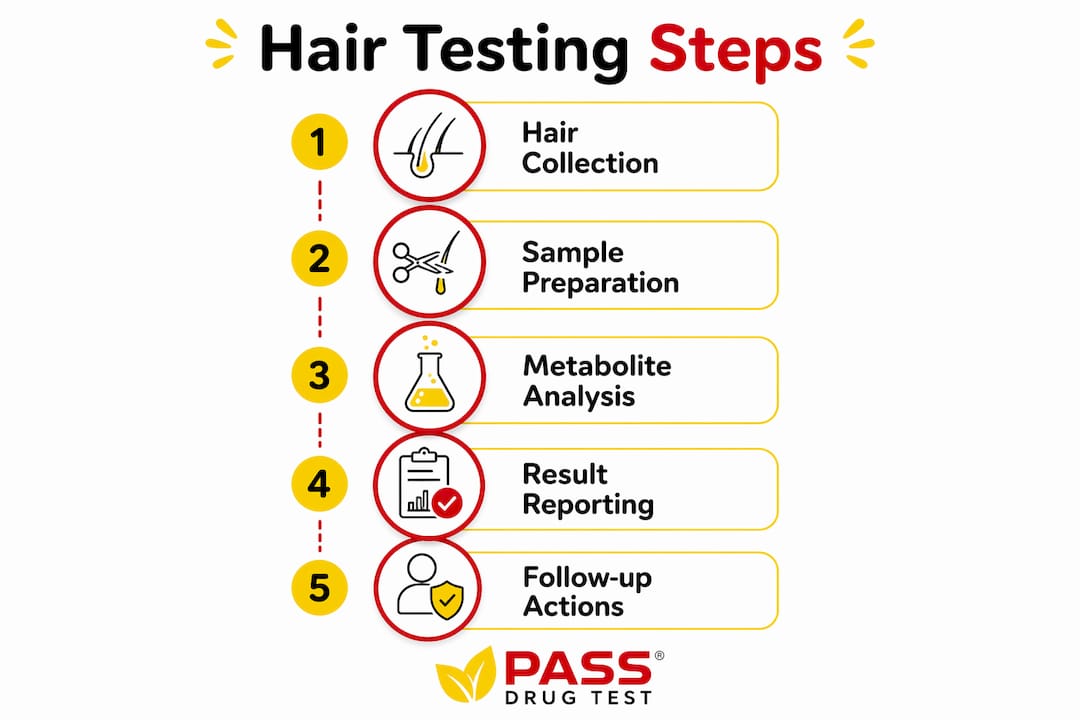
Getting an accurate reading matters more than most people realize. A wrong measurement can lead to unnecessary decisions, including shaving, which makes things worse. Follow these steps:
- Gather a soft, flexible sewing tape measure. A rigid ruler works for very short hair but can miss the natural curve of the scalp.
- Wash and completely dry your hair. Wet hair absorbs moisture and appears longer than its true length; dry hair reflects its actual structural length.
- Straighten if possible. Curly or wavy hair measured in its natural state gives you the curl length, not the strand length.
- Place the zero point of the tape directly at the scalp where the hair shaft emerges from the skin, not at the hairline.
- Extend the tape 1.5 inches along a single strand or bundle and note whether you have enough.
- Confirm with a second strand from a different area of the crown to account for uneven growth.
Pro Tip: Use a mirror or ask someone to help. Measuring the back of your own head without assistance almost always introduces error, especially with curly hair.
If your hair is shorter than 0.5 inches anywhere on your head, you are likely below the minimum threshold for a standard head-hair sample. That changes your options significantly.
What happens when your head hair is too short or absent?
Short hair does not mean you avoid testing. It means the collector adapts.
- Head hair under 1.5 inches: The collector may gather hair from a wider area of the scalp to reach the required mass of 90–120 strands.
- Head hair under 0.5 inches or absent: Collectors move to body hair in a specific order — chest, underarm, leg, and facial hair are all options. The source is documented so the lab can adjust interpretation.
- Body hair and detection windows: Body hair grows more slowly than scalp hair. That slower growth rate means a 1.5-inch body hair sample can reflect a much longer history, potentially up to a year or more.
Shaving your head before a test is one of the most counterproductive moves you can make. Collectors are trained to recognize it, the body hair fallback extends your detection window significantly, and the act itself can be flagged as an attempt to interfere with the collection process. If you have a documented medical condition causing hair loss, bring written documentation from your physician to the collection site.
Practical options when head hair is borderline: delay the test if your situation allows it, begin a pre-test cleansing protocol with time to spare, or speak directly with the test administrator about your hair length before collection day.
What cleansing methods do consumers actually use?
No home method can guarantee a negative result. Labs analyze metabolites embedded inside the hair shaft, and modern confirmation testing with LC–MS/MS is highly sensitive. That said, many consumers pursue cleansing protocols as a risk-reduction measure, and the Macujo Method is the most widely cited multi-step regimen in consumer and community guidance.
The Macujo Method: general steps
- Stop drug use as early as possible before the test.
- Wet hair and apply a salicylic acid-based product to open the hair cuticle.
- Work in a detergent-based cleanser to penetrate the shaft.
- Rinse thoroughly, then follow with a specialized detox shampoo.
- Repeat the full cycle multiple times in the days leading up to the test.
Macujo Aloe Rid Shampoo is the product most commonly paired with this regimen. Passdrugtest carries it along with supporting wash components. You can find detailed regimen guidance and product availability on the Passdrugtest site.
Risks and honest limitations to know:
- Repeated chemical treatments can cause significant hair damage and scalp irritation.
- Over-processed hair may visually signal tampering to a collector.
- No consumer protocol has been validated in peer-reviewed clinical trials as a guaranteed pass.
- Starting the regimen with more time before the test consistently improves reported outcomes.
Your pre-test timeline and checklist
Timeline
- Right now: Measure your dry, straightened hair. Confirm you have at least 1.5 inches from the scalp.
- 2–4+ weeks before the test: Begin your chosen cleansing regimen. The Macujo Method requires multiple wash cycles, so starting early matters.
- 48–72 hours before: Complete final washes. Avoid new chemical treatments, hair color, or relaxers.
- Day of the test: Arrive with hair clean and dry, no heavy styling products, and bring your ID and any medical documentation.
Checklist
- Measurement confirmed: 1.5 inches available from the scalp
- Products on hand: Macujo Aloe Rid Shampoo, astringent, clarifying shampoo
- No new chemical hair services within the past two weeks
- Medical hair-loss documentation ready if applicable
- Do not bring hair from a brush or container to the collection site
Key Takeaways
The single most important fact: labs analyze the proximal 1.5 inches of scalp hair, representing roughly 90 days of drug metabolite history, so your preparation must start with an accurate measurement of that exact segment.
| Point | Details |
|---|---|
| The 1.5-inch rule | Labs use the first 1.5 inches from the root, covering ~90 days based on 0.5 in/month growth. |
| Measure dry and straight | Wet or curly hair inflates length readings; always measure dry and straightened for accuracy. |
| Never shave your head | Body hair fallback extends the detection window and flags potential interference. |
| Cleansing has limits | The Macujo Method reduces risk but cannot guarantee a negative result; start early and follow instructions. |
| Passdrugtest | Carries the Macujo Aloe Rid Shampoo and supporting wash products for U.S. customers preparing for hair follicle tests. |
The part most guides skip over
Accurate measurement before anything else is the decision that drives everything downstream. Most people skip straight to asking “which shampoo should I use?” without first confirming they actually have 1.5 inches of testable hair. If you don’t, the shampoo question is secondary to the body hair question, and those are very different problems with very different timelines.
The other thing worth saying plainly: the 90-day window is a biological average, not a hard cutoff. Individual hair growth rates vary. Someone with slower growth may have a longer history captured in 1.5 inches; someone with faster growth, a shorter one. Labs know this. Treating the 90-day figure as an exact boundary rather than a guideline is a mistake that leads to overconfidence.
Cleansing protocols like the Macujo Method are best understood as risk-reduction tools. Used carefully, with time, and with the right products, they give you a better position than doing nothing. They are not a guarantee, and presenting them as one does readers a disservice. The honest approach is to start early, measure accurately, and use proven products from a source you trust.
Passdrugtest has the products you need to prepare
If you’ve confirmed your hair length and you’re ready to act, Passdrugtest carries the Macujo Aloe Rid Shampoo and the full range of supporting wash components used in consumer cleansing regimens. All products ship to U.S. customers with discreet packaging.
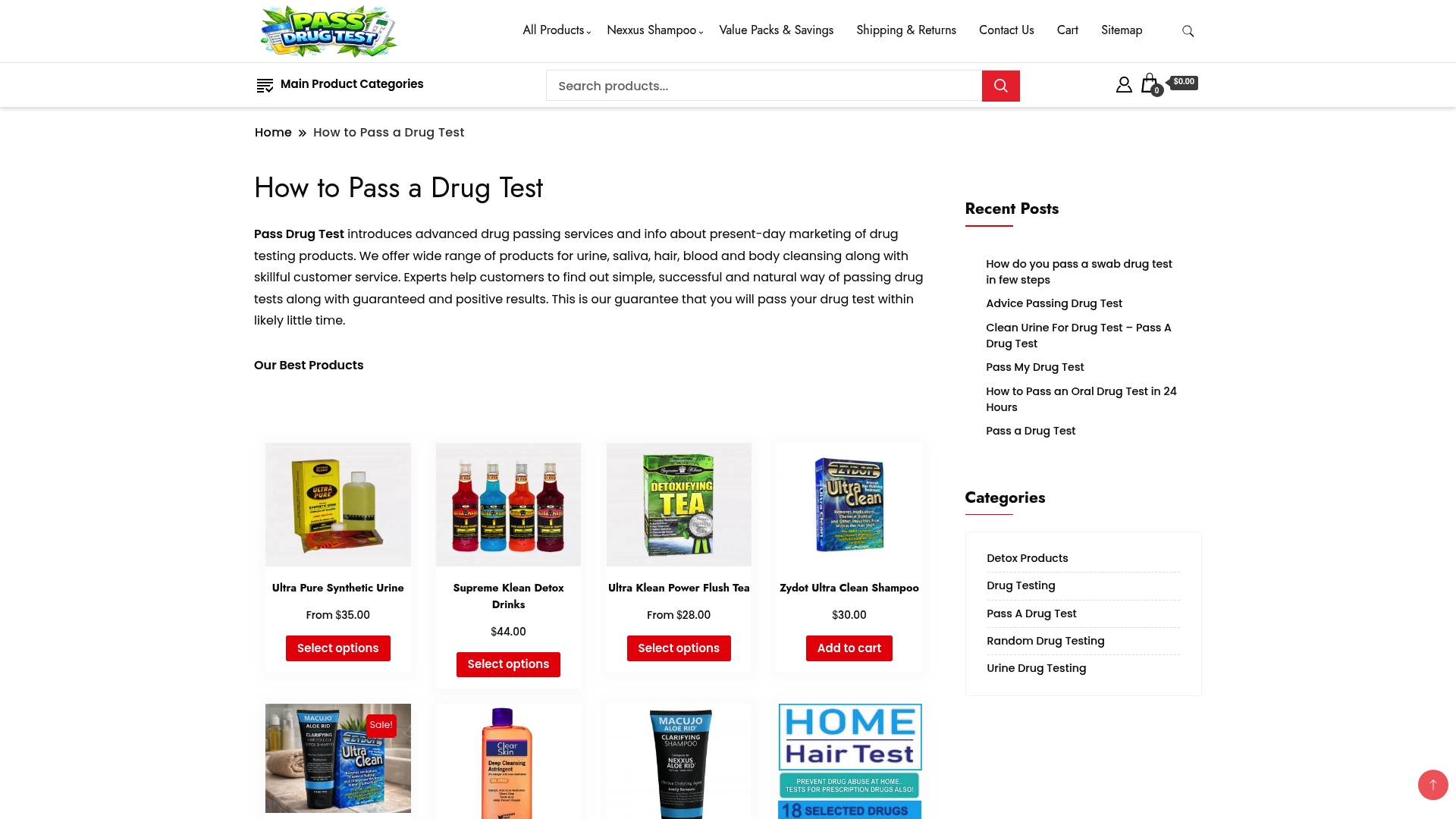
The Macujo Aloe Rid Shampoo is Passdrugtest’s flagship product and the most recommended detox shampoo for hair follicle test preparation. It pairs with astringents, clarifying shampoos, and finishing treatments available in the full detox product catalog. Products are designed to support the multi-step regimen process when used as directed and started with adequate time before the test.
Honest disclaimer: These products improve preparation odds for many users, but no product guarantees a negative result. Follow the included instructions carefully, start as early as possible, and consult the product pages for specific usage guidance.
Useful sources for further reading
- Quest Diagnostics Hair Testing FAQ — lab sampling standards, body hair protocols, and the 90-day window rationale
- Labcorp Hair Follicle Drug Testing — collection procedures and confirmation testing methods
- Concentra Hair Drug Testing 101 — collector protocols and chain-of-custody requirements
- PMC: Micro-segmental hair analysis — technical review of segmental analysis and temporal resolution
- CurlCentric Hair Length Measurement Guide — accurate measurement technique for all hair types
- Passdrugtest Hair Drug Test Info — client education hub on hair follicle testing and product options
This article is general information, not medical or legal advice. Confirm current collection requirements with your test administrator or the collecting laboratory before your test date.