
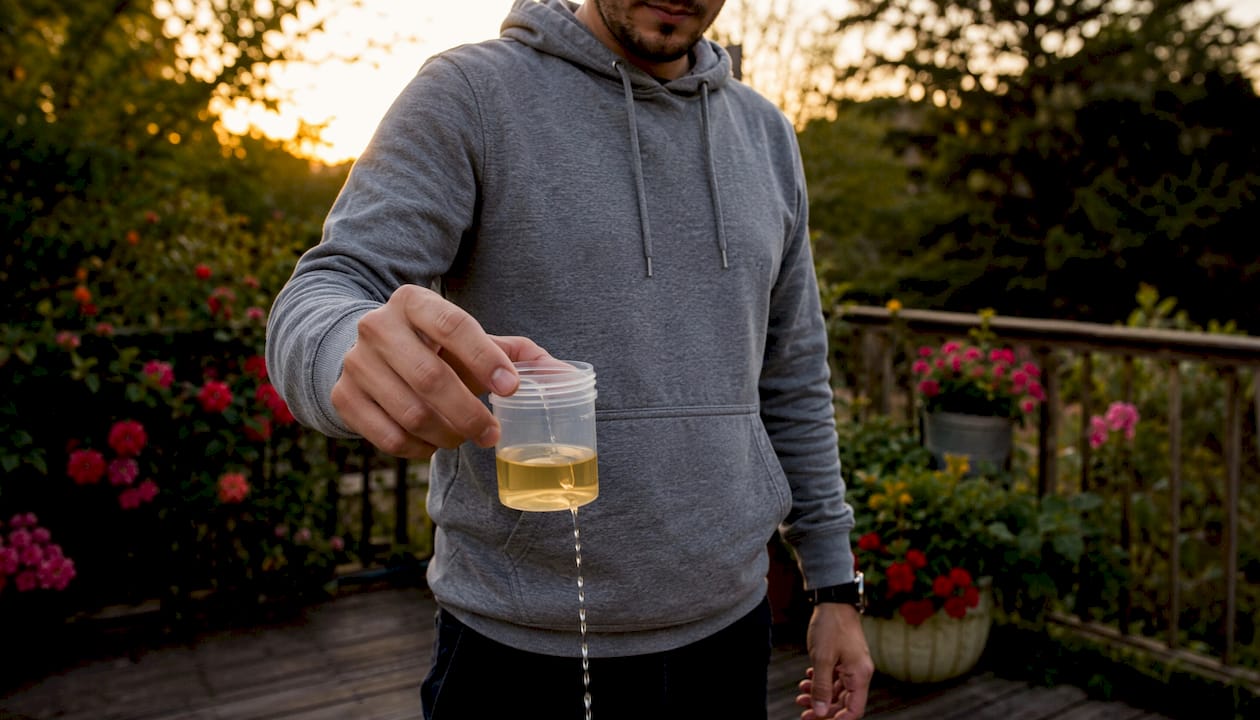

The only reliable way to pass a urine drug test is to be genuinely drug-free for the full detection window of whatever substance you used. No drink, supplement, or household remedy changes that biological reality. If you have a prescription that could trigger a non-negative screen, document it now and be ready to present it to the Medical Review Officer (MRO). If your test is days away and you have been clean long enough, your two most controllable actions are maintaining steady hydration and following collection instructions precisely.
Here is what to do right now, depending on your timeline:
- Stop using immediately if you have not already. Every hour of abstinence matters for detection windows.
- Document any prescriptions that could produce a non-negative result. Your MRO can clear a legitimate positive before it reaches your employer.
- Hydrate steadily with water throughout the day, but do not chug large amounts right before the test. Over-hydration triggers creatinine and specific gravity flags.
- Do not add anything to your sample. Bleach, vinegar, hydrogen peroxide, or any household chemical will be caught by modern specimen validity panels and will convert a possible positive into a guaranteed fail.
- Avoid synthetic urine or substitution for observed or government-mandated tests. Temperature is checked within minutes of collection and must read 90–100°F. An out-of-range reading flags the sample immediately.
Stat to know: Industry reporting highlights an increase in flagged and invalid specimens in recent years, with labs receiving additional training specifically to catch tampering attempts. The odds of a cheat method going undetected are lower now than at any point in the history of workplace drug testing.
Pro Tip: If your test is employer-ordered and you have a legitimate prescription for an opioid, benzodiazepine, or amphetamine, call the testing facility’s MRO line before your appointment. A proactive disclosure is far less damaging than an unexplained non-negative.
Table of Contents
- How urine drug testing actually works: screening, confirmation, and validity checks
- Common cheat methods and why modern labs catch them
- What actually works: abstinence timelines and detection windows by substance
- How to prepare safely and legally for a scheduled urine test
- The truth about detox drinks and over-the-counter masking products
- Legal, employment, and safety risks of attempting to cheat
- How labs detect tampering: the technical reference
- Key Takeaways
- Passdrugtest has product options worth knowing about
How urine drug testing actually works: screening, confirmation, and validity checks
Most people picture a simple dip-strip test. The actual lab process is more layered than that, and understanding it is the clearest reason why quick fixes rarely hold up.
Step 1: Immunoassay screening. Every sample first goes through an immunoassay screen, a qualitative test that flags whether a drug or its metabolites appear above a cutoff concentration. This step is fast and inexpensive, but it produces both false positives and false negatives at the margins.
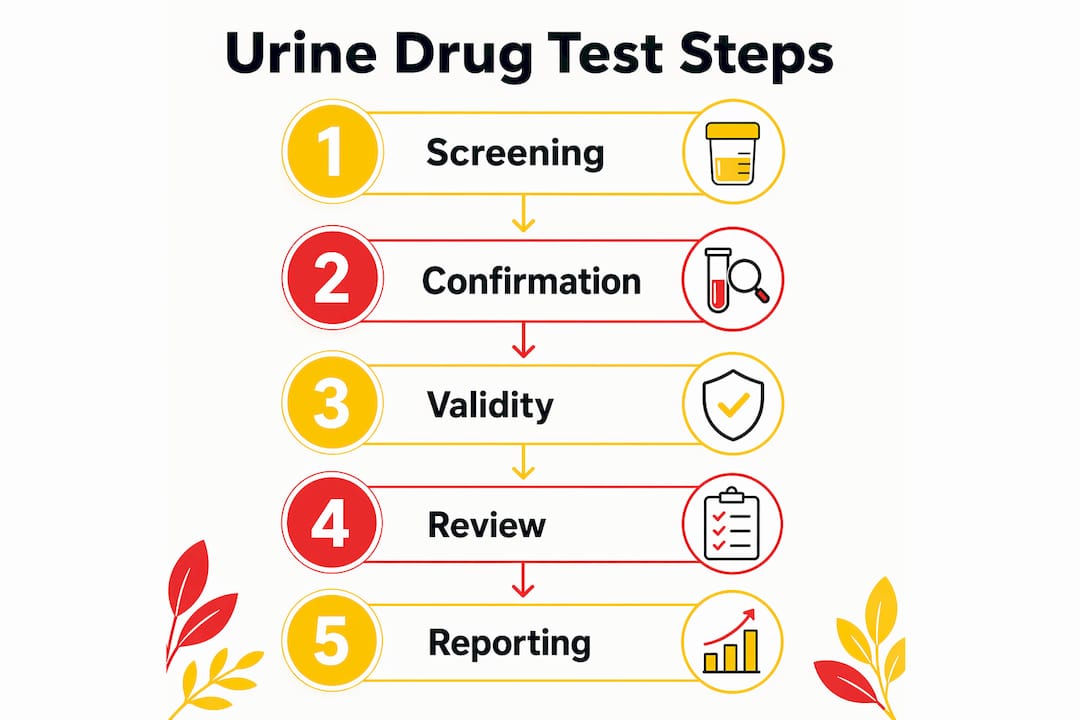
Step 2: GC–MS or LC–MS confirmation. Any non-negative screen is sent for confirmatory testing using gas chromatography–mass spectrometry (GC–MS) or liquid chromatography–mass spectrometry (LC–MS). These methods identify metabolites precisely above cutoff thresholds and are highly accurate. A false positive from the immunoassay screen is usually cleared at this stage. A true positive is confirmed.
Step 3: Specimen validity testing. This runs in parallel with screening, not after it. Labs check:
- Temperature: Must read 90–100°F within minutes of collection. Out-of-range values are one of the fastest indicators of substitution.
- Creatinine: A metabolic byproduct produced by the body at a relatively constant rate. Very low creatinine levels can signal dilution.
- Specific gravity: Normal range is 1.003–1.040. Values outside a typical specific gravity range indicate dilution or possible adulteration.
- pH: Normal urine falls between 4.5 and 8.0. Values outside this range suggest a chemical has been added.
- Oxidant and adulterant screens: Multi-parameter dipstick panels detect bleach, peroxide, nitrites, glutaraldehyde, and other common adulterants.
Step 4: MRO review. When a confirmed non-negative result is reported, a Medical Review Officer reviews it before it reaches your employer. If you have a valid prescription, the MRO can verify it and report the result as negative. This is the legitimate channel for prescription users, and it works.
A “dilute” result, where creatinine and specific gravity are low but not zero, typically triggers a retest, often observed. An “invalid” result, where the sample shows signs of adulteration, is treated by most employers as equivalent to a refusal to test.
Common cheat methods and why modern labs catch them
The three classic approaches to beating a urine test are dilution, adulteration, and substitution. Each has a specific detection mechanism, and all three are caught far more reliably today than they were a decade ago.
| Method | What the person does | How labs detect it |
|---|---|---|
| Over-hydration (dilution) | Drinks large volumes of water before the test | Low creatinine and low specific gravity flag the sample as dilute |
| Chemical adulteration | Adds bleach, vinegar, hydrogen peroxide, or commercial adulterants to the cup | Oxidant assays, pH abnormalities, and nitrite/glutaraldehyde screens catch chemical residues |
| Synthetic urine | Submits a commercial fake urine product | Temperature check, creatinine levels, and specific gravity levels often fall outside normal ranges |
| Biological substitution | Uses another person’s clean urine | Temperature check is the first failure point; creatinine and hormonal markers can also differ |
| Internal masking agents | Ingests detox drinks or herbal supplements | GC–MS confirmation identifies metabolites regardless of dilution; dilution itself triggers a flag |
The lab’s position is clear: A specimen that has been adulterated is treated as equivalent to a refusal to undergo drug testing. Individuals who alter their samples fail the test, regardless of whether the underlying drug screen would have been positive or negative. Modern specimen validity tests combining pH, creatinine, specific gravity, temperature, and specialized adulterant assays allow lab staff to identify tampered specimens before analytical testing even begins.
Household chemicals are particularly risky. Bleach and hydrogen peroxide are detected by oxidant assays within seconds of dipstick contact. Vinegar drops the pH below 4.5, which is immediately flagged as abnormal. Commercial adulterants like Whizzies (nitrite-based) and UrinAid (glutaraldehyde-based) are specifically named on standard adulterant detection panels. The “cat-and-mouse” dynamic has shifted decisively toward labs, and the risk of a flagged sample now outweighs any potential benefit of attempting to cheat.
A flagged sample almost always triggers an observed retest. For probation, parole, or federal employment testing, the consequences escalate further. More on that in the risks section below.
What actually works: abstinence timelines and detection windows by substance
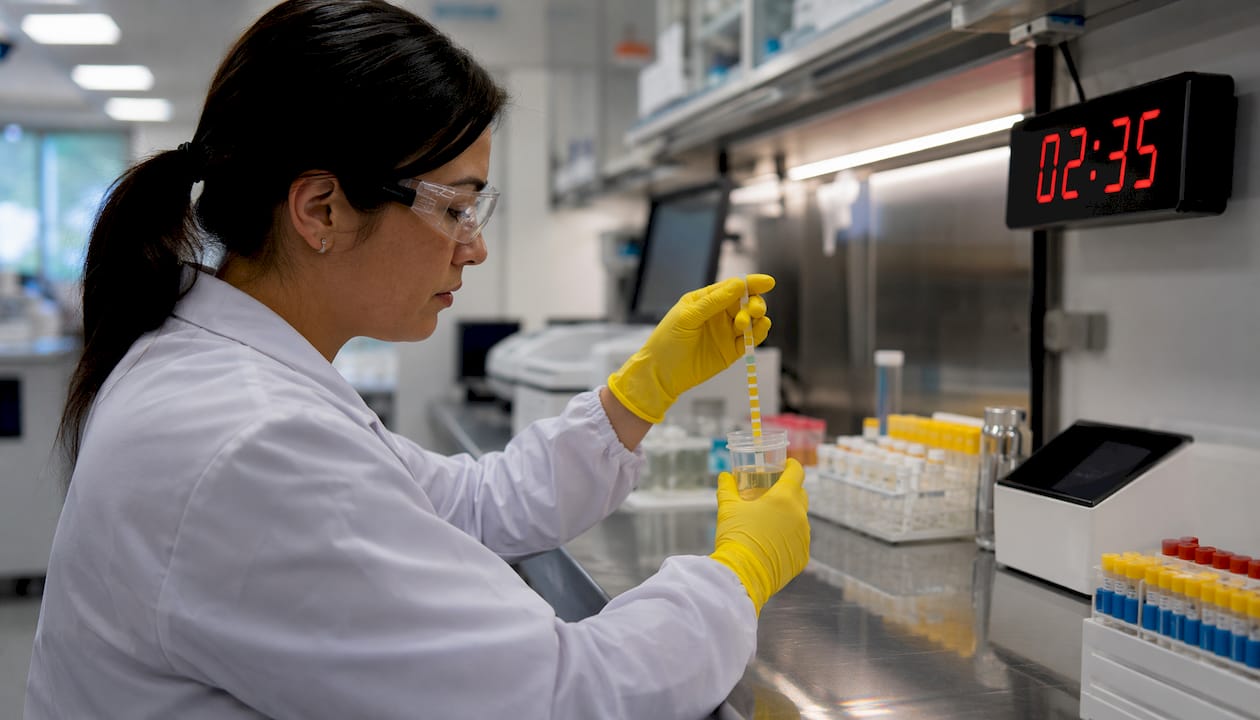
Time is the only variable you can genuinely control. No supplement or drink can reliably remove metabolites already stored in fat tissue or processed into urine. The body metabolizes drugs on its own schedule, and that schedule depends on several personal factors.
Approximate urine detection windows by substance
| Substance | Occasional use | Chronic/heavy use | Notes |
|---|---|---|---|
| THC (marijuana) | 3–4 days | Up to several weeks | Stored in fat; the most variable window of any common drug |
| Cocaine | 2–4 days | Up to about one week | Metabolite benzoylecgonine clears faster than THC |
| Heroin/opioids (short-acting) | 1–3 days | 3 days | Morphine and codeine clear relatively quickly |
| Methamphetamine | 3 days | 5 days | Longer half-life than cocaine |
| Benzodiazepines | 3–7 days | Several weeks | Long-acting benzos (diazepam) accumulate in fat |
| MDMA (ecstasy) | 2–4 days | 3 days | Clears faster than THC |
| Amphetamines | 2–4 days | 4–7 days | Prescription use documented through MRO |
| PCP | 7 days | Up to several weeks | Highly lipophilic; long window for heavy users |
These ranges are approximations. Several personal factors can push your window toward the longer end:
- Frequency and amount of use. Chronic, heavy use saturates fat tissue, especially for THC. A daily marijuana user may test positive for three to four weeks after their last use.
- Body fat percentage. THC and PCP are lipophilic, meaning they bind to fat. Higher body fat means a longer detection window.
- Metabolism and age. A slower metabolic rate extends how long metabolites remain above cutoff thresholds.
- Liver and kidney function. Both organs are central to drug metabolism and excretion. Impaired function slows clearance.
- Hydration level at the time of testing. Steady, normal hydration keeps urine concentration in a normal range. Neither extreme helps you.
- Exercise. Moderate exercise supports metabolism, but intense exercise in the 24–48 hours before a test can temporarily release THC stored in fat cells back into the bloodstream, potentially raising urine metabolite levels.
If your use has been heavy or prolonged and you are facing a test with a short timeline, the honest answer is that abstinence alone may not be enough in time. For chronic dependence, a professional medical detox program is the appropriate next step, both for your health and for any realistic chance of a negative result within a compressed window.
How to prepare safely and legally for a scheduled urine test
If you know your test date in advance, a structured preparation routine gives you the best chance of a clean, valid result without resorting to anything that could get your sample flagged.
Three or more weeks out:
Stop using entirely. Maintain steady hydration throughout each day. Eat a balanced diet, get adequate sleep, and exercise moderately. Document all current prescriptions and note which ones could trigger a non-negative screen. If you take prescribed opioids, benzodiazepines, or stimulants, contact the testing facility’s MRO line in advance.
72–24 hours before the test:
Avoid new supplements, herbal products, or over-the-counter medications you do not normally take. Stop heavy or intense exercise 24–48 hours before collection, since vigorous workouts can temporarily mobilize THC metabolites from fat tissue. Continue drinking water steadily, aiming for pale yellow urine rather than clear. Clear urine is a dilution flag; dark yellow is a concentration flag.
The morning of the test:
Do not use your first void of the day for the sample if you can avoid it. First-void urine is the most concentrated of the day and will show the highest metabolite levels. Drink a normal amount of water with breakfast. Bring a photo ID, your prescription list, and any relevant medical documentation.
At the collection site:
Follow all instructions from collection staff. Provide a midstream sample, not the beginning or end of the stream. Do not add anything to the cup. Do not attempt to dilute the sample with water from the sink or toilet. Collection sites are designed to limit access to water, and many use blued toilet water specifically to prevent sample dilution.
Pro Tip: If you have a legitimate medical condition that affects your creatinine levels or urine concentration, such as kidney disease or diabetes insipidus, inform the MRO before your test. These conditions can produce naturally dilute or abnormal specimens, and documented medical explanations protect you from a false “dilute” designation.
The truth about detox drinks and over-the-counter masking products
The commercial detox product market is large, and the claims on many labels are aggressive. Here is what the science actually supports.
Most single-day “detox” drinks work primarily through dilution. They increase urine volume, which temporarily lowers the concentration of drug metabolites in the sample. The problem is that labs measure creatinine and specific gravity specifically to catch this. A drink that dilutes your urine enough to push THC below the cutoff threshold will very likely also push your creatinine below 20 mg/dL, flagging the sample as dilute. Many employers treat a dilute result the same as a positive, or require an immediate observed retest.
Some products go further and claim to “mask” or “flush” metabolites. Experts note that most OTC masking products are ineffective for recent or chronic use and can themselves be detected in the specimen. GC–MS confirmation testing identifies specific metabolites regardless of what else is in the urine, and some commercial adulterant formulas leave their own chemical signatures.
- Herbal supplements (goldenseal, dandelion root, milk thistle) have no credible evidence supporting their ability to accelerate drug clearance to a degree that matters for testing.
- Creatine loading is sometimes recommended to raise creatinine levels after dilution. It can help normalize creatinine, but it does not remove drug metabolites, and labs check multiple validity markers simultaneously.
- Niacin (vitamin B3) in high doses has been promoted online as a detox agent. There is no credible evidence it accelerates THC clearance, and high doses carry real health risks including liver damage and severe flushing.
- Sure-Jell (Certo) is a popular internet remedy. Court-system myth-busting resources have explicitly labeled this claim false. It does not reliably produce negative results.
If you are a chronic user and want to explore product options with realistic expectations, Passdrugtest offers a range of urine support products alongside honest guidance on what each one can and cannot do. No product replaces abstinence for chronic, heavy use, but some options may provide conditional support for lighter, less frequent users with adequate time before the test.
Legal, employment, and safety risks of attempting to cheat
The consequences of a flagged sample extend well beyond a failed test. Understanding them is worth a few minutes of your time before you consider any shortcut.
Employment consequences vary by employer policy, but most treat an invalid or adulterated specimen as equivalent to a positive result. That means termination in most cases, and in safety-sensitive industries (transportation, healthcare, federal contracting), it also means a report to the relevant regulatory body. Department of Transportation (DOT) regulated employees who receive a refusal-to-test finding are removed from safety-sensitive duties immediately and must complete a return-to-duty process through a Substance Abuse Professional (SAP).
Legal consequences are real in some states. Several U.S. jurisdictions have laws specifically criminalizing the sale or use of urine substitution products or adulterants for the purpose of defeating a drug test. North Carolina, South Carolina, and Texas, among others, have statutes that make submitting a fraudulent specimen a criminal offense. Penalties range from misdemeanor charges to felony-level consequences depending on the context (probation testing, federal employment, or licensed professional testing).
Probation and parole carry the highest stakes. A tampered or substituted sample in a court-ordered testing program is typically treated as a violation of supervision conditions, which can result in immediate incarceration. Judges and probation officers are experienced with common tampering attempts, and observed collection is standard in most supervision programs.
Health risks from aggressive “detox” tactics are underappreciated. Drinking extreme volumes of water in a short period can cause hyponatremia (water intoxication), a potentially fatal condition. Ingesting bleach, strong acids, or caustic chemicals in an attempt to “flush” your system causes serious internal injury. These are not theoretical risks; emergency departments see cases of chemical ingestion from people attempting to pass drug tests.
The safest path, legally and physically, is abstinence combined with honest communication through the MRO channel when prescriptions are involved.
How labs detect tampering: the technical reference
For readers who want to understand the specific mechanisms, here is a concise reference covering the assays and instruments labs use.
| Test | What it measures | Abnormal value | What it suggests |
|---|---|---|---|
| Temperature | Sample temp at collection | Outside 90–100°F | Substitution or delayed submission |
| Creatinine | Metabolic byproduct concentration | Below 20 mg/dL | Dilution (intentional or physiological) |
| Specific gravity | Urine density vs. distilled water | Below 1.003 or above 1.040 | Dilution or possible adulteration |
| pH | Acid-alkaline balance | Below 4.5 or above 8.0 | Chemical adulteration (acid or alkali added) |
| Oxidant screen | Presence of oxidizing agents | Any detectable level | Bleach, hydrogen peroxide, or commercial oxidant adulterant |
| Nitrite | Presence of nitrite compounds | At standard cutoff levels | Commercial adulterant (e.g., Klear, Whizzies) |
| Glutaraldehyde | Presence of aldehyde compounds | Any detectable level | Commercial adulterant (e.g., UrinAid) |
GC–MS and LC–MS confirmation testing operates at a different level of precision. These instruments separate individual chemical compounds in the urine and match them against known molecular signatures. They distinguish a true drug metabolite from a structurally similar compound, which is how false positives from immunoassay screens are resolved. They also identify metabolites at concentrations well below what the initial screen requires, which is why “diluting below the cutoff” is less reliable than it sounds.
The core principle from published research: By combining specimen integrity tests (pH, creatinine, specific gravity, temperature) with specialized adulterant assays for potassium nitrite, glutaraldehyde, pyridinium chlorochromate, and oxidants, laboratory staff can identify adulterated specimens before analytical testing even begins. An adulterated specimen is treated as a refusal to test.
Multi-parameter dipstick panels like Intect 7 run all of these checks simultaneously in seconds. The technology has made chemical adulteration far easier to detect than it was in the 1990s and early 2000s, when many of the internet’s “cheat methods” were first circulated. Those methods were developed against older, simpler testing protocols. Modern labs have closed most of those gaps.
For readers who want primary sources, SAMHSA’s Mandatory Guidelines for Federal Workplace Drug Testing Programs and the ADLM (formerly AACC) Clinical Lab News resources are the most authoritative starting points for understanding specimen validity standards.
Key Takeaways
Abstinence for the full detection window is the only method that reliably produces a negative urine result; every shortcut carries a detection risk that modern labs are specifically trained to catch.
| Point | Details |
|---|---|
| Abstinence is the only reliable method | No drink, supplement, or remedy removes metabolites faster than your body’s natural metabolism. |
| Detection windows vary widely | THC can stay detectable for several weeks in chronic users; cocaine clears in 2–4 days for occasional users. |
| Labs check more than just drugs | Temperature, creatinine, specific gravity, pH, and oxidant screens run on every specimen before drug analysis. |
| Cheating attempts usually backfire | A flagged or invalid sample is treated as a refusal to test, with the same consequences as a positive. |
| Passdrugtest offers vetted product options | For urine and hair test preparation, Passdrugtest’s product range provides support with honest guidance on realistic outcomes. |
The honest perspective on quick fixes and what actually helps
The most common mistake people make when facing a urine test is treating it as a chemistry problem to be solved with the right product. It is not. It is a biology problem, and biology runs on its own clock. The internet is full of methods that worked once for someone, under conditions that will never be exactly replicated, and that advice gets recycled as if it were a proven protocol. It is not.
What I find genuinely useful to stress is this: the MRO channel is dramatically underused. Thousands of people panic over a prescription medication that would have been cleared in a five-minute phone call. If you take Adderall, a prescribed opioid, or a benzodiazepine, you do not have a drug test problem. You have a documentation task. Handle it before the test, not after.
For chronic users facing a short timeline, the honest answer is that no product on the market, including the ones Passdrugtest sells, is a guaranteed substitute for adequate clean time. What products can do is provide conditional support for lighter users who are close to the detection window threshold. That is a real and legitimate use case. But it requires honest self-assessment about how much you used, how recently, and how your body processes substances. If you have been using heavily for months, a detox drink is not your answer. A conversation with a medical professional is.
Passdrugtest has product options worth knowing about
If you have done the math on your detection window and you are looking for additional support, Passdrugtest carries a range of products designed specifically for urine and hair test preparation. The urine-focused options include drinks and kits formulated to support normal urine concentration levels for lighter users who have given themselves adequate clean time. They are not magic, and Passdrugtest does not claim otherwise.
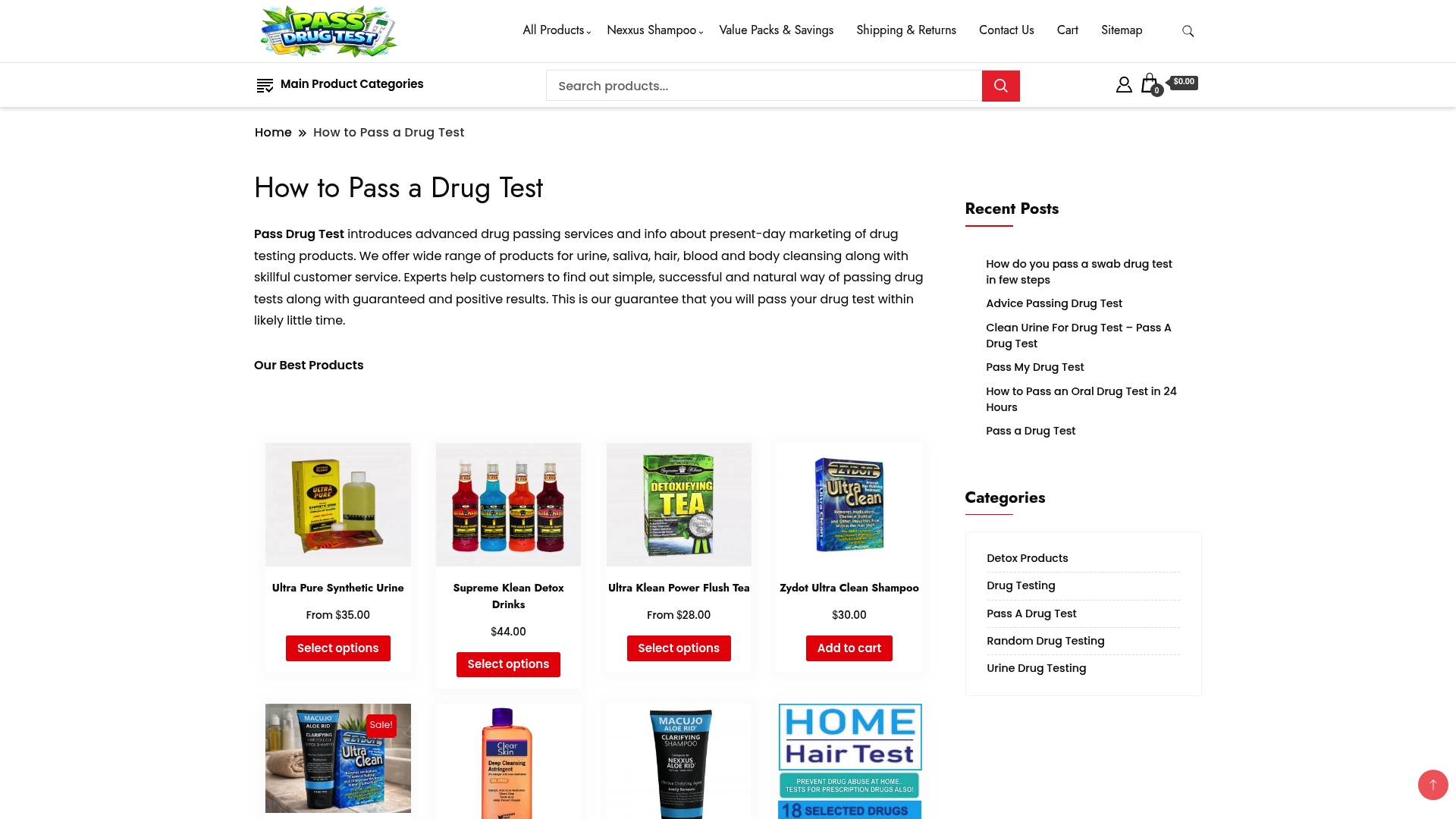
For anyone facing a hair follicle test rather than a urine screen, the preparation approach is entirely different. Passdrugtest’s detox products for urine tests and its clean urine support range cover the urine side. For hair testing, the Macujo Method developed by Mike Macujo is widely regarded as the most effective preparation protocol available, and Passdrugtest carries the products that support it, including the Macujo Aloe Rid Shampoo. Browse the full range, read the realistic guidance on each product page, and choose based on your actual situation. Document your prescriptions, follow collection instructions, and if your use has been heavy, talk to a medical professional first.
This article is general information, not medical or legal advice. Confirm current testing standards and any legal questions with a qualified professional or the relevant primary authority for your situation.
Authoritative sources and further reading
The sources below are the most useful references for readers who want to go deeper on the science, the legal framework, or the clinical side of drug testing and detox.
For specimen validity and lab science:
- ADLM/Clinical Lab News: Detection of adulterants in urine drug testing — the most accessible technical overview of adulterant detection panels and how labs identify tampered specimens.
- PubMed: Beating Drug Tests by Ingesting Detoxifying Agents or Adulterating Urine in vitro — peer-reviewed research on the effectiveness (and failure) of both ingested detox agents and in-vitro adulterants.
- UNC School of Government: Adulteration and Dilution Checks — a detailed practitioner reference covering every major adulteration method and the corresponding detection approach.
For detection windows and metabolism:
- American Addiction Centers: How Long Do Drugs Stay in Your System? — practical detection window ranges with clinical context on metabolism and individual factors.
- Recovered.org: Passing a Drug Test — Effective Detoxing and Myths Debunked — a readable myth-busting overview with clinical review, covering timelines and the MRO process.
For myth-busting and court/probation context:
- Ohio Supreme Court: MythBusters — Drug Testing Myths — a court-system resource that directly addresses common myths (Sure-Jell, sediment, etc.) with clear true/false verdicts.
For practical preparation steps:
- wikiHow: How to Pass a Drug Test — a practical, accessible guide covering low-risk preparation steps including hydration, first-void avoidance, and collection-day routines.
- Dr. Gary Cohen: How to Pass a Pee Drug Test — clinical perspective on temperature, first-void concentration, and specimen validity from a physician’s standpoint.
For professional help with dependence:
- American Addiction Centers — the appropriate starting point for chronic users who need medical detox support rather than a product solution.