

A shampoo cleanse, also called a clarifying shampoo treatment, is a deep-cleaning wash that uses stronger surfactants than everyday shampoos to strip stubborn buildup from your scalp and hair. Where a regular shampoo handles daily oil and light debris, a clarifying formula goes further, targeting polymerized styling products, hard-water minerals, chlorine, and environmental pollutants. For hair-follicle drug-test preparation, the honest verdict is this: clarifying shampoos can remove surface residues effectively, but drug metabolites that are chemically bound inside the hair cortex are largely beyond what any topical wash alone can reliably reach.
Table of Contents
- What is a shampoo cleanse, and how do surfactants actually work?
- How to do an effective, safe shampoo cleanse step by step
- How often should you do a shampoo cleanse?
- Do clarifying or detox shampoos help you pass a hair-follicle drug test?
- What to expect after a shampoo cleanse: timeline, cost, and next steps
- Key Takeaways
- A specialist’s perspective on shampoo cleanses and drug-test prep
- Passdrugtest has the products you need for a serious regimen
- Useful sources and further reading
What is a shampoo cleanse, and how do surfactants actually work?
The science is straightforward. Surfactants are amphiphilic molecules, meaning each molecule has a water-attracting head and an oil-attracting tail. That dual structure lets them solubilize oil-based soils so a warm-water rinse can carry them away. Clarifying formulas use higher concentrations of heavy-duty anionic surfactants, such as ammonium or sodium lauryl sulfate, compared to the milder blends in everyday shampoos.
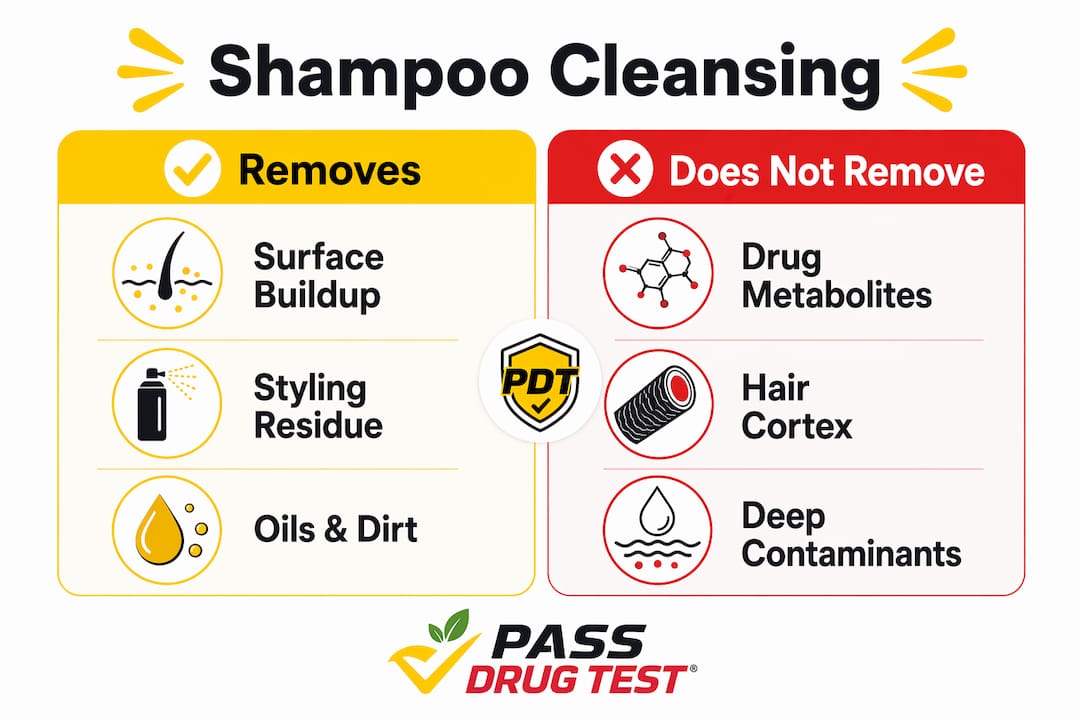
What a shampoo cleanse typically removes:
- Styling-product polymers (gels, mousses, hairsprays)
- Hard-water mineral deposits
- Chlorine and environmental pollutants
- Excess sebum and dead skin cells
What it usually does not remove:
- Drug metabolites chemically embedded inside the hair shaft cortex
- Melanin-bound compounds that have migrated from the bloodstream during hair growth
| Metric | Regular Shampoo | Clarifying Shampoo |
|---|---|---|
| Water content | 80% | Lower; higher active concentration |
| Surfactant strength | Mild (e.g., sodium laureth sulfate) | Stronger (e.g., ammonium lauryl sulfate) |
| Primary target | Daily oil and light debris | Buildup, minerals, polymers |
| Recommended frequency | Daily to every few days | Occasional treatment use |
Because surfactants are nondiscriminatory, they can also strip beneficial proteins and lipids alongside unwanted buildup. That trade-off is why clarifying shampoos are designed as treatments, not daily drivers.
How to do an effective, safe shampoo cleanse step by step
Technique and contact time matter as much as product strength. A rushed rinse with a powerful formula will underperform a methodical wash with a mid-range one.
- Detangle first. Comb or brush dry hair before wetting it. This prevents breakage and lets the shampoo reach the scalp evenly.
- Wet thoroughly with lukewarm water. Hot water can dry out the scalp; lukewarm opens the cuticle enough for effective cleansing.
- Apply the clarifying shampoo directly to the scalp. Use enough to cover the roots without saturating the lengths unnecessarily.
- Massage for 60–90 seconds using circular fingertip motions. This contact time is critical. Surfactants need time to break down residue at the root before you rinse. Fingertips only, never nails.
- Rinse with warm water and let suds flow down the lengths. Do not pile hair on top of your head. Let gravity do the work to avoid friction and tangling.
- Repeat if needed. For heavy buildup or a pre-test regimen, a second application is common. The second pass often lathers more fully because the first removed the top layer of residue.
- Follow immediately with a deep conditioner or hydrating mask. Apply mid-length to ends, leave on for at least three minutes, then rinse with cool water to seal the cuticle.
Pro Tip: Alternate every heavy clarifying session with a moisture-focused conditioning routine. Clarifying strips the hair; conditioning restores it. Skipping this step repeatedly leads to brittleness and breakage, which is the opposite of what you want going into a test.
How often should you do a shampoo cleanse?
Most people benefit from a clarifying treatment occasionally rather than regularly. For general scalp health, occasionally, depending on how much product you use and how oily your scalp runs. Research published in PMC found that increasing wash frequency improved scalp sebum levels, flaking, and odor in many populations, challenging the idea that washing less is always better. That finding applies to regular shampooing, though, not to repeated clarifying treatments, which carry a higher damage risk.
Over-cleansing with a clarifying formula can cause cuticle damage, increased static, brittle strands, and heightened sensitivity to chemical treatments. People with bleached or chemically processed hair, sensitive scalps, or active scalp dermatitis face the highest risk and should limit clarifying sessions or consult a dermatologist or trichologist before starting any intensive regimen.
Avoid clarifying shampoos entirely if you have an active scalp condition like seborrheic dermatitis in a flare, if you have had a chemical service within the past two weeks, or if you are pregnant and your scalp is unusually reactive. Between clarifying sessions, a gentle, sulfate-free shampoo paired with a hydrating conditioner keeps the scalp balanced without stripping what you just restored. Understanding pH balance in hair detox is also worth reviewing before you start any intensive cleansing routine.
Do clarifying or detox shampoos help you pass a hair-follicle drug test?
Clarifying shampoos can remove surface contaminants and may contribute to a multi-step regimen, but alone they are unlikely to guarantee a negative result on a hair-follicle drug test. The reason comes down to where metabolites live. Surface residues sit on the cuticle and outer cortex; drug metabolites from cannabis and other substances are chemically bound deeper inside the hair shaft, deposited there as the hair grew from the follicle. A topical wash, no matter how strong, has limited reach into that interior structure.
What you can realistically expect from a clarifying wash:
- Removal of surface buildup and environmental contaminants
- A cleaner scalp and improved hair texture
- Possible reduction of residue near the outer cuticle
- No reliable guarantee of removing metabolites from the cortex
People preparing for hair-follicle tests commonly use multi-step regimens that go beyond a single clarifying wash. These typically include repeated clarifying sessions, pH-altering steps, and chelating agents. They are higher-effort and carry a real risk of hair damage. Peer-reviewed evidence for guaranteed passing rates does not exist for any of these approaches. For a deeper look at how detox shampoo compares to home remedies, Passdrugtest covers the practical differences.
| What a shampoo cleanse can remove | What it cannot reliably remove |
|---|---|
| Styling-product polymers and residues | Drug metabolites bound in the hair cortex |
| Hard-water mineral deposits | Melanin-bound compounds from bloodstream exposure |
| Chlorine and environmental pollutants | Deeply embedded chemical compounds |
| Excess sebum and dead skin cells | Substances incorporated during hair growth |
What to expect after a shampoo cleanse: timeline, cost, and next steps
Right after a clarifying wash, your scalp will feel noticeably cleaner and lighter. You may also notice some dryness or increased static, which is normal and why conditioning is non-negotiable. Hair may feel slightly coarser until moisture is restored.
Practical timeline and next steps:
- Immediately after: Apply a deep conditioner. Watch for signs of detox shampoo effectiveness like improved scalp feel and reduced product residue.
- Days before a test: People using multi-step regimens typically perform multiple treatments over several days. A single wash the night before is not considered sufficient by most practitioners.
- Post-cleanse hair care: Follow up with a restorative routine. Passdrugtest’s guide on hair care post-detox covers how to rebuild moisture and manageability.
- Confirm your test type first. Hair-follicle tests detect a 90-day window of use. Knowing this helps you set realistic expectations before investing in any regimen.
Typical cost ranges for specialized clarifying and detox shampoos run from around $15–$30 for standard clarifying options to $100–$200 or more for specialized detox shampoo products and multi-product regimens. Prices vary by brand and whether you are purchasing a single product or a bundled kit.
Key Takeaways
A shampoo cleanse removes surface buildup effectively, but drug metabolites bound inside the hair cortex require more than a single clarifying wash to address.
| Point | Details |
|---|---|
| What a shampoo cleanse is | A deep-cleaning treatment using stronger surfactants to remove buildup regular shampoos leave behind. |
| What it reliably removes | Surface residues: styling products, minerals, chlorine, and excess sebum. |
| Limits for hair-follicle tests | Drug metabolites in the hair cortex are not reliably removed by clarifying shampoos alone. |
| Safe frequency | Occasional use (every 1–4 weeks for most); always follow with a deep conditioner. |
| Passdrugtest recommendation | Browse hair drug-test products for clarifying and detox shampoo options suited to multi-step regimens. |
A specialist’s perspective on shampoo cleanses and drug-test prep
The most common mistake customers make is treating a single clarifying wash as a complete solution. A shampoo cleanse is a useful first step, and it genuinely improves scalp condition and removes surface contamination. But for hair-follicle drug-test preparation, surface cleaning is only part of the picture.
What tends to work better in practice is a structured, multi-step approach where clarifying washes are one component alongside other treatments designed to reach deeper into the hair shaft. Customers who see the best outcomes are those who start early, follow a consistent protocol, and do not skip the conditioning steps that protect hair integrity throughout the process.
Common mistakes to avoid: using a clarifying shampoo once and expecting a dramatic result, skipping conditioner after each session, and starting the regimen too close to the test date. The Macujo Method, developed by Mike Macujo, remains the most well-regarded multi-step protocol in the hair-follicle drug-test community, and it incorporates clarifying shampoo as a core component of a broader regimen.
Passdrugtest has the products you need for a serious regimen
If you are facing a hair-follicle drug test and want a clarifying shampoo that is trusted by the community, Passdrugtest carries the Macujo Aloe Rid Shampoo, the flagship product recommended for use within multi-step detox protocols. It is formulated with a stronger surfactant profile than standard clarifying shampoos and is specifically positioned for pre-test preparation routines.
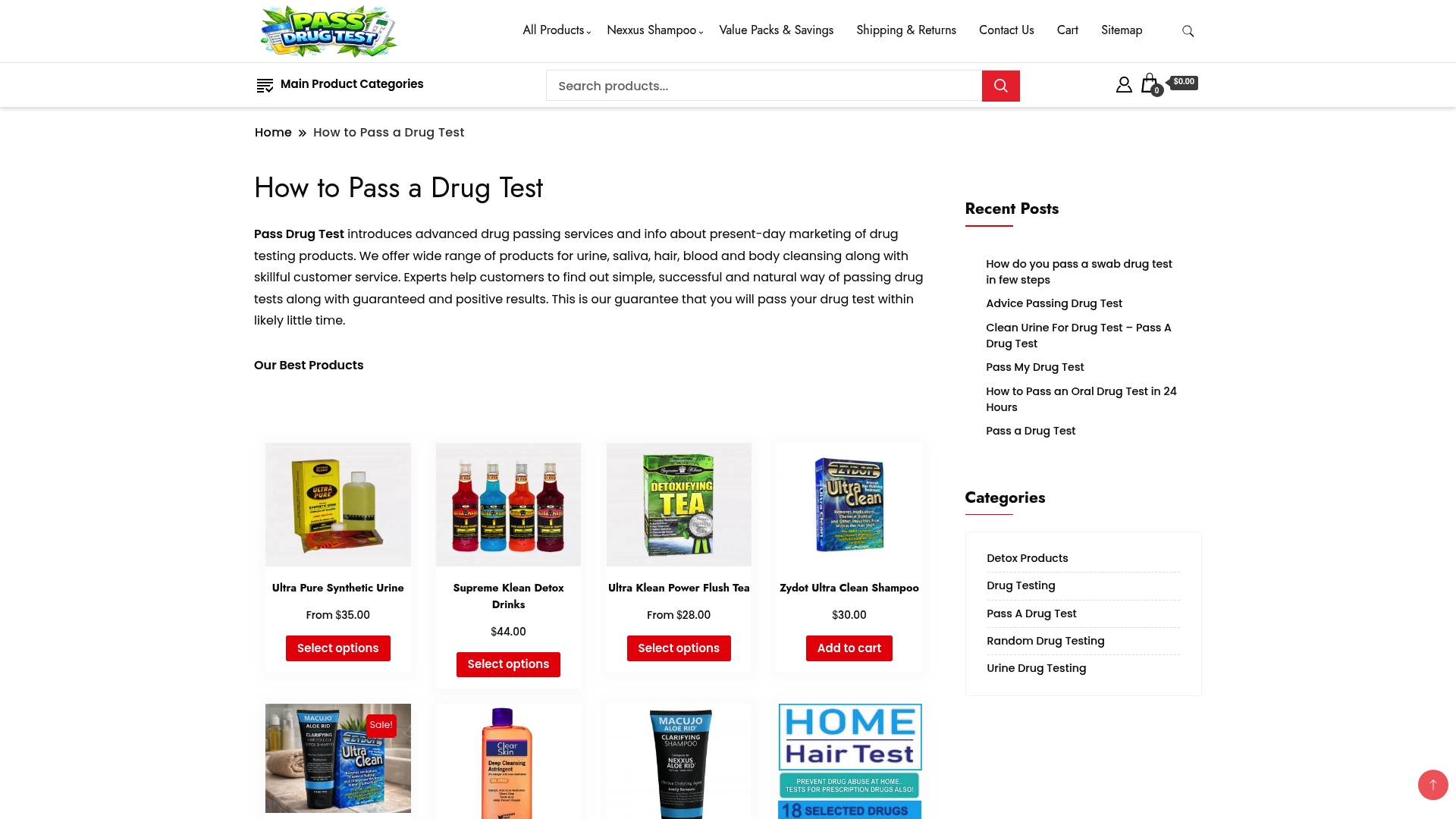
No shampoo, including this one, guarantees a negative result. Its realistic role is deep surface and near-cortex cleaning as part of a structured regimen, not a standalone fix. Passdrugtest also carries the Zydot Ultra Clean Shampoo for readers who want a second-step option. Browse the full range of drug test detox products to find the combination that fits your timeline and hair type.
Useful sources and further reading
- Shampoo science: Wiley — Covers surfactant chemistry, the amphiphilic mechanism, and the trade-off between cleansing power and hair-lipid preservation. Best for understanding why clarifying shampoos work and where their limits lie.
- Scalp wash frequency study: PMC — Research on how wash frequency affects sebum, flaking, and scalp condition. Use this to calibrate how often to cleanse without over-stripping.
- Hair cleansing essentials: PMC — Clinical overview of shampoo as a surfactant-based cleanser and the role of conditioning agents after clarifying treatments.
- Clarifying shampoo guide: Healthline — Practical breakdown of clarifying formulas versus everyday shampoos, including ingredient differences and use-case guidance.
- How to wash your hair: The New York Times — Technique-focused guidance from stylists and scalp experts; reinforces the importance of massage duration and contact time.
- Passdrugtest hair drug-test resources — Publisher product and education hub covering detox shampoos, the Macujo Method, and multi-step regimen guidance for hair-follicle test preparation.