


Not all drug tests are created equal, and assuming they are could cost you the outcome you need. The type of specimen collected, the detection window involved, and the lab processes used all vary significantly depending on which test you face. For marijuana users preparing for a hair follicle test, this distinction is especially critical. Hair tests don’t just check whether you used recently. They look back through months of your history. This guide walks you through what makes each test different, how hair testing works at the lab level, what chemical cleansing methods can and cannot do, and where your real leverage actually lies.
Table of Contents
- Understanding specimen types and detection windows
- Why hair drug tests are so challenging
- How labs interpret positive hair test results
- The facts and gaps behind chemical cleansing approaches
- A reality check: What actually affects your odds of passing
- Support your success with proven resources
- Frequently asked questions
Key Takeaways
| Point | Details |
|---|---|
| Hair tests offer longest window | Hair follicle testing detects drug use for up to 90 days, far longer than urine or saliva tests. |
| Labs use strict cutoffs | A ‘positive’ result depends on exceeding set thresholds, not merely any presence of a drug. |
| Chemical detox is not proven | There is no clinical proof that chemical cleansing methods will always help you pass a hair drug test. |
| Timing and specimen matter | Your test result depends heavily on the specimen type, time since use, and lab procedures. |
| Smart strategies beat home hacks | Choosing the right test, timing, and validated info is more effective than unproven detox tricks. |
Understanding specimen types and detection windows
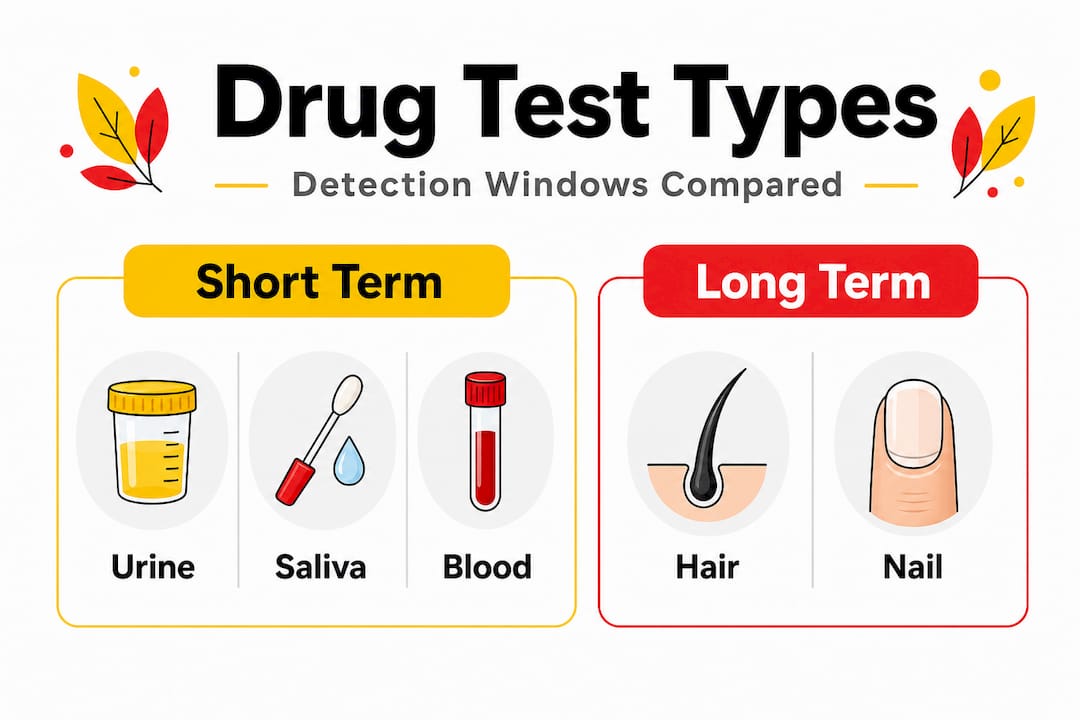
When most people think about drug testing, they picture urine. But drug tests differ primarily by specimen type, and each specimen measures different drug chemistry, whether that’s active drugs or metabolites (the chemical byproducts your body creates when processing a substance), with very different detection windows.
Here’s a direct comparison of the four main specimen types you’re likely to encounter:
| Specimen | Detection window | Typical use | Key advantage | Key limitation |
|---|---|---|---|---|
| Urine | 3 to 30 days (THC varies) | Workplace, probation, pre-employment | Low cost, widely accepted | Can be diluted or substituted |
| Hair | Up to 90 days | Pre-employment, legal proceedings | Long historical record | Cannot detect very recent use |
| Saliva (oral fluid) | 24 to 72 hours | Roadside, post-accident | Detects recent use | Short window, easier to beat |
| Blood | Hours to a few days | Clinical, DUI | Most accurate for active impairment | Invasive, expensive |
The test used in any given situation depends heavily on what the employer or authority wants to know. Are they checking for impairment right now, or are they looking at a broader pattern of use? Each answer calls for a different specimen type.
For marijuana users, the stakes shift dramatically based on which test is ordered. A saliva test might clear you if your last use was more than three days ago. A urine test gives labs a longer window to find THC metabolites, particularly for regular users. But a hair test creates an entirely different challenge, because hair follicle testing is designed for a long retrospective look-back, commonly up to 90 days for a standard scalp sample, because hair growth incorporates drug metabolites into the shaft over time.
Here’s a quick summary of which test type tends to appear in which context:
- Workplace pre-employment screening: Urine is most common, but hair testing is growing in regulated industries.
- Legal and court-ordered testing: Hair and urine are both used; hair is preferred when long-term history matters.
- Post-accident or reasonable suspicion: Saliva or urine for quick, recent-use detection.
- At-home self-testing: Urine strips are the standard, though hair self-tests exist.
- Federal contractor and DOT-regulated jobs: Urine under strict certified-lab protocols, though changes are ongoing.
If you need a deeper guide on what to expect over a longer period, our 90-day THC test guide walks through this specifically. You can also learn more about the exact hair drug test detection window and what it means for your situation.
Now that you know why it’s not one-size-fits-all, let’s explore what makes hair tests unique and often the toughest to beat.
Why hair drug tests are so challenging
Hair testing isn’t just another version of a urine test. It operates on completely different biology. When you consume marijuana, THC enters your bloodstream and your body converts it into metabolites. These metabolites circulate through your blood and eventually get deposited into your hair follicles as your hair grows. Once they’re inside the hair shaft, they don’t wash out with regular shampoo.
The standard hair test uses a 1.5-inch sample cut from the scalp, which corresponds to approximately 90 days of hair growth based on an average growth rate of about half an inch per month. That’s the core reason hair follicle testing looks back so far: the metabolites are physically embedded in the hair structure, creating a timeline of your past use.
“Hair doesn’t just show whether drugs are in your system right now. It shows where you were chemically over the past three months. That’s a fundamentally different question than what urine or saliva answers.”
Here’s a comparison of detection delays across specimen types, which is crucial for understanding your situation clearly:
| Specimen | Earliest detection | Reflects recent or historical use |
|---|---|---|
| Blood | Minutes to hours | Immediate, current impairment |
| Saliva | 1 to 2 hours | Very recent use (24 to 72 hrs) |
| Urine | 2 to 5 hours after use | Recent to moderate-term use |
| Hair | 7 to 10 days after use | Historical use (up to 90 days) |
Notice that hair actually has a delayed start to detection. This is because your hair needs to grow out from the follicle before the metabolites trapped inside become part of a testable sample.
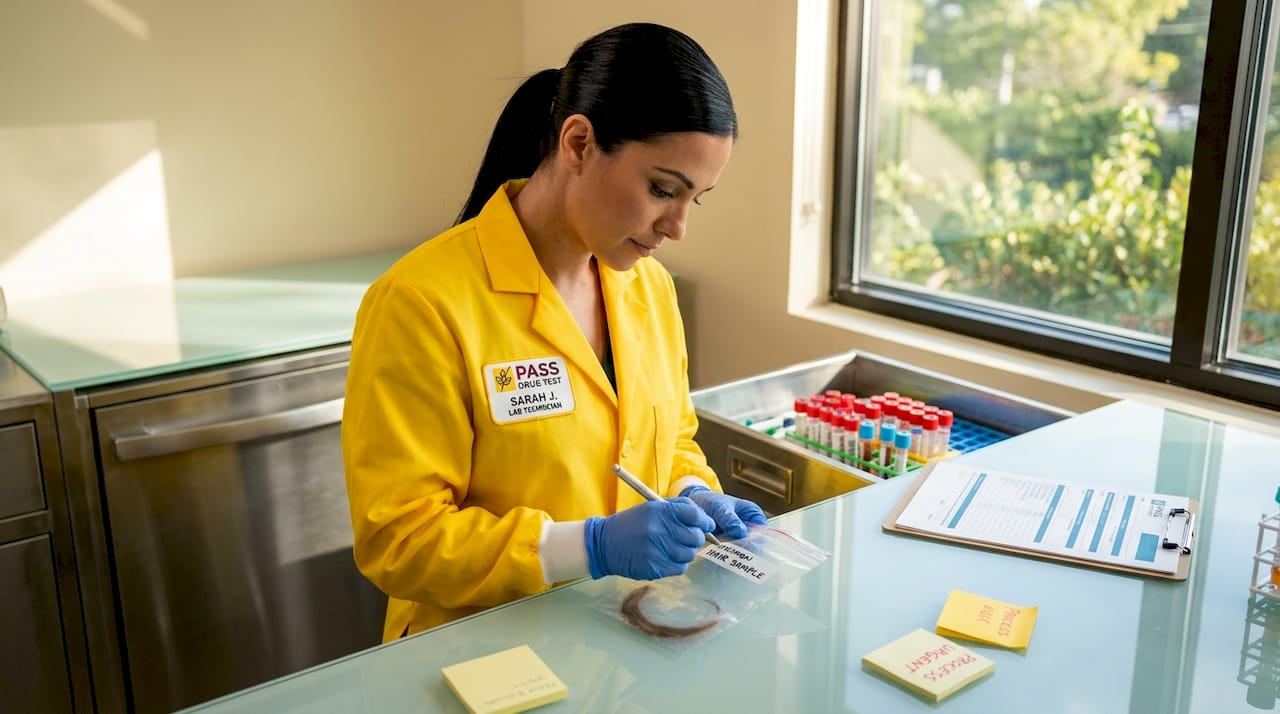
Pro Tip: If your last use was within the past week or two, it may not yet appear in a hair test. However, any use from the weeks and months before that is likely already embedded in your hair shaft. Don’t confuse recent non-detection with safety from a historical record.
This is exactly why hair testing is so challenging for regular marijuana users. If you smoked consistently over the past three months, the evidence is already locked in your hair, and it’s not going anywhere without serious intervention. Understanding the biology at play is the first step to making informed decisions. Learn more about what a hair follicle drug test for marijuana actually measures, and review detailed hair sample analysis for THC to see exactly what labs look for. And if you still have questions about specific hair test detection windows relevant to your timeline, we’ve got that covered.
Additionally, very recent cannabis use may fall outside initial hair detection because the relevant metabolites need time to enter circulation and then incorporate into hair as it grows out. This edge case is important to know, but it’s not a reliable strategy.
Understanding why hair tests are daunting, let’s look closer at how labs interpret these results and why cutoffs matter.
How labs interpret positive hair test results
Many people assume that if any trace of THC metabolites is found in their hair, they automatically fail. That’s actually not how it works. Hair drug testing interpretation depends on laboratory cutoff thresholds and, for positives, confirmatory testing, rather than simply detecting any presence of a drug.
Labs run a two-stage process. First, they use an initial immunoassay screen (a fast, broad detection method that flags samples above a set threshold). If a sample triggers that screen, it moves to a confirmatory test, typically GC-MS (gas chromatography-mass spectrometry), which is far more precise and identifies the specific compound and its concentration. Only a sample that clears both stages is reported as a confirmed positive.
“Chain-of-custody procedures and certified-lab validation are the backbone of reliable hair test results. The process is designed to minimize false positives, not maximize them.”
Federal workplace testing uses structured, certified-lab systems with strict protocols that reinforce how much the outcome depends on the lab process itself, not just whether a substance is present. This matters to you because it means the exact concentration of metabolites in your hair, not just their presence, determines your result.
Here are some common misconceptions about lab hair testing that could cause you to make poor decisions:
- “Any amount means a fail.” False. Labs have established cutoff levels, and samples below those thresholds are reported as negative.
- “Labs detect use immediately.” False. As covered earlier, there’s a lag between use and hair detection.
- “All positive results are the same.” False. Confirmation testing distinguishes between compound types and concentrations.
- “Home test kits match lab accuracy.” False. Home tests are far less sensitive and use different cutoff standards.
- “One-time use won’t show.” It depends on frequency, timing, and individual metabolism. There’s no guarantee.
Understanding the lab’s process is genuinely useful because it shifts your focus from panic to strategy. You can explore more about interpreting hair test results and specific hair test thresholds to know exactly what numbers the lab is working with.
With lab science in mind, the next logical question is whether at-home chemical cleansing methods, like the Macujo Method, can really make a difference.
The facts and gaps behind chemical cleansing approaches
The Macujo Method is one of the most discussed chemical hair cleansing protocols among marijuana users preparing for hair drug tests. It typically involves a multi-step process using specific clarifying shampoos, cleansers, and other products applied repeatedly to the scalp and hair in the days before a test. The theory is that these chemicals can penetrate the hair shaft and break down or flush out the embedded metabolites.
Here’s how most Macujo-type protocols are structured:
- Stop all marijuana use immediately. This is non-negotiable if you want any chance of changing what enters your hair going forward.
- Rinse hair thoroughly with a salicylic acid-based shampoo, which opens the hair cuticle.
- Apply a clarifying or deep-cleaning agent to the hair and scalp and let it sit.
- Follow with a specialized detox shampoo, such as the Macujo Aloe Rid formula, designed to penetrate the hair shaft.
- Rinse thoroughly and repeat the full process multiple times per day in the lead-up to the test.
The risks in this process are real and worth acknowledging honestly. Repeated applications of acidic or clarifying products can damage the hair cuticle, cause scalp irritation, and lead to increased breakage. Some users report significant scalp sensitivity. These aren’t trivial concerns.
“There is currently no peer-reviewed clinical research that validates the Macujo Method as a guaranteed approach to passing a lab hair drug test. The evidence gap here is significant.”
No peer-reviewed clinical studies validate the Macujo Method as a reliable, guaranteed approach for passing lab hair drug tests. The research simply doesn’t exist at that level. Additionally, because hair tests are longer-window retrospective assays and home protocols are not clinically validated, attempts to use chemical cleansing should be treated as high-uncertainty, especially given the scalp irritation and damage risks that are consistently reported.
Pro Tip: Chemical cleansing cannot rewrite the history already locked into your hair shaft. What it may do is reduce the concentration of detectable metabolites in some cases. But this is not a guarantee, and results vary significantly based on your usage frequency, hair type, the specific products used, and how much time you have before the test.
If you want to understand your options more clearly, review our guide on how to minimize drug detection in hair and read through proven Macujo detox routines before committing to any protocol.
Now, let’s add some real-world perspective based on hard-earned experience and what lab evidence shows.
A reality check: What actually affects your odds of passing
Most websites covering hair detox methods focus almost entirely on the products and protocols themselves. What they rarely tell you is that the variables you often have the least control over, including the type of test ordered, the timing of collection, and the lab’s specific cutoff thresholds, matter just as much or more than any cleansing routine.
The most defensible view from research is that specimen choice, timing, and the lab’s validated cutoffs and confirmation pipeline matter far more than at-home chemical routines when the goal is passing rather than simply detecting.
Think about what that means in practical terms. If you’re given any input over which test is administered, or when it’s collected relative to your last use, those decisions carry more weight than anything you put on your hair in the days before. A urine test ordered instead of a hair test changes your entire situation. A test scheduled two weeks later gives your hair more time to grow metabolite-free from the follicle.
What genuinely moves the needle in your favor:
- Cessation of use. Stopping early enough allows new, clean hair growth to replace the metabolite-laden sections. This takes time, typically 90 days or more for the contaminated section to grow out entirely.
- Understanding your test type. Knowing exactly which specimen will be collected lets you apply the right strategy. Hair and urine require very different approaches.
- Awareness of cutoff thresholds. If your metabolite concentration is close to but still below the lab’s cutoff, the lab will report a negative. Knowing this can help you assess your actual risk level.
- Timing of the test. A test taken earlier versus later in your abstinence period changes your result significantly.
Pro Tip: If you’re given a choice of test, specimen type, or testing date, treat that as your biggest opportunity. These factors do more for your odds than any chemical cleanse ever can. If you have no choice, that’s when understanding the detox methods that truly work becomes essential.
The honest truth is that chemical cleansing methods like the Macujo Method exist in a space where the science is limited, the risks are real, and the outcome is never guaranteed. That doesn’t mean people don’t use them, and it doesn’t mean the right products and protocols are worthless. It means you should go in with clear eyes, realistic expectations, and a strategy that accounts for all the variables, not just the ones on your bathroom shelf.
Support your success with proven resources
Facing a hair drug test is stressful, and you deserve access to real information backed by user results and in-depth knowledge, not wishful thinking or empty promises.
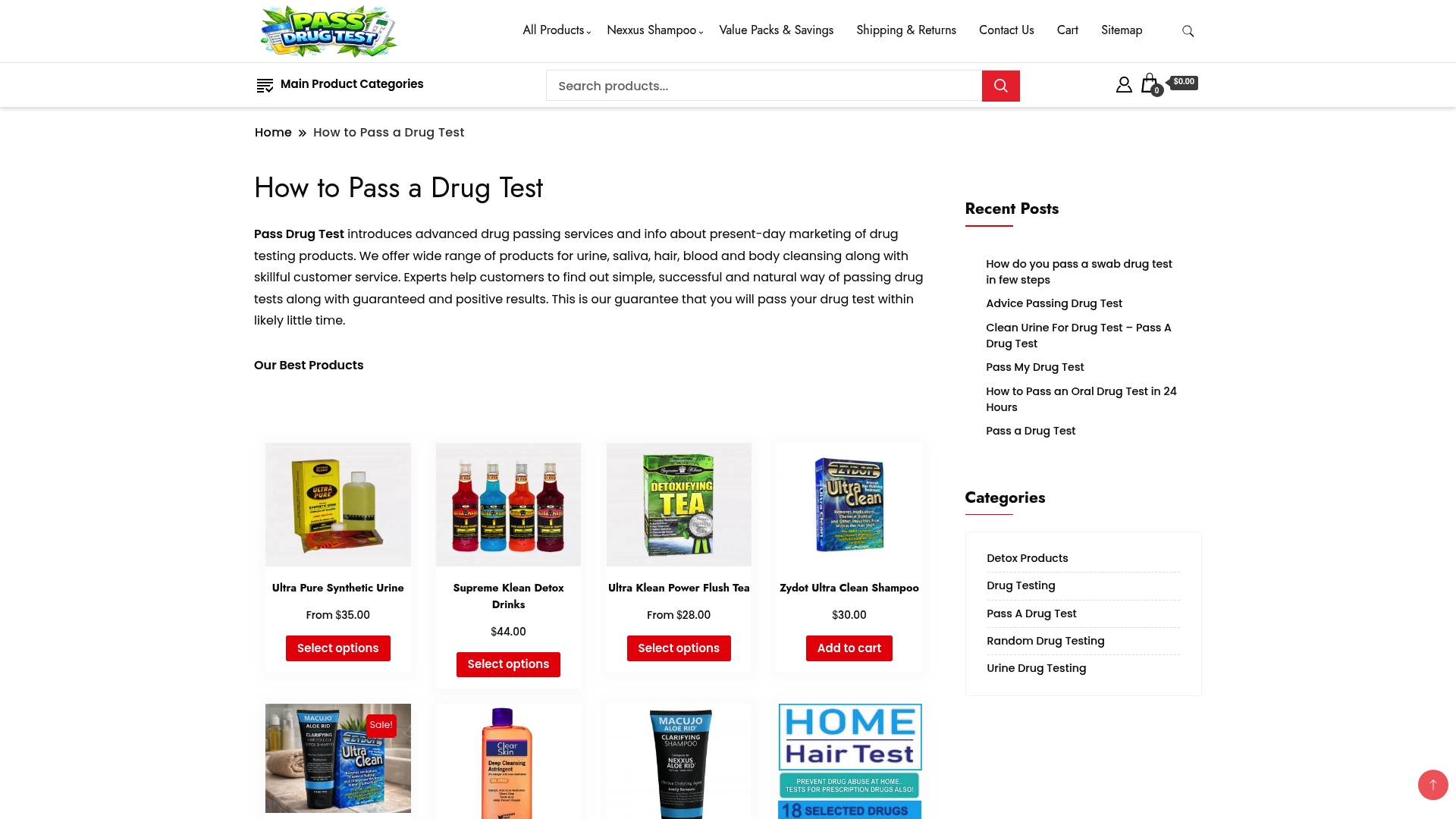
At Pass Drug Test, we give you both the knowledge and the tools to make the most informed decision possible before your test. Whether you’re looking for proven detox products that are best in class, want to compare targeted hair detox shampoos designed specifically for follicle testing, or need a full breakdown of the Macujo Method so you know exactly what you’re committing to, we’ve got everything in one place. Our flagship Macujo Aloe Rid shampoo is specifically formulated for this challenge, and our guides are built around real user needs, not guesswork.
Frequently asked questions
Which drug test type has the longest detection window?
Hair follicle tests detect drug use up to 90 days retrospectively, making them by far the longest window of any standard testing method.
Can detox shampoos guarantee a pass on hair drug tests?
No detox shampoo or chemical cleansing protocol is clinically proven to guarantee a pass, as no peer-reviewed studies validate the Macujo Method or similar approaches as reliable for beating lab-verified hair tests.
What is a lab cutoff threshold in hair drug testing?
A cutoff threshold is the minimum concentration that a lab requires before officially reporting a positive result. Hair drug testing depends on these thresholds and confirmatory testing, not just the presence of any trace amount.
Why might recent cannabis use not show up on a hair test?
It takes several days for drug metabolites to circulate through your blood and incorporate into growing hair, which means very recent use may fall outside hair detection during the initial period after consumption.