

Facing a hair follicle drug test is stressful enough without having to sort through pages of conflicting advice, myths, and outright guesswork. You deserve clear, honest answers. Whether you’re a casual user who tried something months ago or a regular user wondering what your realistic options are, understanding exactly how these tests work is the first step toward making smart, informed decisions. This article cuts through the noise, addresses the most pressing questions marijuana users have about hair testing, and gives you reliable guidance on what genuinely affects your results.
Table of Contents
- How do hair follicle drug tests detect marijuana?
- What are the real detection limits, and do you need to worry as an occasional user?
- Which hair detox methods and products actually work?
- What does the actual hair test process look like, and what can go wrong?
- Popular questions answered: hair test FAQs for marijuana users
- The uncomfortable truth about passing a hair follicle drug test
- Need extra help? Proven solutions and expert support
- Frequently asked questions
Key Takeaways
| Point | Details |
|---|---|
| 90-day window | Hair follicle drug tests can spot marijuana use up to 90 days back based on hair length. |
| Lab wash protocol | External contamination and secondhand smoke rarely cause a positive due to rigorous washing and cutoffs. |
| Detox method limits | Most commercial shampoos and DIY hair detox routines lack scientific proof for reliably beating hair tests. |
| Recent use timing | Marijuana used less than 3 days before a test is usually not detected in hair yet. |
| Sample tampering risks | Bleaching, over-cleansing, or damaged hair can lead to test rejection or further investigation. |
How do hair follicle drug tests detect marijuana?
Now that you know what’s at stake, understanding how the test actually works can ease some anxiety and clarify misconceptions. Hair follicle tests don’t look for THC itself. They screen for THC-COOH, a metabolite your body produces after processing marijuana. When your bloodstream carries this metabolite, some of it gets deposited into the cells that form your hair shaft. As hair grows, that metabolite becomes permanently locked inside the strand.
The standard hair drug test basics process targets the most recent 1.5 inches of hair growth from the scalp. Since hair grows approximately 0.5 inches per month, hair tests detect use up to 90 days prior. This is a significantly longer detection window than urine or saliva tests, which is exactly why employers and labs favor it.
Here’s a quick breakdown of the key steps in the testing process:
- Sample collection: A technician cuts 90 to 120 strands of hair as close to the scalp as possible.
- Decontamination wash: The lab washes the sample to remove surface residue, sweat, and environmental pollutants.
- Immunoassay screening: The first screening test checks for the presence of drug metabolites above the cutoff level.
- Confirmatory testing: Any positive screen gets confirmed by a more precise method (GC-MS or LC-MS) before a result is reported.
One common worry is whether passive exposure (being around marijuana smoke) could cause a positive. The answer is no. Secondhand smoke does not cause positives because labs include washing procedures that remove external contamination, and the cutoff levels are set too high for surface exposure to trigger a result. The metabolite has to come from inside the hair shaft, meaning it must have traveled through your bloodstream first.
| Detection method | Typical window | What it detects |
|---|---|---|
| Hair follicle test | Up to 90 days | THC-COOH (internal metabolite) |
| Urine test | 3 to 30 days | THC-COOH (excreted metabolite) |
| Saliva test | 1 to 3 days | THC (active compound) |
| Blood test | 1 to 7 days | THC and metabolites |
What are the real detection limits, and do you need to worry as an occasional user?
Understanding these specifics of detection limits helps clarify how your use patterns impact the likelihood of a positive result. The standard cutoff for THC-COOH is 1 pg/mg for the initial screen and 0.1 to 0.3 pg/mg for confirmation, which makes hair testing highly sensitive even to occasional use. That said, your personal risk isn’t the same as the next person’s.
Here’s what shapes your individual risk level:
- Frequency of use: Daily users accumulate far higher metabolite concentrations in their hair than someone who used once or twice.
- Time since last use: Very recent use takes 3 to 10 days to appear in hair, so anything within the last 3 days won’t show in the tested segment.
- Hair length tested: Only 1.5 inches from the scalp is collected. Use from more than 90 days ago is in the older portion of your hair and won’t be included.
- Metabolic rate: Everyone processes THC differently. Body fat percentage, metabolism, and hydration all influence how much metabolite ends up deposited in hair.
If you used marijuana occasionally several months ago, your risk may actually be lower than you think, particularly if you were below the sensitivity threshold or if that use falls outside the 90-day window. For resources on detoxing after recent use, timing and approach matter significantly.
Heavy users vs. occasional users: a realistic comparison
| User type | Metabolite level | Risk of positive result | Notes |
|---|---|---|---|
| Daily/heavy (90 days) | High | Very likely | Requires serious preparation |
| Weekly user (60 days) | Moderate | Moderate to high | Cutoff proximity is variable |
| Occasional (1-2 uses past 90 days) | Low | Lower, not zero | Timing and metabolism matter |
| Single use (more than 90 days ago) | Minimal | Very low | Likely outside tested window |
Pro Tip: If your last use was within the past week but more than 3 days ago, it may already be entering your hair shaft. Don’t assume you’re safe just because it was recent. Use our 90-day test guide to understand exactly where your risk sits based on your timeline.
Which hair detox methods and products actually work?
After assessing your personal risk, you’ll want to know which methods give you a real shot at passing, and what’s just wishful thinking. This is where honest guidance matters most, because the internet is full of confident claims that don’t survive scientific scrutiny.
The most widely discussed approaches include:
- Detox shampoos (such as Aloe Rid or other specialty formulas): Marketed as deep-cleansing treatments that strip metabolites from the hair shaft. Popular and heavily discussed in forums.
- The Macujo method: A multi-step protocol combining specific shampoos, treatments, and repeated washes aimed at opening the hair cuticle and removing metabolites. You can read the full Macujo method details to understand exactly what this involves.
- The Jerry G method: A variation involving bleaching and re-dyeing hair to disrupt the hair shaft structure.
- Home remedies: Vinegar, baking soda, lemon juice, or apple cider rinses, often combined with other products.
- Hair bleaching: Repeated bleaching cycles to chemically degrade metabolites embedded in the cortex of the strand.
The hard truth is that no reliable scientific evidence supports detox shampoos, the Macujo method, or bleaching for consistently producing negative results. Studies show minimal effect on embedded metabolites inside the hair shaft. The conflicting evidence on detox approaches reflects how difficult it is to move metabolites that are chemically bound within the hair cortex.
“The hair cortex, not the surface, is where drug metabolites are stored. External washing, regardless of product strength, does not fully penetrate to that level with consistency.” This is the reality labs work with every day.
Understanding hair cuticles and their role in cleansing is important because the cuticle layer protects the inner cortex. Even aggressive treatments that open or damage the cuticle don’t guarantee access to metabolites deep within.
That said, some methods may reduce metabolite concentrations variably. Bleaching can lower detectable levels by 30 to 80% in some cases, but damaged or clearly over-processed hair can alert labs to possible tampering, which sometimes triggers re-testing or flags the sample. A full review of your detox methods overview can help you understand what’s reasonable to attempt versus what creates more problems.
Pro Tip: If you’re going to use any treatment protocol, consistency and proper application matter far more than simply buying the most expensive product. Improper use often reduces any potential benefit entirely.
What does the actual hair test process look like, and what can go wrong?
Clarifying the process itself helps you approach your test prepared and avoid simple mistakes that might raise suspicion. A hair follicle drug test follows a precise, regulated sequence that most people don’t fully understand until they’re sitting in the collection room.
Here’s what happens step by step:
- Collection: A technician cuts 90 to 120 hairs as close to the scalp as possible, typically from the crown area. This standardized lab process involves collecting samples, which are then screened by immunoassay, with positives confirmed by GC-MS or LC-MS. Results typically come back in 2 to 5 days.
- Packaging and sealing: The sample is sealed immediately in front of you to prevent contamination claims later.
- Lab decontamination: The lab washes the hair to remove external contamination before testing begins.
- Immunoassay screening: The initial test checks for metabolites above the threshold.
- Confirmatory GC-MS or LC-MS: If the screen is positive, a second, highly precise test confirms it using a different chemical method.
- Result reporting: A Medical Review Officer (MRO) reviews positive results before they’re reported to the employer.
Several things can go wrong at various stages. If you have too little hair due to recent shaving or very thin hair, the technician may collect body hair instead. Body hair has a longer detection window than scalp hair, sometimes covering up to 12 months of use, which is a critical fact many people overlook. Over-processed or visibly damaged hair can raise lab flags, prompting additional scrutiny. For strategies around minimizing detection mistakes, knowing the collection process gives you practical advantages.
Labs are experienced with tampered samples. Unusual texture, color inconsistencies, or missing cuticle structures are documented and noted in results reports.
Popular questions answered: hair test FAQs for marijuana users
Having explored the process, these scenario-driven FAQs address the remaining “what if” worries you might be facing.
Does hair color or hair treatments affect results? Not significantly. Dye and chemical treatments may marginally affect metabolite levels, but labs account for this. The embedded THC-COOH in the cortex is not fully removed by standard salon treatments.
What if you used marijuana just before the test was scheduled? As confirmed, very recent use within 3 days is undetectable because it hasn’t entered the hair shaft yet. However, existing use from the prior 90 days remains a concern.
Can shaving your head help you pass? Shaving only forces the lab to collect body hair instead, which can actually extend the detection window. This approach frequently backfires and may look suspicious.
Can body hair be substituted? Labs accept body hair as a substitute if scalp hair is insufficient, but as noted above, body hair covers a much longer timeline than scalp hair. This is rarely a strategic advantage for passing as a marijuana user.
Why are heavy users at a serious disadvantage?
- Higher and more frequent metabolite deposits accumulate in hair.
- Concentration levels are much further above the cutoff threshold.
- Any reduction from cleansing approaches may still leave levels above the detection limit.
- More hair segments in the 1.5-inch window contain positive metabolite levels.
If you are a heavy, daily user, your realistic path requires more time, more strategic planning, and honest self-assessment about what any given method can achieve for your specific situation.
The uncomfortable truth about passing a hair follicle drug test
With those practical and science-backed answers in mind, it’s time to reframe expectations with a clear-eyed perspective on the realities marijuana users face. We work with people preparing for hair tests every day, and the single biggest mistake we see is trusting forum success stories over actual chemistry.
Someone posts that they passed after three vinegar rinses and a detox shampoo. Hundreds of people read it and take it as proof. What they don’t see is the person’s actual usage history, metabolite levels, or whether the test was even properly analyzed. One person’s anecdote carries zero scientific weight, and labs know this better than anyone.
Labs are specifically designed to detect manipulation. When a sample shows physical damage consistent with aggressive chemical treatment, the lab notes it. When cuticle structures are inconsistent with a natural hair sample, it gets flagged. What actually works in practice almost never includes last-minute viral hacks applied two days before a test.
What genuinely matters most is your usage history and the time you have available before testing. A light user with 60 or more days since last use is in a very different position than a daily user with 30 days. No shampoo or protocol changes that fundamental reality. Cleansing approaches may play a supporting role for some users in some situations, but they are not a guaranteed solution for everyone. If your career, custody, or legal standing is tied to this test, treat this seriously and focus on what the science actually supports rather than what sounds convenient.
Need extra help? Proven solutions and expert support
If you’re ready to get proactive, here’s where you can find the right solutions with real guidance. Knowing the science is one thing; putting together an actionable plan is another. We’ve built resources specifically for marijuana users preparing for hair testing, because generic advice doesn’t account for your specific situation.
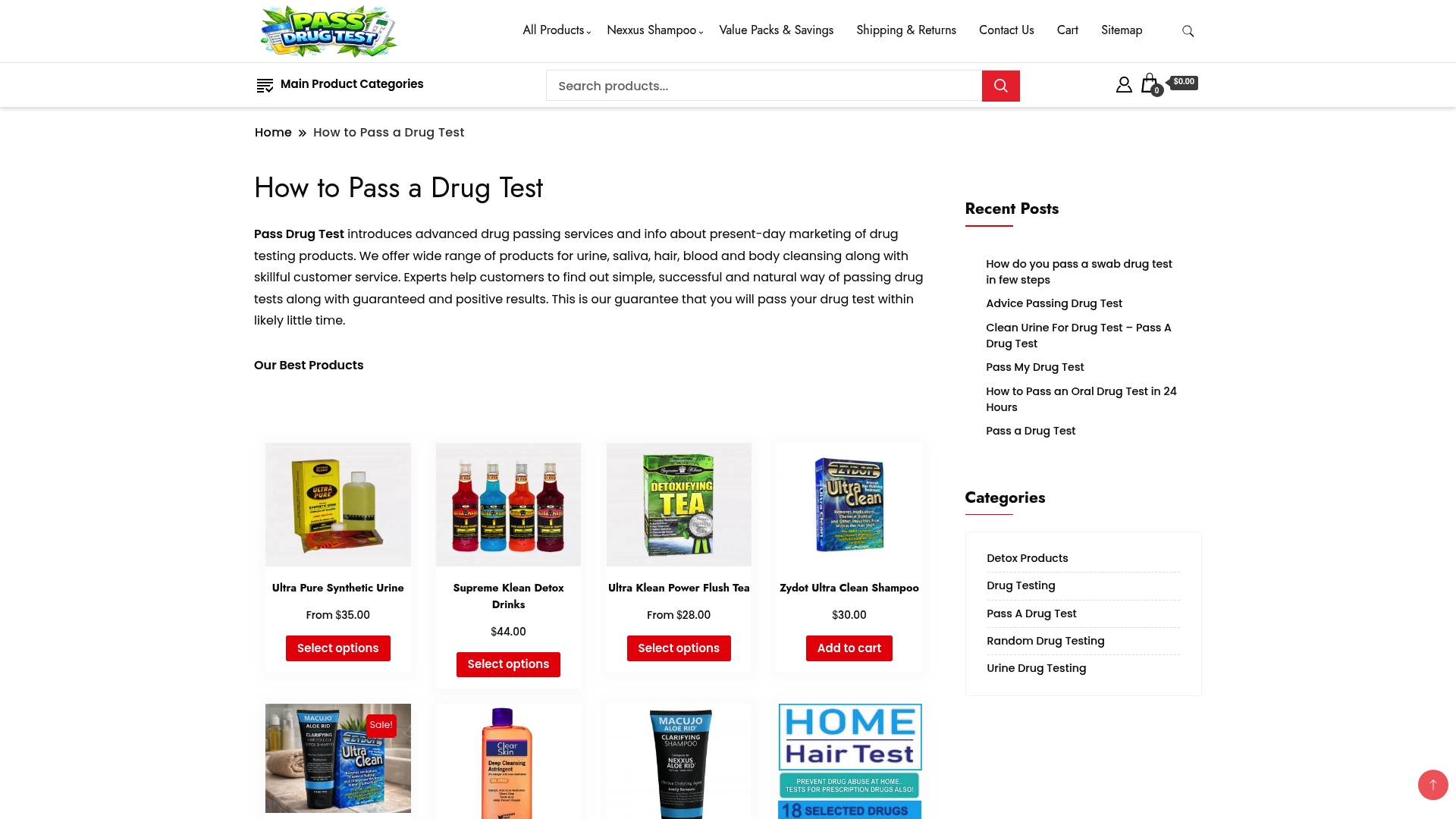
Our comprehensive pass guide walks you through every step of preparation, from understanding your risk level to selecting the right approach for your timeline. If you’re looking for a proven product, our best hair test shampoo page covers the Macujo Aloe Rid shampoo, which is our flagship product and the best in its class for users committed to a consistent protocol. You can also explore the full range of detox product options available to find what fits your situation. Don’t leave your results to guesswork when reliable guidance is right here.
Frequently asked questions
Can secondhand marijuana smoke cause a positive hair follicle drug test?
No. Labs wash hair samples to eliminate external contamination, and the detection cutoff levels are set high enough that passive smoke exposure cannot produce a positive result.
How long after marijuana use should I worry about a hair follicle test?
Hair tests detect use up to 90 days prior, but very recent use within 3 days has not yet entered the hair shaft and won’t appear in the tested segment.
Do natural detox methods like vinegar or baking soda help you pass?
No. No reliable scientific evidence supports home remedies for removing embedded THC metabolites from the hair shaft, regardless of how popular these suggestions are online.
Is bleaching or dyeing my hair a reliable way to pass?
Not reliably. Bleaching may reduce detectable THC levels by 30 to 80% variably, but it can also damage hair in ways that flag samples for tampering or lead to rejection and re-testing.