


Many THC users assume that federal workplace drug testing programs require hair follicle tests. That assumption is wrong, and it shapes how people prepare for drug screenings in ways that can cause real problems. As of April 2026, no federal guidelines authorize hair testing for federal workplace drug programs. Understanding what the rules actually say, how hair tests work in private settings, and what legitimate preparation looks like can make all the difference when a test is on the horizon.
Table of Contents
- Understanding federal guidelines for hair drug testing
- How hair follicle drug tests work
- The Macujo Method: Claims, risks, and realities
- What actually helps pass a hair drug test
- Our perspective: Navigating uncertain tests with evidence and caution
- Find science-backed solutions for hair drug tests
- Frequently asked questions
Key Takeaways
| Point | Details |
|---|---|
| No federal hair test mandate | Federal drug testing programs do not authorize or require hair sample testing for THC. |
| Hair tests detect 90 days | Hair follicle drug tests can reveal THC use up to 90 days prior via metabolites in 1.5 inches of hair. |
| Macujo Method lacks proof | The Macujo Method is popular online, but lacks scientific validation and can cause serious scalp harm. |
| Realistic prep beats risky cures | Understanding lab protocols and test limits prevents false confidence and health risks when preparing for hair drug tests. |
Understanding federal guidelines for hair drug testing
Now that we’ve addressed the misconception, let’s break down what federal guidelines actually require and why hair testing is excluded.
Federal drug testing programs operate under strict rules. The Substance Abuse and Mental Health Services Administration, known as SAMHSA, sets the standards for federal workplace testing. Those standards mandate urine and oral fluid as the only accepted specimen types. Hair is simply not on that list for federally mandated programs.
The Department of Transportation follows the same playbook. Under 49 CFR Part 40, DOT-regulated testing uses only urine or oral fluid. If your job falls under DOT regulations, such as commercial truck driving, aviation, or rail transport, you are not being tested via hair follicle under federal rules. That’s worth knowing before you spend time and money preparing for the wrong kind of test.
So why does hair testing even come up? Researchers and policy advocates have pushed to include hair because it offers a much longer detection window compared to urine. Hair can signal drug use going back months, not just days. However, serious concerns have slowed adoption at the federal level. Critics point to documented evidence that hair tests can produce racially biased results because melanin-rich hair binds more drug metabolites than lighter hair. Laboratories and regulatory bodies haven’t reached consensus on validated cutoff levels that fully account for this.
Here’s a quick comparison of specimen types and their context:
| Specimen type | Federally authorized | Detection window | Common setting |
|---|---|---|---|
| Urine | Yes (SAMHSA/DOT) | 3 to 30 days | Federal and private employers |
| Oral fluid | Yes (SAMHSA/DOT) | 1 to 3 days | Federal and private employers |
| Hair | No (as of 2026) | Up to 90 days | Private employers only |
| Blood | No | Hours to days | Legal and clinical use |
Key takeaways from current federal policy:
- Federal programs rely on urine and oral fluid only
- Hair testing is not federally authorized for workplace drug programs
- Private employers can legally require hair tests in most states
- Bias and lack of standardized validation remain major barriers for hair test adoption
“There are no federal mandatory guidelines specifically authorizing hair testing for federal workplace drug testing programs as of April 2026.”
You can find more context in our hair drug test FAQs if you want a broader picture of how different test types compare.
How hair follicle drug tests work
With the federal rules clarified, understanding how hair tests work is critical for anyone facing this kind of screening.
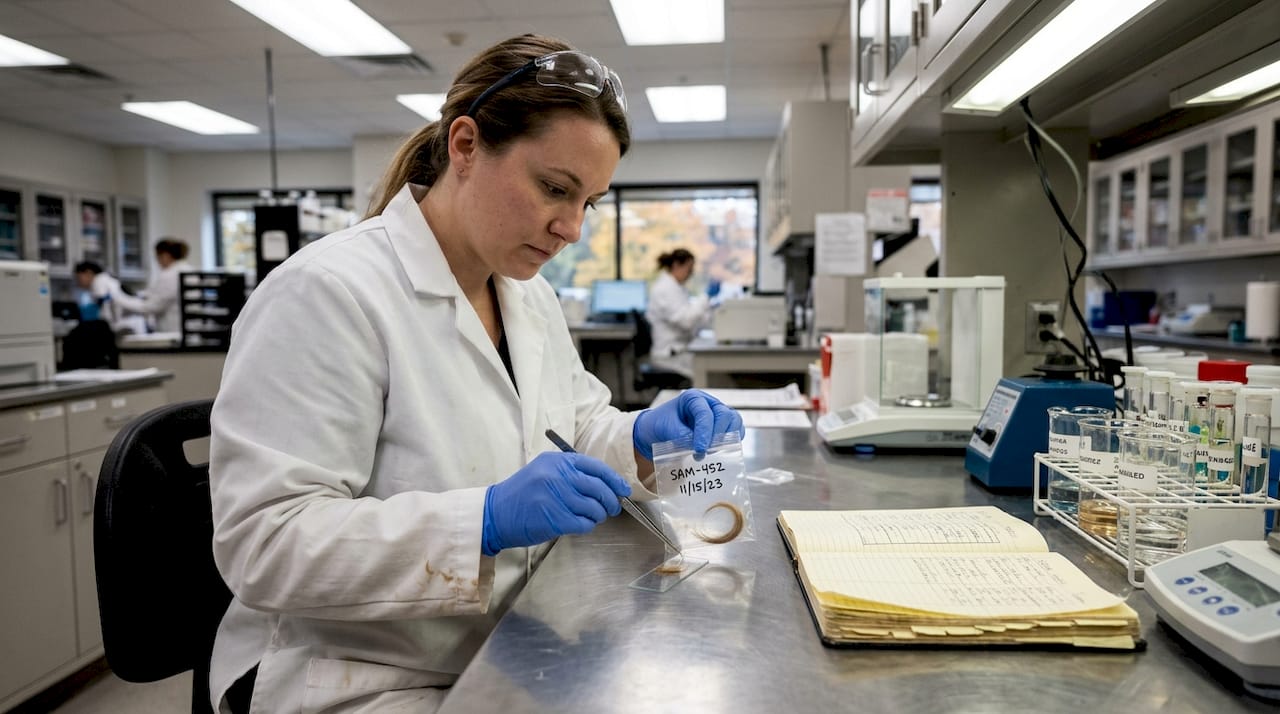
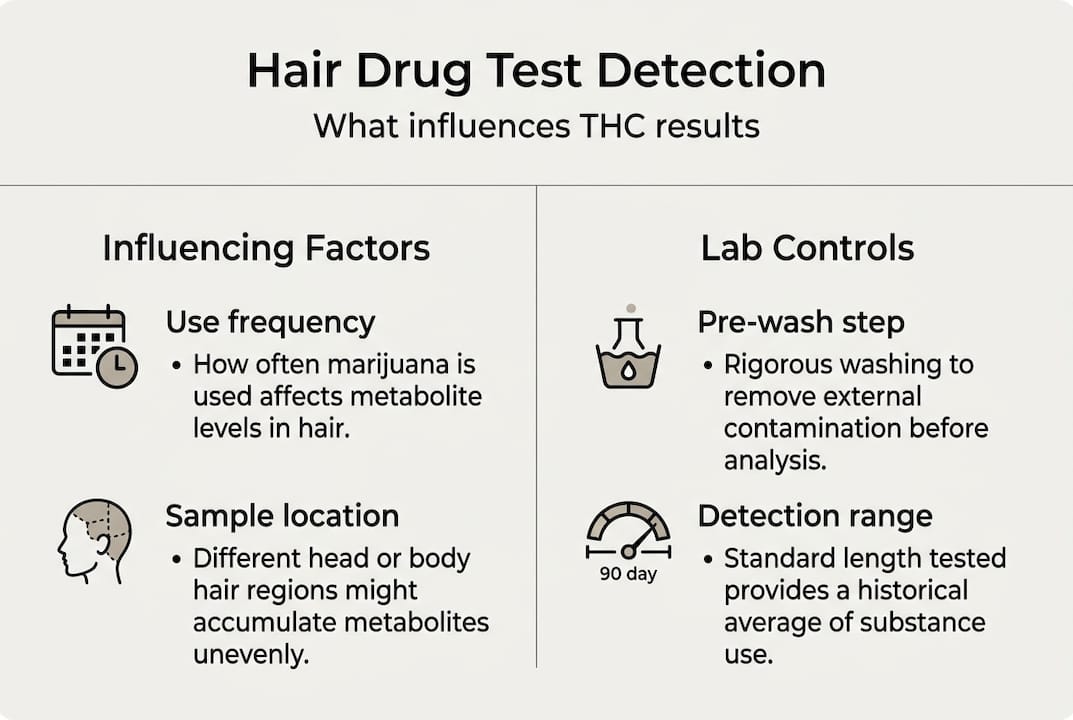
Hair follicle testing is genuinely sophisticated. Labs collect approximately 1.5 inches of hair from close to the scalp, which represents roughly 90 days of growth. That sample is then processed to detect internal drug metabolites, not just surface residue. According to detailed lab analysis, hair tests detect THC metabolites for up to 90 days, and the washing step labs perform before testing is specifically designed to strip away any external contamination.
Here’s why that washing step matters so much. If you’ve been around secondhand smoke or touched cannabis and then touched your hair, surface residue might technically be present. Labs account for that. The washing process removes what’s on the outside so the test can focus on what’s inside the hair shaft itself. That’s where metabolites bind after circulating through the bloodstream.
Detection accuracy by use pattern:
| Use frequency | Detection likelihood | Notes |
|---|---|---|
| Single use (1 to 2 times) | Low to moderate | May fall below cutoff thresholds |
| Occasional (weekly) | Moderate | Depends on hair type and lab protocols |
| Regular (several times/week) | High | Metabolites accumulate in the shaft |
| Daily use | Very high | Strong signal across the full 90-day window |
The confirmation process after an initial positive result involves gas chromatography/mass spectrometry, or GC-MS. This is a highly precise method that rules out false positives. It is not easily fooled by surface treatments or shampoos applied before testing.
Factors that affect your specific result include:
- Hair color and texture (darker hair binds more metabolites due to melanin content)
- Frequency and amount of THC consumed over the past 90 days
- The specific hair test detection window your lab uses
- Whether body hair is collected when head hair is insufficient
Pro Tip: Body hair grows more slowly than head hair, so labs collecting body hair samples can potentially detect use beyond 90 days. If you’re bald or have very short hair, don’t assume you’re off the hook.
For a deeper look at how labs handle samples and what the science says, visit our hair drug test info page.
The Macujo Method: Claims, risks, and realities
Since detox strategies are popular, let’s examine the Macujo Method, what it promises and what the evidence really says.
The Macujo Method is one of the most talked-about hair detox strategies online. It’s a multi-step routine that involves applying a combination of white vinegar, a salicylic acid product, liquid detergent, and a specialized detox shampoo such as Aloe Rid to the hair and scalp. The goal is to open the hair cuticle and flush out drug metabolites before a test. Supporters across forums swear by it. The scientific community remains unconvinced.
No peer-reviewed studies confirm the Macujo Method’s effectiveness. The method’s reputation is built entirely on anecdotal reports, and those reports vary widely based on hair type, usage level, and which lab processes the sample. Labs perform their own washing before testing, which directly counteracts surface-level removal attempts.
The basic steps of the Macujo Method include:
- Rinsing hair with warm water, then applying white vinegar from scalp to tip
- Working a salicylic acid solution into the scalp while keeping vinegar in place
- Covering the hair for 30 minutes to allow penetration
- Adding a small amount of liquid dish detergent and rinsing thoroughly
- Following up with a quality detox shampoo
“The Macujo Method carries documented health risks including scalp irritation, chemical burns, hair damage, and dryness; success is anecdotal and varies by hair type, usage level, and lab protocols.”
Those physical risks are real and should not be minimized. Combining acidic and chemical agents on your scalp repeatedly can cause serious discomfort and lasting damage.
Pro Tip: If you decide to try the Macujo Method, a proper Macujo Method astringent formulated for this process is strongly preferred over random household cleaners. It reduces the risk of irritation while following the intended protocol.
You can get the full breakdown on our Macujo Method overview page, including how to do each step correctly.
What actually helps pass a hair drug test
After reviewing detox myths and risks, it’s vital to know what legitimate strategies can actually make a difference.
Here’s the hard truth: no empirical data supports any external detox method as reliably effective against a properly run hair follicle test. Labs are designed to look past surface treatments. Their pre-wash protocol is specifically built to neutralize attempts at external contamination removal. What the test finds is what’s inside the hair shaft.
That said, there are real, practical steps you can take to reduce your risk:
- Stop using THC immediately. New growth after cessation will be clean. The longer your abstinence period before the test, the shorter the contaminated section of hair.
- Trim your hair regularly. Hair grows about half an inch per month. If you can get a test deferred or have enough lead time, shorter hair means less history for the lab to analyze.
- Know your test type. Confirming whether the test is a federal or private employer test changes your entire preparation strategy.
- Consult a professional. Attorneys who specialize in employment law can advise on your rights, especially if you’re in a state with cannabis protections.
Things that definitively do NOT work:
- Shaving your head (labs will collect body hair as an alternative)
- Bleaching or chemically treating hair alone (may reduce metabolites slightly but doesn’t eliminate them)
- Drinking large amounts of water (irrelevant for hair tests, unlike urine tests)
- Generic clarifying shampoos from a drugstore
If you’re in the market for a purpose-built hair drug test shampoo, use products that are specifically formulated with the hair follicle testing process in mind. Generic products are not designed for this purpose. For a broader look at your options, our guide to passing hair follicle tests and our targeted resource on marijuana hair test tips are worth your time.
Our perspective: Navigating uncertain tests with evidence and caution
Before you make any final decisions, here’s our candid perspective based on years of experience and current science.
We’ve seen a lot of people put serious effort into countermeasures against modern lab techniques, and we want to be honest with you. Labs are not static. They evolve their protocols specifically to counter known evasion strategies. The washing steps, GC-MS confirmation, and internal metabolite focus are all designed with this in mind. Aggressive surface cleaning rarely changes the outcome of a well-run test.
The risk-versus-reward calculation matters here. Damaging your scalp and hair in pursuit of an uncertain outcome is a real cost. We believe in giving you the most accurate picture so you can make the best decision for your situation.
What we advocate for is realistic expectation-setting. The most effective strategy is time and abstinence, with smart use of purpose-built products where appropriate. Understanding THC levels in hair tests and what labs actually detect puts you in a much better position than following unverified forum advice. Make evidence-guided choices, not desperate ones.
Find science-backed solutions for hair drug tests
If you’re looking for real solutions and expert guidance, see our recommended products and resources.
Navigating a hair drug test is stressful, but you don’t have to figure it out alone. We’ve built a focused collection of drug test detox products specifically designed for people in your situation. Our flagship Macujo Aloe Rid shampoo is the go-to choice for serious preparation, and it’s available alongside a complete set of hair test shampoo solutions built for this exact purpose.
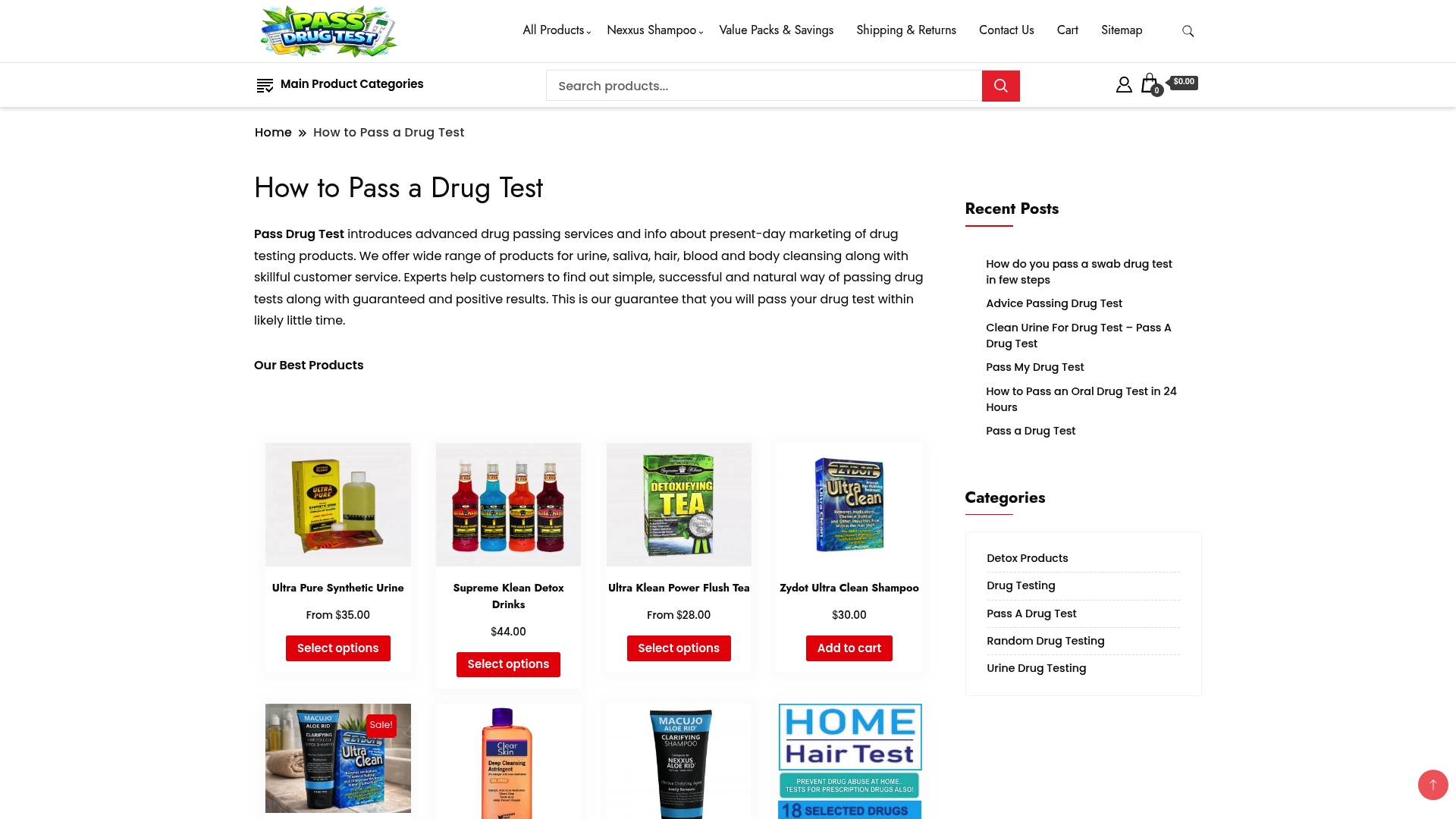
For step-by-step preparation guidance, our detailed Macujo Method guide walks you through every wash, every product, and every timing consideration you need to know. We’re here to help you approach this with confidence.
Frequently asked questions
Are hair drug tests required for federal employment?
No. Federal guidelines mandate only urine and oral fluid testing for federal workplace programs, meaning hair follicle testing is not authorized under SAMHSA or DOT rules.
How long does THC stay detectable in a hair follicle test?
Hair tests detect THC metabolites for up to 90 days based on a 1.5-inch sample, though detection can vary depending on frequency of use and specific lab protocols.
Does the Macujo Method guarantee passing a hair drug test?
No. No empirical data supports the Macujo Method as reliably effective, and lab pre-wash procedures are specifically designed to counter surface-level cleaning attempts.
Can I avoid detection by shaving my head?
Shaving your head does not guarantee a passed test because labs can collect body hair from your arms, legs, or chest as an alternative sample source.
What’s the safest way to prepare for a hair drug test?
The most reliable approach is to stop using THC as early as possible, keep hair trimmed to limit the analyzable window, and use products formulated specifically for hair follicle test preparation.