
No reliable evidence shows that niacin makes a urine drug test come back negative. Public-health surveillance and multiple peer-reviewed case reports document people trying this anyway, some winding up in the emergency room with severe complications. The takeaway is simple: do not take high-dose niacin to try to pass a drug test. The risk is real, and the payoff isn’t.
TL;DR:
- High doses of niacin, ranging from 400 mg to 8,000 mg or more, do not alter urine drug test results and carry significant health risks.
- Documented toxicity cases include liver injury, metabolic acidosis, kidney damage, and blood sugar swings, often requiring intensive care.
- The flush caused by niacin is vasodilation and does not indicate detoxification or metabolite clearance from fat tissue.
- Common overdose symptoms are flushing, nausea, rash, and racing heart, while severe reactions involve liver damage, acidosis, and multi-organ toxicity.
- There is no scientific evidence supporting niacin as a method for passing drug tests, and reliance on it poses dangerous health consequences.
Table of Contents
- The Public Health and Clinical Evidence on Niacin Drug Test Claims
- What Niacin Toxicity Actually Looks Like in the ER
- How Urine Drug Tests Actually Detect Substances
- Recommended Niacin Doses vs. What Shows Up in Overdose Cases
- What to Do if Someone Has Taken a High Dose of Niacin
- Why the Niacin Myth Won’t Die, and What Actually Helps
- A Straight Answer From Someone Who’s Looked at the Research
- Sources
- FAQ
The Public Health and Clinical Evidence on Niacin Drug Test Claims
The CDC’s 2006 surveillance report tracked calls to poison control centers across five states and found something worth repeating: no scientific evidence supports the idea that niacin changes a urine drug screen’s outcome. What the surveillance did find was a pattern of people trying it anyway, often after reading about it online.
The numbers from that report are the clearest signal we have on how widespread and how risky this practice really is.
- Reported doses among identified users ranged from 400 mg to 8,000 mg
- Several people specifically admitted taking niacin to try to beat a urine test
- A notable portion of exposures required medical treatment or referral
- Common reactions included tachycardia, flushed skin, rash, nausea, and vomiting
By the numbers: In the CDC’s review, a significant share of reported niacin exposures tied to drug test evasion required a hospital visit or medical referral, out of a set of identified cases.
Beyond the CDC data, case reports published in PMC and a case series in Annals of Emergency Medicine describe patients who ingested large niacin doses specifically to evade urine testing and ended up with documented toxicity. No controlled clinical trial has ever demonstrated that niacin alters a urine drug screen’s chemistry. What exists instead is a body of case literature showing what happens when people try the strategy on themselves: adverse reactions, hospital visits, and in some cases intensive care.
What Niacin Toxicity Actually Looks Like in the ER
The symptoms fall into two tiers, and the gap between them is wide. Mild reactions are almost expected with high-dose niacin: flushing, rash, nausea, and a racing heart. These are unpleasant but usually self-limiting. The severe end of the spectrum is a different story entirely.
- Hepatotoxicity (liver injury, sometimes with elevated liver enzymes)
- Metabolic acidosis
- Acute kidney injury
- Hypoglycemia that can later swing into hyperglycemia
- Coagulopathy (impaired blood clotting)
One PMC case report describes a patient who took 5,500 mg of extended-release niacin within 12 hours, then developed vomiting, lactic acidosis, hypoglycemia, and transaminitis (a marker of liver stress) severe enough to require ICU monitoring. The Annals of Emergency Medicine series documented four separate patients who used niacin to try to beat a urine screen; two needed intensive care, and all four showed some combination of hepatotoxicity, metabolic acidosis, and blood sugar instability. A separate case reported in the Journal of Emergency Medicine involved roughly 22.5 grams of sustained-release niacin consumed over 48 hours, resulting in multi-system toxicity and a prolonged hospital stay.
Every published case that recovered did so through supportive care alone: IV fluids, glucose correction, and close monitoring of liver and kidney function. None responded to a specific “antidote” because there isn’t one. The body simply has to clear the excess niacin on its own while doctors manage the fallout.
That’s the pattern across nearly every case report on record. Emergency clinicians don’t have a targeted treatment for niacin overdose. They watch the labs, correct what’s going wrong, and wait it out.
How Urine Drug Tests Actually Detect Substances
Urine screens look for specific drug metabolites, the byproducts your body creates after breaking down a substance. THC-COOH, the primary metabolite tested for marijuana use, gets stored in fat tissue and released slowly over days or weeks depending on use frequency, body fat percentage, and metabolism. That’s the biological reality niacin has to overcome to work as advertised, and it doesn’t.
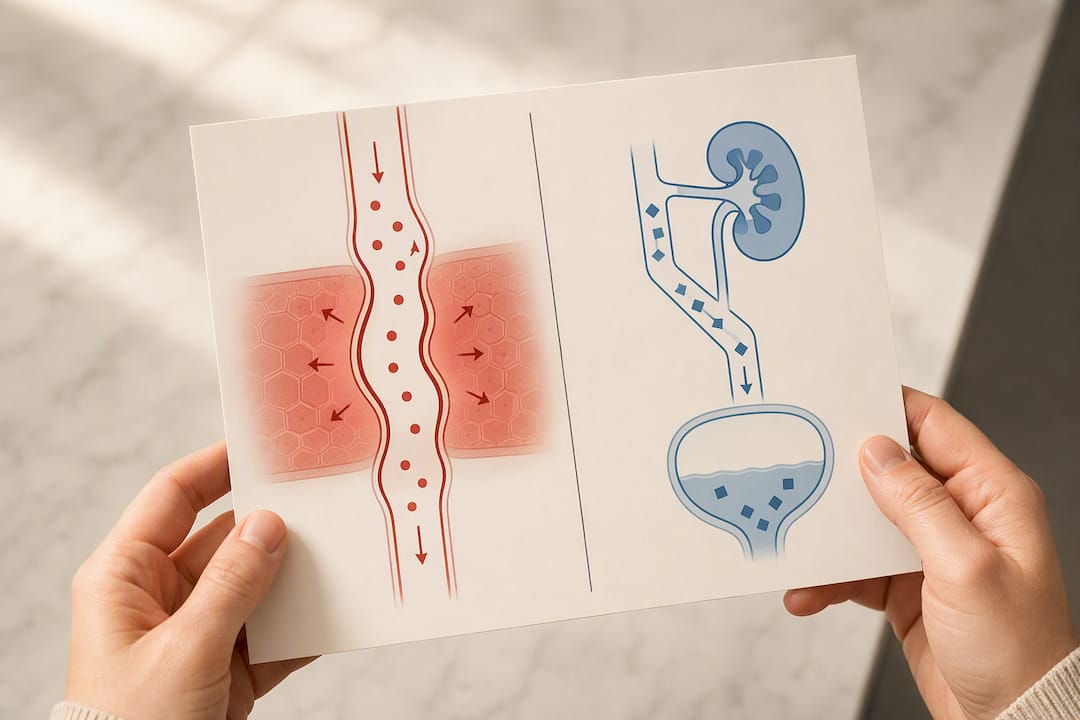
- Niacin causes vasodilation. The “flush” is blood vessels near the skin widening, a prostaglandin-driven reaction, not a purging of stored toxins.
- It doesn’t mobilize fat-stored metabolites. THC-COOH sitting in adipose tissue isn’t chemically bound to niacin or affected by it in any documented way.
- It doesn’t alter lab chemistry. The immunoassay and confirmatory tests labs use detect metabolite presence directly; niacin doesn’t neutralize or mask that signal.
People do try other evasion methods, most commonly diluting urine with excess water, substituting a clean sample, or adding an adulterant directly to the cup. Labs routinely screen for these tactics by checking creatinine, specific gravity, and pH, and getting caught attempting them can carry worse consequences than a positive result on its own.
Recommended Niacin Doses vs. What Shows Up in Overdose Cases
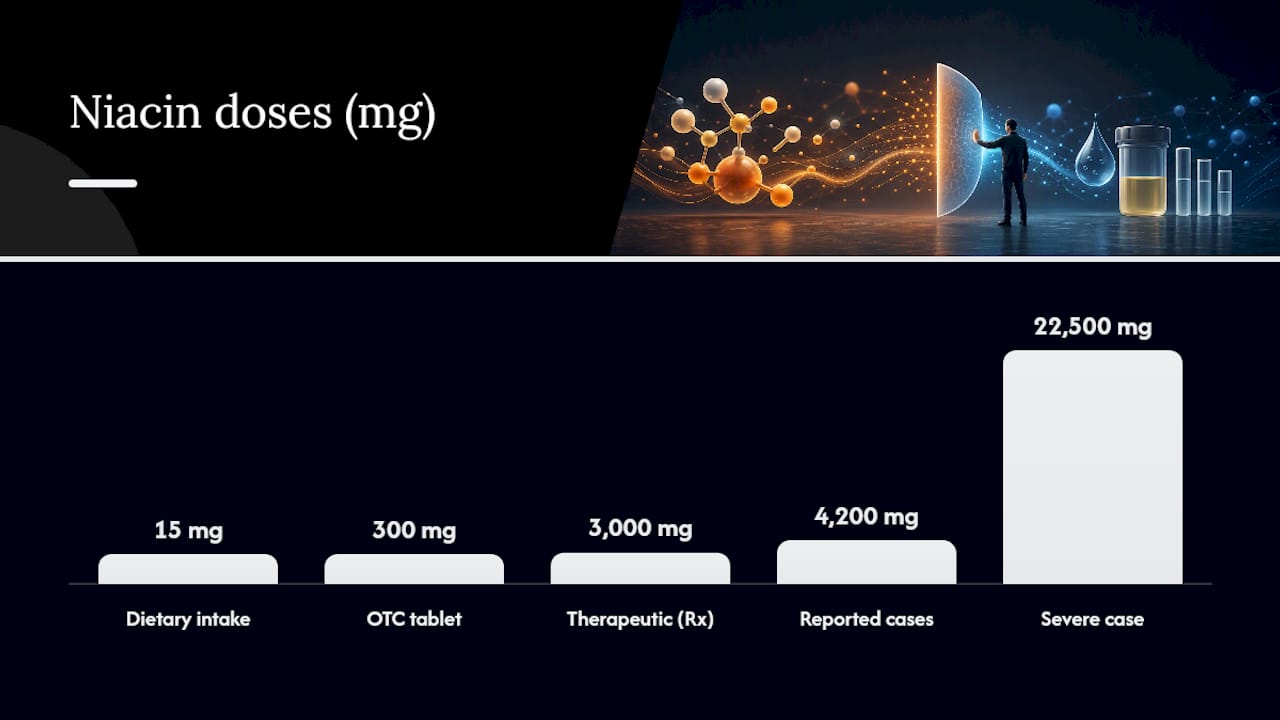
The gap between a normal dose and what’s showing up in these case reports is staggering, and it’s worth seeing side by side.
By the numbers: The recommended dietary intake of niacin sits around 14–16 mg per day. Even prescription-strength niacin therapy for cholesterol management, taken under a doctor’s supervision, tops out around 1,000 to 5,000 mg daily. Compare that to the 400 mg to 8,000 mg range documented in CDC-tracked exposures tied to drug test attempts, or the 22.5 grams reported in one severe JEM case.
- Dietary requirement: about 14 to 16 mg per day
- Common over-the-counter tablets: 100 to 500 mg each
- Supervised therapeutic range: 1,000 to 5,000 mg per day, monitored by a physician
- Reported toxicity cases: hundreds to thousands of milligrams consumed in a single sitting or over 24 to 48 hours
Even the supervised therapeutic range carries monitoring requirements, because sustained-release niacin formulations in particular raise the risk of liver injury even at doses doctors consider acceptable long-term. Compressing weeks’ worth of intake into a few hours, which is what most of these case reports describe, removes any safety margin the body would otherwise have.
What to Do if Someone Has Taken a High Dose of Niacin
Certain symptoms mean this isn’t a “wait it out” situation anymore. Severe vomiting, fainting, yellowing skin or eyes (a sign of liver stress), confusion, persistent low blood sugar, or trouble breathing all warrant immediate emergency attention.
- Call Poison Control at 1-800-222-1222 right away, or head to the nearest emergency room if symptoms are severe.
- Tell the operator or clinician the exact product name, the estimated amount taken, and roughly when it was ingested.
- Expect the clinical team to run liver enzyme panels, a metabolic panel, and blood glucose checks as first steps.
- Expect supportive treatment: IV fluids, glucose correction if blood sugar has dropped, and observation until labs stabilize.
Pro Tip: Save the product packaging or take a photo of the label before heading to the ER. Poison control and emergency staff move faster when they know the exact formulation (immediate release versus sustained release matters for how the case unfolds).
Most patients in the published literature recovered fully once niacin intake stopped and supportive care took over. That recovery came from time and monitoring, not from any treatment that reversed the overdose directly.
Why the Niacin Myth Won’t Die, and What Actually Helps
The flush feels like something is happening, and that sensation gets mistaken for evidence of detoxification. It isn’t. It’s vasodilation, a surface-level reaction with no connection to how metabolites clear from fat tissue or urine. That mix-up is largely why the myth keeps circulating on forums and social media, where one person’s anecdote gets repeated as fact without anyone checking whether it actually worked.
A single story of someone claiming it worked for them isn’t proof of anything. Test results vary by dozens of factors, dose, frequency, metabolism, and hydration among them, and confirmation bias does the rest.
If you’re facing a scheduled test and worried about the outcome, a few honest paths exist:
- Understand realistic detection windows for the substance in question, which vary by how urine testing for marijuana specifically works
- Talk to the testing authority directly if there are legitimate concerns about timing or circumstances
- Seek medical guidance if dependency is part of the picture, since that’s a different conversation than test-day panic
- Review what actually works versus what’s myth before relying on internet advice for any test type
A Straight Answer From Someone Who’s Looked at the Research
The niacin myth is a textbook example of correlation getting mistaken for causation. Someone feels their skin flush, assumes something toxic is leaving their body, passes a test for unrelated reasons (timing, low use, dilution), and posts about it as if the niacin did the work. That anecdote spreads, gets repeated as fact, and eventually shows up in someone’s search results right before they make a decision that lands them in an emergency room.
One pattern holds steady in the detox product space: methods with actual science behind them, like properly formulated shampoo systems for hair follicle testing, consistently outperform folk remedies aimed at urine screens. If you’re dealing with a hair follicle test specifically, the Macujo Method remains one of the most well-documented approaches available, built around Aloe Rid shampoo and a specific application process rather than a single ingredient someone read about in a forum thread.
For urine testing, the honest answer is that niacin isn’t it. The evidence doesn’t support it, and the risk profile is genuinely bad. If you want a legitimate path forward, explore proven detox options instead of gambling on a home remedy with a stack of hospital case reports behind it.
— MIchael
This article is general information, not a substitute for advice from a qualified doctor. Consult a qualified healthcare professional about your own circumstances before acting on anything here.
Sources
- Use of Niacin in Attempts to Defeat Urine Drug Testing — Five States, January–September 2006
- Beating the urine drug test – a case report on niacin toxicity
- Toxicity From the Use of Niacin to Beat Urine Drug Screening
- Niacin Toxicity Resulting from Urine Drug Test Evasion
FAQ
Does Niacin Help You Pass a Drug Test?
No. CDC surveillance and multiple peer-reviewed case reports found no evidence that niacin changes urine drug test results, and high doses caused documented harm in people who tried it.
How Long Does a Niacin Flush Last?
The flushing sensation from a high niacin dose typically fades within an hour or two, but that reaction is vasodilation, not evidence of any detox process affecting drug metabolites.
How Much Niacin Causes a Flush?
Flushing can occur at doses well above the recommended daily intake of 14 to 16 mg, with over-the-counter tablets commonly sold in 100 to 500 mg strengths triggering noticeable flushing in many people.
Do You Urinate Out Excess Vitamin B3?
Excess water-soluble B vitamins, including niacin, are partly excreted in urine, but this normal elimination process does not remove or neutralize stored drug metabolites like THC-COOH.
Is a Niacin Flush a Good Sign?
Not necessarily. It simply means blood vessels near the skin have widened; case reports show that pushing doses higher to intensify the flush raises the risk of liver injury, metabolic acidosis, and other serious complications.