
If you are comparing powdered and liquid urine for a urine drug test, the real question is which one arrives at the collection cup looking like a normal specimen. In a 2022 study of commercial products, the pre-mixed (liquid) version of one brand came back with normal results, while the powdered version of the same brand showed anomalies that came from the heating powder added to it. That gap is the core of this comparison, and it is why we point urine-test readers to a ready-to-use kit instead of a powder-and-water routine.
TL;DR
- Powdered urine is mixed with water before use. Liquid (pre-mixed) urine is ready to go, with fewer steps where something can go wrong.
- In a 2022 laboratory study, a powdered product with a heat-generating additive showed high specific gravity and confirmed nitrite, while its pre-mixed twin looked normal.
- Labs check temperature, creatinine, specific gravity, pH and adulterants. Your sample has to sit inside all of those ranges at once.
- Appearance alone, such as color or white residue, tells you very little about a specimen. The numbers matter.
- A urine product does nothing for a hair follicle test. Hair needs a different approach, covered near the end.
Table of Contents
- What “powdered” and “liquid” urine actually mean
- Where the two forms differ in practice
- What a U.S. lab checks, and why it matters for this choice
- The heating-powder problem
- What the evidence says about passing
- Does the look of a sample tell you anything?
- Choosing between powder and liquid
- Know the rules before test day
- If your test is hair, not urine
- Our kits for your test type
- Our perspective
- FAQ
- Sources
What “powdered” and “liquid” urine actually mean
Both terms describe synthetic urine, a lab-made fluid designed to mimic the chemistry of human urine: water, urea, creatinine, salts and a pH balance. They differ only in how the product reaches you.
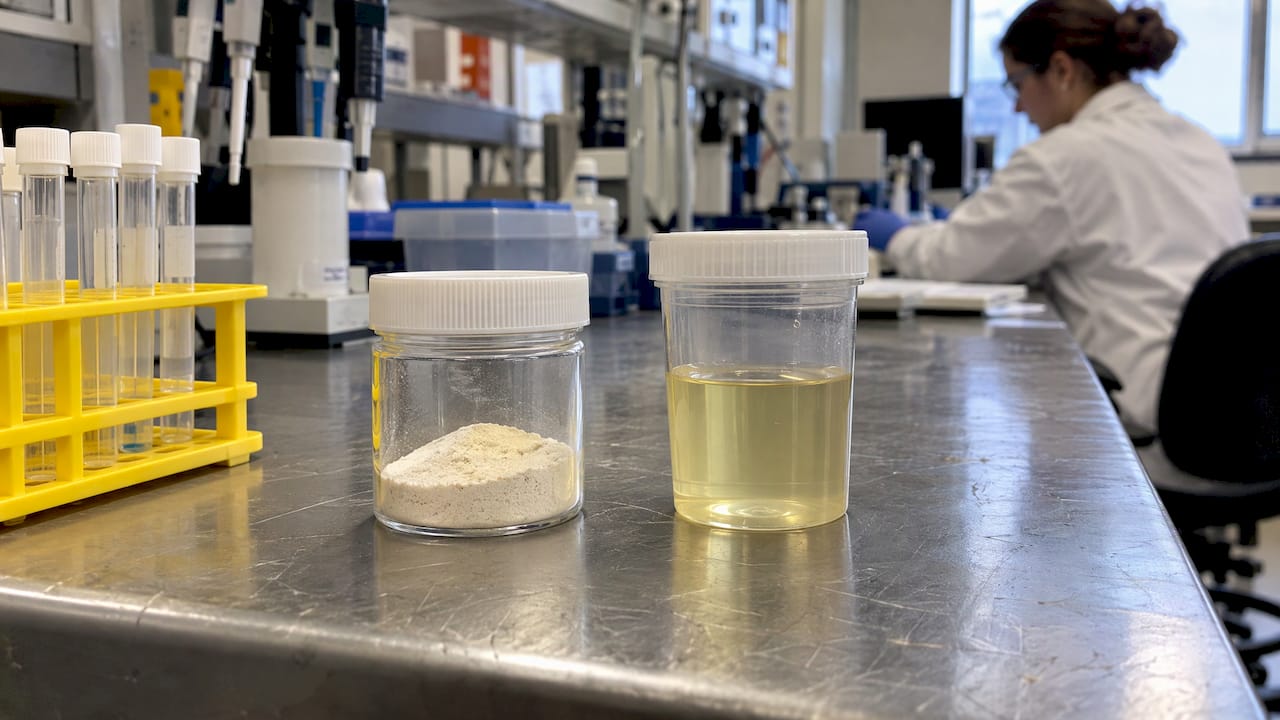
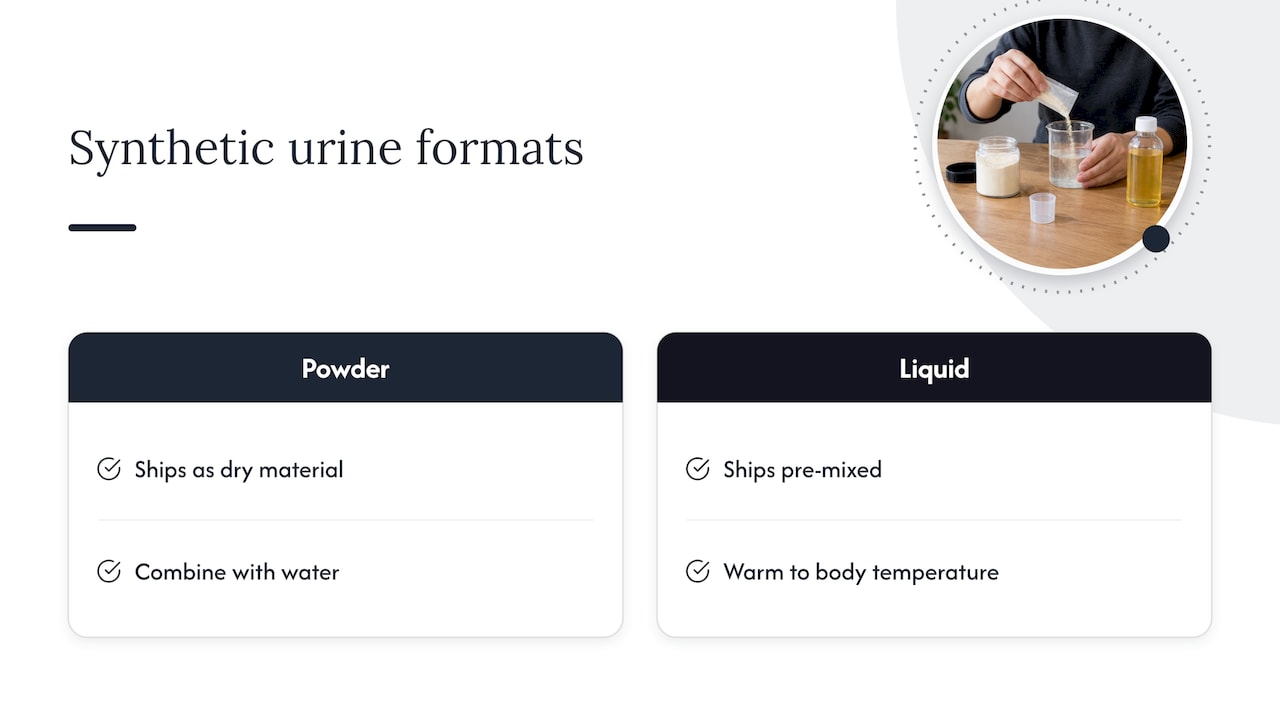
Powdered urine ships as dry material that you combine with water. Researchers who studied commercial products sorted them into powdered or pre-mixed, which is the same split you see on a store shelf.
Liquid urine is the pre-mixed version. The solution is already blended, so your main job is to bring it to body temperature and handle it correctly.
There is a third thing that shows up in search results for this phrase: dried urine. That is a different subject. Dried urine means real human urine soaked into filter paper so clinical labs can ship it without refrigeration. The ZRT Laboratory method saturates a strip with about 2 mL of urine, dries it for at least 4 hours and mails it at room temperature, while liquid urine is prone to bacterial contamination and must be shipped refrigerated or frozen. It is a health-testing technique, not a product for a workplace drug screen, so we leave it aside here.
Where the two forms differ in practice
Preparation
Powder adds steps. You measure, mix, wait for it to dissolve, and then get the mixture to the right temperature. Every step is a chance for a measuring error, a clump or a mismatch in concentration. A pre-mixed liquid removes the first three.
Temperature
Temperature is the first thing a collector can check. Clinical guidance says urine measured within four minutes of voiding should read 90°F to 100°F in a healthy person, and a specimen outside that range should be recollected. Some powdered kits include a heat-generating powder to reach body temperature without a heating pad. That convenience is exactly where the lab study found trouble, covered below.
Consistency
A factory-blended liquid has the same concentration every time. A home-mixed powder is only as consistent as your measuring. Since creatinine and specific gravity are both numeric cutoffs, consistency is not a small detail.
Handling
Liquid needs careful warming and a steady hand. Powder needs careful mixing and a steady hand. Neither is difficult, but practice before the day makes both smoother. Our synthetic urine instructions walk through the temperature target step by step.
What a U.S. lab checks, and why it matters for this choice
When a specimen reaches a certified laboratory, it goes through specimen validity testing (SVT) before or alongside the drug screen. Under federal rules, an HHS-certified laboratory must determine creatinine, pH and oxidizing adulterants on every urine specimen, and measure specific gravity when creatinine is below 20 mg/dL. Specific gravity is simply how dense the fluid is compared with water.
The benchmarks come from the national lab certification program. In its 2023 validation guide, the NLCP states that normal human urine has creatinine of at least 20 mg/dL and specific gravity between 1.0030 and 1.0200. The same document explains that normal pH sits near 7.0, with a physiological range of roughly 4.5 to 9.0, that a pH below 4.0 or at or above 11.0 is reported as adulterated, and that nitrite at 500 mcg/mL or more is adulterated.
For the federal reporting categories, a specimen is reported as substituted when creatinine is under 2 mg/dL and specific gravity is at or below 1.0010 or at or above 1.0200. It is reported as dilute when creatinine is at least 2 but under 20 mg/dL with specific gravity above 1.0010 and below 1.0030. If you want the plain-English version of those cutoffs, we cover them in our guides on the 20 mg/dL creatinine cutoff and on the SVT markers labs use.
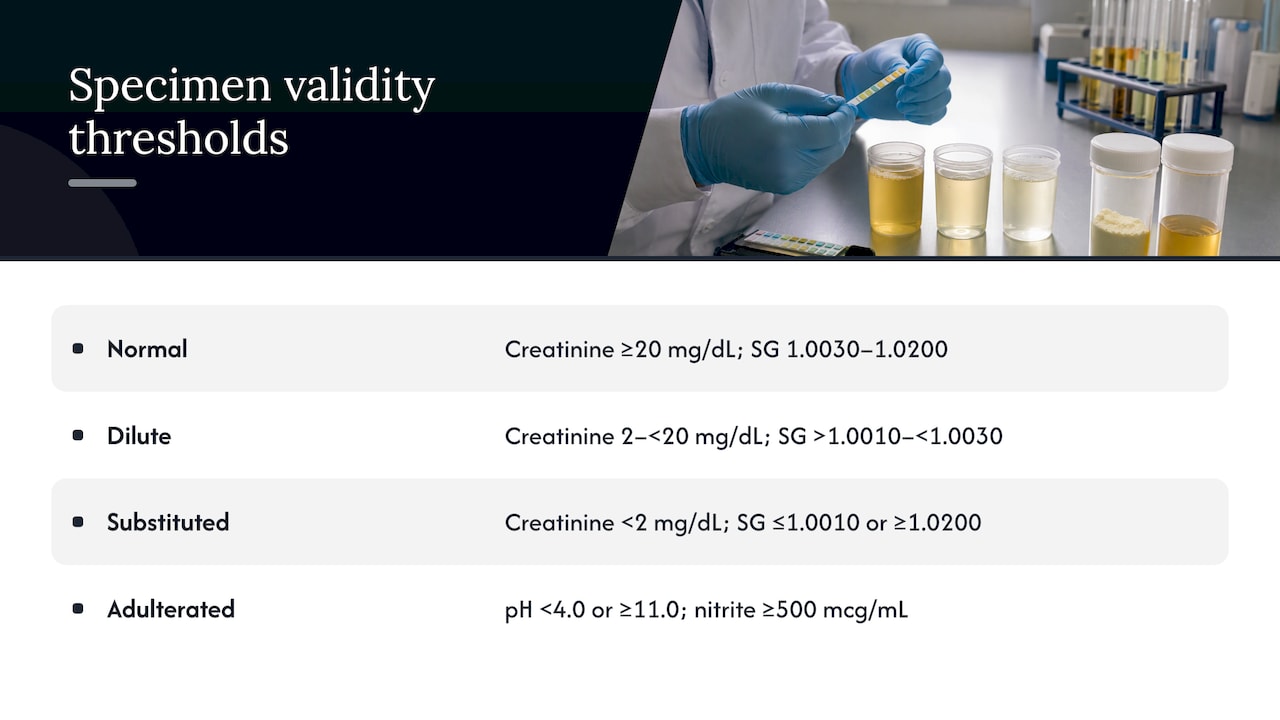
The point for your decision: every number has to land in the normal window together. A product can get creatinine right and still miss on specific gravity or nitrite. That is precisely what happened in the study below.
The heating-powder problem
In a 2022 Journal of Analytical Toxicology study, researchers sent ten commercial synthetic urine products to U.S. laboratories. Eight of the ten produced results consistent with authentic urine in SVT assays. The two that did not are the interesting part for this comparison.
One powdered sample showed a high specific gravity and confirmed nitrite. The authors linked this to the heat-generating powder added to reach body temperature. Its pre-mixed counterpart from the same line returned normal results.
Two lessons follow:
- The additive can matter as much as the base formula. A fluid that is chemically close to urine can still be flagged because of what was added to warm it.
- Nitrite is not trivial. The NLCP notes that nitrite at 200 to under 500 mcg/mL is reported as invalid, and that nitrite can also affect marijuana metabolite measurements. A specimen that is flagged is a specimen that gets questioned.
This does not mean every powder fails or every liquid passes. It means that a ready-mixed fluid warmed in a controlled way takes one variable off the table, and that is the sensible default for most people.
What the evidence says about passing
The same lab-certification program is candid about the state of testing. A December 2025 NLCP paper states that many synthetic urines are able to pass SVT, that substitution is now the most common subversion strategy discussed online, and that the most effective first line of defense is vigilance at the collection site. That means the part of the process that decides most outcomes is not the lab bench. It is the collection cup, the temperature check and the visual inspection.
That shapes how you prepare:
- Temperature on arrival. A collector who checks a reading in the first minutes will notice a cold or overheated specimen.
- Appearance. The NLCP lists color, foreign objects and excessive foaming among the things collection staff look for, so a fluid that looks and behaves like ordinary urine is part of the picture.
- Consistency of chemistry. Pre-mixed liquid keeps the numbers steady from the first sample to the last.
The lab side adds one more layer. Our overview of how workplace labs detect synthetic urine explains the 96 to 100°F check and the lab methods that follow it.
Does the look of a sample tell you anything?
Readers often ask about powder showing up in a sample, or about a white film after urine dries. Appearance is a weak signal on its own. Fresh urine ranges from pale straw to deep amber depending on hydration, and dried urine leaves a residue that can look pale or crystalline simply because the salts stay behind when the water leaves. None of that tells you whether a specimen is authentic.
The NLCP makes a related point: abnormal validity results often have ordinary explanations. Warm storage and delayed refrigeration can raise pH through bacterial growth, and kidney disease or heavy fluid intake can lower creatinine. A flag points to a problem with the specimen, not automatically to a person doing anything wrong. Numbers, not looks, decide how a lab reads a sample.
Choosing between powder and liquid
Use this as a quick filter:
| What matters | Powdered | Liquid (pre-mixed) |
|---|---|---|
| Steps before use | Measure, mix, dissolve, heat | Warm to temperature |
| Chance of a mixing error | Higher | Lower |
| Heat source | Often a chemical heating powder | Controlled external warming |
| Lab result in the 2022 study | Heating powder linked to high specific gravity and nitrite in one sample | Normal results for the matching pre-mixed sample |
| Best for | People who have practiced the mixing | Most first-time users |
For most readers, a ready-to-use kit is the cleaner route. Our Ultra Pure Synthetic Urine kit is one we list for urine tests, and you can see the rest of the range in our urine drug testing category.
Know the rules before test day
Two legal and practical points belong in your planning. First, some states have laws about possessing or using synthetic urine to defeat a test. Our page on which states criminalize synthetic urine covers where that applies, and it is worth reading for your state before you act. Second, if your test is tied to probation, a dilute specimen can be treated as a positive result, which we explain in our probation urine test guide. If you are on probation or in a regulated program, talk to your probation officer or attorney about your obligations.
If your test is hair, not urine
A hair follicle test looks back about 90 days and measures drug metabolites that have been incorporated into the hair shaft. Urine products, powdered or liquid, do not touch that. If a hair test is your situation, the tool that fits is a hair detox shampoo, not a urine product. Our Macujo Aloe Rid Shampoo is built around the Macujo method, and the 10 to 14 day Macujo Aloe Rid instructions show timing and safe use. For the full overview, start with our hair follicle drug test guide.
Our kits for your test type
We sell products for hair, saliva and urine testing, and our support team is available from 9am to 12am every day if you want to talk through which one fits your test. Orders are packaged for confidential, secure delivery. For urine tests, browse products for clean urine. For hair tests, go straight to our hair follicle drug test shampoo.
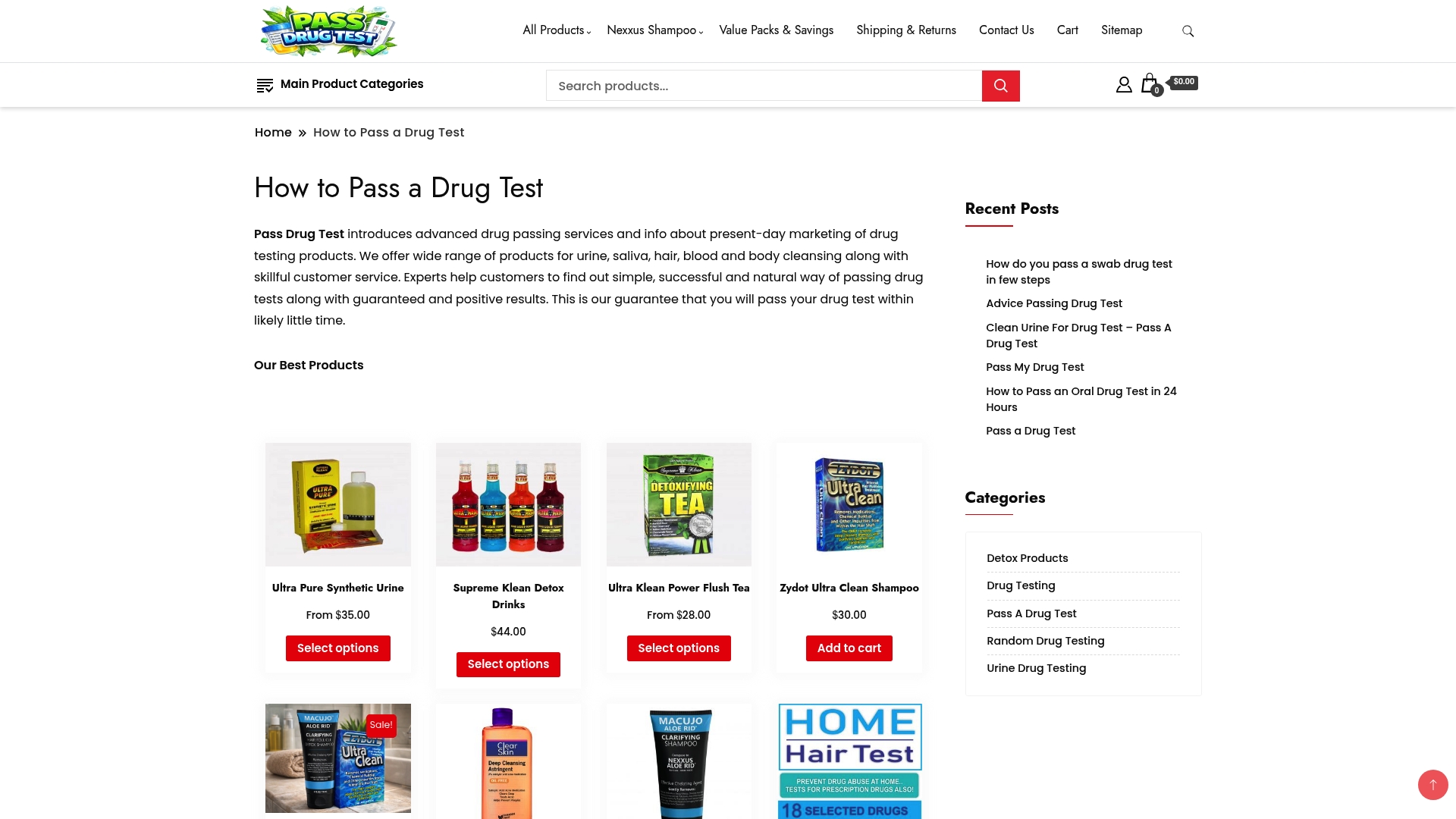
If you are not sure what your employer or program will run, our drug testing products page lists everything in one place, and our guide to how to pass a urine drug test puts the steps in order.
Our perspective
Most people who write to us about powdered versus liquid urine are not chemists. They have a test coming up and want one thing: a sample that behaves like the real thing from the moment it is handed over.
That is why we lean toward ready-to-use. The study evidence is clear that the heating powder in one powdered product created its own anomalies, while the pre-mixed version of the same product looked normal. Fewer moving parts means fewer surprises, and fewer surprises is what you want when the cup is in your hand.
We also want you to match the product to the test. Urine kits are for urine tests. If your employer or court has ordered a hair follicle test, you need a different plan, and that is where the Macujo method comes in. Mike’s Macujo method is the approach we recommend most for hair follicle tests, and our Macujo Aloe Rid Shampoo is the product we put at the center of it.
Whatever you choose, read the instructions twice, practice the temperature step, and reach out to us if anything is unclear. We would rather answer a question on Tuesday than have you guess on test day.
MIchael
FAQ
Is powdered or liquid synthetic urine better?
For most people, liquid (pre-mixed) is the simpler choice because there is no mixing and no chemical heating powder. In a 2022 laboratory study, a powdered product’s heating additive was linked to high specific gravity and nitrite, while the pre-mixed version of the same product returned normal results. Powder can still work for someone who has practiced the preparation.
Can a lab tell if urine is synthetic?
Labs run validity tests on temperature, creatinine, specific gravity, pH and adulterants. The NLCP says many synthetic urines pass those standard checks, which is why collection-site checks such as temperature and visual inspection carry so much weight. A product with an unusual additive, however, can show anomalies.
What does it mean if urine looks white or has powder in it?
Appearance alone cannot establish much. Dried urine leaves salts behind that can look pale or crystalline, and fresh urine varies in color with hydration. Labs rely on measured values such as creatinine and specific gravity, not on how a specimen looks in the cup.
Does either type help with a hair follicle test?
No. Hair tests detect drug metabolites that have built up in the hair shaft over roughly 90 days, so a urine product is irrelevant. For hair, use a hair detox shampoo such as our Macujo Aloe Rid Shampoo and follow the instructions through the full timeline.
How should I store a sample before the test?
Keep it away from heat and out of direct sun. The NLCP notes that warm storage and delayed refrigeration can raise pH in real specimens through bacterial growth. Follow the storage directions on your product, and review our step-by-step instructions before the day.
Sources
- Update on Urine Adulterants and Synthetic Urine Samples, Journal of Analytical Toxicology
- The Science of Dried Urine Testing, ZRT Laboratory
- 10 CFR 26.161, Cutoff levels for validity testing
- Validating Specimen Validity Testing, NLCP (RTI International), 2023
- Validating Specimen Validity Testing, Part 2, NLCP 2023 (pH and nitrite)
- An Introduction to Specimen Validity Testing in Workplace Testing, NLCP, December 2025
- A Practical Guide to Urine Drug Monitoring, PMC