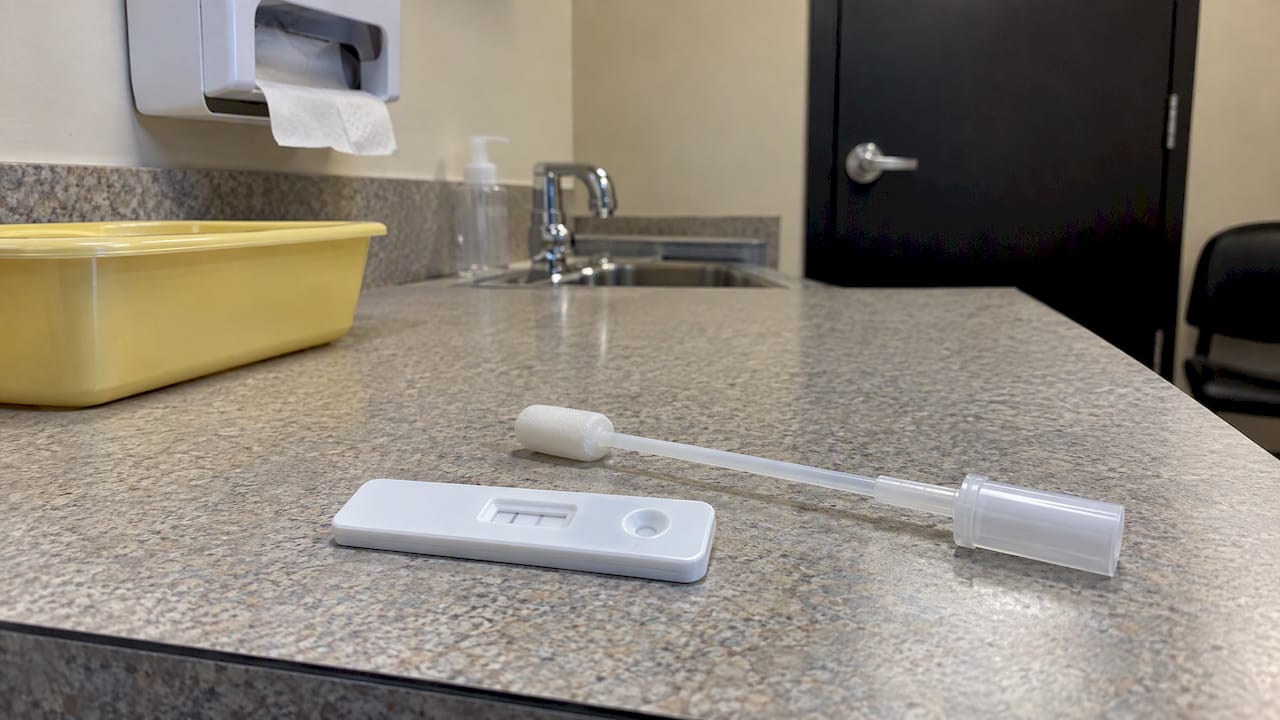

A probation saliva drug test is an oral swab, collected while an officer or collector watches, that screens for recent drug use. Most drugs, including marijuana, show up for roughly one to two days, so the test mostly reflects the last day or two of your life. The details depend on your county, your court order and your officer, and knowing them ahead of time takes a lot of the stress out of the process.
TL;DR
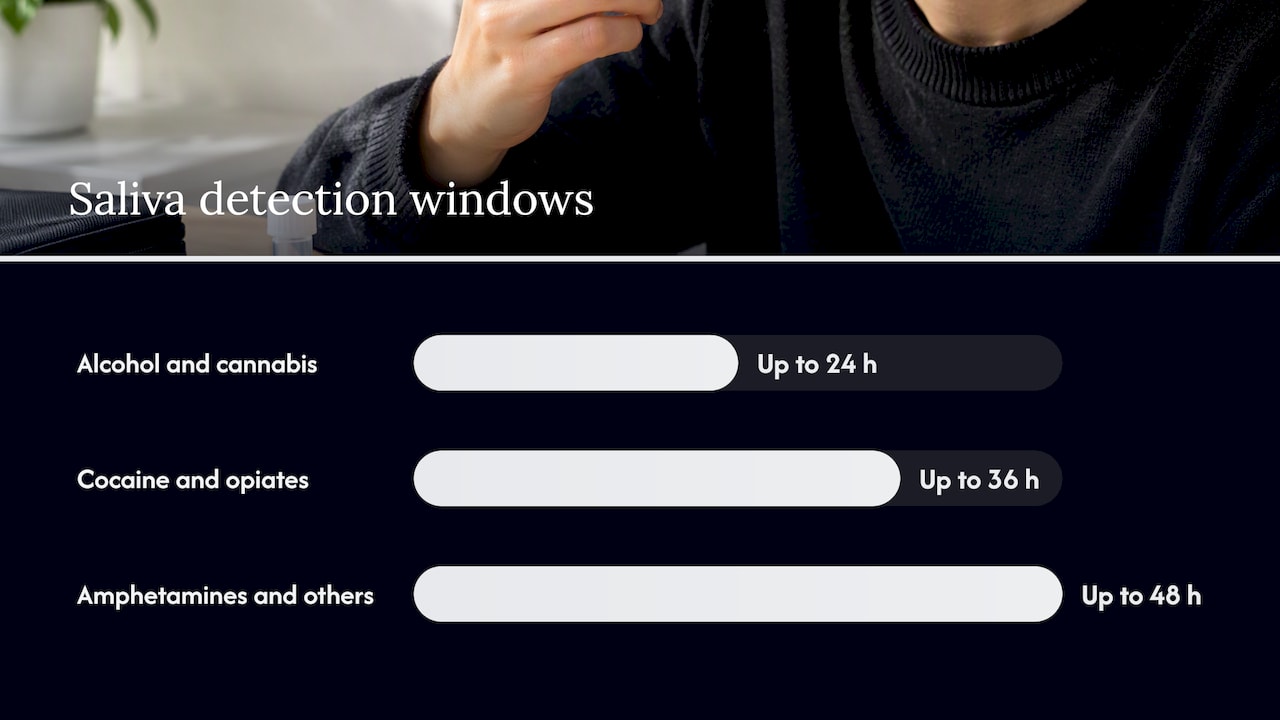
- Saliva tests catch recent use. Cleveland Clinic estimates up to 24 hours for cannabis and alcohol, up to 36 hours for cocaine and opiates, and up to 48 hours for amphetamines, benzodiazepines and methamphetamine.
- Collection is observed. You hold a swab or pad in your mouth for several minutes while the collector stays with you.
- A positive field screen is not the final word. Many programs send the sample to a laboratory for confirmation, and you can ask how disputes are handled.
- Rules differ by state, county and court order. Your probation officer and your written conditions are the only reliable source for your case.
- Do not tamper with the test. Observed collection makes substitution and adulteration risky, and refusing to test can itself be a violation.
Table of Contents
- Why probation offices use saliva tests
- What a probation saliva test screens for
- How long drugs stay detectable in saliva
- How collection works, step by step
- Onsite results versus laboratory confirmation
- How accurate are saliva tests?
- What happens after a positive or refused test
- How to prepare sensibly
- Our perspective
- Products for saliva testing
- FAQ
- Sources
Why probation offices use saliva tests
Saliva testing is fast and needs little equipment. The New York State Police toxicology unit explains that oral fluid collection is rapid, minimally invasive and does not require medically trained personnel, and that drugs in oral fluid generally point to more recent use than drugs in urine. That is why the same document notes it is commonly used in probation settings.
In practice, officers like it for three reasons:
- It can be done in the office, at a home visit or in a car, with results in minutes.
- The collector can watch the whole sample being given, which is harder to do with urine.
- It works for people who cannot provide urine on demand.
That last point matters. West Virginia’s court policy, for instance, generally limits oral testing to situations such as shy bladder or cross-gender collection unless the chief probation officer decides otherwise. In other places, saliva is the default. Oral testing is a supervision tool set by local court practice, not one nationally uniform test.
If your officer usually uses urine, our guide to probation urine tests and why a dilute sample can count as positive covers that side of things.
What a probation saliva test screens for
There is no single national probation panel. Each program chooses its own, and the choice shows up in contracts and county pages. A few real examples:
| Program | What its public documents say it tests for |
|---|---|
| West Virginia courts (2023 request for proposals) | Minimum targets include EtG, fentanyl, tramadol, amphetamines, methamphetamines, MDMA, opiates, marijuana, cocaine, benzodiazepines, oxycodone, methadone and buprenorphine, with possible confirmation for others such as PCP, K2 and LSD |
| Cuyahoga County Common Pleas, Ohio | Oral fluid samples are tested for cocaine, opiates, marijuana and PCP |
| Riley County, Kansas | Up to 13 drugs can be tested onsite, including alcohol, amphetamines, barbiturates, cocaine, marijuana, methamphetamine and opiates, with immediate results |
The lesson is that a person on probation in one county may be tested for four substances and a person in another for a dozen or more. If you are asked what panel will be used, ask your officer. Questions about a 26-panel test, which appear in searches, are really questions about a specific laboratory product, not something probation offices announce nationwide.
Prescriptions are the one area where you should speak up early. Opiates, benzodiazepines, amphetamines and similar drugs can come from legitimate medication. Tell your officer about every prescription before a test, and bring the pharmacy label or a note from your prescriber.
How long drugs stay detectable in saliva
Detection windows are estimates, not promises. Cleveland Clinic’s overview of oral drug tests gives these approximate ranges:
| Substance | Estimated saliva window |
|---|---|
| Alcohol | Up to 24 hours |
| Cannabis | Up to 24 hours |
| Cocaine | Up to 36 hours |
| Opiates | Up to 36 hours |
| Amphetamines, benzodiazepines, methamphetamine, oxycodone and fentanyl-type opioids | Up to 48 hours |
The same source stresses that the drug, the amount, the timing, your metabolism and how often you use all change the result. A person who used once and a person who uses daily do not behave the same way.
Cannabis deserves a closer look because it is the question most readers have. A peer-reviewed controlled-cannabis study in Clinical Chemistry found THC detectable in oral fluid anywhere from 4 to over 22 hours with a 5 µg/L screening cutoff, and from 2 to over 22 hours with a 10 µg/L cutoff. Those numbers came from one device under study conditions, and the authors note that differences in devices and cutoffs make comparisons hard. In real life, frequent use, smoking versus edibles and the specific cutoff your program uses all matter. Our page on edibles and mouth swab tests goes deeper on how edibles behave.
How collection works, step by step
Procedures vary, but the written protocols of several probation agencies look alike.
- Waiting period. West Virginia’s policy calls for no tobacco for 15 minutes before oral screening. Cleveland Clinic says not to eat or drink for at least 10 minutes beforehand. Your officer may state a different wait, so ask.
- Observed collection. Orange County, California’s protocol requires direct observation. The pad goes under the tongue, without chewing or sucking, and is removed when the indicator turns blue or after 15 minutes if it does not.
- Saturation time. In West Virginia, the device stays in the mouth for five to 30 minutes until it is saturated, with the collector present throughout.
- Sealing and documentation. The sample is capped, labeled and logged. In the West Virginia model, it is mailed to a laboratory under chain-of-custody procedures. In an onsite model, the device may show a result in minutes.
Cone and Huestis, in a peer-reviewed review of oral fluid testing, point out that direct observation reduces adulteration and substitution risk. That is the practical reason to treat tampering ideas with great caution: the collector is standing right there.
Onsite results versus laboratory confirmation
There are two stages, and people often confuse them.
The first is a screen. Cleveland Clinic says point-of-collection tests can give results within minutes, while laboratory results usually take a day or two. The New York State Police FAQ separates onsite screening, which preliminarily identifies common drugs or drug classes, from evidential laboratory testing that needs a separate sample.
The second is confirmation. SAMHSA’s federal guidance for medical review officers requires separate portions of the sample for initial and confirmatory oral fluid testing, with confirmation by a more specific chromatographic and mass-spectrometric method. Probation programs are not all bound by federal workplace rules, but many follow the same logic. Riley County, Kansas, for example, says a positive field test goes to a federally licensed laboratory, with GC/MS confirmation available within a few days.
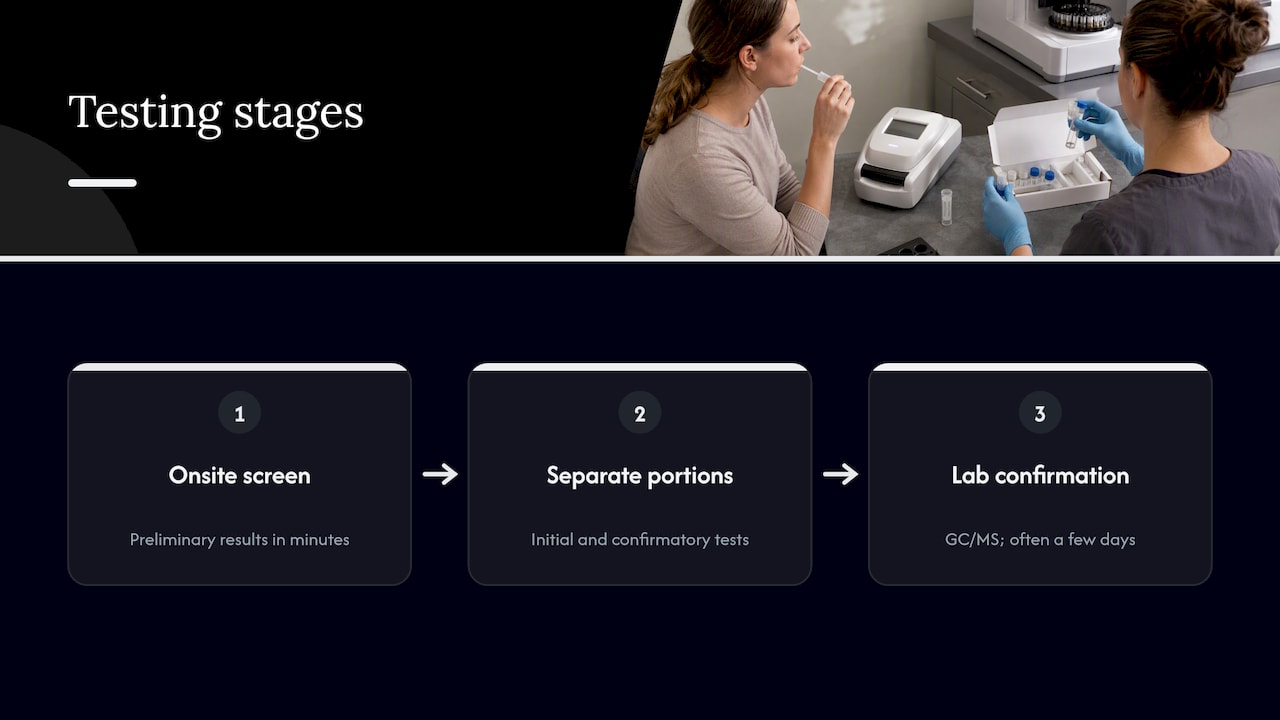
So a field screen showing positive is a signal, not a verified finding. If your result is positive and you disagree, ask right away whether a laboratory confirmation is planned.
How accurate are saliva tests?
Accurate enough to be used widely, but not perfect. In the Clinical Chemistry cannabis study, the evaluated device showed 86.2 to 90.7% sensitivity and 75.0 to 77.8% specificity under the reported conditions. Cleveland Clinic says the best tests may be around 97% accurate, and lists last use, metabolism, frequency of use, test quality and food or drink in the mouth as factors.
Two takeaways:
- Quality varies by device and cutoff, which is another reason confirmation matters.
- A positive oral fluid result shows recent use. The New York State Police notes it does not by itself prove impairment.
What happens after a positive or refused test
Consequences depend on your court, your officer and your history. The public policies give a sense of the range:
- Refusal. In West Virginia, refusing to test as directed is treated as a probation violation under local circuit court practice.
- Retesting. After an initial positive in West Virginia, the probationer is retested within 30 calendar days. If the result is still not negative, the officer reports to the judge or prosecutor for direction.
- Denial of use. San Bernardino County, California, says that when an offender denies use after a positive onsite screen, the officer submits the specimen for urinalysis.
- Disputes. Cuyahoga County says positive samples are stored for 90 days and disputed results may go to a reference laboratory for retesting.
If you receive a positive result, stay calm and polite, write down the date, the device and what the officer said, and ask about confirmation and your options. For serious matters, such as a possible revocation hearing, speak with your defense attorney or public defender before you say more. We cannot give legal advice, and your attorney knows your court.
How to prepare sensibly
Preparation is about being informed and avoiding mistakes, not about gambling on shortcuts.
- Know your conditions. Read your probation order and ask which tests are used and how often. Random schedules are common.
- Understand your window. If you last used a substance within the windows above, a saliva test can plausibly detect it. Time is the most reliable factor, and nothing replaces it.
- Follow the waiting rules. Avoid food, drink and tobacco before collection for as long as your officer directs. It keeps the sample clean and avoids disputes about contamination.
- Declare medication. Keep prescriptions documented.
- Never tamper. Do not try to substitute or adulterate a sample. Collection is observed, and a tampering finding is likely to be treated more severely than a simple positive.
For general planning across test types, see our hair, urine and saliva preparation plans, and the warning signs before a drug test if you suspect a test is coming. If you want to understand how oral tests work in more depth, our saliva swab drug testing page is a good next step.
Our perspective
We hear from people on probation every week, and the first thing we notice is fear of the unknown. They do not know what the swab looks for, how long it lasts or what a positive means. Clear information fixes much of that.
Our honest view: saliva is the test where time does the most work. The windows are short, so what you did in the last day or two matters far more than what you did last month. We also think people should hear plainly that nothing is guaranteed. Test devices, cutoffs and individual metabolism differ, and no product can promise an outcome for a supervised, observed test. What we can offer is accurate information and products that fit a saliva test’s short window, and straightforward customer service, available 9am to 12am every day, when you have questions. Orders are shipped with confidentiality in mind.
If you are also facing a hair test or urine test as part of your supervision or a job, the plan is different for each, and mixing them up is a common mistake.
— MIchael
Products for saliva testing
If you are preparing for an oral test and want to see what we carry, start with our saliva drug testing category. It includes the Supreme Klean saliva detox mouthwash and saliva drug testing kits you can use at home to see how a test device behaves before an official one. Follow every label direction, and remember that results vary and no mouthwash replaces time since last use. If your supervision includes hair testing, our Macujo Aloe Rid Shampoo is built for that different task.
FAQ
What does a saliva drug test look for on probation?
It depends on the program. Public examples range from four substances (cocaine, opiates, marijuana and PCP) in one Ohio county to up to 13 drugs onsite in a Kansas county. Ask your officer which panel applies to you.
How long does marijuana stay in saliva?
Cleveland Clinic estimates up to 24 hours for cannabis. A controlled study found detection times from a couple of hours to more than 22 hours, depending on the cutoff. Frequent use and the specific device can change the window.
Can a saliva test be wrong?
Yes. Sensitivity and specificity depend on the device, and factors like food or drink in the mouth can matter. Positive screens are often sent for laboratory confirmation, so ask whether one is planned if you dispute a result.
Do I have to take a saliva test on probation?
If your conditions allow testing, yes, and refusing can count as a violation. Some courts reserve oral tests for particular situations, such as when someone cannot give urine. Check your order and ask your officer or attorney.
How fast do results come back?
Onsite devices can show results in minutes. Laboratory results usually take a day or two, and some confirmations can take a few days.
Sources
- Oral Drug Test (Mouth Swab), Cleveland Clinic
- Oral fluid toxicology FAQ, New York State Police
- Probation Drug Testing Policy and Protocol, West Virginia courts
- Substance Abuse Screening Services RFP, West Virginia courts
- Probation Programming and Services, Cuyahoga County Common Pleas Court
- Frequently Asked Questions, Riley County, Kansas
- Urinalysis, oral fluids sample collection, Orange County Probation
- Drug Screening policy, San Bernardino County Probation
- Medical Review Officer Guidance Manual, SAMHSA
- On-Site Test for Cannabinoids in Oral Fluid, Clinical Chemistry study
- Interpretation of Oral Fluid Tests for Drugs of Abuse