
Yes, standard hair follicle tests detect opiates, and they detect them well past the point where urine or blood tests come up empty. A standard 1.5-inch hair sample covers roughly 90 days of history, screening for codeine, morphine, and 6-monoacetylmorphine at a Society of Hair Testing cutoff of 200 pg/mg. Whether a positive result actually proves ingestion, though, depends on which metabolites show up and how the lab handled decontamination.
TL;DR:
- High sensitivity for opiates allows hair tests to detect drug use up to 90 days prior, especially when the sample includes metabolites like 6-MAM indicating heroin ingestion.
- Testing for phase II metabolites, such as glucuronide conjugates, significantly improves confirmation of ingestion over surface contamination or environmental exposure.
- Variables like hair type, growth rate, dose, and administration route can cause variations in detection thresholds, affecting the likelihood of confirming low-dose or infrequent use.
- A positive result above the 200 pg/mg cutoff generally requires no unreported prescription, and understanding which opioid panel is used is critical for interpreting specific drug detection.
- Proper sample collection, chain of custody, and thorough pre-test disclosure and documentation can influence result validity and help prevent false positives or disputes.
Table of Contents
- What Labs Test for in an Opiates Hair Drug Test
- Detection Window: How Far Back Does a Hair Test Go?
- Inside the Lab: From Collection to Confirmed Result
- Cutoffs and What a Positive Result Actually Means
- Contamination vs. Ingestion: Why Metabolites Settle the Argument
- Why Hair Tests Sometimes Miss Real Opiate Use
- What a Realistic Timeline Looks Like Before a Scheduled Test
- The Research Behind These Numbers
- Reading the Evidence Honestly
- Where Passdrugtest Fits Into Your Preparation
- Sources
- FAQ
What Labs Test for in an Opiates Hair Drug Test
A basic opiates hair drug test does not screen for one drug. It screens for a small family of related compounds, and which ones get tested changes what the result actually tells you.
Standard panels target three analytes: codeine, morphine, and 6-monoacetylmorphine, known as 6-MAM. That last one matters more than the other two combined. 6-MAM forms only when the body metabolizes heroin, so its presence rules out the common “I ate a poppy seed bagel” defense that muddies morphine and codeine results. If 6-MAM shows up, heroin use is the only explanation.
Expanded panels go further. Many employers and clinics now order tests that also screen for semi-synthetic and synthetic opioids, since prescription opioid misuse doesn’t always overlap with heroin metabolism:
- Oxycodone (OxyContin, Percocet)
- Hydrocodone (Vicodin, Norco)
- Hydromorphone (Dilaudid)
- Oxymorphone (Opana)
- Fentanyl and fentanyl analogs, increasingly added given the rise in synthetic opioid exposure
Hair testing has also become a useful tool for catching novel psychoactive substances and synthetic opioids that clear urine and blood too fast to catch, which is part of why researchers have leaned on hair analysis for high-risk population screening.
Here’s the detail most explainers skip: labs increasingly look for phase II metabolites, meaning glucuronide conjugates the body produces during normal drug processing. A parent drug like morphine can theoretically transfer to hair from external contact, like touching drug residue and then touching your hair. A glucuronide metabolite can’t get there that way. Your liver has to make it. Finding those metabolites is stronger proof the drug was actually consumed, not just picked up secondhand.
Detection Window: How Far Back Does a Hair Test Go?
Hair grows at a fairly predictable rate, and that predictability is what makes the whole test work. On average, scalp hair grows about half an inch per month, so a standard 1.5-inch sample cut close to the scalp represents roughly the last 90 days of drug exposure.
A few collection details shape what that window actually captures:
- Labs typically need about a small mass of hair, roughly a moderate number of strands, cut as close to the scalp as possible.
- If someone has short hair or a shaved head, body hair from the chest, legs, or arms can substitute, though body hair grows more slowly and unevenly, which widens the estimated detection window and makes it less precise.
- Longer samples can be segmented into sections representing different months, which is how forensic labs sometimes map out whether use was recent, ongoing, or further in the past.
The 90-day figure is an average, not a guarantee. Growth rate varies by individual, by body region, and even by season. That variability is one reason interpretation always needs a trained eye, not just a pass or fail number. For a deeper look at how growth rate math applies to other substances, the detection window explainer on kratom in hair walks through the same growth-rate logic.
Inside the Lab: From Collection to Confirmed Result
Getting from a snip of hair to a reportable result involves more steps than most people expect, and each one is a place where accuracy can slip if it’s not done correctly.
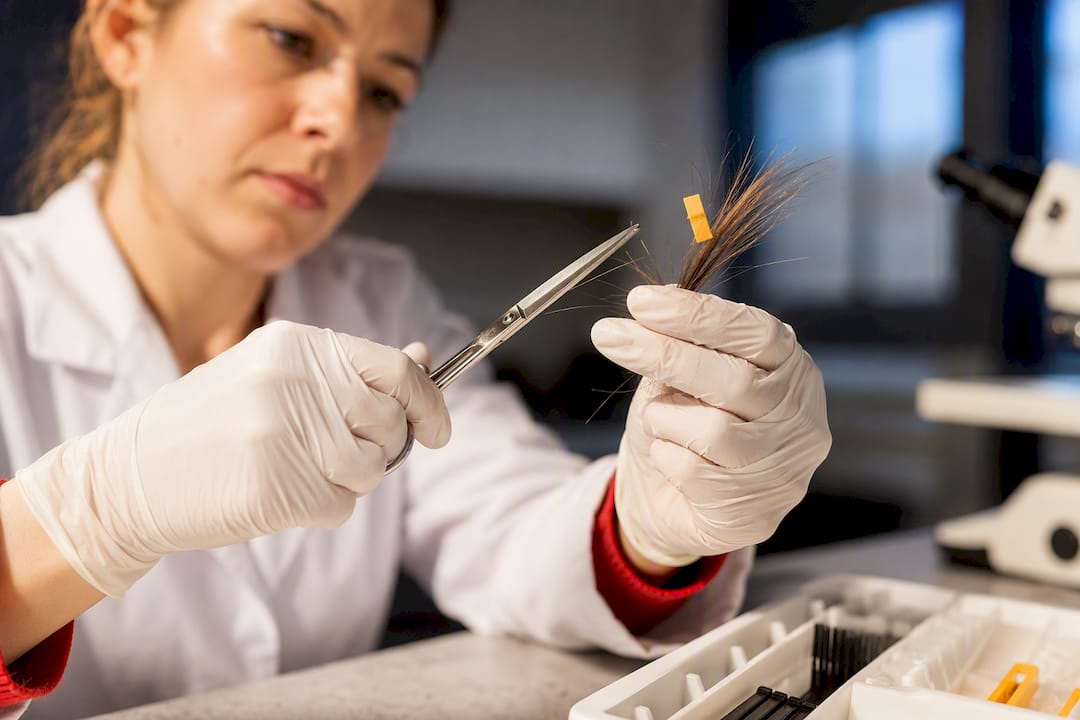
Collection comes first. A technician cuts the sample as close to the scalp as possible and documents chain of custody, meaning a paper trail proving the sample wasn’t tampered with or swapped between collection and testing. This matters more for legal and employment disputes than most people realize, since a broken chain of custody can get a result thrown out entirely.
Next comes decontamination. Before any chemical testing begins, labs wash the hair to strip away surface residue that might reflect environmental exposure rather than actual use. Wash protocols vary between labs, and validation matters here. The Society of Hair Testing’s consensus guidance recommends documented wash efficiency, but no wash step fully substitutes for metabolite testing, which is covered in more detail below.
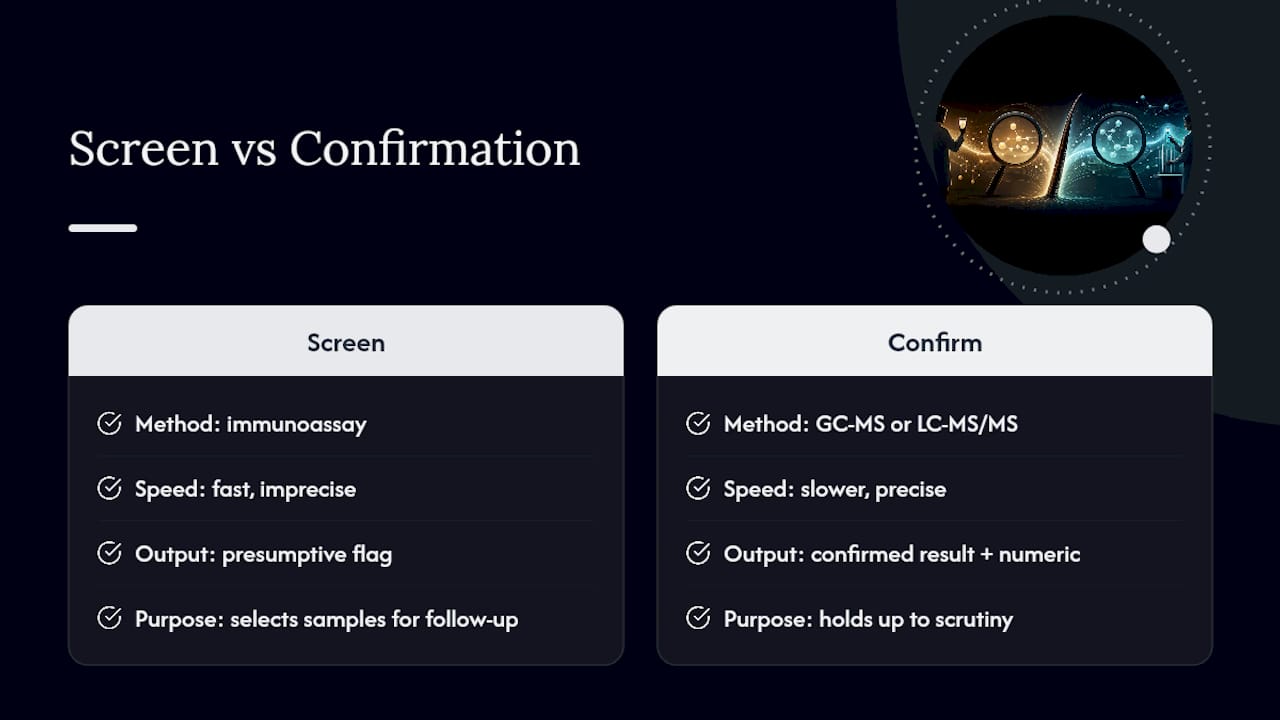
After washing, the sample goes through an initial immunoassay screen, a fast, relatively inexpensive test that flags samples likely to contain opiates. Anything that screens positive moves to confirmatory testing using gas chromatography mass spectrometry or liquid chromatography tandem mass spectrometry, commonly abbreviated GC-MS and LC-MS/MS. These methods identify and quantify the exact compounds present, which is what actually determines a legally defensible positive result.
Turnaround time is usually fast for negatives. Labcorp reports negative screens in about 48 to 72 hours, with confirmatory testing on presumptive positives adding roughly another 72 hours.
Cutoffs and What a Positive Result Actually Means
The number that decides everything: 200 pg/mg. That’s the confirmatory cutoff the Society of Hair Testing recommends for the opiates group, meaning morphine, codeine, and 6-MAM combined have to clear that concentration threshold before a lab reports a confirmed positive.
Cutoffs exist for a reason, and they cut both ways. Set the threshold too low, and trace environmental exposure risks triggering false positives. Set it too high, and genuine but light or infrequent use slips through as a false negative. The 200 pg/mg figure represents a working compromise the field has largely settled on, and understanding it changes how you should read a result. A detailed breakdown of cutoff levels and how they shift interpretation is worth reading if you want the full mechanics.
There’s also a meaningful difference between a presumptive screen and a confirmed positive. The initial immunoassay is a screening tool, fast but imprecise. It flags samples that need a closer look. Only the GC-MS or LC-MS/MS confirmation step produces a result that holds up to scrutiny, and it also produces something the screen can’t: a quantitative number. That number, how far above the cutoff the sample measured, gives toxicologists a rough sense of whether exposure was a single incident or a sustained pattern.
None of this makes hair testing infallible. Population research comparing hair results against self-reported drug use has found sensitivity for opiates can run surprisingly low in some samples, meaning a real chunk of people who reported opiate use in surveys still tested negative on hair. That gap matters for anyone reading a negative result as absolute proof of abstinence. It usually isn’t.
Contamination vs. Ingestion: Why Metabolites Settle the Argument
Environmental contamination is a real problem for hair testing, and it’s the argument most people raise first when they get a positive result they didn’t expect. Hair can pick up drug residue from smoke exposure, shared surfaces, or even close contact with someone who handles opioids regularly, all without a single dose entering the person’s body.
This is exactly why NIJ-funded forensic research treats metabolite detection as the strongest available tool for separating contamination from actual use. A parent compound sitting on the outside of a hair shaft can, in theory, get there through contact alone. A phase II glucuronide metabolite can’t. The body has to metabolize the parent drug first, which only happens after ingestion.
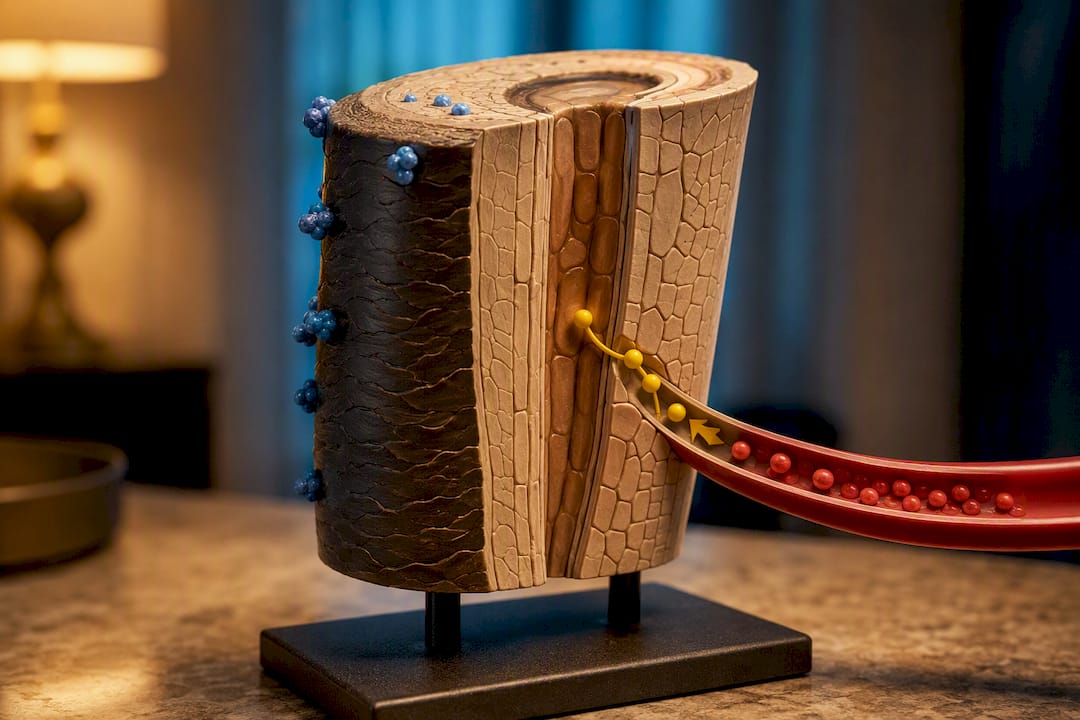
Advances in mass spectrometry have made this distinction sharper. Validated LC-MS/MS methods can now quantify opioid glucuronide metabolites in hair at very low picogram-per-milligram levels, giving labs a sensitive enough tool to detect metabolites even when overall drug exposure was modest. Wash protocols help reduce surface contamination, but they were never designed to be the final word. Metabolite confirmation is the backstop for a deeper look at how drugs bind into the hair matrix itself, the explainer on metabolite incorporation covers the biology in more detail.
Why Hair Tests Sometimes Miss Real Opiate Use
Hair testing has a reputation for being nearly impossible to beat, but the sensitivity data tells a more complicated story. Multiple biological and technical factors can push a genuine user’s result below the cutoff.
Dose and frequency matter more than most people assume. Someone who used opiates once or twice in a 90-day window, at a low dose, may simply not deposit enough drug into the hair shaft to clear 200 pg/mg. Route of administration plays a role too. Injected or smoked opiates tend to produce different incorporation patterns than oral use, partly because blood-borne drug reaches the hair follicle differently than drug absorbed through the gut.
Hair characteristics themselves introduce variability. Darker, coarser hair tends to bind more drug than lighter or finer hair, a phenomenon tied to melanin content rather than actual usage differences. This means two people using the same amount of the same drug can produce meaningfully different hair concentrations purely based on hair type, which is a fairness concern that toxicologists take seriously but haven’t fully solved.
Growth rate variability compounds the problem. If someone’s hair grows faster or slower than the 0.5 inch per month average used to calculate the 90-day window, the actual period represented by a 1.5-inch sample shifts without anyone knowing it.
On the methodology side, panel breadth and cutoff choice both affect what gets caught. A narrow panel that only screens codeine, morphine, and 6-MAM will miss oxycodone or hydrocodone use entirely unless the lab was told to expand the test. Assay sensitivity, meaning the lab’s limit of detection and limit of quantification, sets a hard floor below which no amount of drug in the sample will register.
All of this lines up with the population research mentioned earlier: hair testing, despite its long detection window, is not a perfectly sensitive instrument. It’s excellent at catching sustained use. It’s considerably less reliable at catching a single low-dose exposure, which is a distinction anyone interpreting a result, or anticipating one, needs to understand.
What a Realistic Timeline Looks Like Before a Scheduled Test
Stopping opiate use a few days before a scheduled hair test does close to nothing. The test isn’t measuring what’s in your bloodstream today. It’s measuring what got deposited into hair that already grew out of your scalp over the past three months. That single fact catches more people off guard than anything else about hair testing.
A handful of practical steps make a real difference in how a scheduled test plays out:
- Disclose any legitimate prescriptions to the testing coordinator or medical review officer before the sample is collected, since a documented prescription for codeine or hydrocodone can explain an otherwise positive result.
- Avoid unnecessary environmental exposure in the weeks before testing, including secondhand smoke situations or handling substances that could transfer to hair.
- Find out which panel is being used, standard or expanded, since that determines which specific opioids will actually be screened.
- Keep documentation of any medical treatment, detox program, or relevant paperwork in case a disputed result needs a second look.
- Preserve chain of custody expectations by using an accredited collection site rather than an informal or unverified one.
Pro Tip: If a test is scheduled with real advance notice, treat the 90-day window as fixed, not negotiable. The only variables you can actually influence are avoiding new exposure and making sure any legitimate medical explanation is documented before the sample is collected.
Anyone weighing preparation options ahead of a scheduled hair test may also want to look at a structured hair detox checklist that walks through the process in more granular detail.
The Research Behind These Numbers
The claims in this article rest on a small set of consensus documents and peer-reviewed studies that most hair testing guidance traces back to.
- The Society of Hair Testing’s 2021 consensus document set the 200 pg/mg confirmatory cutoff for opiates and standardized sample preparation and wash recommendations that most accredited labs now follow.
- NIJ-funded forensic toxicology research addressed the contamination-versus-ingestion problem directly, concluding metabolite detection is the most defensible way to separate the two.
- Gryczynski and colleagues’ comparison of hair testing against self-reported drug use in primary care patients found sensitivity for opiates was inconsistent, a finding that has shaped how cautious toxicologists are about treating negative results as proof of abstinence.
- Validated LC-MS/MS methods for glucuronide metabolite quantification gave the field a technical path to detect ingestion evidence at concentrations previous assays couldn’t reliably measure.
Reading the Evidence Honestly
The data here doesn’t support the internet folklore that hair tests are either unbeatable or trivially easy to fool. Both extremes ignore what the research actually shows: a test with real sensitivity limitations, a fairly rigid 90-day retrospective window, and a confirmation process that increasingly relies on metabolites rather than parent drug alone.
What strikes me most is how often people focus on the wrong variable. They fixate on stopping use right before a test, when the biology makes that almost irrelevant. The window that matters already grew out weeks ago. The more useful questions are about disclosure, documentation, and understanding which panel is actually being run, because those are the factors someone facing a scheduled test can actually influence.
If you’re staring down a disputed result or a prescription that might complicate things, don’t guess. Get the lab’s confirmatory report, not just the screen, and if anything looks off, involve a medical review officer or a qualified toxicologist before assuming the worst. No hair test, no matter how well validated, offers 100% certainty in every case.
— MIchael
Where Passdrugtest Fits Into Your Preparation
Understanding cutoffs, metabolites, and detection windows is only half the equation. The other half is what you actually do with that knowledge, and that’s where a targeted hair prep approach matters more than generic advice about waiting it out.

Passdrugtest carries the Macujo Aloe Rid Shampoo, widely regarded as the centerpiece of Mike Macujo’s original hair cleansing method, still considered by many the most thorough approach available for anyone facing a hair follicle test. Beyond that flagship product, the drug test detox product catalog covers a full range of hair prep formulas for readers who want more options to compare. None of these products are a magic guarantee, and Passdrugtest doesn’t pretend otherwise. What they are is a legitimate, well-documented option built around the same science covered above: reducing surface residue and giving your hair the best realistic shot heading into a scheduled test. Follow the instructions exactly as written, give yourself enough lead time before your test date, and if you have questions about your specific situation, a quick look at the Macujo Method walkthrough without Aloe Rid is a good next stop before you decide which approach fits your timeline.
This article is general information, not a substitute for advice from a qualified doctor. Consult a qualified healthcare professional about your own circumstances before acting on anything here.
Sources
- Hair Follicle Drug Testing: Process & Benefits | Labcorp
- Society of Hair Testing consensus (2021) — opiates cutoff
- Detecting drugs in hair: is it drug use or environmental contamination? | NIJ
- Detection and quantification of opioid glucuronides in human hair by LC–MS/MS
FAQ
How long can opiates be detected in hair?
A standard 1.5-inch hair sample captures roughly 90 days of history, based on an average hair growth rate of about half an inch per month.
How long do I need to be clean to pass a hair follicle test?
Because the test measures drug deposited in hair that already grew months ago, abstaining for just a few days before a scheduled test typically has little effect on a 90-day retrospective window.
What disqualifies you from a hair follicle test?
A confirmed result above the 200 pg/mg cutoff for the opiates group, without a documented legitimate prescription, is what produces a disqualifying positive; undisclosed prescription opioid use is a common and avoidable cause.
What drugs will test positive for opiates?
Standard panels detect codeine, morphine, and 6-MAM, which is specific to heroin use, while expanded panels also screen for semi-synthetic opioids like oxycodone, hydrocodone, hydromorphone, and oxymorphone.