
Yes, body hair can be used for a drug test, and it changes the math in your favor and against you at the same time. Scalp hair gives a roughly 90-day segmented window [LabCorp], but body hair often reflects a longer record, potentially stretching close to 12 months. The tradeoff: body hair can push the look-back period out further, but it makes pinpointing exactly when you used a substance much harder.
TL;DR:
- Body hair can reflect drug use over up to 12 months but lacks precise timing, making it harder to determine when use occurred.
- Hair testing detects metabolites embedded inside the shaft, with positive results indicating use happened days or weeks prior, not immediately.
- When scalp hair is unavailable or shaved, labs may collect body hair samples, but interpretation becomes more uncertain due to biological variability and contamination issues.
- Heavy, sustained use is easier to identify in body hair because of low detection thresholds, while single or infrequent use is more difficult to confirm reliably.
- Preparation strategies like the Macujo Method may lower detectable drug levels but do not guarantee passing, and abstinence remains the most reliable approach.
Table of Contents
- What Is a Body Hair Drug Test and How Does It Work?
- How Does Body Hair Testing Differ From Head Hair Testing?
- What Happens During Sample Collection?
- Why Are Body Hair Results Harder to Interpret?
- Do At-Home Hair Cleansing Methods Actually Work?
- How Should You Prepare Before a Scheduled Hair Test?
- What Legal and Privacy Rules Apply to Body Hair Testing?
- Which Drugs Show Up Most Reliably in Body Hair?
- How Does Body Hair Testing Compare to Urine, Blood, and Saliva Tests?
- Where PassDrugTest.net Fits Into This Conversation
- Evidence-Based Options for Test Preparation
- Where to Verify the Science Yourself
- Sources
- FAQ
What Is a Body Hair Drug Test and How Does It Work?
Drugs and their metabolites travel through your bloodstream and get trapped inside the hair follicle as it forms, showing up in the visible shaft after about 5 to 10 days. That lag is why a hair follicle drug screening can’t detect last night’s use. It’s detecting what happened over the weeks and months before the sample was cut.
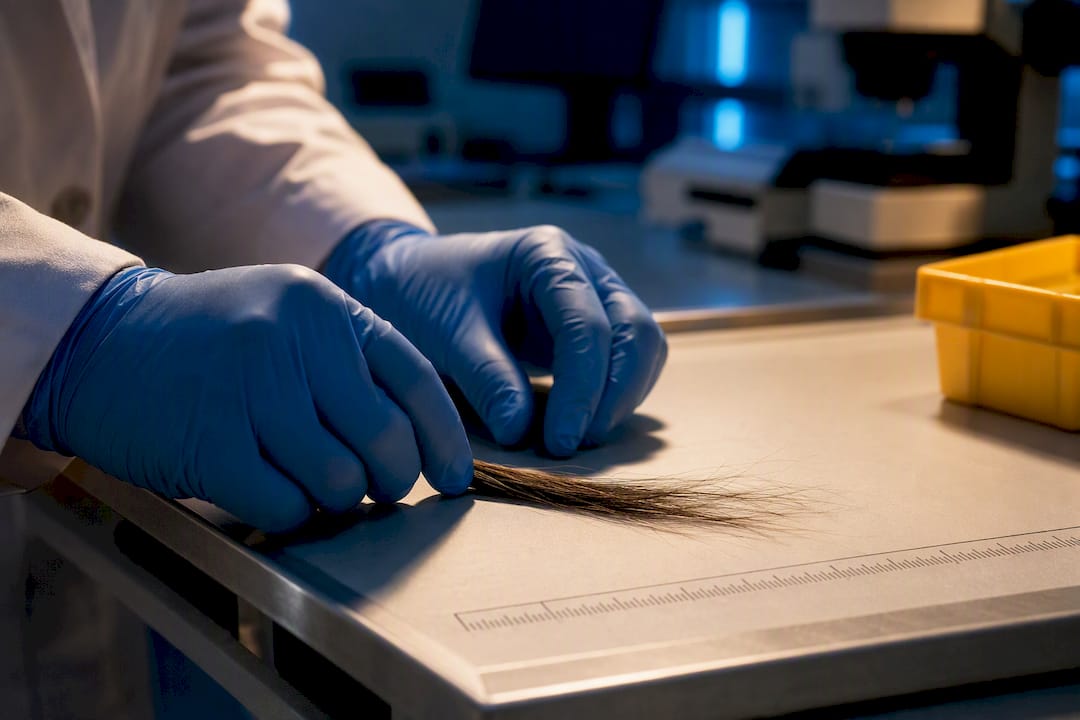
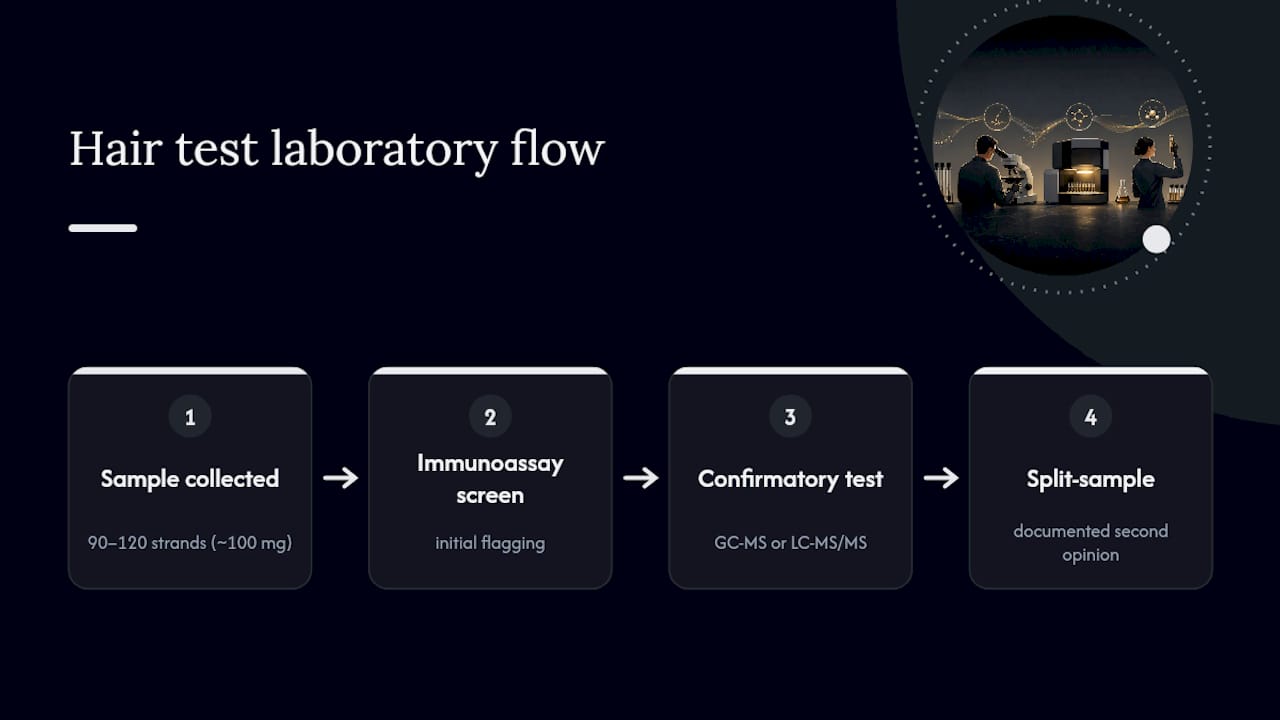
For scalp hair, labs follow a fairly standard convention: a 1.5 inch segment closest to the scalp represents roughly 90 days of growth [LabCorp], and technicians typically need 90 to 120 strands, or about 100 milligrams to run a complete analysis. That segment length lets toxicologists slice the sample into rough monthly timelines.
Every hair drug test sample follows the same two-stage lab process. An initial immunoassay screen flags samples that might be positive, and any flagged sample moves to confirmatory testing using GC-MS or LC-MS/MS, the gold-standard methods that identify specific compounds rather than general chemical classes. This confirmation step is also where split-sample testing comes into play, giving the donor a documented second opinion if the first result is disputed. Compared to urine or oral fluid, which typically clear within days, hair testing wins on detection length because keratin locks metabolites in place instead of letting the body flush them out.
How Does Body Hair Testing Differ From Head Hair Testing?
The core distinction comes down to a tradeoff between reach and precision. Head hair gives you a defined, roughly 90-day window that labs can segment into rough monthly chunks. Body hair extends that reach, sometimes offering a general use overview covering up to about 12 months, but it sacrifices the ability to timestamp anything within that period.
That loss of precision isn’t a lab shortcoming. It’s biology. Scalp hair grows at a fairly predictable rate, close to half an inch per month, which is what makes segmentation possible in the first place. Body hair, whether from the arms, legs, chest, or beard, cycles through growth and rest phases at wildly different rates depending on the site and the individual, so a single strand might represent months of exposure compressed into a length that looks deceptively short.
Location matters for concentration too. Some forensic research points to certain drugs showing higher concentrations in non-scalp hair than in scalp samples for the same person, depending on the analyte. Practical implications worth understanding:
- A body hair positive tells an employer or forensic examiner that use happened sometime in the past several months, not when.
- Beard hair grows faster than leg or arm hair, so it sits closer to head hair in terms of timeline usefulness.
- Because body hair can’t be reliably segmented, a single result functions more like a general overview than a calendar.
- This ambiguity is exactly why body hair testing gets treated as a backup option rather than a first choice.
What Happens During Sample Collection?
Collection procedures depend on what hair is actually available, but the fundamentals stay consistent across labs and testing sites.
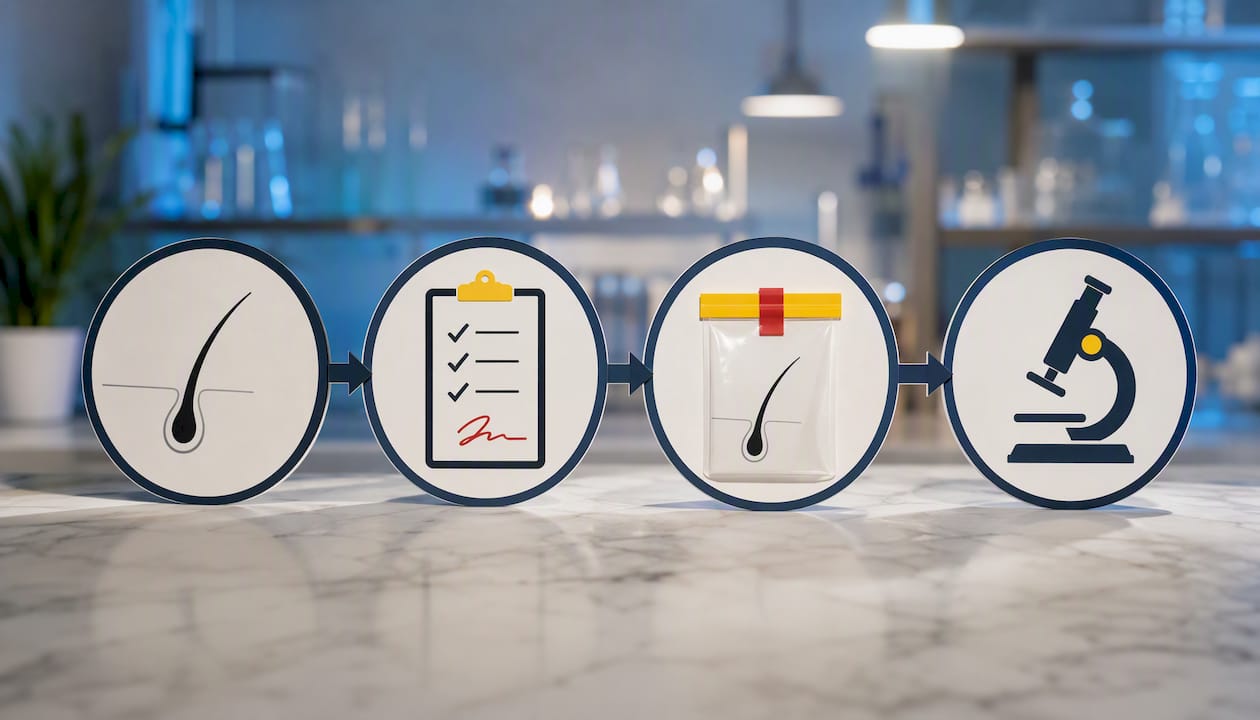
- A trained collector cuts scalp hair as close to the root as possible from the crown area, where growth is most uniform, and secures the sample in foil, clearly marking the root end.
- If scalp hair is too short (generally under half an inch) or unavailable entirely, the collector moves to body hair sites such as the chest, underarm, leg, or beard, gathering a comparable mass to reach the required sample.
- The sample gets sealed into a chain-of-custody envelope, documented with signatures from both the donor and collector, and shipped to an accredited lab.
- If the screen comes back positive, the lab splits the sample into A and B portions, running confirmatory GC-MS or LC-MS/MS on the primary portion while preserving the second for independent retesting if the result is challenged.
- Screening results often return within 24 to 48 hours, while confirmation testing on a positive screen typically adds several more business days.
If a donor arrives with a shaved head and no viable body hair, collectors are trained to document the situation rather than fabricate a sample, and many testing programs treat an inability to provide any hair as equivalent to a refusal.
Why Are Body Hair Results Harder to Interpret?
Body hair testing carries interpretive baggage that scalp hair mostly avoids, starting with contamination. Labs address this with a decontamination wash before analysis, then compare the wash-off fraction against what’s actually embedded in the hair matrix. Simple exposure, like being near secondhand smoke, tends to sit on the surface and rinse away, while ingested drugs leave metabolites bound inside the shaft that washing can’t touch.
Melanin content adds another layer of uncertainty. Darker, more heavily pigmented hair can bind certain drugs, especially basic compounds like methamphetamine, more readily than lighter hair, which means two people with identical use patterns could show different concentrations purely because of hair color. Analytical cutoffs compound the problem: labs set detection thresholds at extremely low levels, often in the picogram-per-milligram range, and a result sitting just above that cutoff can represent either light, infrequent use or a lingering trace from heavier use months earlier.
Because of these variables, a body hair positive rarely stands alone in a serious dispute. Toxicologists typically want case history, prescription records, and sometimes a second specimen type before drawing firm conclusions.
Do At-Home Hair Cleansing Methods Actually Work?
Peer-reviewed research gives a mixed, cautionary answer rather than a clean yes or no. A study published in Drug Testing and Analysis examined homemade chemical treatments applied to hair and found that some intensive, multistep procedures measurably lowered detectable concentrations for certain drugs, with reductions reported in the range of roughly 80 to 90% for specific substances under controlled experimental conditions.
That’s a meaningful reduction, but it’s not the same as guaranteed removal, and the effect varied significantly by drug class. A few things worth understanding before anyone assumes a shortcut works:
- Ordinary shampoo has no measurable effect on internalized metabolites, since those compounds are bound inside the hair shaft, not sitting on the surface.
- Aggressive treatments that did show reductions typically involved repeated chemical stripping that also visibly damages hair, raising questions during collection.
- Labs can sometimes detect chemically altered analyte patterns, which can trigger additional scrutiny rather than a clean pass.
- No documented household method reliably guarantees a negative result across all drug classes.
The honest takeaway: treated hair can still test positive, and the treatment process itself may draw attention during chain-of-custody documentation.
How Should You Prepare Before a Scheduled Hair Test?
Preparation starts with understanding the timeline, not looking for a last-minute fix.
- Stop use immediately and account for the 5 to 10 day incorporation lag before anything shows up in new growth, then plan around the full window a scalp test could capture, often targeting roughly 100 days as a safer buffer.
- Resist the urge to shave. Arriving without scalp hair usually prompts the collector to move to body hair sites instead, and refusing to provide any sample at all is typically logged as a refusal, which many employers treat the same as a positive result.
- If a screen comes back positive and you dispute it, request confirmatory testing on the retained B sample and ask for documentation of the chain-of-custody process.
- Keep records of any prescribed medications and last-use dates in case you need to explain a result during a review.
Pro Tip: If you’re facing a scheduled test with real lead time, a documented 90-day preparation window gives you far more room to work with than trying to solve the problem in the final week.
What Legal and Privacy Rules Apply to Body Hair Testing?
Body hair testing raises consent and dignity concerns that scalp hair collection generally avoids. Because body hair sites such as chest, underarm, leg, or beard involve more personal areas of the body than a scalp clip, most testing programs require the donor’s explicit consent for the specific collection site and often mandate a same-gender collector or a private setting. Refusing consent for a body hair collection after scalp hair proves unavailable typically gets logged the same way as refusing the test outright, which carries the same consequences as a confirmed positive in most employment settings.
Chain-of-custody documentation matters just as much here as with any other specimen type. Every collection needs a signed record showing who collected the sample, from where, and when, with tamper-evident packaging that protects both the donor and the employer if a result gets challenged later. The UNODC’s international guidelines on hair testing specifically recognize scalp, beard, pubic, and axillary hair as viable specimen types, but they also stress that collection protocols must be followed precisely to preserve the sample’s evidentiary value.
Privacy laws around drug testing vary by state and by whether the test is court-ordered, employer-mandated, or voluntary, so the specific consent and disclosure requirements a donor faces depend heavily on jurisdiction and context. Anyone facing a body hair collection in a legally sensitive situation, a custody dispute or a probation requirement, for example, should understand that the stakes for a disputed or mishandled sample are considerably higher than in a routine pre-employment screen, and asking for written documentation of the collection process protects the donor either way.
Which Drugs Show Up Most Reliably in Body Hair?
Body hair tends to perform well for the same broad drug categories that scalp hair testing already targets: THC metabolites, cocaine and its metabolite benzoylecgonine, opiates, methamphetamine, and PCP. What changes with body hair isn’t which drugs get detected. It’s how confidently labs can quantify them.
Chronic, heavy use is far easier to flag in body hair than a single isolated exposure. Laboratory detection cutoffs sit at extremely low concentrations, often in the picogram-per-milligram range for THC metabolites specifically, which means the test is tuned to catch a pattern of use rather than a one-time event. Someone who used heavily for months has a much stronger, more consistent signal embedded across body hair sites than someone who tried something once three months before the test.
Methamphetamine and other basic compounds bind particularly well to melanin, which is part of why concentration differences between scalp and body hair, and between people with different natural hair color, tend to show up more prominently for stimulants than for some other drug classes. Beard hair, because it grows faster and more uniformly than leg or arm hair, often produces a more interpretable result for these substances than hair pulled from the extremities.
The practical upshot for anyone facing a body hair collection: the test isn’t guessing at whether you used a substance recently. It’s built to catch a broader pattern, which is exactly why a single use event is harder to pin down but a sustained pattern is very difficult to hide.
How Does Body Hair Testing Compare to Urine, Blood, and Saliva Tests?
Each specimen type answers a different question, and understanding that difference explains why employers pick one method over another.
| Test type | Typical detection window | Best for | Main limitation |
|---|---|---|---|
| Urine | 1 to 3 days for most drugs (longer for chronic THC use) | Recent use, routine screening | Easily timed around; doesn’t show long-term patterns |
| Blood | Hours to 1 to 2 days | Confirming current impairment | Invasive, narrow window |
| Saliva | Up to 24 to 48 hours | Roadside or immediate post-incident checks | Very short window, less lab infrastructure |
| Scalp hair | Around 90 days, segmentable | Employment screening, pattern-of-use history | Requires adequate scalp hair length |
| Body hair | Up to roughly 12 months, not segmentable | Backup when scalp hair is unavailable | No reliable timeline, more interpretive uncertainty |
Urine remains the workhorse for routine workplace testing because it’s cheap, fast, and answers a narrow question well: did this person use recently? Blood and saliva serve a different purpose entirely, confirming impairment at the moment of collection, which makes them the tools of choice after an accident or a traffic stop rather than for pre-employment screening.
Hair testing, scalp or body, exists for a different job: establishing a pattern over weeks or months rather than catching a single recent event. That’s precisely why hair drug testing for employment has become common for safety-sensitive roles. Employers care less about last weekend and more about whether someone has a consistent pattern that could affect judgment or reliability on the job.
Where PassDrugTest.net Fits Into This Conversation
PassDrugTest.net focuses on the practical side of hair testing preparation, not on medical or legal advice. No shampoo, drink, or kit changes the biology of how metabolites bind inside the hair shaft, and any resource claiming otherwise deserves skepticism. What we can offer is clear information about what the science actually shows, and product options built around that same evidence.
— MIchael
Evidence-Based Options for Test Preparation
If you’re staring down a scheduled hair test, the research above should tell you one thing clearly: the timeline matters more than any shortcut. That’s exactly where a documented routine has an edge over guesswork.
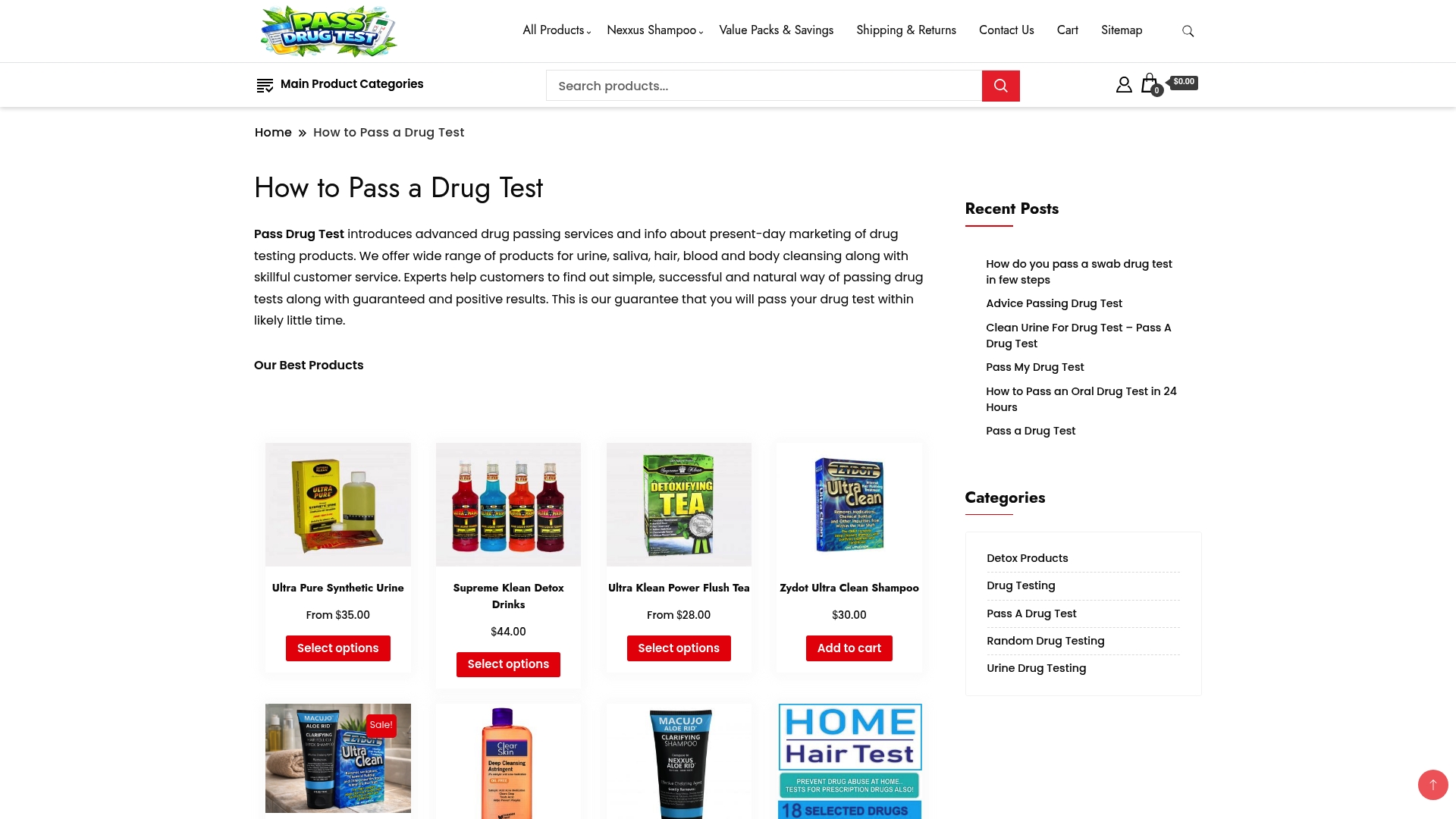
The Macujo Method, developed by Mike Macujo, has built a reputation as one of the most detailed hair detox routines available, and its core product, Macujo Aloe Rid Shampoo, is formulated specifically to work with that multistep process rather than as a standalone rinse. Some test-takers pair it with the Zydot Ultra Clean treatment for an added layer on test day itself. None of these products can promise a specific outcome, and the safest approach always starts with stopping use and giving your body as much time as the 90 to 100 day window allows.
If you want the full picture before buying anything, read our breakdown of detox versus cleansing to understand what each approach can realistically do, then check the 90-day preparation guide to map out your specific timeline. From there, browse the full detox product lineup and pick what fits your situation and your test date.
Where to Verify the Science Yourself
- The UNODC hair testing guidelines cover accepted collection sites and required lab methodology.
- NIJ research on contamination explains how labs separate exposure from ingestion.
- LabCorp’s hair testing page details sample requirements and lab workflow.
- The Drug Testing and Analysis study measures real treatment effects on detectable concentrations.
Sources
- Guidelines for testing drugs under international control in hair, sweat and oral fluid — UNODC
- Detecting drugs in hair: Is it drug use or environmental contamination? — NIJ
- Hair analysis: Assessment of homemade hair treatment effects on drug concentrations in the keratin matrix — Wiley Analytical Science Journals
- Hair follicle drug testing — LabCorp
FAQ
Can You Pass a Hair Follicle Test in 30 Days?
It’s difficult but not impossible for light or infrequent use, since new growth still carries a 5 to 10 day incorporation lag and a standard scalp test still captures roughly 90 days of history. Heavier or more recent use makes a 30-day window considerably riskier.
How Can I Detox My Hair Follicles?
There’s no single method proven to guarantee a negative result, but documented multistep routines like the Macujo Method combine specific washes designed to work on the hair shaft, and pairing that with as much abstinence time as possible gives the most realistic chance of a lower reading.
Is Body Hair Testing More Accurate Than Head Hair Testing?
Not exactly. Body hair extends the detection window to potentially 12 months but sacrifices the ability to pinpoint when use happened, while scalp hair offers a defined roughly 90-day segmented timeline.
What Happens if I Don’t Have Enough Body or Head Hair for a Test?
Collectors are trained to document insufficient hair rather than force a sample, but many testing programs treat an inability to provide any viable hair as equivalent to a refusal, which typically carries the same consequences as a positive result.
Does Hair Color Affect Drug Test Results?
Yes, to some degree. Darker, more pigmented hair can bind certain drugs, particularly methamphetamine and other basic compounds, more readily than lighter hair, which can create concentration differences between people with identical use patterns.