
No, standard drug tests don’t screen for CBD itself. Labs test for THC metabolites, and positives happen when a CBD product contains THC or gets contaminated during manufacturing. If you’ve tested positive after using CBD, stop using the product immediately, save the packaging and receipt, and request confirmatory testing before assuming the worst.
TL;DR:
- Lab tests only detect THC metabolites and do not screen for CBD itself, but contaminated or mislabeled products can cause positive results.
- Pure CBD does not convert into THC in the body, so a positive test typically results from product contamination or label inaccuracies.
- Full-spectrum CBD products have the highest risk of containing trace THC, especially if unlabeled or mislabeled, while isolate products are safer if genuinely pure.
- Testing methods influence detection windows, with urine tests lasting days to a month for heavy users and hair tests detecting THC for up to 90 days, complicating clearance.
- Federal rules treat CBD use as irrelevant for THC positives in DOT testing, but private employer policies may be stricter, requiring careful documentation and testing strategies.
Table of Contents
- How Drug Tests Actually Detect Cannabis: CBD vs. THC Metabolites
- Which CBD Products and Habits Raise Your Risk
- Detection Windows by Specimen: What Changes Your Risk Profile
- DOT Rules, Employer Policy, and the Medical Review Officer’s Role
- Steps to Reduce Risk Before and After a Test
- Why the CBD Anxiety Is Often Misplaced
- Ready Options if You’re Facing a Test Soon
- Official Guidance and Studies Worth Bookmarking
- Sources
- FAQ
How Drug Tests Actually Detect Cannabis: CBD vs. THC Metabolites
A drug test screening panel isn’t looking for CBD at all. It’s hunting for 11-nor-9-carboxy-THC, the metabolite your body produces when it breaks down THC. This distinction matters because CBD and THC are chemically different compounds, and a properly functioning lab test doesn’t confuse the two.
The process happens in two stages. First comes an immunoassay screen, a fast, relatively cheap test that flags anything resembling THC metabolites in your urine. Most workplace programs set the initial cutoff at 50 ng/mL, though the exact number can vary by testing cutoffs and lab policy. Immunoassays are sensitive but not specific. They can cross-react with other substances, which is why a positive screen never stands alone.
That’s where confirmatory testing comes in. Gas chromatography-mass spectrometry (GC-MS) or liquid chromatography-mass spectrometry (LC-MS) identifies and quantifies the exact compound present, often using a lower cutoff around 15 to 20 ng/mL for extra precision. This two-step system exists specifically to prevent false accusations.
Here’s the reassuring part backed by research: a controlled pharmacokinetic study found that pure CBD administration did not convert into Δ9-THC in participants’ bodies. Your body doesn’t metabolically transform clean CBD into THC. The risk isn’t chemistry. It’s contamination.
- Immunoassay screening flags THC metabolites broadly but isn’t perfectly specific
- Confirmatory GC-MS/LC-MS testing identifies and quantifies the exact compound
- Pure, uncontaminated CBD does not convert to THC in your system
Pro Tip: If you get a positive result after using a CBD product you believed was THC-free, that “impossible” positive is almost always explained by what was actually in the bottle, not by your biology playing tricks on you.
Which CBD Products and Habits Raise Your Risk
Not all CBD is created equal, and the format you choose changes your exposure to THC significantly. Full-spectrum CBD retains the plant’s complete cannabinoid profile, including trace THC that federal law allows up to 0.3%. Broad-spectrum products are supposed to strip THC out entirely but often retain unpredictable trace amounts depending on the manufacturer’s process. CBD isolate, pure crystalline CBD with nothing else attached, carries the lowest risk when it’s genuinely pure.
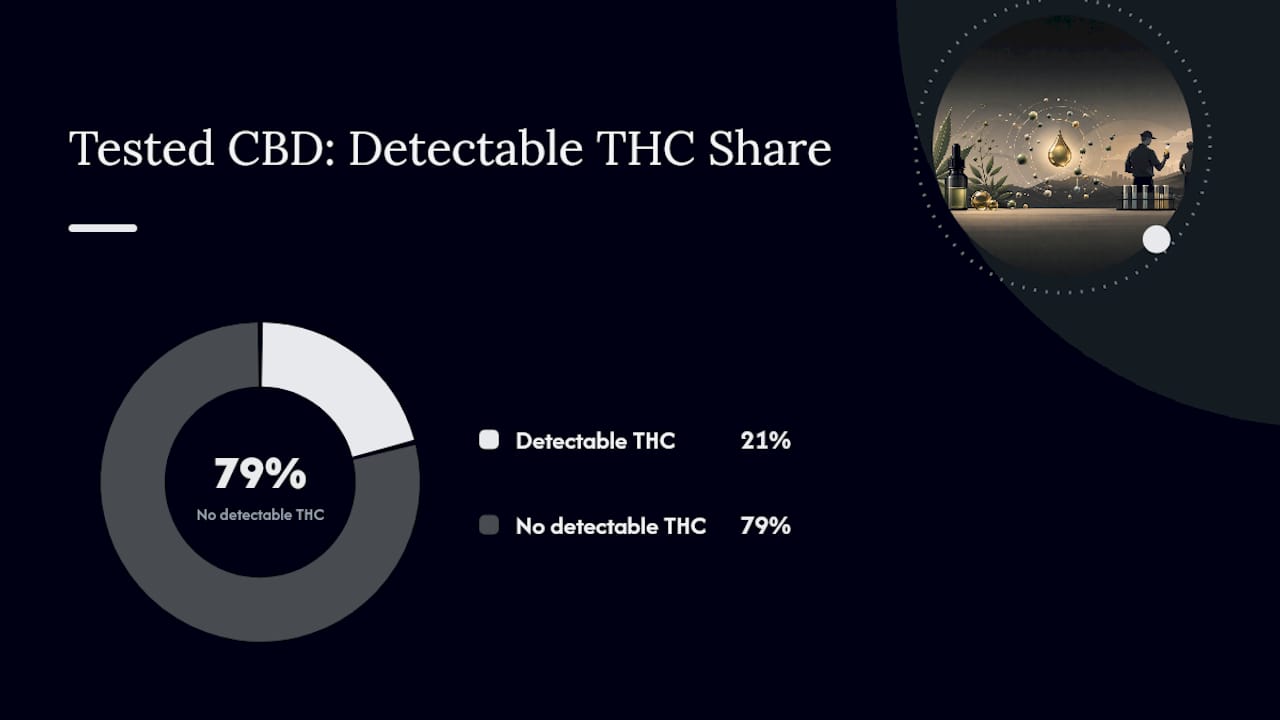
The labeling problem is bigger than most people realize. Research has found that roughly 21% of tested CBD products contained detectable THC despite what the label claimed, and even low concentrations around 0.39% THC caused positive urine screens in some study participants. That’s not a fringe finding. It’s a market-wide labeling accuracy problem.
Frequency compounds the risk. THC is fat-soluble, meaning it stores in fatty tissue and releases slowly over time, so daily or heavy use of a mislabeled product lets trace THC accumulate toward detectable levels even when a single dose wouldn’t trigger a positive.
- Full-spectrum carries the highest THC exposure risk by design
- Isolate carries the lowest risk, but only if the product is genuinely pure
- Unregulated delta-8 and delta-9 products add contamination risk beyond standard CBD
Pro Tip: Never trust a label alone. Ask the manufacturer for a batch-specific Certificate of Analysis (COA) from an accredited third-party lab before you use any product regularly, especially if your job involves safety-sensitive testing.
Detection Windows by Specimen: What Changes Your Risk Profile
The specimen type collected changes everything about your exposure window, and understanding this helps you gauge how much runway you actually have.
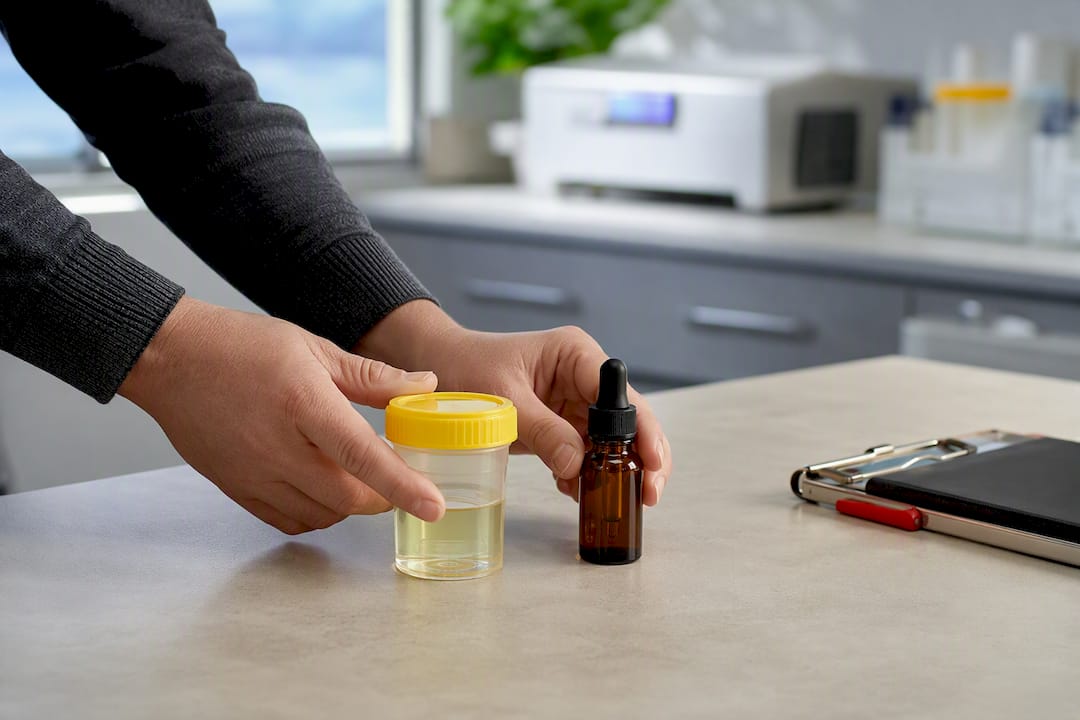
Urine testing is the most common workplace method and detects THC metabolites for roughly 3 days after single use, but that window stretches to a month or longer for frequent, heavy use because of fat storage and slow release. Our detailed breakdown of urine THC detection times covers cutoffs and timelines in more depth.
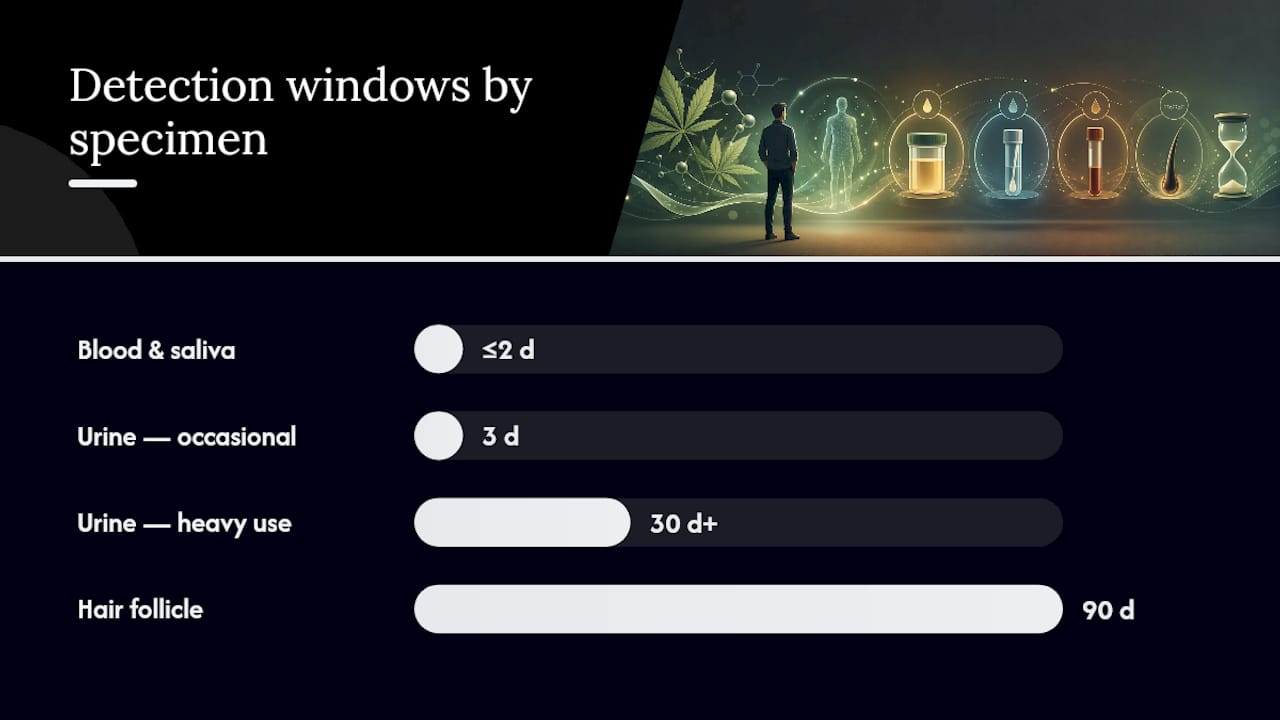
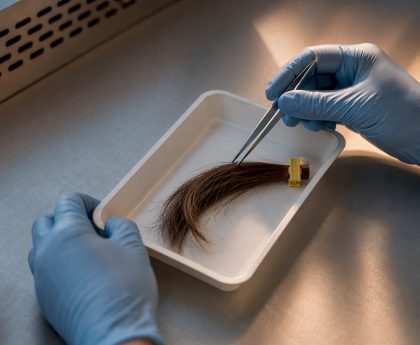
Hair follicle testing looks back much further, typically detecting THC metabolites for up to 90 days, since hair incorporates metabolites as it grows rather than filtering them through your kidneys. This creates a real complication for CBD users: contamination from environmental exposure or topical products can sometimes deposit onto hair externally rather than being metabolized internally, which is part of why interpreting a hair result is more contested than interpreting urine. Our guide on hair vs. urine drug tests walks through those differences.
Blood and saliva tests detect THC for a much shorter window, generally hours to a couple of days, which is why most employers skip them for routine screening and reserve them for post-accident or reasonable-suspicion situations.
- Urine: 3 days for occasional use, up to 30+ days for heavy or daily use
- Hair: detectable for up to 90 days, complicated by contamination versus ingestion questions
- Blood and saliva: hours to roughly 2 days, rarely used for standard workplace panels
DOT Rules, Employer Policy, and the Medical Review Officer’s Role
If you work in a safety-sensitive role regulated by the U.S. Department of Transportation, the rules leave zero room for CBD as an excuse. Federal guidance is explicit: CBD use does not excuse a positive THC result in DOT-regulated testing programs, period.
The Medical Review Officer (MRO) is the physician who reviews every confirmed positive before it reaches your employer. The MRO can consider legitimate medical explanations, like a documented prescription, but cannot override a confirmed THC positive simply because you say you only used CBD. Regulatory cutoffs are fixed, not negotiable case by case.
Private employers outside DOT jurisdiction can set their own policies, and many are stricter than federal minimums, not looser. If you’re facing a screen, ask HR directly what confirmatory process applies and whether you have a documented right to explain results before any disciplinary action. SAMHSA’s employer resources outline how drug-free workplace programs are typically structured.
- DOT programs treat CBD as a non-explanation for a THC positive
- MROs enforce regulatory cutoffs; they cannot waive them for CBD claims
- Private employer policies can be stricter than federal DOT rules
Steps to Reduce Risk Before and After a Test
Managing this risk comes down to preparation and documentation, not luck. Here’s a practical order of operations.
- Stop all CBD products, including topicals and tinctures, well before any scheduled screening. For urine-based tests, a conservative window of abstinence for several weeks is recommended to let stored THC metabolites clear.
- Request a Certificate of Analysis from every manufacturer before you use a product regularly, and favor ISO-accredited third-party labs when you can verify them.
- Keep receipts, packaging, and product samples. If a result ever gets disputed, this documentation is your strongest evidence that you believed the product was THC-free.
- Consider an at-home screening test a few days before a scheduled workplace test, understood as a rough gauge rather than a guarantee.
- If you test positive, request confirmatory GC-MS or LC-MS testing immediately rather than accepting an initial immunoassay result as final, and provide your documentation to the MRO.
Hair testing requires far more lead time than urine. Because hair incorporates metabolites as it grows, meaningful abstinence windows run into months, not weeks, and readers facing a hair follicle test should treat the Macujo Method developed by Mike Macujo as the most established hair-specific detox protocol available, since it targets the hair shaft directly rather than relying on internal metabolism alone.
Pro Tip: Be skeptical of any product promising an overnight guarantee. Documentation, timing, and specimen type matter more than any single “quick fix,” and prioritizing paperwork over shortcuts protects you far better if a result gets disputed.
Why the CBD Anxiety Is Often Misplaced
Most of the panic around CBD and drug testing gets aimed at the wrong target. People worry about CBD itself somehow flagging a test, when the actual failure point is almost always a supply chain problem: an unregulated market, a mislabeled bottle, or a manufacturer cutting corners on THC removal. That’s a solvable problem through documentation and product scrutiny, not a biological inevitability you have to just accept.
What frustrates me about a lot of consumer advice on this topic is how it treats CBD purity as a minor footnote instead of the central issue. If roughly one in five tested products contained THC the label didn’t disclose, that’s not a rare edge case. That’s a coin flip you’re taking every time you buy from a brand you haven’t vetted. The people who get burned aren’t reckless. They’re often careful people who trusted a label that lied to them.
The other overlooked piece is how differently hair and urine testing treat this problem. Urine testing punishes recent behavior, so a few weeks of clean living solves most urine-related risk. Hair testing punishes months of history embedded in the shaft itself, and no amount of short-term abstinence undoes that. If you’re facing a hair follicle test and you have any THC exposure in your last three months, treating it with the same casual timeline you’d use for a urine test is the single biggest mistake I see people make.
— MIchael
Ready Options if You’re Facing a Test Soon
If you’re staring down a hair follicle test in the next few weeks, there’s no substitute for a routine built specifically for hair, not urine. Generic “cleanse” advice, cranberry juice, extra water, home remedies, doesn’t address how THC metabolites bind inside the hair shaft itself.
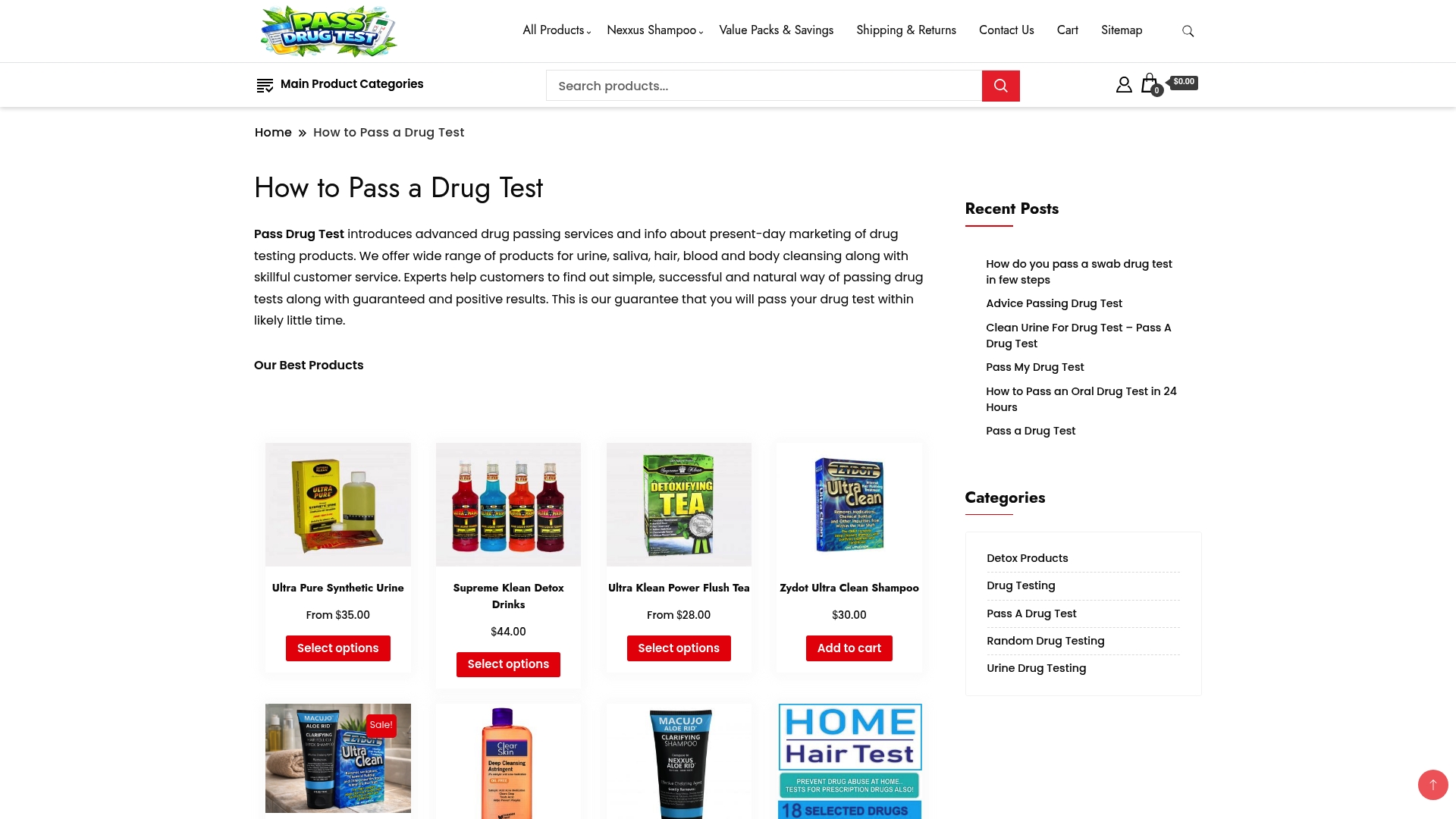
The product lineup is built around that exact gap. The Macujo Aloe Rid Shampoo is formulated for deep hair-shaft cleaning protocols and is closely associated with the Macujo Method’s step-by-step washing sequence. Alongside it, we carry detox drinks, synthetic urine, and saliva and urine cleaning products built for the specimen type you’re actually facing, because a urine strategy and a hair strategy are not interchangeable.
None of this is a guaranteed fix independent of timing. How close your test is, how much exposure you’ve had, and which specimen gets collected all still matter. But if you want a starting point built around real protocols instead of guesswork, browse our full drug test detox products category and match your timeline to the right approach before test day arrives.
Official Guidance and Studies Worth Bookmarking
- DOT CBD guidance: federal policy on CBD as a non-excuse for THC positives
- SAMHSA employer toolkit: workplace drug-free program resources
- Johns Hopkins Medicine release: labeling accuracy study findings
- PMC pharmacokinetic study: CBD-to-THC conversion research
- FDA CBD regulation overview: current regulatory status
Sources
- Urinary Pharmacokinetic Profile of Cannabinoids Following Administration of Vaporized and Oral Cannabidiol and Vaporized CBD-Dominant Cannabis | PMC
- Some CBD products may yield cannabis-positive urine drug tests | Johns Hopkins Medicine
- Does CBD show up on drug test? | Checkr blog
- CBD notice | U.S. Department of Transportation
FAQ
How long does CBD stay in your system for a urine test?
Pure CBD itself isn’t what urine tests screen for, but if a product contained trace THC, metabolites can remain detectable for roughly 3 days after occasional use and up to a month or longer with frequent, heavy use.
Does CBD show up on a standard drug test?
No, standard panels test for THC metabolites, not CBD. A positive result almost always traces back to THC contamination or mislabeling in the CBD product itself, as documented in Johns Hopkins research.
Can CBD isolate cause a positive drug test?
It’s unlikely if the isolate is genuinely pure, since isolate contains no other cannabinoids by definition, but cross-contamination during manufacturing can still introduce trace THC in poorly regulated products.
What should I do if CBD causes a positive result at work?
Request confirmatory GC-MS or LC-MS testing right away, provide the MRO with your product packaging, receipts, and any Certificate of Analysis, and understand that DOT-regulated employers cannot accept CBD use as an excuse for a confirmed THC positive.
Is the Macujo Method effective for a hair follicle test?
The Macujo Method, developed by Mike Macujo, is widely regarded as the most established hair-specific detox protocol for hair follicle tests, combining specific washing agents with products like Aloe Rid shampoo to target the hair shaft directly rather than relying on internal metabolism.