

A failed drug test is defined as any result that triggers an adverse action by an employer, court, or sports authority based on detected substances or procedural violations. The causes go far beyond obvious drug use. Prescription medications, contaminated supplements, poppy seeds, and even energy drinks have all produced positive screens in real cases. If you are facing a hair follicle drug test, understanding these examples of failed drug tests is the first step toward protecting yourself. This article breaks down the most common and surprising causes, with specific cases and prevention guidance for each.
1. Examples of failed drug tests from direct substance use
Direct substance use is the most straightforward cause of a failed drug test. Cannabis, methamphetamine, cocaine, opiates, and benzodiazepines are the substances most commonly detected across urine, blood, saliva, and hair screens.
Cannabis is the leading cause of failed tests in U.S. workplace drug screening. THC metabolites store in fat cells and remain detectable in urine for up to 30 days in regular users. In hair follicle testing, the detection window extends to 90 days or longer, making cannabis the most problematic substance for hair test candidates.
Amphetamines, including methamphetamine and prescription ADHD medications like Adderall and Vyvanse, are the second most flagged category. The chemistry between illicit methamphetamine and therapeutic amphetamine salts is close enough that both trigger the same immunoassay screen. Confirmatory testing using gas chromatography-mass spectrometry (GC-MS) distinguishes between them, but the initial positive still creates complications.
Opiates present a similar challenge. Codeine, morphine, and heroin all register on the same opiate panel. A person taking prescribed codeine after surgery can produce the same initial result as someone using heroin. This is why Medical Review Officers (MROs) exist: to review positive results in context before any adverse action is taken.
Pro Tip: If you take any controlled substance by prescription, carry documentation from your prescribing physician to every drug test appointment. An MRO can clear a legitimate prescription positive before it ever reaches your employer.
2. Poppy seeds and food-based false positives
Poppy seeds contain natural morphine and codeine, and eating poppy seed foods can trigger a positive opiate screen depending on the amount consumed and the assay cutoff level used. This is one of the most well-documented examples of drug test results that surprise people who have never used opiates.
The federal workplace drug testing cutoff for opiates in urine is 2,000 ng/mL, raised specifically to reduce poppy seed false positives. However, not all employers use federal cutoffs. Private employers and court-ordered tests sometimes use lower thresholds, making a poppy seed bagel a genuine risk. The safest practice before any drug test is to avoid poppy seed products for at least 48 hours.
3. Energy drinks and supplements triggering methamphetamine flags
One of the most striking failed drug test stories in recent years involved a nurse who tested positive for methamphetamine after consuming a $4.90 gym drink. The culprit was bitter orange extract, a common ingredient in energy and pre-workout products. Roadside saliva tests showed approximately 94% accuracy overall, but that 6% margin for error is significant when it costs someone their job or freedom.
Bitter orange extract contains synephrine, a compound structurally similar to amphetamine. Immunoassay screens cannot always distinguish between the two. Weight-loss supplements, fat burners, and certain herbal energy products carry the same risk. The lesson here is that “legal” does not mean “safe for drug testing purposes.”
- Bitter orange extract (synephrine) in pre-workout drinks
- Ephedra and ephedrine in herbal supplements
- Pseudoephedrine in over-the-counter decongestants like Sudafed
- Phenylpropanolamine in some cold medications
All of the above can produce a methamphetamine or amphetamine flag on an initial screen.
4. Prescription medications causing false positives
Several common prescription drugs are well-documented causes of false positive drug test results. This category covers some of the most frustrating failed drug test cases, because the person involved did nothing wrong medically or legally.
- Antidepressants: Sertraline (Zoloft) and bupropion (Wellbutrin) have both been linked to false positive amphetamine screens.
- Antipsychotics: Quetiapine (Seroquel) can cross-react with methadone assays.
- Antihistamines: Diphenhydramine (Benadryl) has triggered false positives for PCP and opiates.
- Proton pump inhibitors: Pantoprazole (Protonix) has been documented as a cause of false positive THC results.
Cross-reactivity in immunoassay screens explains why these errors happen. The initial screen is designed for speed, not precision. It flags any molecule that resembles the target substance. GC-MS confirmatory testing resolves the issue, but only if you request it.
Disclosing your medications to the Medical Review Officer before your test is the single most effective step you can take to prevent a false positive from becoming an adverse finding. MROs are required to consider legitimate medical explanations before reporting a result as positive.
5. CBD oil and hemp products affecting cannabis tests
CBD oil derived from hemp is legal federally in the United States, but it can still cause a failed cannabis test. Full-spectrum CBD products contain trace amounts of THC, typically below 0.3%. Regular use of high-dose full-spectrum CBD can accumulate enough THC metabolites to exceed the 50 ng/mL urine cutoff used in most workplace screens.
For hair follicle testing, the risk is compounded. Drug metabolites deposit into the hair shaft as it grows, and even small repeated exposures can build up over a 90-day window. CBD isolate products carry less risk because they contain no THC, but mislabeling in the supplement industry means you cannot always trust the label. Third-party tested products from verified brands reduce this risk significantly.
6. Supplement contamination in sports and workplace testing
Supplement contamination is a leading cause of failed tests in athletic and professional settings. A UFC fighter, Bassil Hafez, received a one-year suspension after testing positive for a banned substance traced to a contaminated supplement. The finding was classified as negligent rather than intentional, but the suspension stood.
This case illustrates a critical point: anti-doping and workplace drug testing programs operate under strict liability in many contexts. You are responsible for what enters your body, regardless of whether you knew it was there. Supplement contamination with unlabeled banned substances is common enough that professional athletes now use third-party certified products exclusively. The same caution applies to anyone facing a workplace or legal drug screen.
Pro Tip: Before taking any supplement, search the product name in the NSF Certified for Sport or Informed Sport databases. These programs test for contamination with substances that trigger drug test failures.
7. Procedural and administrative errors that cause invalid results
Not every failed or invalid drug test result comes from a substance. Administrative errors including incomplete forms, ID mismatches, chain-of-custody lapses, and sample mishandling are a leading cause of questionable results. These are preventable with good process management, but they happen regularly.
The most common procedural failures include:
- Sample dilution: Drinking excessive water before a urine test lowers creatinine levels below the valid threshold, triggering an invalid or dilute result that requires a retest.
- Chain-of-custody errors: A broken seal, missing signature, or mismatched ID on the sample container can invalidate the entire collection.
- Lab mislabeling: Samples mixed up at the laboratory level produce results attributed to the wrong person.
- Shy bladder: Inability to provide a sufficient sample under observation can be flagged as a refusal in some testing programs.
| Error type | Consequence |
|---|---|
| Sample dilution | Invalid result, mandatory retest under supervision |
| Chain-of-custody lapse | Result challenged or thrown out |
| Lab mislabeling | Wrong person receives positive result |
| Incomplete documentation | Test result held or rejected |
Medical conditions like kidney disease or diuretic use can also produce inconsistent creatinine readings that flag a sample as invalid. If you receive an invalid result and have a medical explanation, request a supervised retest and bring documentation from your physician.
8. Legal consequences of failed drug tests: real cases
The consequences of a failed drug test extend well beyond losing a job. NFL wide receiver Rashee Rice was ordered to jail after testing positive for marijuana on a court-ordered probation test. The 30-day sentence was immediate, with no appeal window before reporting. This case is one of the clearest examples of how a single failed probation test can produce severe, fast consequences.
Court-ordered tests operate under different rules than employer tests. There is no MRO review process in most jurisdictions. A positive result goes directly to the judge or probation officer. If you are on probation, pre-trial release, or any form of supervised release, the stakes of a failed test are categorically higher than in a workplace context.
9. How hair drug tests fail and what makes them different
Hair follicle drug testing detects drug metabolites deposited into the hair shaft as it grows. The standard test analyzes the most recent 1.5 inches of hair, representing approximately 90 days of growth. This extended detection window is why hair tests are used for pre-employment screening and legal proceedings where a longer history matters.
Common reasons hair tests produce unexpected results include:
- Passive exposure: Being in an environment where drugs are smoked or handled can deposit metabolites on the hair surface. Laboratories use washing procedures to distinguish external contamination from internal metabolite deposits, but passive exposure cases do reach positive thresholds in some documented instances.
- Hair treatments: Bleaching, dyeing, and chemical relaxers can reduce drug metabolite concentrations in hair. Some people mistakenly believe these treatments alone will produce a clean result. They reduce levels but rarely eliminate them entirely.
- Shampoo misuse: Using a standard clarifying shampoo is not sufficient to remove embedded metabolites. Products designed specifically for hair follicle detox use a different mechanism, targeting the cortex of the hair shaft where metabolites are stored.
- Incorrect sample collection: Hair taken from the wrong body location or at the wrong length can produce results that do not reflect the intended detection window.
Understanding what causes false positives in hair tests is particularly relevant if you have used CBD products, been around secondhand smoke, or undergone chemical hair treatments before your test date.
Key takeaways
Failed drug tests result from direct substance use, false positives from legal products, supplement contamination, and procedural errors. Knowing the specific cause determines the correct response.
| Point | Details |
|---|---|
| False positives are common | Legal substances like CBD, Sudafed, and energy drinks can trigger positive screens. |
| Confirmatory testing matters | GC-MS testing resolves immunoassay false positives; always request it before accepting an adverse result. |
| Hair tests have a 90-day window | Drug metabolites remain in hair far longer than in urine, making preparation timing critical. |
| Supplement contamination is real | Products with unlabeled banned substances cause failed tests even without intentional drug use. |
| Procedural errors are preventable | Proper hydration, accurate documentation, and MRO disclosure prevent most administrative failures. |
What I’ve learned from years of watching people fail tests they should have passed
I have seen people lose jobs, violate probation, and face legal consequences from test results that had nothing to do with intentional drug use. The pattern is consistent: they assumed the test was straightforward, they did not disclose medications, and they did not request confirmatory testing when the initial screen came back positive.
The biggest misconception I encounter is that a positive immunoassay result is final. It is not. The initial screen is a presumptive test. GC-MS confirmation is the standard that holds up in court and in employment disputes. If you receive a positive result and you have a legitimate explanation, you have the right to request confirmation before any adverse action is taken. Most people do not know this, and testing programs do not volunteer the information.
For hair tests specifically, the 90-day detection window changes everything. A urine test reflects recent use. A hair test reflects your history. If you are facing a hair follicle screen, preparation needs to start well before the test date, and it needs to involve products designed for the specific chemistry of hair-based metabolite removal. Standard shampoos do not reach the cortex of the hair shaft. The drug testing methods that actually work are grounded in understanding that chemistry, not in wishful thinking about quick fixes.
— Michael
Trusted products to help you prepare for a hair drug test
If you are facing a hair follicle drug test and want proven support, Passdrugtest offers a focused selection of products built specifically for this situation.
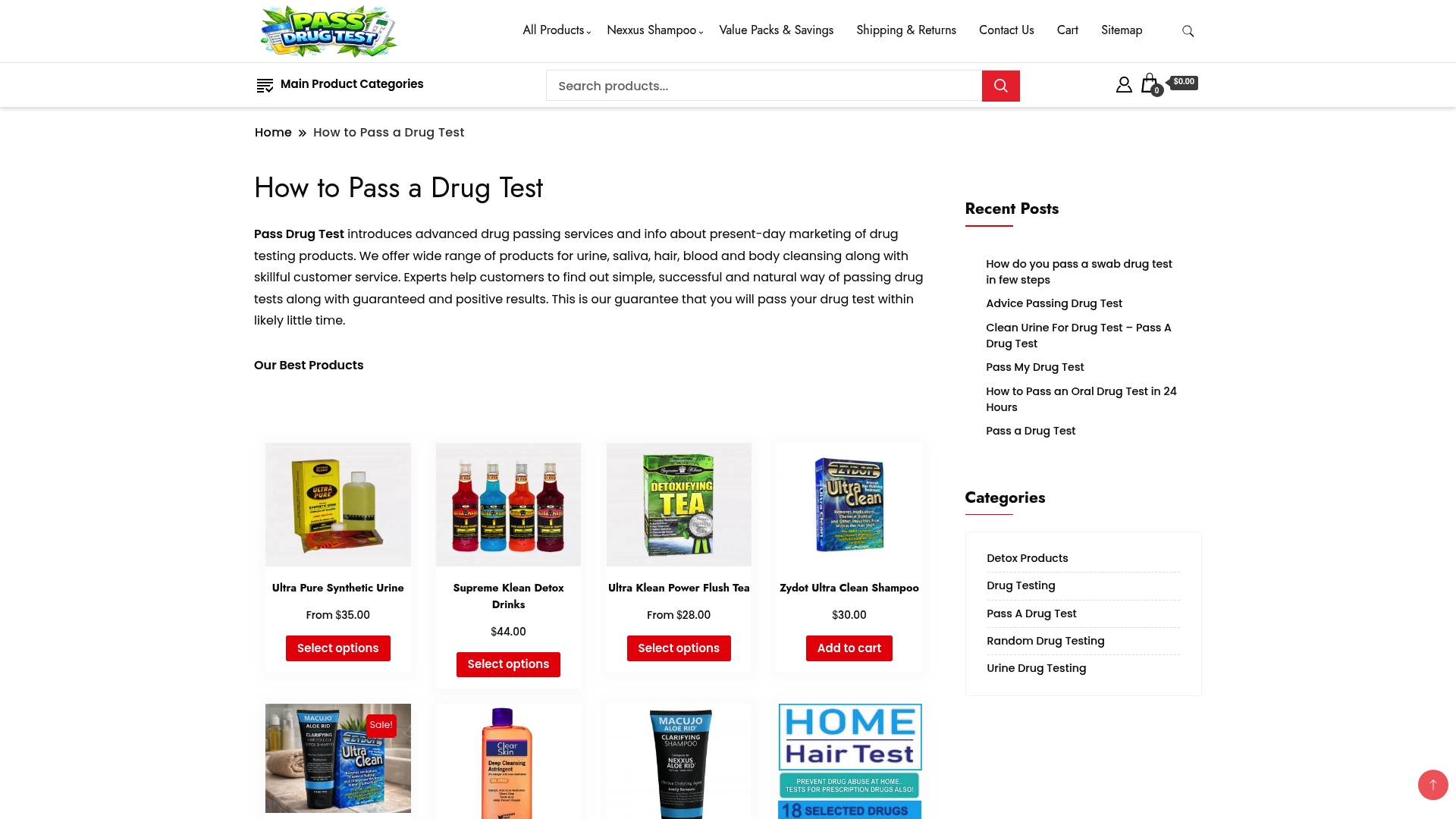
The flagship product is the Macujo Aloe Rid Shampoo, formulated to penetrate the hair cortex and target embedded drug metabolites. It is the core component of Mike’s Macujo Method, the most documented hair detox protocol available. Passdrugtest also carries a full range of hair detox shampoos and drug test detox products to support your preparation. Every product is selected for effectiveness, and the team is available to guide you through the right protocol for your timeline and test type.
FAQ
Can legal medications cause a failed drug test?
Yes. Prescription drugs including Wellbutrin, Benadryl, and Sudafed are documented causes of false positive results on initial immunoassay screens. Requesting GC-MS confirmatory testing and disclosing medications to the Medical Review Officer resolves most of these cases.
How long does cannabis stay in hair for a drug test?
Cannabis metabolites are detectable in hair for up to 90 days using the standard 1.5-inch hair sample. Regular users may show detectable levels beyond that window depending on hair growth rate and metabolite concentration.
What makes a drug test result invalid rather than positive?
An invalid result occurs when the sample fails integrity markers, most commonly due to dilution from overhydration or medical conditions affecting creatinine levels. Invalid results typically require a supervised retest rather than triggering an immediate adverse action.
Can poppy seeds actually cause a failed opiate test?
Yes. Poppy seeds contain natural morphine and codeine that can exceed opiate cutoff thresholds in urine tests, particularly when lower cutoffs are used by private employers or court programs. Avoiding poppy seed foods for 48 hours before testing reduces this risk.
Does CBD oil show up on a hair follicle drug test?
Full-spectrum CBD products containing trace THC can accumulate enough metabolites to trigger a positive hair test with regular use. CBD isolate products carry lower risk, but mislabeling in the supplement industry makes third-party verified products the only reliable option.