

Drug metabolites from marijuana don’t just float around on the surface of your hair waiting to be washed away. They are locked deep inside the hair shaft, protected by a tough outer layer called the cuticle, making the challenge of passing a hair follicle drug test far more complex than most detox product marketing would have you believe. Understanding the hair cuticle’s protective role is the first step toward making smart, informed decisions about your options before your test date arrives.
Table of Contents
- What is the hair cuticle and why does it matter for drug detection?
- How drugs enter, settle, and are detected in hair
- Detox methods and the cuticle: The science and limits
- Myths, claims, and what actually works
- What most guides won’t tell you about the hair cuticle and passing drug tests
- Find solutions for hair drug testing and detox
- Frequently asked questions
Key Takeaways
| Point | Details |
|---|---|
| Cuticle is a protective barrier | The hair cuticle shields drug metabolites in the cortex, making removal for tests difficult. |
| Lab tests penetrate beneath cuticle | Drug testing labs extract the inner hair cortex, targeting metabolites beyond surface contamination. |
| Detox methods have limits | Aggressive cleansing can reduce drug detection but rarely fully eliminates evidence, and damaged hair can trigger tampering suspicions. |
| Product claims vs. scientific reality | Most products promise molecular cleansing but lack peer-reviewed proof for passing US lab standards. |
| Safety and informed choices matter | Understand the risks and science before choosing any hair detox strategy for drug testing. |
What is the hair cuticle and why does it matter for drug detection?
Hair looks simple from the outside, but it has a layered structure that plays a significant role in how drug metabolites are stored and detected. Understanding that structure gives you a clearer picture of why hair follicle testing is so effective and why detox efforts often fall short.
The three layers of a hair strand:
- Cuticle: The outermost layer, made up of overlapping, scale-like cells that protect everything inside. Think of it as a tight-fitting armor around your hair shaft.
- Cortex: The middle and largest layer. This is where proteins, pigments, and, critically, drug metabolites are stored after entering through the bloodstream.
- Medulla: The innermost core, present in thicker hair types, with less relevance to drug testing.
The hair cuticle is the outermost protective layer, consisting of overlapping scales that shield the inner cortex where drugs are stored. Those scales overlap like roof tiles and bond tightly, creating a formidable shield. This structure exists to protect the cortex from environmental damage, chemical exposure, and friction. Unfortunately for someone trying to cleanse drug metabolites, that same protection works against any external washing or treatment.
“The cuticle’s job is protection. It doesn’t distinguish between what it’s keeping in and what it’s keeping out. That’s the core challenge for any hair detox strategy.”
When labs test for drug use, they are not just checking the surface of the hair. They are targeting the cortex, where drug metabolites are permanently embedded during the hair growth process. Surface washing, whether with regular shampoo or even specialized detox formulas, only reaches the outer cuticle layer and cannot reliably access the cortex where the real evidence is stored.
This is why you can find detailed information about hair drug testing so valuable before you start any cleansing protocol. Knowing what labs are actually testing for changes how you approach the problem. Labs don’t just look for traces of THC on your hair’s surface. They look for metabolites embedded in the cortex, which gives them a historical record of your drug use going back up to 90 days.
The cuticle’s barrier function is also the reason that the accuracy of hair drug tests is generally very high compared to urine or saliva testing. When metabolites are stored inside a protective structure, they are less affected by time, hydration, or metabolic changes. That makes hair testing a gold standard for employers and legal proceedings, and a serious challenge for marijuana users facing an upcoming test.
How drugs enter, settle, and are detected in hair
Understanding the pathway that THC and its metabolites take to reach your hair strand helps explain exactly why cleansing is so difficult.
Here is how drug metabolites end up in your hair:
- You consume marijuana, and THC enters your bloodstream rapidly.
- THC is metabolized by your liver into compounds including THC-COOH, the primary metabolite that drug tests detect.
- Your bloodstream carries those metabolites throughout your body, including to the scalp and hair follicles.
- During hair growth, the hair bulb (located at the root) absorbs these metabolites from surrounding blood vessels.
- As hair cells harden through a process called keratinization, the metabolites become trapped inside the cortex of each hair strand.
- The hair grows outward at roughly half an inch per month, carrying that chemical record with it.
THC metabolites incorporate into hair primarily via the bloodstream to the hair bulb during keratinization in the cortex. This is the critical point: once those metabolites are locked in the cortex through keratinization, no external shampoo or rinse can simply wash them out. The process is permanent from a biological standpoint.
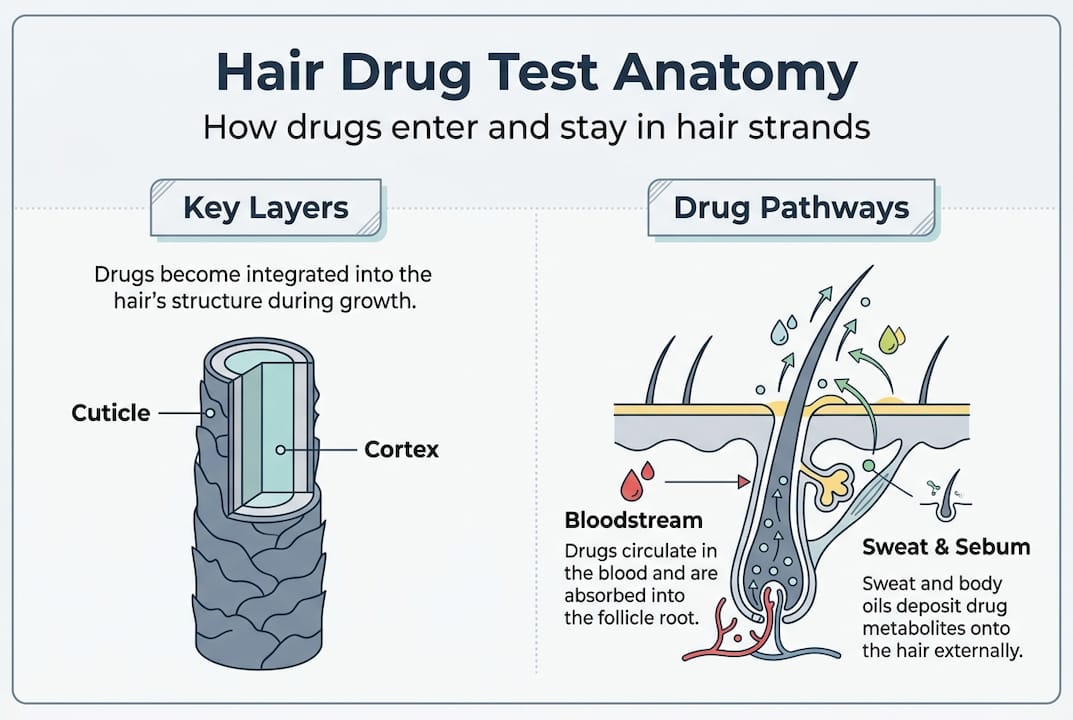
There are secondary pathways through sweat and sebum (the natural oil your scalp produces), but researchers generally consider these minor contributors compared to the bloodstream route. Sweat and sebum can deposit trace amounts of drug compounds on the outer hair surface, but labs wash hair samples extensively to remove external contaminants from the cuticle surface, then extract and analyze the cortex to detect incorporated metabolites, distinguishing real systemic use from surface contamination.
This lab washing process is a key reason why claims about detox shampoos being able to “cleanse” hair can be misleading. Labs already account for surface contamination in their procedures. They remove it deliberately before analyzing the cortex. So even if a shampoo strips some material from the cuticle surface, the cortex sample is what gets analyzed.
Pro Tip: If you are approaching a hair test, focus on understanding what the lab is actually testing rather than assuming that any surface-level treatment can replicate what happens during cortex extraction. Knowledge is your most reliable starting point.
The Macujo method overview gives a thorough breakdown of one of the most widely discussed hair cleansing protocols. While we’ll discuss the science and limits of that method next, understanding the biological pathway above makes it clear why even aggressive methods face real challenges.
Detox methods and the cuticle: The science and limits
Now that you understand how drug metabolites become embedded in hair and how labs detect them, it is time to look honestly at what popular detox methods can and cannot accomplish.
| Method | Mechanism | Cuticle effect | Effectiveness | Risks |
|---|---|---|---|---|
| Standard shampoo | Surface cleaning | Minimal lift | Very low | None significant |
| Detox shampoo (e.g., Aloe Rid) | Deep cleansing agents | Moderate lift | Inconsistent | Mild scalp irritation |
| Macujo method | Multi-step chemical treatment | Significant lift | Anecdotal positive results | Scalp burns, hair breakage |
| Bleaching | Oxidative damage to cortex | Severe disruption | Can reduce metabolite levels | Severe damage, detection risk |
| Apple cider vinegar rinse | pH alteration, cuticle opening | Slight | Very low | Scalp irritation |
Cosmetic treatments like shampoos, bleaching, and the Macujo method can lift and damage the cuticle, potentially reducing detectable drug levels in the cortex, but they rarely eliminate them fully, and labs note and record damaged hair. That final detail matters more than most guides acknowledge.
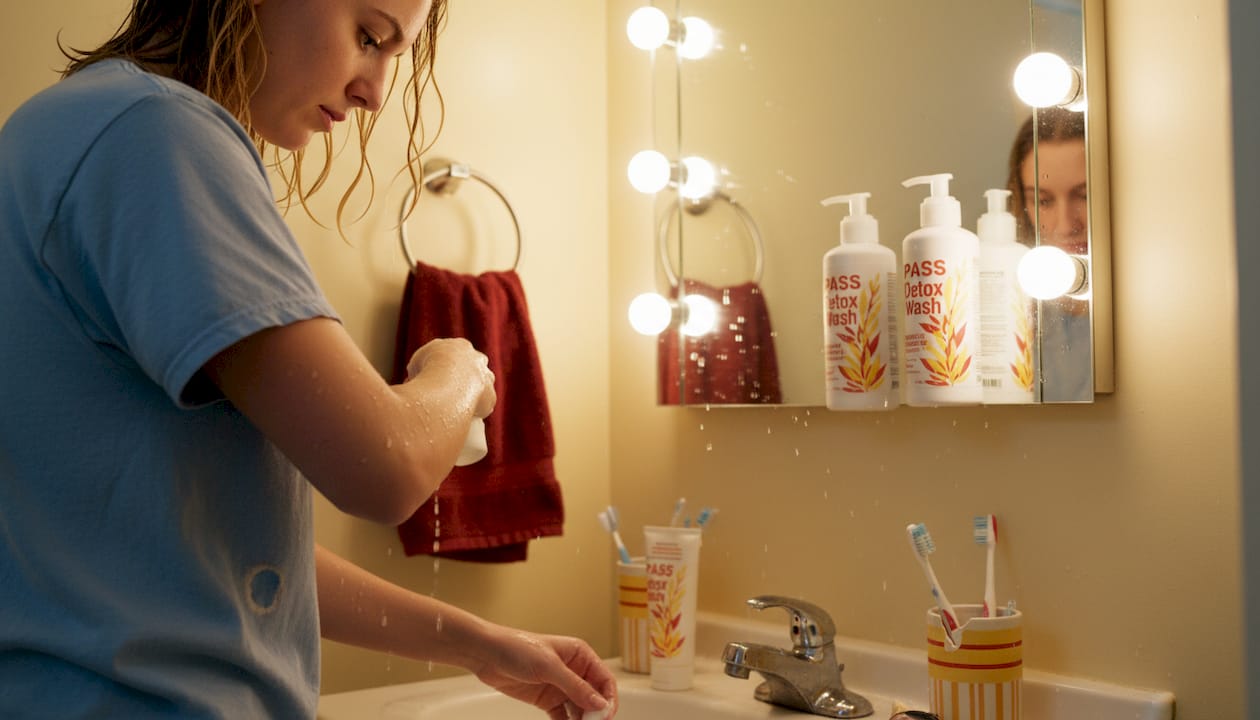
The Macujo method combines multiple steps using products including vinegar, a specific shampoo, and other agents. The goal is to open the cuticle scales and allow cleaning agents to reach the cortex. Some users report success, and the Macujo Aloe Rid shampoo is widely considered the strongest formulated product for this purpose. However, it is important to be honest about what the science says.
No peer-reviewed data confirms that Macujo or Aloe Rid fully cleanses THC from hair. Success is anecdotal, varies significantly by hair type and frequency of use, and risks include scalp burns and hair breakage. Lighter, more casual users may see different outcomes than heavy, daily marijuana consumers. Hair texture, color treatments, and individual biology also affect results.
According to research on detox limits for hair tests, even aggressive chemical treatments that severely damage hair structure do not guarantee removal of all incorporated metabolites. Labs are also aware of hair tampering and have developed methods to flag samples that show evidence of excessive chemical treatment.
The good news is that some users do report that following hair detox steps consistently and correctly reduces their detectable metabolite levels significantly. The key word there is “reduces.” Whether that reduction falls below the detection threshold depends on many personal factors you cannot fully control.
Statistic callout: Labs typically use a detection cutoff of 1 picogram of THC-COOH per milligram of hair. Even a substantial reduction in metabolite levels may not bring a heavy marijuana user below this threshold through cleansing alone.
Myths, claims, and what actually works
Marketing language around hair detox products often uses terms like “molecular cleansing” and “full removal.” It is worth separating those claims from what the scientific literature and lab practices actually support.
Common myths about hair detox:
- Myth: A detox shampoo can fully eliminate THC from your hair. Scientific sources consistently emphasize the cuticle’s barrier role and the limits of external treatment. Contrasting views reveal that product sites claim molecular cleansing, but no controlled studies validate these claims for US lab standards.
- Myth: Home remedies like baking soda or vinegar alone are enough. These substances may slightly disrupt the cuticle surface, but they cannot penetrate the cortex to remove metabolites.
- Myth: If your hair looks clean and healthy, it will test clean. Appearance has nothing to do with metabolite content in the cortex.
- Myth: Shaving your head avoids the test. Labs will take hair from other areas of your body, including arms, legs, or chest. Refusing to provide a sample is typically treated the same as a failed test.
| What labs detect | What product claims state |
|---|---|
| Cortex-embedded metabolites (THC-COOH) | “Full removal” of toxins |
| Evidence of hair tampering (damaged cuticle) | “Gentle, non-damaging formula” |
| Metabolites from up to 90 days prior | “Cleanse your hair in one session” |
| Consistent findings across multiple hair segments | “One-time treatment effective” |
Pro Tip: If you are serious about your upcoming test, start the Macujo method protocol as early as possible before the test date. Multiple treatments over several days give the best chance of reducing metabolite concentration, even if full elimination is not guaranteed.
Edge cases where cleansing may make a real difference:
- Occasional, light marijuana users with lower baseline metabolite levels
- Users who stopped consuming at least 60 to 90 days before the test
- People with lighter or chemically treated hair, which may be more porous
For strategies on passing a hair drug test and exploring available hair drug testing options, your individual profile matters. There is no one-size-fits-all answer, and anyone claiming otherwise is oversimplifying the science.
What most guides won’t tell you about the hair cuticle and passing drug tests
Here is the hard truth that most product-focused guides avoid saying out loud: the hair cuticle is not just a minor inconvenience for detox methods. It is a biologically evolved barrier that has resisted thousands of years of environmental exposure. No commercial shampoo was designed to overcome a structure that evolution spent millennia perfecting.
What this means for you is that aggressive treatments involving bleaching or repeated chemical exposure can create real physical damage to your hair and scalp with uncertain results. Labs are trained to notice damaged hair and may document it as a potential indicator of tampering. That does not automatically disqualify a sample in all jurisdictions, but it is a factor worth knowing.
The Macujo method represents the most organized and most frequently discussed approach to this problem. When done correctly and repeatedly, it gives the cuticle its best chance of being lifted enough to allow some metabolite leaching. For lighter users, that can make a meaningful difference. For heavy users, it may not be enough on its own.
Our honest advice is this: use the best tools available, understand their limits, and make decisions based on your actual usage history rather than best-case marketing scenarios. Informed choices protect you better than wishful thinking.
Find solutions for hair drug testing and detox
If this article has made anything clear, it is that your approach to a hair follicle drug test needs to be grounded in real information, not just product hype. We carry the products most widely associated with serious hair detox protocols, including the Macujo Aloe Rid shampoo, and we also provide detailed guides to help you use them effectively.
Explore our full range of drug test detox products to find what fits your situation. If you are specifically looking for expert guidance on the most effective shampoo options, check out our guide to the best hair follicle shampoo available today. We believe in giving you the facts first, so you can make the choice that actually makes sense for your circumstances.
Frequently asked questions
Can detox shampoos like Macujo Aloe Rid guarantee a passing hair drug test?
No peer-reviewed evidence confirms full removal of THC from hair by any detox shampoo. Results are inconsistent and largely anecdotal, varying by hair type, frequency of use, and individual biology.
How do labs distinguish real drug use from surface contamination in hair?
Labs wash hair samples extensively to remove external contaminants from the cuticle surface, then extract and analyze the cortex where systemically incorporated metabolites are found, making contamination a non-factor in the final result.
Is damaged or bleached hair less likely to test positive for drugs?
Damaged hair may show somewhat reduced drug metabolite levels due to partial leaching from the cortex, but labs note damaged hair and can still detect remaining metabolites in most cases.
Why are drug metabolites harder to remove from hair than urine?
Drug metabolites are physically embedded in the hair cortex during keratinization and protected by the cuticle, making them structurally locked in place, unlike urine where metabolites are simply filtered through the kidneys and excreted from the body over time.