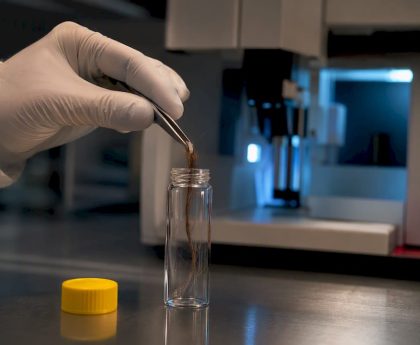
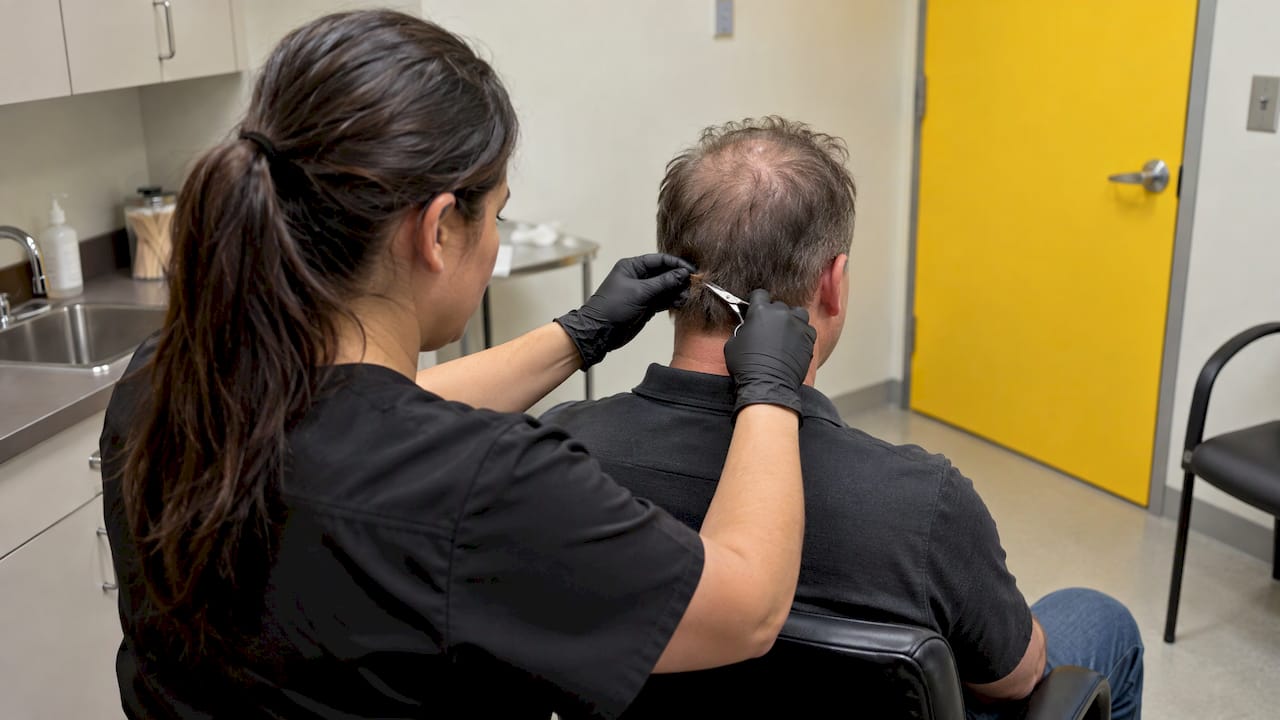

Having thin hair does not take you out of a hair drug test. Labs collect from different spots on the scalp, and if the scalp can’t supply enough, collectors can move to body hair. So the useful question is not whether thin hair gets you off the hook. It is how to get your hair as clean as possible before the collection day. That is the job our Macujo Aloe Rid Shampoo and our hair detox guides are built for.
TL;DR
- Thin or sparse scalp hair can still be tested: collectors may combine hair from several scalp locations, and may use body hair if scalp hair is too short or missing.
- A standard sample is about 100 milligrams, roughly 90 to 120 strands, cut close to the scalp.
- About 1.5 inches of scalp hair represents roughly 90 days of history, so the hair closest to your scalp matters most.
- Body hair is less studied, and its detection window can’t be reliably determined, so don’t assume it is a loophole.
- Start your hair prep early and plan it around your collection date. Our hair drug test shampoo page is the place to begin.
Table of Contents
- Can you be tested with thin or sparse hair?
- How much hair does a lab need?
- What if you have no usable scalp hair?
- How far back does a hair test look?
- Which drugs does a hair test cover?
- Is hair testing federally required?
- How to prepare when your hair is thin
- Why a hair routine beats improvised fixes
- What does a hair test cost?
- Our perspective
- Ready to start your hair prep?
- FAQ
- Sources
Can you be tested with thin or sparse hair?
Yes. Quest Diagnostics says in its hair testing FAQ that little or no scalp hair does not automatically rule out a test. Hair can be pooled from different areas of the scalp, though scalp and body hair should not be mixed in one sample.
That matters if you are thinning at the crown, have a receding hairline, or keep your hair cropped. The collector isn’t limited to a single patch. They can take small amounts from several places until the sample is big enough.
The Society of Hair Testing, a professional body for hair analysis, names the posterior vertex (the crown area at the back of the head) as the preferred collection site, because hair growth varies least there. Its 2022 consensus recommends cutting close to the skin and recording the site, color, length and any hair treatments. If your crown is the thinnest part of your head, expect the collector to look elsewhere on the scalp and note what they did.
How much hair does a lab need?
Labs ask for a small but specific amount. Labcorp specifies a 100-milligram sample, about 90 to 120 strands, cut at the scalp. USDTL describes an ideal specimen as about 100 mg, around 200 strands at 1.5 inches, roughly the width of a No. 2 pencil. For alcohol markers, add-on tests or panels above 10 drugs, it recommends 150 mg.
The SoHT consensus doesn’t set one universal quantity. It says the amount should meet the requirements of the lab doing the analysis. Your employer’s lab and collection site decide the exact amount.
Here is what that means in practice:
| Your situation | What the collector is likely to do |
|---|---|
| Thin all over, scalp hair at least 1.5 inches long | Take small cuts from several scalp spots to reach the sample size |
| Receding hairline or thin crown | Collect from the fuller areas of the scalp |
| Scalp hair shorter than ½ inch, or none | Move to body hair |
| Buzz cut or shaved head | Collect whatever scalp hair remains, or switch to body hair |
If you have a shaved head, our article on why a shaved head hair test still detects drugs goes through that situation in detail.
What if you have no usable scalp hair?
Quest’s FAQ says that when scalp hair is unavailable or shorter than ½ inch, collectors may use chest, underarm, leg or facial hair, in that order of preference. The lab asks for as much body hair as possible and records where it came from.
The detection window for body hair works differently. Quest notes that body-hair growth and drug incorporation are less studied, so the window can’t be reliably determined. Body hair grows more slowly and cycles differently than scalp hair, so a sample can reflect a longer or shorter period than the usual 90 days. Treat body hair as a reason to clean up all of your hair, not just your head.
How far back does a hair test look?
A hair test is not a snapshot of the last few days. SAMHSA, the federal substance abuse agency, describes hair detection as starting about 7 to 10 days after use. Most laboratories analyze hair representing roughly three months of growth, and the exact interval depends on hair length and other factors.
Quest explains the math: 1½ inches (3.9 cm) of scalp hair represents about 90 days, based on growth of about ½ inch (1.3 cm) a month, and its standard analysis uses the length closest to the root.
For thin hair, this has two practical consequences:
- The segment nearest your scalp carries the most recent history. When a collector pools thin hair, they are cutting as close to the skin as they can, so the newest growth is in the sample.
- Longer hair doesn’t give you more days to worry about. Labs typically analyze the first 1.5 inches, so a thin ponytail and a thick one are read over the same window.
Our guide to the hair drug test detection window lays this out in more detail, and how drug metabolites stay in hair explains why the hair shaft holds on to them.
Which drugs does a hair test cover?
It depends on the panel ordered. Testing.com notes that hair testing can include amphetamines, cocaine, marijuana, opioids and other drugs or metabolites. Marijuana is covered through its metabolites, the compounds your body creates as it processes THC.
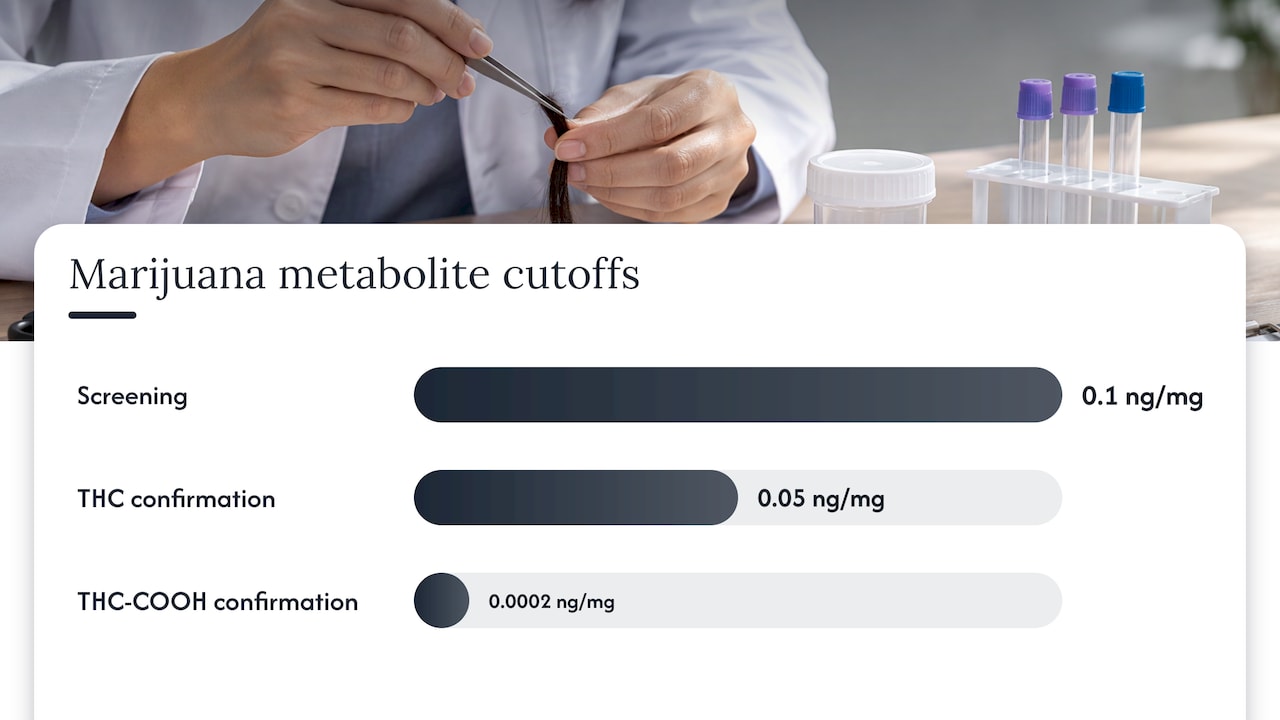
The same page lists Society of Hair Testing reference cutoffs: marijuana metabolite screening at 0.1 ng/mg, with confirmation cutoffs of 0.05 ng/mg for THC and 0.0002 ng/mg for THC-COOH. These are reference values from a professional society, not a single federal table, so your employer’s lab may use its own thresholds. The practical takeaway is that the lab is measuring very small amounts per milligram of hair, which is why thorough preparation matters.
If you want to understand how a result is read, see our explainer on negative vs positive hair test results.
Is hair testing federally required?
Not for most federally regulated jobs. SAMHSA proposed hair testing for federal workplace programs in a 2020 Federal Register notice, but that was a proposal, not a final rule. SAMHSA’s 2025 Medical Review Officer Guidance Manual covers urine and oral-fluid specimens and does not make hair an authorized federal specimen.
For Department of Transportation testing, the 2023 final rule added oral-fluid provisions, not hair. If you are a commercial driver, your DOT test is urine-based.
When a hair test is required, it is usually because a private employer chose it, often for pre-employment screening. Your offer letter or the employer’s testing policy will tell you which specimen they use.
How to prepare when your hair is thin
Thin hair leaves you less room for surprises, so a plan matters more than it would with a full head of hair. Here is a routine that works with how labs collect.
Step 1: Confirm the date and what will be collected
Work out how many days you have. The more lead time, the more consistent your routine can be. Ask what specimen the employer requires, since some programs use urine or saliva instead of hair. If it is hair, plan for the scalp first and body hair as the backup.
Step 2: Know which hair you are preparing
Because collectors may pool from several scalp locations, treat your whole scalp the same way. Don’t focus only on the thick areas. If you have little scalp hair, apply the same care to any body hair that might be collected.
Our article on scalp detox for a hair drug test walks through preparing the scalp itself, since hair grows from there.
Step 3: Use a purpose-made detox shampoo, consistently
This is where our Macujo Aloe Rid Shampoo comes in. It is our flagship product, and it is designed for people following the Macujo method, which is the routine that many of our customers use for hair follicle tests. Pair it with the guidance on our hair follicle drug test shampoo page and follow the product’s directions exactly, rather than improvising a different routine each wash.
With thin hair, there is a practical advantage: less hair means each strand gets thorough, even contact when you work the product through. Take your time on the crown and temples, the areas a collector is most likely to cut from.
Step 4: Be gentle and keep your routine steady
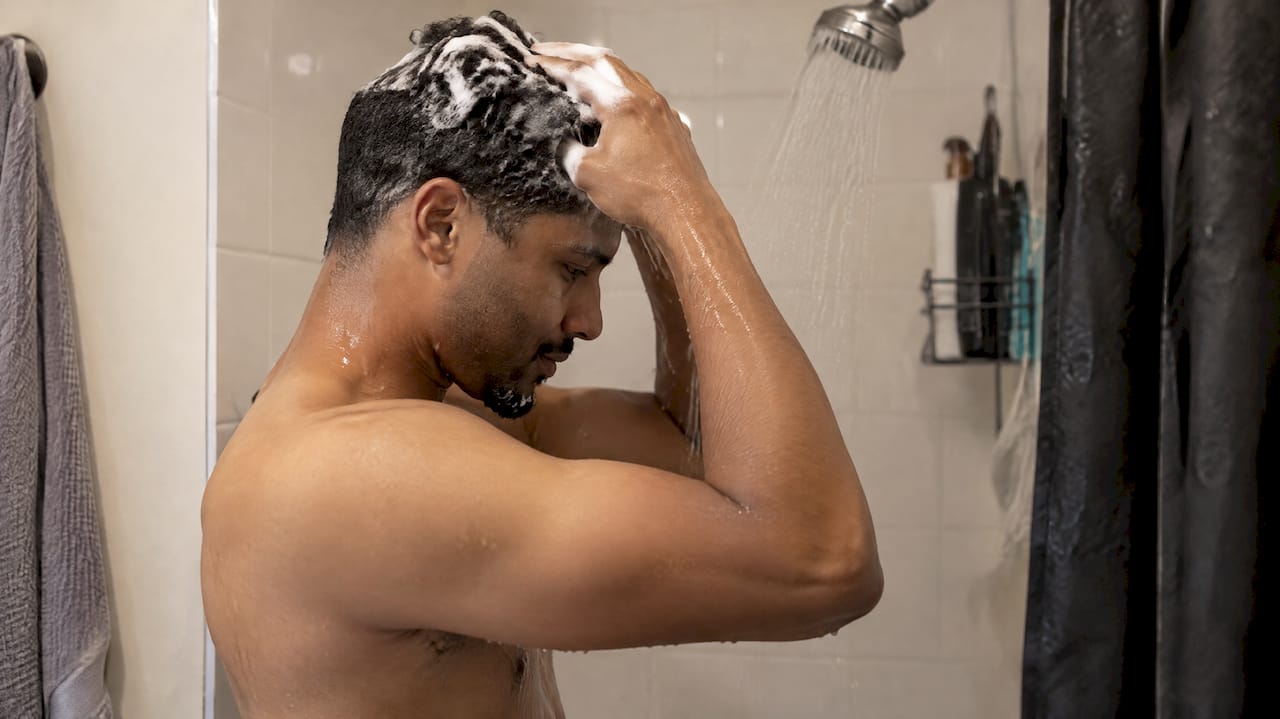
Work through the lather slowly, rinse completely, and avoid roughing up thin hair. Consistent treatment beats a last-minute rush, and it keeps your hair from breaking, which is a real concern when you don’t have much to spare.
Step 5: Skip hair treatments you can’t explain
The SoHT consensus tells collectors to document hair color and treatments. A 2025 laboratory medicine review notes that melanin, hair color, treatments and growth variation can all complicate interpretation. Keep your routine simple in the weeks before the test.
Step 6: Keep your own appearance natural on collection day
Show up with your hair in its normal state. Don’t plan on a haircut right before the appointment to shorten the window: a shorter cut doesn’t reduce the lab’s 1.5-inch read, and if scalp hair falls below ½ inch, the collector moves to body hair.
Why a hair routine beats improvised fixes
People with thin hair often look for something quick, like a harsh scrub or a mix of household products. These approaches tend to damage fragile strands, and they rarely give you a repeatable plan. Our comparison of detox shampoo vs home remedies for hair drug tests explains why a formulated shampoo is the better foundation.
Labs also expect hair to be washed. The SoHT consensus recommends validated wash protocols to remove surface material and external contamination before analysis. A routine built around a purpose-made shampoo fits right into that picture.
What does a hair test cost?
Prices vary by lab, panel and whether the employer or the individual pays. Employers usually cover pre-employment testing. If you are buying a test yourself, panel size and add-ons such as alcohol markers affect the price, so check the testing provider’s own page for current figures.
Our perspective
Thin hair makes people anxious, and we understand why. You feel like there is less to hide behind and less margin for error. In reality, labs have well-defined ways to deal with sparse hair, and that means the best thing you can do is get organized early.
What we see in the way people approach hair tests is that the people who feel most in control are the ones with a clear routine. They know their date, they know which hair may be collected, and they follow a consistent process. That is why we built our guidance around the Macujo method and our Macujo Aloe Rid Shampoo. We designed it for people who want a straightforward way to prepare their hair, and we stand behind that approach.
Our customer service team is available from 9am to 12am every day, so if you are working out timing at night before a collection appointment, you can reach us. Orders are handled with confidentiality and secure delivery.
MIchael
Ready to start your hair prep?
If you have a hair follicle test coming up, start with the product that anchors our approach. Our Macujo Aloe Rid shampoo and related hair detox products are collected on one page, and you can also browse everything in the store from our home page.
If you want to read more before you order, our hair drug test information guide covers the basics, and the 90-day THC guide for job applicants is written for pre-employment testing.
FAQ
Can I be hair tested if I’m balding?
Yes. Quest says limited scalp hair doesn’t automatically preclude testing, and collectors can combine hair from several scalp locations. If scalp hair is shorter than ½ inch or missing, body hair may be collected instead.
How many strands does a lab need?
Labcorp specifies a 100-milligram sample of about 90 to 120 strands, cut at the scalp. USDTL describes about 200 strands at 1.5 inches as ideal. The exact requirement is set by the lab doing your analysis.
Does body hair show the same 90 days as scalp hair?
No. Quest notes that body-hair growth and drug incorporation are less studied, so its detection window can’t be reliably determined. Plan for the possibility that body hair reflects a different period than scalp hair, and prepare accordingly.
Is hair testing used for DOT drug tests?
No. The 2023 DOT final rule added oral-fluid testing but did not authorize hair testing for DOT-regulated programs. Hair tests are typically chosen by private employers.
Sources
- Quest Diagnostics, Hair testing FAQ (2023)
- Labcorp, Hair Follicle Drug Testing
- USDTL, Hair Drug Test Laboratory Services
- Society of Hair Testing, General Consensus on Hair Testing (2022)
- SAMHSA, Clinical Drug Testing in Primary Care (2012)
- Testing.com, Hair Follicle Drug Test
- Federal Register, Mandatory Guidelines for Federal Workplace Drug Testing Programs (2020)
- SAMHSA, Medical Review Officer Guidance Manual (2025)
- Federal Register, DOT Procedures, Addition of Oral Fluid (2023)
- Journal of Applied Laboratory Medicine, Review on Toxicology Testing in Hair (2025)