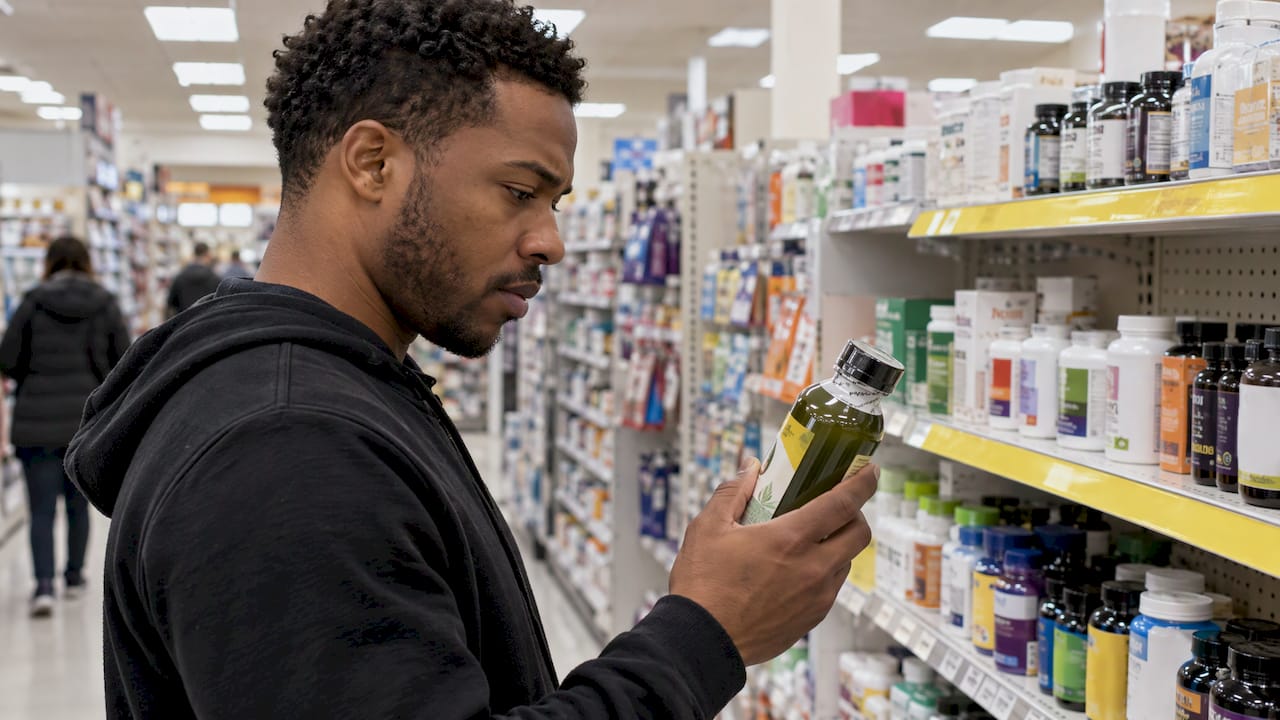

A fake detox drink usually gives itself away before you open it: no manufacturer on the label, promises that sound too good to be true, a seller you can’t trace, and a price that makes no sense. If you are preparing for a drug test, the stakes are higher than wasted money, because a bad bottle can carry ingredients that are not on the label. This guide shows you the signs, how to check a product in a few minutes, and why a hair follicle test calls for a product made for hair.
TL;DR
- Warning signs include a missing manufacturer, “too good to be true” claims, a made in an “FDA-approved facility” boast, a wall of rave reviews and a seller you can’t verify.
- A legitimate supplement label lists the product name, net quantity, Supplement Facts, other ingredients and the name and place of business of the manufacturer, packer or distributor.
- Searching the FDA health fraud database helps, but a product missing from it is not automatically safe.
- If you feel unwell after a product, stop using it and talk to a health care professional. You can also report it to the FDA.
- A drink is not a hair product. For a hair follicle test, we point you to the Macujo method and our Macujo Aloe Rid Shampoo.
Table of Contents
- Why fake detox products are so easy to find
- The warning signs of a fake or unsafe detox drink
- A five-minute check before you buy
- Why safety matters more than the test
- Matching the product to the test
- Where to buy with confidence
- Our perspective
- FAQ
- Sources
Why fake detox products are so easy to find
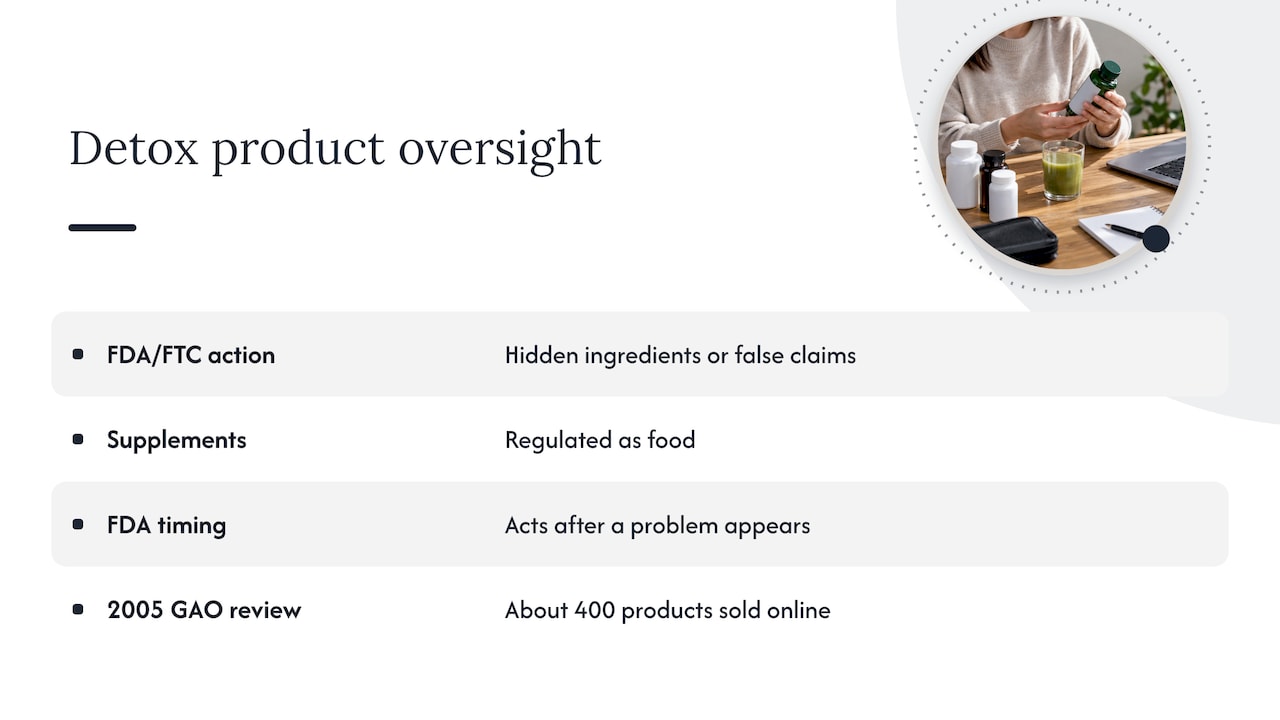
Detox is a marketing word, not a medical one. The National Center for Complementary and Integrative Health (NCCIH) notes that the FDA and the FTC have acted against companies selling detox and cleansing products because the products contained hidden ingredients or were sold with false claims. Dietary supplements are regulated as food, and the Congressional Research Service explains that the FDA generally acts after a problem appears with a product already on the market. Nobody pre-approves the bottle in your cart.
The market for drug-test products is not new. A 2005 Government Accountability Office investigation found about 400 different products for adulterating urine samples sold online, and vendors boasted of reformulating them regularly. Counterfeiters and careless resellers fill that space with copies, relabeled bottles and unnamed ingredients.
That is why checking before you buy matters more than any claim on the front of the bottle.
The warning signs of a fake or unsafe detox drink
The FDA’s guidance on hidden ingredients in health products is the best starting point. Here is how to apply it to a detox drink.
1. The manufacturer is missing or vague
Under federal labeling rules, a supplement label carries the name and place of business of the manufacturer, packer or distributor. The NIH Office of Dietary Supplements lists this among the required label information. A bottle with only a brand name, a website and no business address is a red flag. So is a label with an address that turns out to be a mailbox or doesn’t exist.
2. There is no Supplement Facts panel or ingredient list
The same NIH page says the label should show Supplement Facts and any other ingredients. A bottle with a short, blurry or missing list is hiding something, or it was printed by someone who doesn’t follow the rules. Federal law requires products to list ingredients accurately and bars them from containing hidden drug ingredients, according to the FDA.
3. The claims are too good to be true
Guarantees of instant results, “works on any test” and “flushes everything in an hour” are the first thing the FDA lists. Real products describe what they are designed to do and how to use them, with directions. Be wary of anything that promises an outcome without asking about your situation, timing or test type.
4. The label leans on “herbal” or “all natural”
The FDA is plain that these words do not guarantee that a product is true to its label or safe. A peer-reviewed study of online supplement sales makes the same point: natural is often read as safe, and marketing exploits that.
5. The product claims an “FDA-approved facility”
The FDA does not approve facilities for supplement manufacturing, and the agency lists this boast as a tip-off. Federal good manufacturing practice rules do apply to supplement makers. They are meant to ensure identity, purity, strength and composition, but a sticker saying so on a bottle proves nothing by itself.
6. The reviews look manufactured
A page full of near-identical five-star reviews that tout the same miracle result is another FDA warning sign. Look for specific details in reviews: when the person used it, what the directions said, what the test type was. Generic praise can be written by anyone.
7. The packaging looks off
Spelling mistakes, uneven printing, a loose or missing safety seal, a lot number that is missing or smudged, and a cap that doesn’t match the label are signs of a copy or a repackaged product. Compare against photos on the brand’s own site before you buy, and keep the bottle’s lot number.
8. The seller is the weak link
The FDA notes that problem products appear in big online marketplaces, social media ads and physical stores such as gas stations, convenience stores and supplement shops. A real brand can still be copied by a third-party seller. Buy from a storefront with clear contact details, support you can actually reach and a return address.
9. It’s sold as something else
Products pitched for weight loss, energy, bodybuilding, sleep or sexual enhancement are the categories where the FDA most often finds hidden drug ingredients. A detox drink pitched with any of those promises should make you stop.
A five-minute check before you buy
Use this routine on any bottle, from any seller.
- Read the label like a regulator. Find the product name, net quantity, directions, Supplement Facts or a clear ingredient list, and the company name and address.
- Look the company up. Search the business name and address. A real manufacturer or distributor leaves a trail: a site, a phone number, an address that matches the label.
- Search the FDA’s database. The Nutrition.gov page on misinformation and fraud points you to the FDA Health Fraud Product Database. Keep in mind that the FDA says the database covers only a small fraction of contaminated products, so a clean result is not a guarantee.
- Compare price and seller. A price far below every other listing, or a seller with no history, usually means a copy or an expired lot.
- Check the seal and lot number when it arrives. If the seal is broken, the smell is off or the label doesn’t match the listing, don’t drink it.
- Talk to a professional. The FDA’s guidance on health fraud says that if you are tempted by a product with questionable claims, check with your doctor or another health care professional first. That matters most if you take prescription medication or have a health condition.
The point of the routine is simple: know who made the product, what is in it and who sold it to you.
Why safety matters more than the test
The risk is not abstract. A peer-reviewed case report describes a 19-year-old who developed acute psychosis after using a commercial detoxification kit before a workplace urine screen and needed hospitalization. The authors noted that these products have little or no regulation by state or federal authorities. They also say that ingesting products carries the most risk among tampering methods because it adds unregulated chemicals to the body.
The NCCIH adds some practical safety points for any detox routine:
- Drinking large quantities of water and herbal tea while barely eating for days can cause dangerous electrolyte imbalances.
- Laxatives can lead to diarrhea, dehydration and poor nutrient absorption.
- Unpasteurized juices can cause serious illness in children, older adults and people with weakened immune systems.
- High-oxalate juices are a concern for people prone to kidney stones.
If you have a heart condition, kidney problems, diabetes, or you are pregnant, or if you take prescription drugs, speak with your doctor before you take any new drink or supplement.
If something feels wrong after a product
Stop using it. If symptoms are severe, such as chest pain, a racing heart, confusion or trouble breathing, call 911 or go to an emergency room. For anything milder, talk to a doctor or pharmacist and keep the packaging and lot number. The FDA accepts voluntary adverse event reports from consumers, and those reports are how it spots patterns across a product. Federal law also requires manufacturers and distributors to report serious adverse events, according to the Congressional Research Service.
Matching the product to the test
Most fake-product advice is written for people using a urine test. If you came here because you are facing a hair follicle test, it helps to separate the two.
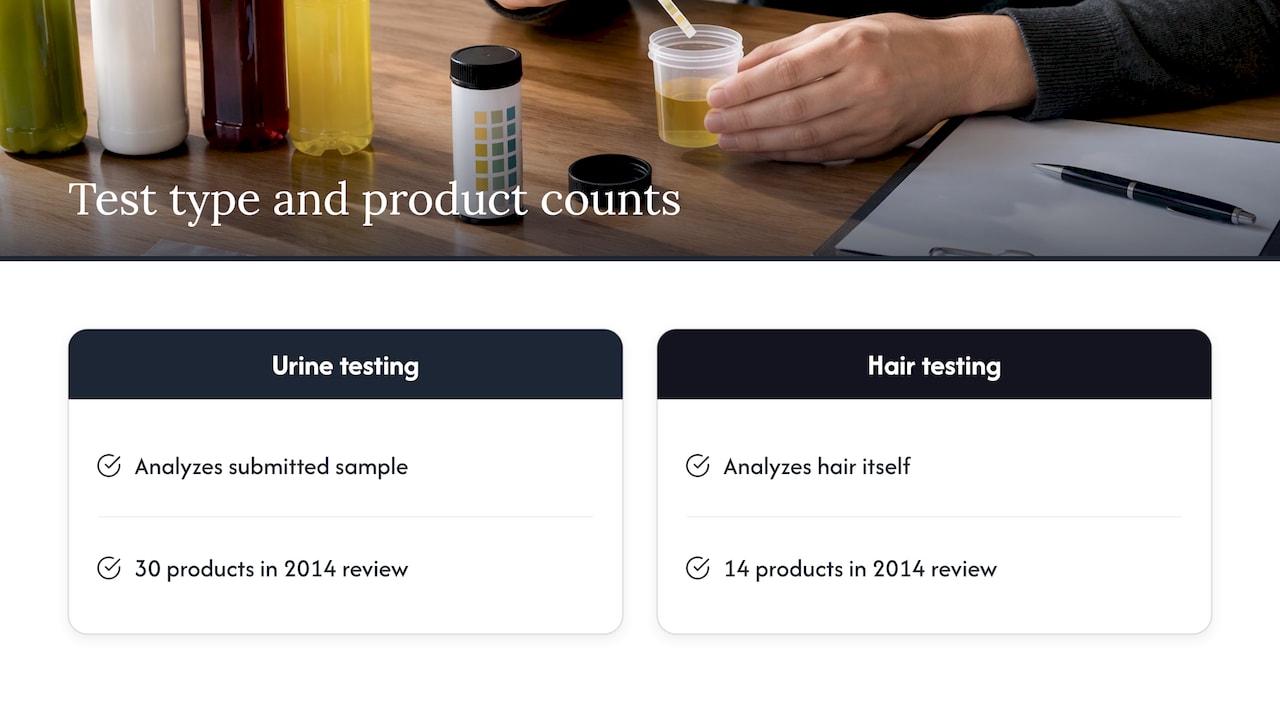
A urine test looks at what is in a sample you provide. A hair follicle test looks at the hair itself, which means the product you use has to work on the hair. That is why a drink and a hair product are not interchangeable and why the first question is always what kind of test you face. In 2014, SAMHSA’s review of subversion products counted 30 urine detox products and 14 hair-test products in a single search, which shows how crowded each category is.
For hair, we recommend the Macujo method, created by Mike Macujo, as the best method to prepare for a hair follicle drug test. It is a hair-washing routine, and the product built for it is our Macujo Aloe Rid Shampoo. The full routine, timing and safety notes are in our Macujo Aloe Rid instructions. To understand how the test works first, read our hair follicle drug test guide.
If you are comparing hair products and want the list of what to leave off your cart, our guide to detox products to avoid for hair drug testing is the next read. For help with how detox claims and cleansing differ, see detox vs cleansing explained.
Where to buy with confidence
We sell hair, saliva and urine drug testing products, including the Macujo Aloe Rid Shampoo, detox drinks, synthetic urine and home test kits, at Passdrugtest. Our customer service is available from 9am to midnight every day, so a question about your product, your timing or your order does not have to wait until morning. We also focus on confidentiality and secure delivery, so the order arrives discreetly.
If your test is a hair follicle test, start with the Macujo Aloe Rid Shampoo, or look at the Macujo Aloe Rid Shampoo with Zydot Ultra Clean Treatment if you want a bundle. If your test is urine, browse our urine drug testing products.
Our perspective
Every week, people come to us stressed about a test and ready to buy the first bottle that promises relief. That is the moment a fake product does the most harm. Fear makes a cheap price and a big guarantee look attractive.
Our view is that the right product starts with the right match: the type of test, your timeline and a seller who answers questions. For hair follicle testing, we believe the Macujo method is the best approach, and our Macujo Aloe Rid Shampoo is built around it. We stand behind it as the flagship of what we sell.
Read the label, know who made what you are using, and ask questions before you order. Our team is available from 9am to midnight every day to help you do exactly that, and we keep every order confidential.
MIchael
FAQ
Is detox fake?
The word “detox” is used loosely. The NCCIH says no compelling research supports detox diets for eliminating toxins in general, which is a claim about whole-body wellness diets. For a drug test, what matters is whether the product is made by an identifiable company, labeled honestly and matched to your test type.
How can I tell if a detox drink label is real?
Look for the product name, net quantity, directions, Supplement Facts, other ingredients and the name and address of the manufacturer, packer or distributor. Then check that the business exists, that the lot number is readable and that the seal is intact. Be suspicious of any label that skips these.
Does a detox drink work for a hair follicle test?
A hair follicle test examines your hair, so the product you choose should be made for hair. That is why we steer hair-test customers toward the Macujo method and our Macujo Aloe Rid Shampoo rather than a drink. Our hair follicle drug test shampoo guide explains how.
What should I do if a detox product makes me sick?
Stop using it and contact a doctor or pharmacist. Call 911 for severe symptoms. Keep the packaging and lot number, and consider submitting a voluntary adverse event report to the FDA through its hidden ingredients guidance page.
Sources
- Avoiding Products Contaminated with Hidden Ingredients, FDA
- 6 Tip-offs to Rip-offs: Don’t Fall for Health Fraud Scams, FDA
- “Detoxes” and “Cleanses”: What You Need To Know, NCCIH
- Background Information: Dietary Supplements, NIH Office of Dietary Supplements
- Nutrition Misinformation and Fraud, Nutrition.gov
- Regulation of Dietary Supplements, Congressional Research Service
- GAO-05-653T, Drug Tests: Products to Defraud Drug Use Screening Tests
- SAMHSA DTAB open proceedings, September 3, 2014
- A Case of Psychosis After Use of a Detoxification Kit, PMC
- Adulteration and Counterfeiting of Online Nutraceutical Formulations in the United States