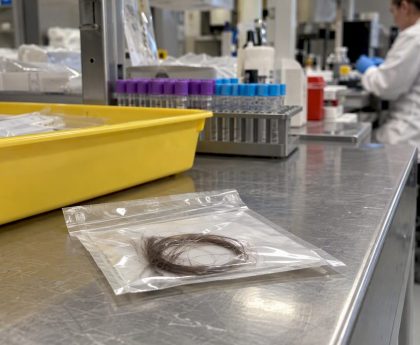

Most U.S. employers use a urine test. Some use saliva, and a smaller group uses hair follicle testing, which looks back about 90 days instead of a few. The test you get depends on the employer’s policy and the kind of job. So the useful question is which test your employer is likely to give you, and how far back it can see. If a hair test is on your schedule, that second part is the one to plan around.
This guide covers each test type, what it detects, how long it can detect it, and what a THC user who faces a hair test can do to get ready.
TL;DR
- Urine is the most common workplace test. In a 2018 SHRM report, 90% of employers used urine, 10% saliva and 7% hair.
- Federally regulated programs authorize urine and oral fluid. Hair testing comes from a private employer’s own policy.
- Urine detects drug use for roughly one to seven days, or longer for chronic users. Saliva covers hours to two days. A 1.5-inch hair sample represents about 90 days.
- If your employer uses a hair test, preparation has to start well ahead of the test date, because the window is so long.
Table of Contents
- The test most employers use: urine
- Which tests employers can use, side by side
- Saliva tests: short window, on-the-spot collection
- Hair follicle tests: the long look-back
- What the panel looks for
- How to find out which test you will get
- Getting ready for a hair test
- The Macujo method for hair follicle tests
- Why prepare with us
- Promo: the right product for your test
- Our perspective
- FAQ
- Sources
The test most employers use: urine
Urine testing is the default in American workplaces. The top-ranking guides agree on the reason: collecting a sample is non-invasive, quick and affordable, and results come back fast. The SHRM figures add up to more than 100% because many employers use more than one method.
Federal rules point the same way. SAMHSA, the federal Substance Abuse and Mental Health Services Administration, says that federally regulated programs authorize urine and oral fluid testing under HHS guidelines. Truck drivers and other workers under Department of Transportation (DOT) rules are tested this way. FMCSA guidance adds that an employer can also run a separate, clearly identified non-DOT program that covers additional drugs and other specimen types.
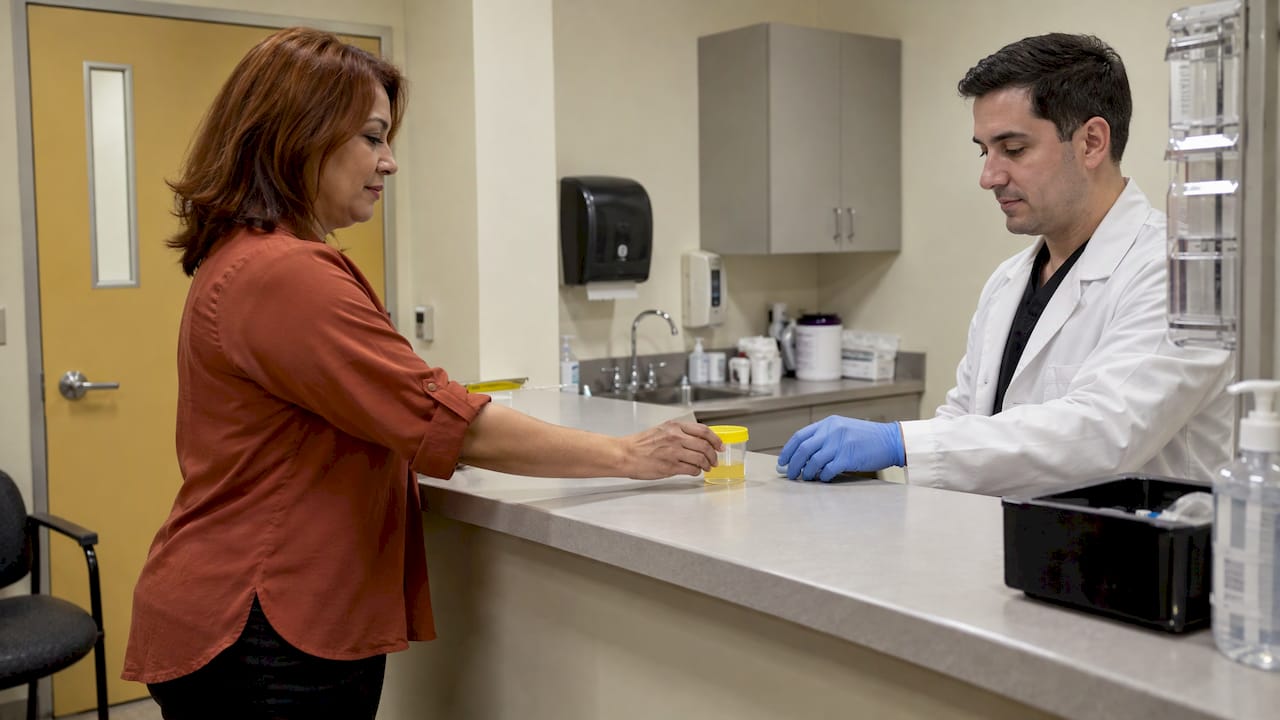
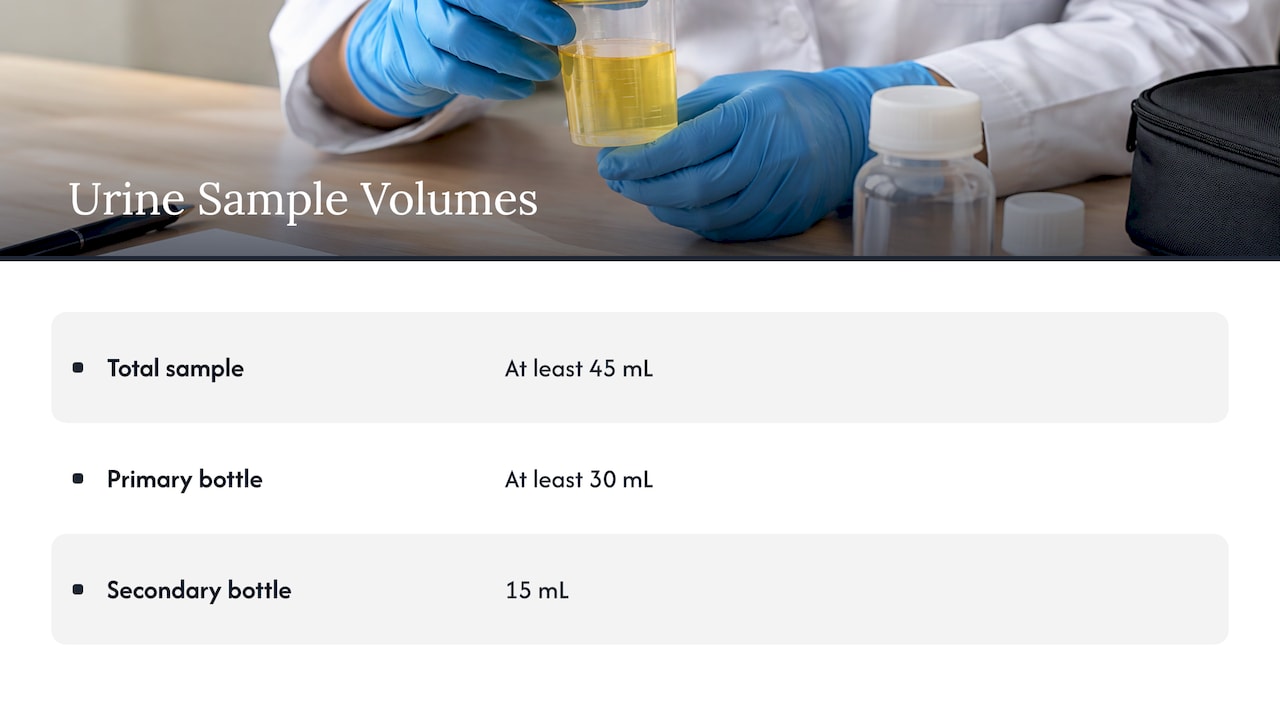
What happens at a urine collection is fairly standard. For a federally regulated collection, a Federal Transit Administration checklist tells the donor to provide at least 45 mL. At least 30 mL goes in the primary bottle and 15 mL in the secondary bottle. That is a little over a shot glass and a half, so drinking a normal amount of fluid beforehand is enough. Private employers set their own collection procedures, so ask the collection site or HR what applies to you.
If your test is urine, our guide on how to pass a urine drug test walks through timing and preparation.
Which tests employers can use, side by side
SAMHSA lists the specimens that workplace programs may use: urine, oral fluid (saliva), hair, blood, breath, sweat and other body tissues. In practice, four of them matter to most job applicants.
| Test | How common | Approximate detection window | Where you see it |
|---|---|---|---|
| Urine | Most common | 1 to 7 days, longer for chronic users | Pre-employment, random, post-accident |
| Oral fluid (saliva) | Growing, second most common | 5 to 48 hours | Pre-employment, reasonable suspicion, on-site |
| Hair | Less common | Up to 90 days | Pre-employment, safety-sensitive and regulated roles |
| Blood | Rare for routine screening | Hours | Post-accident, clinical settings |
The detection windows come from Labcorp’s workplace drug testing FAQ, which says hair gives the longest window, then urine, then oral fluid. It also notes that the real window changes with the dose, how often someone uses, the drug, the specimen and the person’s metabolism. Treat the numbers as ranges. The National Safety Council’s workplace guide describes blood as a short window, often just hours, which is why it is not used for routine pre-employment screening.
Saliva tests: short window, on-the-spot collection
An oral fluid test uses a swab held in the cheek. It is quick, observed and hard to tamper with, so employers like it for pre-employment checks and for post-incident testing. Its window is short, from about five hours to two days according to Labcorp. For a THC user that makes timing the main factor.
If your employer uses saliva, see our page on saliva swab drug testing and the saliva drug testing kits we carry.
Hair follicle tests: the long look-back
Hair is the test that worries marijuana users most, and for good reason. Labcorp explains that drugs and their metabolites (the substances the body makes as it breaks a drug down) travel from the bloodstream into the hair. Head hair grows about half an inch a month, so a 1.5-inch sample from near the scalp represents roughly 90 days of history.
The lab needs about 100 milligrams of hair for screening and confirmation, which Labcorp puts at roughly 90 to 120 strands. Employers that choose hair usually do so for pre-employment screening, safety-sensitive jobs or roles where they want a longer history than urine can show. Because it comes from the employer’s own policy, not from a federal requirement, it varies by company. Our overview of hair follicle test policies in 2026 explains what employers typically ask for.
Two more things are worth knowing:
- Body hair counts. If you have little or no head hair, a lab can take a sample from elsewhere on the body. Body hair reflects a longer span, so plan for it. Our guide to body hair drug tests and timing covers this.
- A positive shows presence, not impairment. The National Safety Council points out that these tests detect a drug or its metabolites and do not establish that someone was impaired at work. With a 90-day window, that distinction matters.
For a deeper look at how the lab reads a sample, read about hair shaft drug incorporation and the hair drug test detection window.
What the panel looks for
The test type is one question. The panel, the list of drugs it screens for, is the other. For DOT-regulated testing, FMCSA lists marijuana, cocaine, opiates, amphetamines and methamphetamines, and PCP. SAMHSA describes federal agency panels in the same five groups, with the opioid group covering heroin, codeine, hydrocodone, hydromorphone, morphine, oxycodone and oxymorphone.
Private employers pick their own panels, often a 5-panel or 10-panel urine test. Two cautions from authoritative sources help you read the paperwork:
- The National Institute on Drug Abuse notes that opioid tests are drug-specific, and no single test covers every opioid. Fentanyl, for example, may need its own testing.
- The National Safety Council says no panel detects every substance, and some prescription drugs, synthetic drugs and alcohol are only found when the panel specifically includes them.
If you take a prescription medication, tell the medical review officer (the physician who reviews lab results for the employer) when the test is reported. Ask your own doctor about any medication question.
Marijuana is on the standard panel for nearly every test type. Our marijuana drug test guide explains what the lab looks for.
How to find out which test you will get
You rarely have to guess. Use these steps:
- Read the offer letter and the job posting. Many name the test and the panel.
- Ask HR or the recruiter directly. The question “Is the screen urine, saliva or hair?” is routine and they hear it often.
- Check the collection instructions. The lab or clinic order tells you whether to expect a cup, a swab or a hair cut.
- Consider the role. DOT and other federally regulated jobs follow federal specimen rules, with urine and oral fluid. Safety-sensitive, finance, healthcare and government-contractor roles are where private employers more often add hair.
- Allow for random and post-incident tests. These tend to use urine or saliva, so timing matters.
Policies change, so rely on your employer’s current written policy over anything you heard secondhand. The legal side, including state rules on marijuana and workplace testing, differs from state to state. For an employment question about your rights, a licensed employment attorney in your state is the right person to ask.
Getting ready for a hair test
A hair test is the one you cannot fix at the last minute. Urine and saliva windows are short, so waiting is a strategy. With hair, the 90-day history is already in the strand, and your preparation has to work on the hair itself.
Here is the routine we point THC users to:
- Know your date. Count back from the test day. The hair taken is the segment closest to the scalp.
- Start a cleansing routine early. A detox shampoo routine takes days, not hours. Our 10 to 14 day Macujo Aloe Rid instructions lay out the safety notes and timing.
- Follow the directions exactly. Use the product as written on the label and in the instructions, with attention to your hair type.
- Plan for the collection. Have enough hair, and know what a lab will ask for. Our guides on dreadlocks and body hair cover special cases.
- Keep it private. Choose a store that ships in discreet packaging.
If you want the full walk-through, start with our hair detox guide for job applicants. Our hair drug test FAQs answer the questions people ask most.
The Macujo method for hair follicle tests
The Macujo method, created by Mike Macujo, is the approach we recommend for a hair follicle drug test. It pairs a repeatable washing routine with a purpose-made detox shampoo, so you are not improvising at the sink the week of your test. We sell the Macujo Aloe Rid Shampoo as our flagship product for it. It is designed to remove drug metabolites from the hair when you follow the routine. If you want a stronger routine, the Macujo Aloe Rid Shampoo with Zydot Ultra Clean Treatment bundles both.
Why prepare with us
Our customers are people who have a real test coming and want a clear plan. We carry hair, saliva and urine products, along with home test kits so you can see where you stand. Our customer service is available from 9am to 12am every day, so questions before a test do not have to wait, and orders ship with confidentiality in mind.
Promo: the right product for your test
Whichever test your employer uses, you can find the matching products in our store. For a hair follicle test, start with the Macujo Aloe Rid Shampoo and follow the instructions through the whole routine.
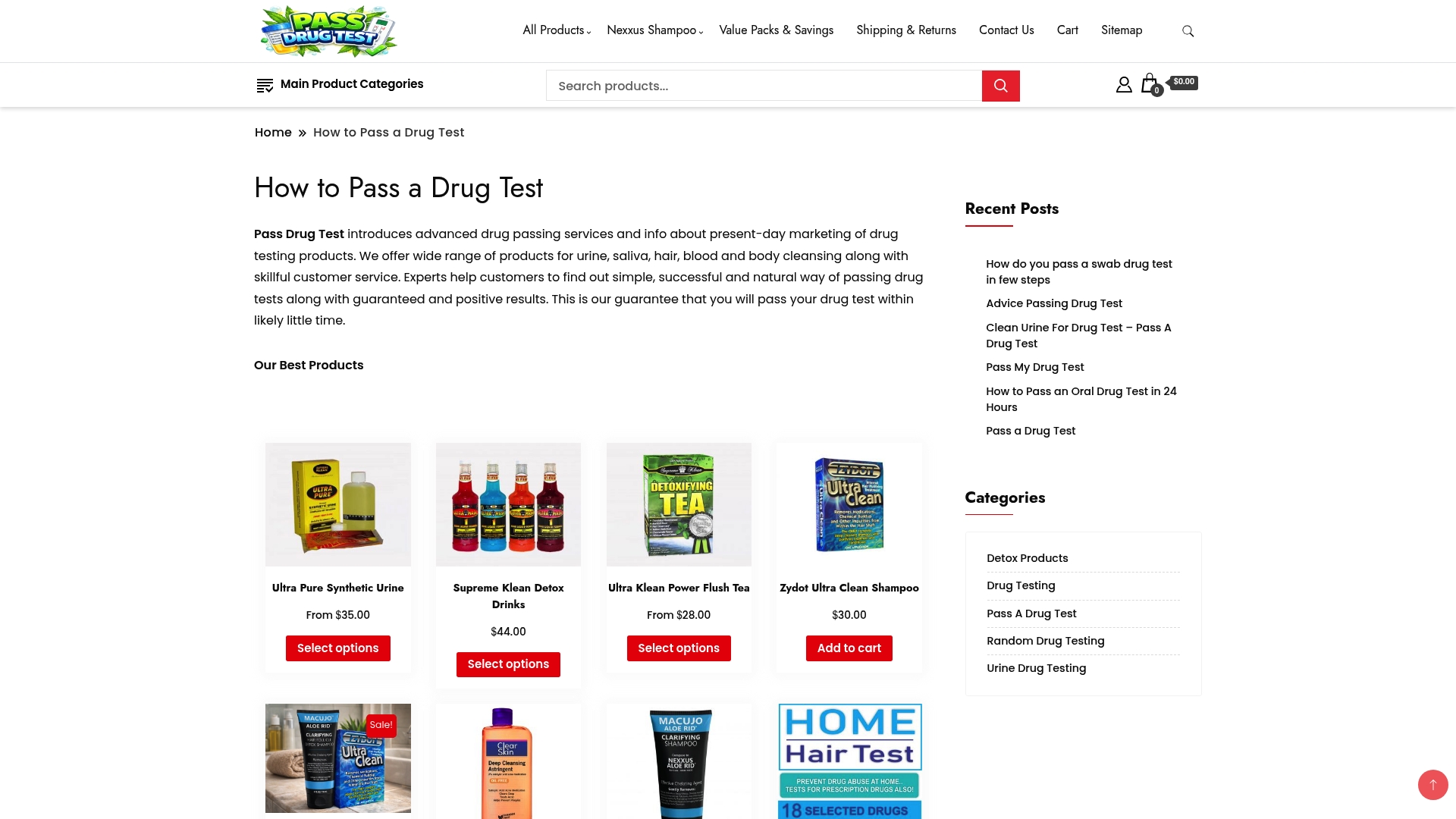
Browse hair, saliva and urine drug testing products or go straight to the Macujo Aloe Rid Shampoo page.
Our perspective
Most of the people who write to us are not worried about the cup or the swab. They are worried about the hair test, because it is the one that cannot be explained away with a few days of waiting. We built our store around that worry.
Our view is simple: the earlier you know which test is coming, the more calmly you can prepare. A urine or saliva test rewards good timing. A hair test rewards a routine that starts well before the date. That is why the Macujo method and the Macujo Aloe Rid Shampoo are where we put our attention, and why we want you to read the instructions in full before the first wash.
You do not have to face this alone. Tell us which test you have and when, and we will help you choose the right products from our range.
MIchael
FAQ
Which drug test do most employers use?
Urine. It is non-invasive, affordable and fast, and in a 2018 SHRM report, 90% of employers used it. Saliva and hair are used by smaller shares, and many employers use more than one method.
Do employers test for nicotine?
Standard workplace panels cover drug classes such as marijuana, cocaine, opiates, amphetamines and PCP, and do not include nicotine by default. A panel only covers a substance if it is specifically included, so check the employer’s written policy for the exact list.
How long can drugs be detected in a drug test?
It depends on the test. Labcorp gives approximate ranges of 5 to 48 hours for oral fluid, one to seven days or longer for chronic users for urine, and up to 90 days for hair. Dose, frequency of use, the drug and your metabolism all change the real number.
How much urine do you need for a standard drug test?
For a federally regulated collection, the donor provides at least 45 mL. 30 mL goes in the primary bottle and 15 mL in the secondary bottle. A private employer’s collection site may follow its own procedure, so confirm the details before you go.
Sources
- Workplace Drug Testing Resources, SAMHSA
- Hair, Saliva or Urine: Which Is Best for Drug-Testing Job Candidates, SHRM
- What Substances Are Tested, FMCSA
- Drug Testing, National Institute on Drug Abuse
- Drug Testing in the Workplace, National Safety Council
- Workplace Drug Testing Quick Guide for Supervisors, National Safety Council
- Workplace Drug Testing FAQs, Labcorp
- Collection Site Checklist, Federal Transit Administration