
A scalp detox is a deep cleanse that strips away product buildup, oils, sweat and dead skin, and it is the first step many people take when a hair test is coming. A lab does not test your scalp. It tests a short section of hair cut close to the root, so your preparation should cover the hair shaft, the scalp, and your timing. This guide explains how each works so you can plan with confidence.
TL;DR
- A scalp detox is deep cleansing for buildup. A hair test reads the hair strand itself, so preparation means caring for both scalp and shaft.
- Labs typically cut about 1.5 inches of hair nearest the scalp, which represents roughly 90 days.
- Hair treatments such as bleaching and dyeing are documented by labs, so keep your hair care consistent and tell the collector the truth about it.
- Our Macujo Aloe Rid Shampoo is built around the Macujo method for people preparing for a hair follicle test in the United States.
- Start early, follow the full routine, and do not rely on one wash the night before.
Table of Contents
- What a scalp detox actually is
- What the lab tests: hair, not your scalp
- How far back a hair test looks
- What happens to your sample in the lab
- A practical scalp and hair routine before your test
- The Macujo method and why we recommend it
- Our perspective
- Mistakes to avoid when preparing
- Understanding results and limits of the test
- Get the right products for your test
- FAQ
- Sources
What a scalp detox actually is
In plain terms, a scalp detox is a deeper-than-normal clean. SELF explains that it removes buildup from products, oils, sweat and dead skin cells, and that many scalp treatments use ingredients such as salicylic acid, glycolic acid, charcoal or clay. Some detox products overlap with regular shampoos.
A dermatologist quoted by The Guardian in August 2026 says an occasional scalp cleanse can be useful for clearing product buildup that could clog follicle openings. That is the everyday meaning of the word.
When people searching for a drug test say “scalp detox,” they usually mean something more specific: a cleansing routine designed for the days and weeks before a hair follicle test. That routine has a different goal, so it helps to understand what the lab looks at first.
What the lab tests: hair, not your scalp
The name “hair follicle test” is misleading. In the United States, the collector does not pull follicles from your scalp. According to Quest Diagnostics, the lab collects about 100 mg of hair from the first 1.5 inches at the root end, and it is cut as close to the scalp as possible. For hair longer than 4 inches, that is roughly 120 strands. Collections are directly observed.
The Society of Hair Testing recommends cutting head hair from the posterior vertex, the crown area at the back, because growth rate varies least there. It also recommends documenting hair color, length and any topical, chemical or physical treatments.
What this means for you:
- The hair closest to your scalp is the hair that matters most.
- Your scalp condition affects the hair that is growing right now, but the strand is what gets analyzed.
- Whatever you have done to your hair will be noted on the collection record.
How far back a hair test looks
Quest states that a 1.5-inch head-hair sample represents approximately 90 days, based on average growth of about 0.5 inch per month. Hair that contains a drug can take roughly 5 to 10 days to reach the scalp surface, so very recent use may not be in the sample yet.
Medical News Today notes that a hair test cannot pinpoint the exact date of use because growth rates vary. It also lists factors that affect metabolite concentration, including how much was consumed, sweating, melanin content, and bleaching or coloring.
A few practical takeaways:
- Short hair means the lab may take what it can reach, so your haircut is part of your planning.
- Body hair can be used by some collectors when head hair is not available, so ask your testing provider what they accept.
- Timing counts. The earlier you start your routine and the earlier you stop use, the more of your 90-day window moves in your favor.
For a deeper look at how drugs enter the strand, see what test-takers must know about hair shaft drug incorporation.
What happens to your sample in the lab
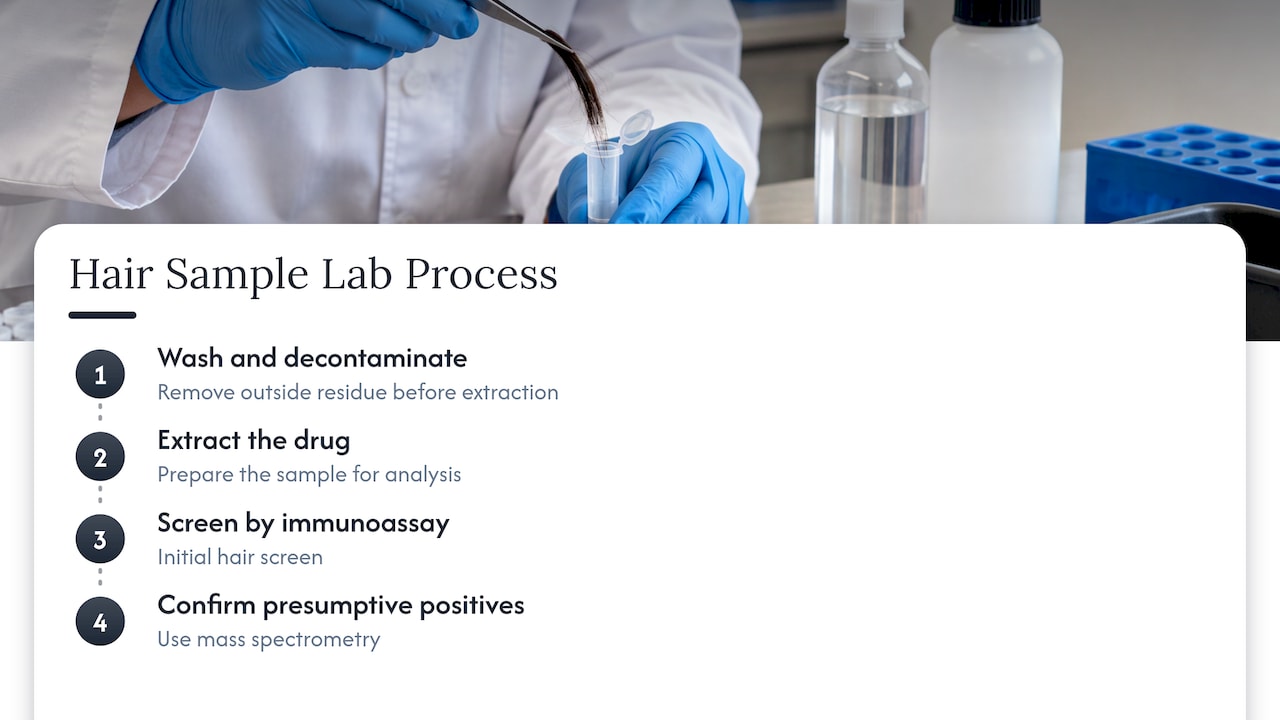
Knowing the process removes a lot of the anxiety. Labcorp says initial hair screens use immunoassay, and presumptive positives are confirmed by mass spectrometry. Negative screens are generally available within 48 to 72 hours of the lab receiving the specimen, and confirmations usually take about 72 hours more.
Quest describes the same flow: the sample is washed, the drug is extracted, and it is analyzed by GC-MS, GC-MS/MS or LC-MS/MS. The SoHT 2021 consensus adds that a decontamination step is necessary before extraction and that pulverizing the hair is recommended for drugs present at low levels.
The lab wash is built to remove outside residue. That is one reason a clean, well-maintained strand and scalp matter: you want the hair presented as healthy and consistent, not coated with leftover products.
A practical scalp and hair routine before your test
This is the routine we walk readers through. It focuses on what you control: cleanliness, consistency, and timing.
Step 1: Count your days
Find your test date and work backward. If you have notice, begin as early as you can. A routine you can repeat consistently beats a last-minute rush. If you have only a few days, you can still follow the full routine; just do not skip a step.
Step 2: Reset the scalp
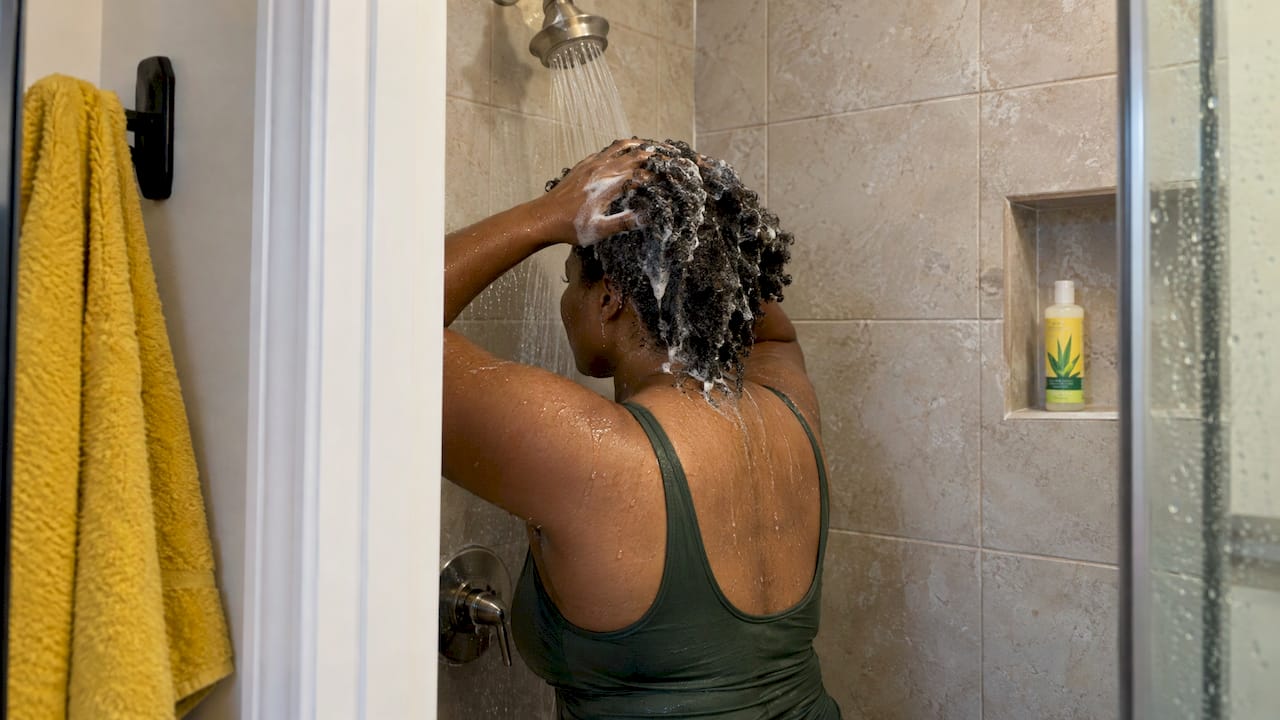
Buildup from styling products, oils and dead skin sits on the scalp and around the hair near the root, which is exactly where the sample is cut. A clarifying, deep-cleansing wash gives you a clean baseline. Work the shampoo into the scalp with your fingertips, not nails, and rinse thoroughly.
Step 3: Use a purpose-made detox shampoo as directed
This is where our Macujo Aloe Rid Shampoo comes in. We position it as our flagship for hair test preparation, and it is designed for use with the Macujo method. Follow the directions on the bottle for how long to leave it on and how often to repeat. Our guides on shampoo for hair follicle drug tests and detoxifying shampoo for drug tests go deeper on application.
Step 4: Keep your hair treatment history simple
The SoHT consensus says bleaching, dyeing, perming, straightening and UV exposure can influence the concentration of drugs in hair and that the lab records these treatments. Do not start a dramatic new treatment right before your test, and answer questions on the collection form accurately. Consistency also keeps your appointment simple.
Step 5: Support the rest of your plan
Hair is one piece. If your employer may also use urine or saliva, plan for those too. We carry options covered in our guides to urine drug testing for marijuana and saliva swab testing.
Step 6: Show up ready
Arrive with clean, dry, product-free hair. Skip heavy gels, oils and sprays on test day. Bring ID and any paperwork. Stay calm: the collection is quick, and it is a routine process for the collector.
The Macujo method and why we recommend it
The Macujo method, created by Mike Macujo, is the approach we recommend most for people who need to get ready for a hair follicle drug test. We consider it the best-known method for hair follicle preparation, and our Macujo Aloe Rid Shampoo is the product we built our hair category around. It pairs a structured wash routine with a shampoo made for the job.
People like it for three reasons:
- It gives you a clear, step-by-step routine instead of guesswork.
- It is made for hair test preparation, unlike a general-purpose scalp scrub.
- It is backed by customer service available 9am to 12am daily if you have questions about your routine.
If you want to compare it with other approaches, read our breakdown of detox shampoo versus home remedies.
Our perspective
We hear from people every week who are anxious about an upcoming hair test, and the same pattern shows up: they are told to scrub harder or wash more, with no plan behind it. We believe a routine you can follow works better than any single trick.
That is why we put our weight behind the Macujo method and the Macujo Aloe Rid Shampoo. Our formula is designed for people who need a dedicated hair test routine, and we back it with discreet, secure delivery and support from 9am to 12am every day.
Start early, follow the directions closely, keep your hair care steady, and reach out if you want help building your schedule. You do not have to work this out alone.
MIchael
Mistakes to avoid when preparing
These are about safe, smart use, so your routine works as intended.
- Waiting until the night before. Give yourself as many days as possible.
- Harsh home mixes. Putting strong chemicals on your scalp can irritate or burn skin. If you have a scalp condition such as seborrheic dermatitis or psoriasis, talk to a dermatologist before using any new treatment. Dermatologist Amy Spizuoco, MD, told SELF that much of the scalp care hype relates to dandruff and seborrheic dermatitis. See our list of detox products to avoid for hair drug testing.
- Skipping rinse time. Residue left on the scalp can itch and flake, which defeats the purpose of a clean start.
- Last-minute dye or bleach. Fresh chemical treatments get recorded and can complicate things.
- Ignoring other test types. Know whether your employer uses hair, urine or saliva, or several.
To separate fact from rumor, our guides on detox myths and facts and hair detox myths debunked cover the most common claims. If you are new to the vocabulary, start with hair detox terminology explained.
Understanding results and limits of the test
A hair result shows a pattern, not a single moment. The SoHT 2021 consensus states that the concentration in hair cannot be used to determine how much of a drug was consumed. Drugs.com notes that hair tests mostly pick up heavy or regular use over the past three months and are not recommended for testing occasional use.
Research on contamination is also evolving. A June 2024 paper from the National Institute of Justice proposes looking at drug breakdown products, called metabolites, to help separate actual use from environmental exposure. That is a developing area, and labs set their own procedures.
If you are a job applicant, our 90-day THC hair test guide for job applicants walks through the timeline. For general background, see our hair drug test information page.
Get the right products for your test
We built our store for people in the United States who have a hair, urine or saliva test on the calendar. Our Macujo Aloe Rid Shampoo leads our hair range, and our shop also carries saliva and urine options so you can cover every test type your employer might use. Orders ship with a focus on confidentiality and secure delivery, and our team is available from 9am to 12am daily.
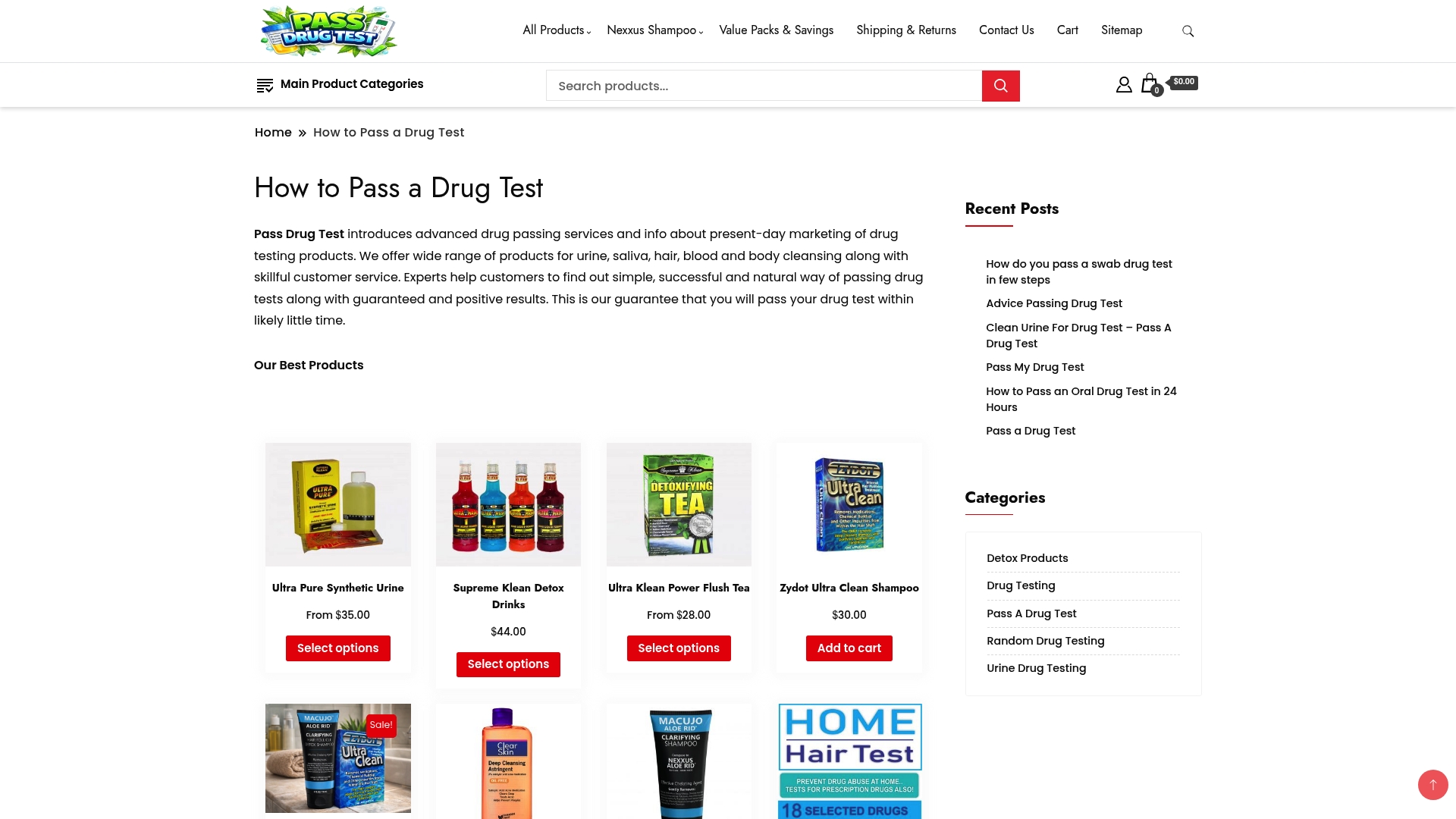
Ready to start your routine? Browse our hair drug test shampoo page, or head to the Passdrugtest store to see everything we carry.
FAQ
What can a hair follicle drug test tell?
It gives a history of repeated drug use over up to about 90 days. Quest says it is useful for evaluating long-term patterns. It cannot give an exact date of use or the amount consumed.
What is a scalp detox?
It is a deep cleanse that removes buildup from products, oil, sweat and dead skin. Ingredients often include salicylic acid, clay or charcoal. For a drug test, people pair it with a dedicated routine such as the Macujo method.
How early should I start preparing for a hair test?
As early as your notice allows. A routine followed consistently over many days is easier to manage than a rush. If your test is soon, begin today and follow every step on the product directions.
Does the lab test my scalp or my hair?
The lab tests hair. The collector cuts roughly 1.5 inches from the crown area close to the scalp. So caring for both the scalp and the strand is the sensible approach.
Can I use the same routine for urine or saliva tests?
No, those tests work differently. Hair routines target the strand, while urine and saliva have their own products. See our guides to urinalysis drug testing and saliva drug testing kits.
Sources
- Quest Diagnostics, Hair testing FAQ
- Labcorp, Hair follicle drug testing
- Society of Hair Testing, General Consensus on Hair Testing 2022
- Society of Hair Testing, Consensus on Drugs of Abuse Testing in Hair 2021
- SELF, Who Really Needs a Scalp Detox?
- The Guardian, Do you need to detox your scalp?
- Medical News Today, Hair follicle drug test
- Drugs.com, How far back does a hair follicle test detect drugs?
- National Institute of Justice, Detecting Drugs in Hair